


 Top Rated Course

We may not have the course you’re looking for. If you enquire or give us a call on +358 942454206 and speak to our training experts, we may still be able to help with your training requirements.
Mindfulness Meditation: What it is and How to do it?
The Knowledge Academy 13 February 2026Mindfulness Meditation is a mental training practice where you focus on being aware of the present moment without judgment, feelings, and bodily sensations. It helps reduce stress, boosts focus, enhances emotional regulation, improves well-being in daily life, and encourages a calmer, more mindful approach to challenges.

Training Outcomes Within Your Budget!
We ensure quality, budget-alignment, and timely delivery by our expert instructors.
Table of Contents
Have you ever caught yourself lost in thought, forgetting the present moment? Mindfulness Meditation provides a gentle way to pause, breathe, and reconnect with now. By cultivating awareness without judgment, it supports inner peace, sharpens focus, and enhances emotional well-being. In this blog, we’ll explore how Mindfulness Meditation works, highlight its impact, and share practical tips to help you begin your own practice.
Table of Contents
1) What is Mindfulness Meditation?
2) How to Practice Mindfulness Meditation?
3) How Does Mindfulness Work?
4) Impact of Mindfulness Meditation
5) Tips to Practice Mindfulness in Daily Life
6) What is the Difference Between Mindfulness and Meditation?
7) Conclusion
What is Mindfulness Meditation?
Mindfulness Meditation is a practice that helps train the mind to remain present and aware in the moment. Mindfulness means being conscious of what is happening inside and around us. In today’s fast-paced lives, it is easy to lose awareness of our surroundings or disconnect from our bodies, often without realising how this affects emotions and behaviours.
Through Mindfulness Meditation, we learn to reconnect with our bodies and focus on physical experiences like sights, sounds, smells, and tastes. At the same time, we observe thoughts and feelings as they arise, moment by moment, without judgment. This balance of sensory awareness and mindful observation makes meditation a powerful way to cultivate focus, peace, and emotional resilience.
How to Practice Mindfulness Meditation?
Learning Mindfulness Meditation can be straightforward to practice independently, but having a teacher or programme can be beneficial, especially for specific health goals. These are the steps to help you begin on your own:
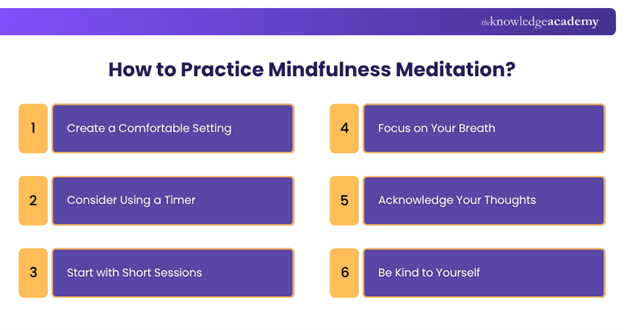
1) Create a Comfortable Setting
a) Choose a quiet and peaceful place to avoid distractions
b) Select a spot where you can sit comfortably for some time
c) Use a chair or cushion to balance your body and avoid discomfort
d) Make sure your environment is clean and calming to enhance focus
2) Consider Using a Timer
a) Set a timer with a gentle sound to alert you when the session ends
b) This helps you stay focused without checking the clock
c) Choose a comfortable starting duration, such as 5 minutes
d) After the session, take a moment to sit quietly before returning to your routine
3) Start with Short Sessions
a) Begin with manageable sessions that suit your comfort level
b) Focus on building a consistent daily practice
c) As you grow more familiar with the process, gradually increase the duration
d) Short but regular sessions are more effective than long, irregular ones
4) Focus on Your Breath
a) Pay attention to each breath as it enters and leaves your body
b) Feel the sensation of air moving in through your nose and out through your mouth
c) Concentrate on the rise and fall of your chest or belly with each breath
d) If your mind roams, gently bring your focus back to your breath
e) Try counting your breaths to keep your attention grounded
5) Acknowledge Your Thoughts
a) Recognise any thoughts without trying to push them away or judge them
b) View thoughts as passing clouds, coming and going without attachment
c) Let go of any need to control your thoughts; simply observe them
d) Each time your mind drifts, calmly return your attention to your breath
e) Remember that it is normal for the mind to roam; the key is bringing it back gently
6) Be Kind to Yourself
f) If your mind drifts, gently notice and refocus
g) Avoid criticizing yourself, losing focus is completely natural
h) Give yourself time; mindfulness is a skill that develops gradually
i) Show yourself the same compassion you’d offer a close friend
How Does Mindfulness Work?
Mindfulness refers to the ability to pay complete attention to the moment and accept it. It enhances attentiveness, emotional regulation, and body awareness through brain reorganisation of such areas as the prefrontal cortex and amygdala. This would help to stress less and become resilient in the face of pain and suffering.
It also promotes non-judgment of thoughts and feelings, which reduces emotional reactivity and leads to clarity. Mindfulness enhances emotional equilibrium and mental concentration with practice. It is like the process of training a muscle, which enhances awareness, calms the mind and improves your well-being.
Understand how to tackle mental health problems with our Mental Health and Well-being Training – Register now!
Impact of Mindfulness Meditation
Mindfulness Meditation helps minimize stress, anxiety, and depression by focusing on the present. It improves concentration, emotional strength, and promotes calmness. Regular practice also supports better sleep and overall well-being by boosting self-awareness and acceptance.
Reducing Stress
Mindfulness Meditation is mind cleansing that teaches your mind to be present in the moment. It assists in breaking this habit of overthinking and is less emotionally reactive. It recodes the brain to react more peacefully to stress.
Lower Heart Rate
Meditation activates the parasympathetic nervous system, slowing the heart rate and shifting the body into a state of rest. This relaxation supports cardiovascular health and can reduce the risk of high blood pressure and heart disease.
Meditation triggers the parasympathetic nervous system, and the heart rate is slowed, and the body enters the rest mode. This also relaxes the heart system, which is helpful in avoiding high blood pressure and heart disease.
Improved Immunity
By lowering stress hormones and improving sleep quality, mindfulness meditation strengthens the immune system. It may also enhance natural killer cell activity, which helps the body fight infections more effectively.
Better Sleep
Mindfulness Meditation calms both body and mind, easing daily anxieties that disturb rest. By focusing on the breath or body, it encourages deeper, more restorative sleep while helping to minimise insomnia.
Transform your mindset and create lasting personal growth with our Positive Psychology Course – Begin Now!
Tips to Practice Mindfulness in Daily Life
Combining mindfulness into your daily routine can be simple and effective. Here are some tips to help you stay present and focused throughout your day.
1) Start with Deep Breathing
Take a few minutes each day to focus on your breath. This helps centre your mind and reduce stress.
2) Practice Mindful Eating
Give attention to the taste, texture, and smell of your food. Eating mindfully can enhance digestion and help you enjoy your meals more.
3) Take Short Breaks
During work or daily tasks, take brief moments to pause and reconnect with your surroundings. These breaks help reset your mind and enhance focus.
4) Observe Your Surroundings
Take a moment to notice the views, sounds and smells around you. Being aware of your environment can enhance mindfulness and present-moment awareness.
5) Use Reminders
Set reminders throughout your day to pause and check in with yourself. This simple practice helps reinforce mindfulness regularly.
What is the Difference Between Mindfulness and Meditation?
Mindfulness means being aware of what’s happening right now, including your thoughts, feelings, and surroundings, without judging them. Meditation is a way to practice mindfulness. You can be mindful anytime, but meditation is a focused activity that helps you build that awareness.
Conclusion
Mindfulness Meditation addresses the challenge of constant stress and distraction by guiding you back to the present. This creates the opportunity to cultivate calm, focus, and emotional strength in daily life. By starting a regular practice today, you take a simple yet powerful step toward lasting balance. The result is a more centred, resilient, and fulfilling way of experiencing every moment.
Experience deeper peace and sharpen your concentration daily with our Mindfulness Training – Join Now!
Frequently Asked Questions
How Long Does it Take to see Results from Mindfulness Meditation?

Results from mindfulness meditation can be noticed in as little as a few weeks with regular practice. Many people report reduced stress, better focus, and improved mood within 2 to 4 weeks of consistent daily meditation.
Can Mindfulness Meditation be Combined with Other Relaxation Techniques?
Yes, Mindfulness Meditation pairs well with other leisure methods, including deep breathing or progressive muscle relaxation, improving overall relaxation.
What are the Other Resources and Offers Provided by The Knowledge Academy?
The Knowledge Academy takes global learning to new heights, offering over 3,000+ online courses across 490+ locations in 190+ countries. This expansive reach ensures accessibility and convenience for learners worldwide.
Alongside our diverse Online Course Catalogue, encompassing 19 major categories, we go the extra mile by providing a plethora of free educational Online Resources like Blogs, eBooks, Interview Questions and Videos. Tailoring learning experiences further, professionals can unlock greater value through a wide range of special discounts, seasonal deals, and Exclusive Offers.
What is Knowledge Pass, and how Does it Work?
The Knowledge Academy’s Knowledge Pass, a prepaid voucher, adds another layer of flexibility, allowing course bookings over a 12-month period. Join us on a journey where education knows no bounds.
What are Related Health & Safety Courses and Blogs Provided by The Knowledge Academy?
The Knowledge Academy offers various Mental Health Courses, including Mindfulness Training, Mental Health and Well-being Training, and Positive Psychology Course. These courses cater to different skill levels, providing comprehensive insights into Mindfulness.
Our Health & Safety Blogs cover a range of topics related to Mental Health, offering valuable resources, best practices, and industry insights. Whether you are a beginner or looking to advance your Health and Safety Skills, The Knowledge Academy's diverse courses and informative blogs have you covered.

The Knowledge Academy


Global Training Provider
The Knowledge Academy is a world-leading provider of professional training courses, offering globally recognised qualifications across a wide range of subjects. With expert trainers, up-to-date course material, and flexible learning options, we aim to empower professionals and organisations to achieve their goals through continuous learning.

Upcoming Health & Safety Resources Batches & Dates
Date
 Mindfulness Training
Mindfulness Training
Fri 20th Mar 2026
Mindfulness Training
Fri 5th Jun 2026
Mindfulness Training
Fri 30th Oct 2026

 If you wish to make any changes to your course, please


