


 Top Rated Course

We may not have the course you’re looking for. If you enquire or give us a call on +34 932716793 and speak to our training experts, we may still be able to help with your training requirements.
Enterprise Architecture Governance: A Complete Guide
William Brown 22 April 2026Enterprise Architecture Governance is the framework that ensures IT and business alignment through standards, policies, and decision-making processes. It promotes consistency, reduces duplication, and guides strategic technology investments. With strong governance, organisations can adapt to change while maintaining control and clarity.

Training Outcomes Within Your Budget!
We ensure quality, budget-alignment, and timely delivery by our expert instructors.
Table of Contents

You hear “Governance” and probably think of meetings, red tape, and roadblocks. But Enterprise Architecture Governance is a different story. If done right, it’s less about restrictions and more about direction. It’s the structure that lets your teams move fast, but with purpose. It helps your tech decisions serve your business goals.
In this blog, we’ll break down how good Enterprise Architecture Governance brings order, direction, and strategic control to your tech decisions, without your micromanagement. Stick around as we’re diving into how it works and why it’s the missing piece in so many digital journeys.
Table of Contents
1) What is Enterprise Architecture Governance?
2) Enterprise Architecture Governance Principles
3) Enterprise Architecture Governance Framework
4) Enterprise Architecture Governance Metrics
5) Advantages of a Strong Enterprise Architecture Governance
6) Common Challenges in Enterprise Architecture Governance
7) Examples of Enterprise Architecture Governance Processes
8) What Does Successful Enterprise Architecture Governance Look Like?
9) Conclusion
What is Enterprise Architecture Governance?
Enterprise Architecture Governance is the framework used to ensure that an organisation’s technology, systems, and business strategies are aligned and consistently support its overall goals. It involves setting rules, standards, roles, and responsibilities to manage the design, implementation, and evolution of Enterprise Architecture (EA). It typically includes:
1) Policies and Standards
2) Decision-making Structures
3) Compliance Checks
4) Change Management
You can imagine a large retail company planning to launch a new e-commerce platform. Without governance, each department might choose their own tools or data systems, causing integration headaches. With Enterprise Architecture Governance, there is a central architecture board to approve technology choices, clear rules for security and compliance and a roadmap that aligns the platform with long-term business goals.

Enterprise Architecture Governance Framework
To successfully implement and sustain Enterprise Architecture (EA), organisations need a sound governance framework. This framework ensures that EA efforts are aligned with strategic objectives and consistently managed over time. A well-defined governance structure promotes accountability, transparency, and ongoing improvement.
The core components of an Enterprise Architecture Governance Framework are:
1) Organisational Structure
2) Roles and Responsibilities
3) Processes
4) Standards and Guidelines
5) Metrics
6) Tools
Enterprise Architecture Governance Metrics
Enterprise Architecture Governance metrics are measurable indicators that track how effectively EA initiatives support business goals. They provide evidence of progress, highlight gaps, and help leaders make informed, data-driven decisions. Strong metrics also show whether governance efforts are delivering real business value.
Key types of Enterprise Architecture Governance Metrics include:
1) Alignment Metrics: Measure how well IT projects and systems support overall business strategies and objectives.
2) Process Efficiency Metrics: Track cycle times, decision-making speed, and the reduction of redundancies or bottlenecks in EA processes.
3) Compliance Metrics: Monitor adherence to standards, policies, and regulatory requirements.
4) Cost and Resource Optimisation Metrics: Evaluate savings from eliminating duplicate systems, improving resource use, or reducing technical debt.
5) Innovation and Agility Metrics: Assess how quickly the organisation can adopt new technologies or respond to market changes.
6) Maturity Metrics: Gauge the overall development of EA governance practices, from initial adoption to advanced integration across the enterprise.
Shape large-scale architecture confidently - Start your Certified Enterprise Architect Professional (CEAP) Course now!
Enterprise Architecture Governance Principles
To ensure consistency, alignment, and long-term value, organisations follow a set of core principles to take architecture decisions. Below are the key principles that shape strong EA governance.

1) Business Value Focus
Enterprise Architecture (EA) Governance should always begin with the question: How does this support our business goals? Every architectural decision, framework, or standard must contribute to tangible business outcomes. They are increased efficiency, reduced cost, better customer experience, or innovation. By prioritising value, the architecture becomes a strategic asset rather than just a technical framework.
2) Standardisation and Consistency
Establishing consistent practices, tools, and templates across the enterprise reduces complexity and fosters smoother collaboration. Standardisation ensures that architecture artefacts are understandable, systems can interoperate, and technical debt is minimised. This principle also supports better vendor management and technology integration.
3) Transparency and Accountability
Clear governance means decisions are made openly and documented. This principle ensures that everyone involved in the architecture process understands how and why decisions are made, who is responsible, and what the expected outcomes are. It builds trust, improves communication, and prevents misalignment.
4) Risk Management
EA governance plays a crucial role in identifying, evaluating, and mitigating risks before they impact projects or systems. Whether the risks are related to security, compliance, operational failures, or future scalability, having structured governance ensures they are addressed early. This makes the organisation more resilient to change or disruption.
5) Stakeholder Engagement
Successful architecture requires buy-in from across the organisation. Engaging stakeholders includes business leaders, IT teams, and end-users. It ensures that the EA aligns with actual needs and is more likely to be adopted. Involvement leads to better feedback, fewer surprises, and more effective execution.
6) Continuous Improvement
Governance is not a one-time exercise. Continuous improvement involves regularly reviewing EA effectiveness, collecting feedback, tracking KPIs, and refining practices. This makes the architecture adaptable and relevant, especially in environments where technology and business needs evolve rapidly.
7) Flexibility and Agility
Rigid frameworks can stifle innovation. EA governance should strike a balance between control and adaptability. When new technologies, market trends, or business models emerge, the architecture must respond without compromising integrity. Agile governance encourages iterative improvements and quick decision-making.
8) Integration with IT Governance
Enterprise Architecture should not exist in isolation. It must be fully integrated with the broader IT governance ecosystem. It includes security policies, project management processes, and service delivery models. This alignment ensures that technology investments are optimised and support strategic priorities.
Get integration confident - Learn lifecycle, standards, and practices with our Enterprise Integration Fundamentals Course today!
Advantages of a Strong Enterprise Architecture Governance
A strong governance model is essential for making enterprise architecture effective, scalable, and valuable. Below are the key advantages of adopting a well-structured Enterprise Architecture Governance.

Alignment with Business Strategy
A strong EA governance model ensures that IT decisions directly support organisational goals. It helps translate business strategies into actionable architecture plans, keeping all initiatives aligned with the company’s long-term vision and direction.
Enhanced Decision-Making
With clear processes, roles, and data-driven insights, governance improves decision quality. It enables faster, more informed choices about technology investments, project prioritisation, and risk management, reducing uncertainty and waste.
Consistency and Standardisation
Governance ensures that architectural practices, tools, and documentation follow consistent standards. This reduces complexity, improves integration across systems, and makes it easier to scale operations efficiently across departments or regions.
Resource Optimisation
By streamlining systems and eliminating redundancies, governance helps optimise the use of IT resources. They are people, technology, and budget. It ensures that investments deliver maximum value and support sustainable growth.
Compliance and Regulatory Adherence
A governed architecture aligns with relevant laws, industry standards, and internal policies. It ensures systems are secure, auditable, and compliant. This helps to reduce the risk of penalties and reputational damage.
Improved Collaboration and Communication
Clear governance roles and documentation foster better communication between business and IT teams. It aligns expectations, promotes shared understanding, and encourages cross-functional collaboration throughout the organisation.
Agility and Flexibility
Strong governance balances structure with adaptability. It allows organisations to respond quickly to market changes or technological advances, while maintaining control over risk and system integrity.
Common Challenges in Enterprise Architecture Governance
From internal resistance to lack of resources and unclear goals, several challenges can affect how successfully governance is adopted and sustained. Below are some of the most common obstacles businesses encounter.
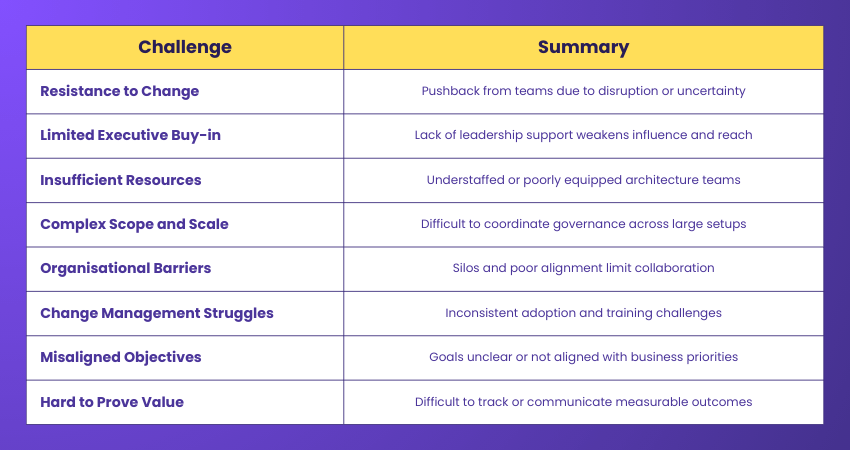
Resistance to Change
Many teams and departments are comfortable with familiar systems and workflows. Introducing new architecture practices can be met with hesitation or even pushback, especially when changes disrupt existing routines or tools.
Limited Executive Buy-in
Without strong sponsorship from senior leadership, EA initiatives may lack influence, visibility, or funding. When executives view architecture as purely technical, it becomes harder to connect EA to strategic goals.
Insufficient Resources
Governance requires skilled personnel, tools, and time. Organisations often underestimate these needs, leading to under-resourced teams, inconsistent practices, and stalled progress.
Managing Complex Scope and Scale
In large organisations, the scope of Enterprise Architecture can span across many departments, regions, and systems. Coordinating governance at this level becomes increasingly complex and difficult to standardise.
Build integration mastery with our Enterprise Integration Advanced Course- learn about APIs, cloud models, and data flow strategies.
Cultural and Organisational Barriers
Silos, lack of communication, and competing interests can prevent enterprise-wide collaboration. Governance efforts can fail if teams are not aligned or unwilling to adopt a shared vision.
Difficulty with Change Management
Even with good intentions, managing the rollout of architectural changes, training, adoption, feedback, can be slow and inconsistent. Change fatigue may also reduce effectiveness over time.
Vague or Misaligned Objectives
If EA goals are not clearly defined or do not match business priorities, governance loses direction. Teams may struggle to see purpose or measure success.
Measuring and Demonstrating Value
Enterprise Architecture is often long-term and strategic, making its value hard to quantify. Without clear metrics, stakeholders may question its impact or reduce investment.
Examples of Enterprise Architecture Governance Processes
Effective Enterprise Architecture (EA) Governance relies on structured, repeatable processes that ensure decisions are aligned with business strategy and architectural standards. Common governance processes include:
1) Architecture Review Boards (ARBs): Formal groups that review proposed projects and solutions to ensure they align with Enterprise Architecture principles and standards.
2) Technology Standards Management: Establishing, maintaining, and enforcing guidelines for technologies, platforms, and tools used across the organisation.
3) Change Request and Impact Analysis: Evaluating proposed changes to systems or processes to understand potential impacts and ensure consistency with architecture goals.
4) Compliance Monitoring: Ensuring projects follow established architecture rules, legal regulations, and security standards.
5) Lifecycle Management: Overseeing the full life of applications, data, and infrastructure to support rationalisation and avoid technical debt.
6) Portfolio Management Integration: Aligning the architecture roadmap with business project portfolios to prioritise and fund initiatives effectively.
What Does Successful Enterprise Architecture Governance Look Like?
Successful EA governance is about ensuring those rules support meaningful, strategic outcomes. It looks like:
1) Business and IT in sync, working toward common goals.
2) Leadership backing, where executive teams actively support and understand EA value.
3) Transparent decision-making, with defined roles, responsibilities, and approvals.
4) Clear standards and tools, consistently used across departments.
5) Measurable impact, shown through improved performance, reduced risks, or cost savings.
6) Flexibility to adapt, where governance supports innovation, not blocks it.
Conclusion
Enterprise Architecture Governance ensures that technology and business strategies move in harmony. With clear roles, consistent standards, and strong oversight, organisations can manage change, reduce risk, and make smarter decisions. A well-structured governance model not only supports growth but also helps maintain long-term stability in today’s evolving digital environment.
Elevate your design thinking - Train to lead it with our Enterprise Architect Training today!
Frequently Asked Questions
What are the Four Main Types of Enterprise Architecture?

The four main types of Enterprise Architecture are Business, Data, Application, and Technology. Business Architecture looks at processes and goals, while Data and Application focus on information and software use. Technology Architecture covers the IT systems and tools that support everything else.
What is the Difference Between IT Governance and Enterprise Architecture?
IT governance focuses on making sure IT decisions, policies, and resources support the overall business strategy. Enterprise Architecture, on the other hand, creates a structured plan that connects business goals with technology systems.
What are the Other Resources and Offers Provided by The Knowledge Academy?
The Knowledge Academy takes global learning to new heights, offering over 3,000 online courses across 490+ locations in 190+ countries. This expansive reach ensures accessibility and convenience for learners worldwide.
Alongside our diverse Online Course Catalogue, encompassing 19 major categories, we go the extra mile by providing a plethora of free educational Online Resources like Blogs, eBooks, Interview Questions and Videos. Tailoring learning experiences further, professionals can unlock greater value through a wide range of special discounts, seasonal deals, and Exclusive Offers.
What is The Knowledge Pass, and How Does it Work?
The Knowledge Academy’s Knowledge Pass, a prepaid voucher, adds another layer of flexibility, allowing course bookings over a 12-month period. Join us on a journey where education knows no bounds.
What are the Related Courses and Blogs Provided by The Knowledge Academy?
The Knowledge Academy offers various Enterprise Architect Training, including the Certified Enterprise Architect Professional (CEAP) Course, Enterprise Integration Practitioner Course and the Information Architecture Training Course. These courses cater to different skill levels, providing comprehensive insights into What is Enterprise Architecture.
Our Business Improvement Blogs cover a range of topics related to Enterprise Architecture Governance, offering valuable resources, best practices, and industry insights. Whether you are a beginner or looking to advance your Enterprise Architecture knowledge, The Knowledge Academy's diverse courses and informative blogs have got you covered.

William Brown


Senior Business Analyst and Strategic Advisor
William Brown is a senior business analyst with over 15 years of experience driving process improvement and strategic transformation in complex business environments. He specialises in analysing operations, gathering requirements and delivering insights that support effective decision making. William’s practical approach helps bridge the gap between business goals and technical solutions.
View Detail
Upcoming Business Improvement Resources Batches & Dates
Date
 Enterprise Architecture Black Belt
Enterprise Architecture Black Belt
Mon 27th Jul 2026
Enterprise Architecture Black Belt
Mon 30th Nov 2026

 If you wish to make any changes to your course, please


