


 Top Rated Course

We may not have the course you’re looking for. If you enquire or give us a call on +44 1344 203 999 and speak to our training experts, we may still be able to help with your training requirements.
What is a Quality Management System (QMS)?
The Knowledge Academy 04 February 2026Quality management ensures products and services meet standards through planning, assurance, control, and continuous improvement for customer satisfaction. It helps organisations operate efficiently and reduce errors across processes. A strong Quality Management approach builds trust and improves overall business performance.

Training Outcomes Within Your Budget!
We ensure quality, budget-alignment, and timely delivery by our expert instructors.
Table of Contents
The Quality Management System is a tool that allows organisations to be more efficient and produce reliable results. It organises the way things are done and leads to more informed choices. Knowing the impact of Quality Management on performance is a prerequisite for business success over a long period.
Table of Contents
1) What is Quality Management?
2) Quality Management Components
3) Quality Management Principles
4) Quality Management Examples
5) Quality Management Benefits
6) Quality Management Challenges
7) Conclusion
What is Quality Management?
The management of quality guarantees that the organisation provides products and services meeting the customer and regulatory demands. The management creates a systematic way for the organisations to improve their processes and minimise errors.
It directs the activities through unambiguous rules and constant improvement. Robust Quality Management empowers organisations to gain customers’ trust, increase their performance, and maintain their competitive position.

Quality Management Components
Quality Management is comprised of four essential components, each contributing to the consistent delivery of high-quality products and services that meet customer expectations. Here are the key components:
1) Quality Control
a) Checking products to make sure they meet quality standards
b) Finding and fixing mistakes before they reach customers
c) Using tests and inspections to ensure consistency
2) Quality Assurance
a) Prevents defects by maintaining process consistency
b) Ensures compliance with quality policies and procedures
c) Builds confidence in the organisation’s output
3) Quality Planning
a) Sets quality goals aligned with customer requirements
b) Determines standards, processes, and resources needed
c) Forms the foundation of the Quality Management System
4) Quality Improvement
a) Identifies opportunities for process or product enhancement
b) Encourages ongoing optimisation and efficiency
c) Supports customer satisfaction and long-term success
Quality Management Principles
The Quality Management principles provide a framework for making decisions, optimising processes, and fostering a culture of continuous improvement across all levels of the business. Let's discuss them:
1) Data-driven
Data-driven decision-making is the process of using accurate evidence to direct the improvement of quality and operations. Besides, it is a way that organisations take to avoid guessing and making decisions based on real performance indicators.
2) Process Efficiency
The way to go when it comes to processes is focusing on making them efficient so that they lose no time and gain maximum consistency. Thus, a thorough process approach can elevate productivity and quality to the same high standards across operations.
3) People Engagement
When workers are involved in quality goals, it is like they are given the rare privilege to be a part of something greater than themselves and also be the ones to share the accolades. This sharing of quality roles leads to commitment, stronger performance, and even better quality of output from the entire team.
4) Ongoing Improvement
Continuous improvement is when processes are constantly being evaluated and modified to get rid of any defects and make them more efficient. It is a guarantee that organisations will not fall behind and that they will always be able to have high standards even when conditions change.
5) Strong Leadership
Strong leadership will always provide a straightforward path to follow and will also set high aspirational standards, thus bringing the team together towards the quality goals that are common. Besides, good leaders will encourage responsibility and ensure that all the steps are followed uniformly by all the people working in the organisation.
6) Customer Commitment
A customer-centric strategy makes sure that the products and services are up to par or even better than the customers' needs and demands. Therefore, guaranteeing customer satisfaction leads to loyalty and is a driving force for the company's survival in the long run.
7) Relationship Building
Establishing a good rapport with suppliers, partners, and stakeholders is the way to go as it promotes smooth cooperation and keeps quality steady throughout the supply chain. Having strong partnerships is a major factor in maintaining standards and facilitating the flow of communication across different processes.
Learn to recognise customer importance with our Quality Assurance Training – Join today!
Quality Management Examples
Here are some practical examples that show how Quality Management works in real business environments.
a) Manufacturing Excellence: Manufacturers integrate quality controls from design to final production to reduce defects and improve consistency. This approach strengthens product reliability and helps minimise waste through efficient processes.
b) Continuous Improvement with Lean and Six Sigma: Organisations use improvement methods like Lean and Six Sigma to streamline workflows and reduce process variation. These techniques support better decision-making by identifying root causes and enhancing overall efficiency.
c) Service Industry Quality Control: Service-based organisations standardise procedures to ensure accurate, timely and compliant service delivery. Ongoing training and process monitoring help maintain high performance and strong customer satisfaction.
d) Supply Chain and Logistics Quality Systems: Logistics teams apply quality management across procurement, storage, transport and delivery activities. This ensures accurate order fulfilment, smoother operations, and fewer errors throughout the supply chain.
e) Organisation-Wide Quality Culture: Some companies embed quality principles across all departments to encourage a collective commitment to improvement. This unified approach strengthens teamwork, supports long-term success, and promotes consistent quality standards.
Quality Management Benefits
Implementing a Quality Management System (QMS) offers organisations a structured approach to maintaining high standards, improving efficiency, and building customer trust, all while driving continuous improvement and ensuring compliance with industry regulations. Here are the key advantages of it:

1) Improved Product and Service Quality
a) Establishes standardised processes to minimise errors, defects, and variations
b) Ensures every product or service meets the same high standard
c) Builds brand reputation and customer trust
d) Reduces rework, saving time and resources
2) Compliance with Regulations and Standards
a) Aligns with ISO standards and industry-specific requirements
b) Helps meet legal and regulatory obligations
c) Reduces risk of penalties, product recalls, and legal disputes
d) Demonstrates quality commitment to regulators and customers
3) Increased Operational Efficiency
a) Streamlines workflows and removes redundant steps
b) Reduces waste for higher productivity
c) Clarifies roles and responsibilities for faster task execution
d) Improves output without compromising quality
4) Cost Reduction
a) Prevents defects and inefficiencies, lowering long-term costs
b) Reduces scrap and rework expenses
c) Cuts warranty claims through higher quality
Optimises use of materials, labour, and time
5) Enhanced Customer Satisfaction
a) Ensures products/services meet or exceed expectations
b) Encourages repeat purchases and positive recommendations
c) Integrates customer feedback into improvement cycles
d) Aligns offerings more closely with market needs
6) Culture of Continuous Improvement
a) Built to evolve with market and operational needs
b) Uses feedback loops, internal audits, and reviews to improve
c) Keeps the organisation competitive and adaptable
7) Data-Driven Decision Making
a) Generates performance data for fact-based decisions
b) Identifies root causes of issues quickly
c) Spotlights opportunities for innovation and growth
8) Stronger Brand Reputation and Market Position
a) Proven quality record differentiates the company from competitors
b) Attracts clients and partners who value recognised quality standards
Opens doors to new business opportunities
Learn about product quality with our ISO 9001 Internal Auditor Training – Join today!
Quality Management Challenges
Here are some of the limitations of it:

1) Global Compliance
a) Companies must follow different rules in each country
b) Keeping up with changing laws can be difficult
c) Not meeting rules can lead to fines or losing customers
2) Claims Verification
a) Businesses must prove that their products do what they promise
b) False claims can harm a company's reputation
c) Checking facts and testing products takes time and effort
3) Ingredient Testing
a) Products like food and medicine must be safe to use
b) Testing ingredients ensures they meet quality standards
c) Poor testing can lead to health risks and legal trouble
Conclusion
Quality Management plays a crucial part in the process of enhancing performance, minimising mistakes, and providing regular value to organisations. Teams can double their efficiency and build customer loyalty by implementing ordered methods. Quality will continue to be a differentiator in the market and a supporting factor in the survival of the business through ups and downs as the enterprises grow and change.
Learn Quality Management standards with our ISO 9001 Certification – Join today!
Frequently Asked Questions
What are the Requirements of Modern Quality Management Software Solutions?

Modern solutions require automation, real-time data tracking, integration capabilities, document control, audit management, and compliance features to ensure consistent quality, efficiency, and regulatory alignment across all operations.
What is the ISO Standard for Quality Management?
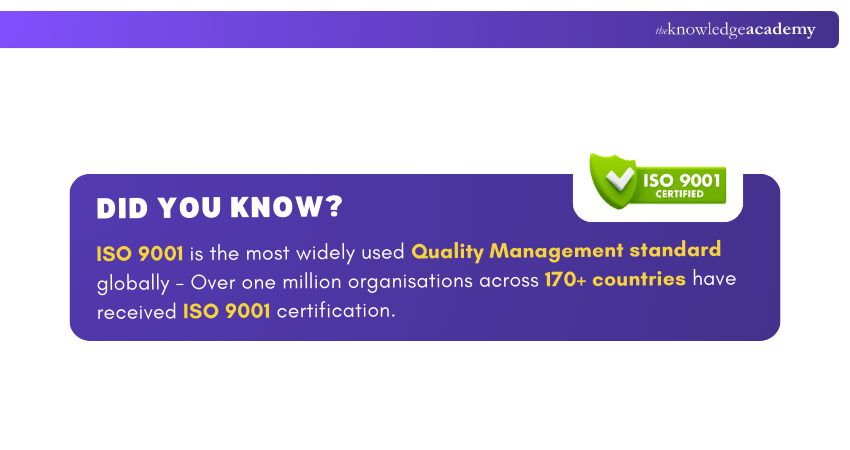
The ISO Standard for Quality Management is ISO 9001. It outlines principles such as customer focus, leadership, process approach, and continual improvement to help organisations consistently meet customer and regulatory requirements.
What are the Other Resources and Offers Provided by The Knowledge Academy?
The Knowledge Academy takes global learning to new heights, offering over 3,000+ online courses across 490+ locations in 190+ countries. This expansive reach ensures accessibility and convenience for learners worldwide.
Alongside our diverse Online Course Catalogue, encompassing 19 major categories, we go the extra mile by providing a plethora of free educational Online Resources like Blogs, eBooks, Interview Questions and Videos. Tailoring learning experiences further, professionals can unlock greater value through a wide range of special discounts, seasonal deals, and Exclusive Offers.
What is The Knowledge Pass, and How Does it Work?
The Knowledge Academy’s Knowledge Pass, a prepaid voucher, adds another layer of flexibility, allowing course bookings over a 12-month period. Join us on a journey where education knows no bounds.
What are the Related Courses and Blogs Provided by The Knowledge Academy?
The Knowledge Academy offers various ISO 9001 Courses, including the ISO 9001 Foundation Course, ISO 9001 Lead Auditor Course, and ISO 9001 Internal Auditor Training. These courses cater to different skill levels, providing comprehensive insights into the Service Level Agreement (SLA).
Our ISO & Compliance Blogs cover a range of topics related to Quality Management, offering valuable resources, best practices, and industry insights. Whether you are a beginner or looking to advance your ISO & Compliance skills, The Knowledge Academy's diverse courses and informative blogs have got you covered.

The Knowledge Academy


Global Training Provider
The Knowledge Academy is a world-leading provider of professional training courses, offering globally recognised qualifications across a wide range of subjects. With expert trainers, up-to-date course material, and flexible learning options, we aim to empower professionals and organisations to achieve their goals through continuous learning.

Upcoming Business Improvement Resources Batches & Dates
Date
 ISO 9001 Internal Auditor Training
ISO 9001 Internal Auditor Training
Mon 6th Jul 2026
ISO 9001 Internal Auditor Training
Mon 3rd Aug 2026
ISO 9001 Internal Auditor Training
Mon 7th Sep 2026
ISO 9001 Internal Auditor Training
Mon 5th Oct 2026
ISO 9001 Internal Auditor Training
Mon 2nd Nov 2026
ISO 9001 Internal Auditor Training
Mon 23rd Nov 2026
ISO 9001 Internal Auditor Training
Mon 7th Dec 2026

 If you wish to make any changes to your course, please


