


 Top Rated Course

We may not have the course you’re looking for. If you enquire or give us a call on +45 89870423 and speak to our training experts, we may still be able to help with your training requirements.
How to Control Your Emotions: 12 Practical Ways for Everyday Life
The Knowledge Academy 21 April 2026Controlling emotions involves self-awareness, pausing before reacting, and using mindfulness, deep breathing, and reframing to respond calmly. You will develop resilience through consistent training, which enables you to maintain composure during difficult situations while handling challenges in a controlled manner.

Training Outcomes Within Your Budget!
We ensure quality, budget-alignment, and timely delivery by our expert instructors.
Table of Contents
Feelings are like waves. Some are smooth-flowing, and others are very overwhelming and intense. Without the relevant strategies, it might be difficult to be on course. Nevertheless, there is a reason why it is not only in theory but also in practice that you learn to balance yourself when you are either happy or on a day when you are sad.
Studies have shown that emotional control is good, as it contributes to good relationships, less stress, and better decisions. This blog will provide you with practical tips on how to learn How to Control your Emotions, use effective strategies, become resilient, and have enduring emotional strength in your daily life.
Table of Contents
1) Importance of Controlling Emotions
2) Tips to Control Your Emotions
3) Emotional Control vs Emotional Suppression
4) 5 Common Mistakes When Coping with Emotions
5) Conclusion
Importance of Controlling Emotions
Emotional intelligence is crucial in being able to keep the mind straight and have a balanced judgment. By learning how to deal with your reactions, you eliminate stress and avoid needless conflicts both on the personal and the work front.
It also builds relationships as it promotes considerate communication rather than the knee-jerk reaction. Emotional control is resilience-forming, enhances confidence, and, with time, you can cope with difficult circumstances calmly and maturely.
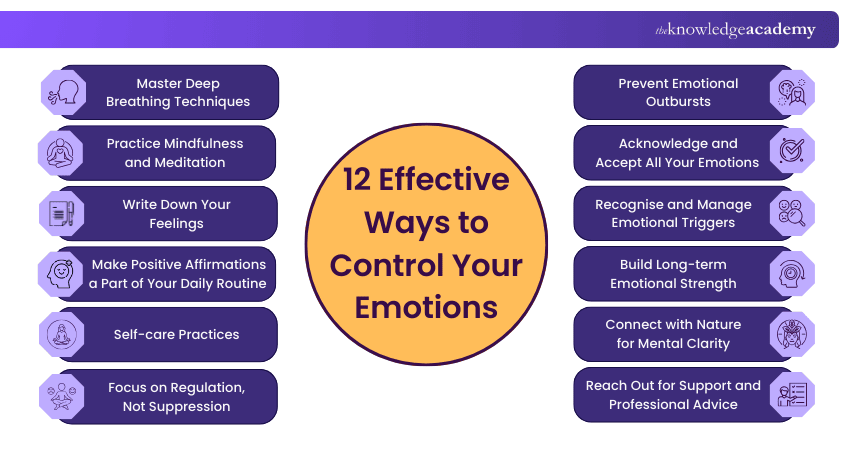
12 Effective Ways to Control Your Emotions
Here are the key tips to help you stay in control in the event of overwhelming emotions. These simple yet powerful strategies can support your daily emotional health.
1) Master Deep Breathing Techniques
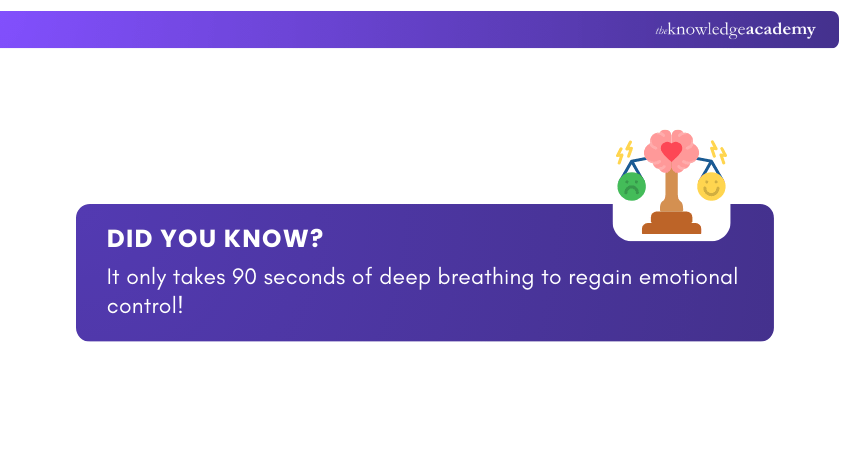
When there is an arousal of emotion, your body tends to react. Deep breathing helps activate the body’s relaxation response. Try slow inhalation and hold for a few seconds, and then exhale through your mouth. This simple and straightforward technique can help your mind and body relax in moments of stress.
2) Practice Mindfulness and Meditation
Mindfulness helps you stay present and observe your emotional state without judgement, which is essential when learning How to Control Emotions effectively. Even a few minutes of simple meditation each day can reduce reactivity, improve focus, and help you recognise feelings before they become overwhelming.
3) Write Down Your Feelings
Putting down your feelings makes you realise what is really happening to you rather than responding in a particular manner. Through the process, people are able to step aside and manage their emotional state and actualise their behavioural patterns.
4) Make Positive Affirmations a Part of Your Daily Routine
Positive affirmations will be practised daily and will change the negative way of thinking and boost self-confidence. Emotional resilience that is gained through repetition of affirmations offering support helps individuals to establish a more secure and balanced psychological state.
5) Self-care Practices
Taking care of your body and mind forms the emotional controlling foundation. Give your sleep quality more priority, eat nutritious food, perform regular exercise, and give sufficient time to your enjoyable activities. When all your basic needs are met, you are better equipped for stress management and stay emotionally balanced.
6) Focus on Regulation, Not Suppression
Trying to push emotions away, but make sure not to make them disappear - it often makes them stronger. Instead of avoiding your feelings, aim for response regulation. Achieving emotional recognition, understanding why it's happening in a healthy, thoughtful way.
7) Prevent Emotional Outbursts
Emotional outbursts often result from bottled-up feelings or triggers that you didn’t catch in time. Try regularly checking in with yourself, especially in stressful situations. Take a moment to pause, breathe, and think before you react. This small habit can prevent emotional escalation.
8) Acknowledge and Accept All Your Emotions
It’s okay to feel angry, sad, frustrated, or scared - these are normal human emotions. Accepting them doesn’t mean you are allowing them to take control over you. It means you’re being self-honest, which is the first step toward wiser stress management.
9) Recognise and Manage Emotional Triggers
Everyone has emotional triggers - specific feeling triggering situations, people, or memories. Learn to self-identify. Once you recognise what sets you off, you can prepare well ahead of time, set boundaries, or create calming, grounding routines.
10) Build Long-term Emotional Strength
Strengthening your emotional health isn’t just about tough moment management, it’s about lasting habit-building. These practices can help you develop greater resilience, clarity, and control over time.
11) Connect with Nature for Mental Clarity
Spending nature time has been shown to help with anxiety as well as stress reduction and enable mood improvement. Whether it’s a park walk, a weekend hike, or just sitting by a tree, nature can offer an everyday pressure-reducing calming break and helps in mind clarity.
12) Reach Out for Support and Professional Advice
You don’t have to self-handle everything. Talking to your friends or family members for emotional relief. Moreover, therapists or counsellors, among other therapists, can offer deeper guidance. It's important to remember that seeking help is a sign of intense strength, not weakness.
Maximise your productivity and reclaim your time – register for our Time Management Training now to boost your efficiency and achieve your goals!
Emotional Control vs Emotional Suppression
Emotional control means recognising your feelings, understanding them, and choosing how to respond in a healthy way. It supports calm, thoughtful reactions while practising self-care and acknowledging what you genuinely feel.
Emotional suppression, on the other hand, involves ignoring or pushing emotions aside without processing them. While it may seem helpful in the short term, unaddressed emotions often resurface later as stress or frustration.
5 Common Mistakes When Coping with Emotions
Many people cope with emotions in ways that provide temporary relief but create long-term challenges. Recognising these common mistakes can guide you towards healthier, more sustainable emotional habits and highlight practical Ways to Control Emotions more effectively in everyday life.
1) Bottling up feelings instead of addressing them can block your progress in learning How to Control your Emotions effectively
2) Reacting impulsively without pausing to reflect
3) Relying on distractions to avoid emotional discomfort
4) Being overly self-critical during difficult moments
5) Expecting emotions to disappear without active effort
Conclusion
Being able to feel strong emotions is absolutely normal, yet being aware of how to manage your emotions will assist you in getting a smooth, healthier, and productive emotional management. Such habits as you practice will make you emotionally aware and less likely to act on the spur of the moment. Through perseverance, you will discover that it is much easier to remain stable and calm even when life is making no sense. Always keep in mind, emotional control is a skill to be cultivated! Grow faster, think sharper, and lead better with Personal Development Courses – Join now!
Frequently Asked Questions
What Role Does Emotional Intelligence Play in Emotional Control?

Emotional intelligence helps you recognise, understand, and manage your own feelings while also being aware of others’ emotions. It strengthens emotional control by encouraging thoughtful responses, improving empathy, and reducing impulsive reactions in challenging situations.
How to Stop Letting People Affect Your Mood?
To begin, set emotional boundaries, focus on your reactions rather than others' actions, and build self-awareness. Practice detachment through mindfulness and remind yourself that others' behaviour is a reflection of them, not yours.
What are the Other Resources and Offers Provided by The Knowledge Academy?
The Knowledge Academy takes global learning to new heights, offering over 3,000+ online courses across 490+ locations in 190+ countries. This expansive reach ensures accessibility and convenience for learners worldwide.
Alongside our diverse Online Course Catalogue, encompassing 17 major categories, we go the extra mile by providing a plethora of free educational Online Resources like Blogs, eBooks, Interview Questions and Videos. Tailoring learning experiences further, professionals can unlock greater value through a wide range of special discounts, seasonal deals, and Exclusive Offers.
What is The Knowledge Pass, and How Does it Work?
The Knowledge Academy’s Knowledge Pass, a prepaid voucher, adds another layer of flexibility, allowing course bookings over a 12-month period. Join us on a journey where education knows no bounds.
What are the Related Courses and Blogs Provided by The Knowledge Academy?
The Knowledge Academy offers various Personal Development Courses, including Time Management Training, Stress Management Course, and Dealing with Difficult People Course. These courses cater to different skill levels, providing comprehensive insights into Strategic Planning.
Our Business Skills Blogs cover a range of topics related to stress management, offering valuable resources, best practices, and industry insights. Whether you are a beginner or looking to advance your personal development skills, The Knowledge Academy's diverse courses and informative blogs have got you covered.

The Knowledge Academy


Global Training Provider
The Knowledge Academy is a world-leading provider of professional training courses, offering globally recognised qualifications across a wide range of subjects. With expert trainers, up-to-date course material, and flexible learning options, we aim to empower professionals and organisations to achieve their goals through continuous learning.

Upcoming Business Skills Resources Batches & Dates
Date
 Emotional Intelligence Training
Emotional Intelligence Training
Fri 4th Sep 2026
Emotional Intelligence Training
Fri 11th Dec 2026

 If you wish to make any changes to your course, please


