


 Top Rated Course

We may not have the course you’re looking for. If you enquire or give us a call on +45 89870423 and speak to our training experts, we may still be able to help with your training requirements.
How Much Caffeine is in Coffee? Explained in Detail
The Knowledge Academy 18 October 2025An average cup of coffee has about 95 mg of caffeine, but it can vary widely. Explore caffeine content in brewed, espresso, instant, and decaf coffee. Factors like bean type, roast level, grind size, and brewing method influence caffeine strength. It determines How Much Caffeine is in Coffee, influencing energy levels and daily focus.

Training Outcomes Within Your Budget!
We ensure quality, budget-alignment, and timely delivery by our expert instructors.
Table of Contents

Have you ever wondered why one cup of coffee keeps you buzzing for hours while another feels far milder? Understanding how much caffeine is in coffee, helps you make informed choices that match your lifestyle and energy needs. From roast levels to brewing styles, every detail shapes your daily cup. Unlocking these insights will empower you to enjoy coffee with balance and confidence. Let’s dive in and explore what truly fuels your favourite brew.
Table of contents
1) What is Caffeine?
2) How Much Caffeine Content Do Different Coffee Types Have?
3) The Caffeine Content in Coffee by brand
4) What Factors Affect Caffeine Content?
5) Other Sources of Caffeine
6) Effects of Caffeine
7) How Much Caffeine is Too Much?
8) Conclusion
What is Caffeine?
Caffeine is a natural stimulant found in coffee beans, tea leaves, cacao plants, and energy drinks. It is the most widely consumed psychoactive substance in the world, prized for improving alertness and reducing tiredness. By blocking adenosine, it delays fatigue and enhances focus.
Caffeine also boosts mood, endurance, and reaction times, making it useful for athletes and professionals. However, excessive intake can cause restlessness, sleep disturbances, rapid heartbeat, and dependency. Consuming it in moderation allows people to enjoy its stimulating effects while maintaining good health and overall wellbeing.

How Much Caffeine Content Do Different Coffee Types Have?
Caffeine levels in coffee vary by type, bean, and brew method. Knowing How Much Caffeine is in a Cup of Coffee helps guide your choices. Let’s look at the types of coffee and how brewed, instant, espresso, and decaf coffee differ in their caffeine levels.

1) Brewed Coffee
Brewed coffee is the most common type, averaging around 95 mg of caffeine per cup, though this can range based on bean type, roast, and serving size. It generally offers a balanced strength suitable for everyday consumption.
2) Instant Coffee
Instant coffee contains slightly less caffeine, usually between 60–80 mg per cup. Its quick preparation makes it popular, but the caffeine content varies depending on the brand and the concentration of coffee granules used.
3) Espresso Coffee
Espresso coffee is highly concentrated, with about 63 mg of caffeine per shot (30 ml). While the amount per serving is less than brewed coffee, its intensity makes it stronger per ounce, appealing to those seeking a bold energy kick.
4) Decaf Coffee
Decaf coffee isn’t completely caffeine-free, typically containing 2–5 mg per cup. While minimal, this amount is significantly lower than regular coffee, making it a preferred choice for individuals sensitive to caffeine or looking to limit daily intake.
The Caffeine Content in Coffee by brand
Commercial brands tend to contain more caffeine per serving than home-brewed varieties. Coffee shops are also notoriously known for their larger cups, which sell up to 700 ml of Coffee, five times as much as regular Coffee.
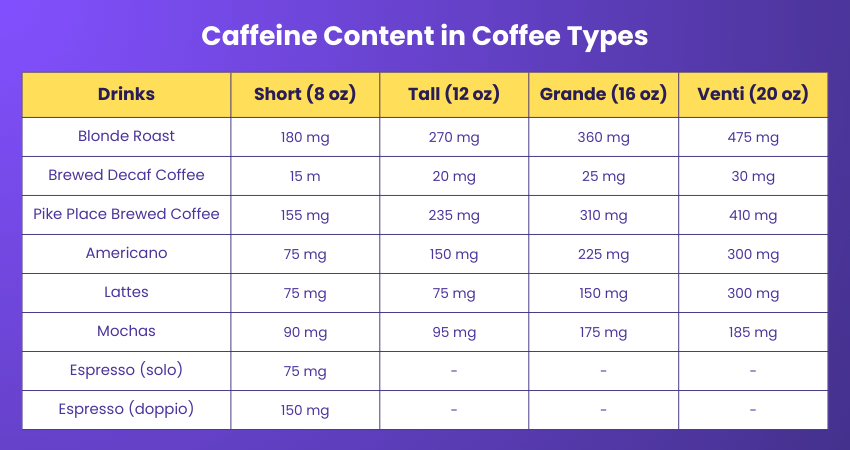
1) Starbucks
Probably the best-known Coffee shop in the world, it offers the most caffeinated Coffee, Amount of caffeine in a cup of coffee being as follows:
Here is the table depicting the caffeine content:
2) McDonald’s
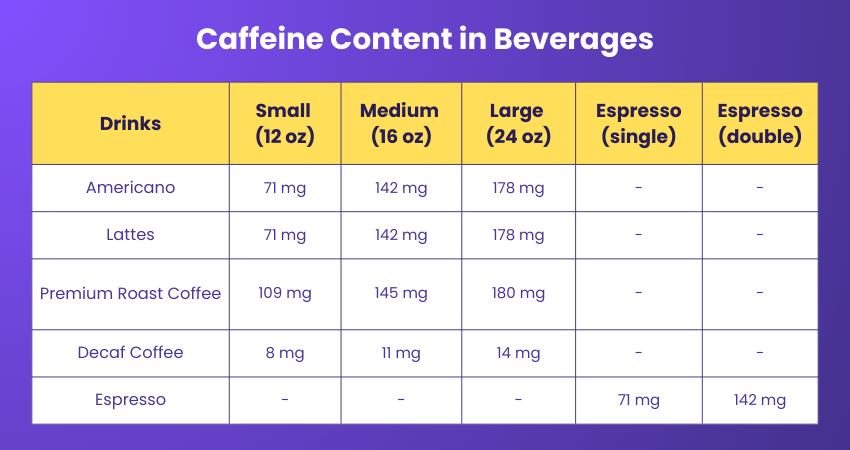
McDonald’s, recognised globally for its McCafe Coffee line, is among the largest fast-food entities offering Coffee. However, the caffeine content in their Coffee offerings is not standardised. The approximate caffeine level in their brewed Coffee is as follows:
Here is the table providing information on caffeine content:
 |
|
3) Dunkin Donuts
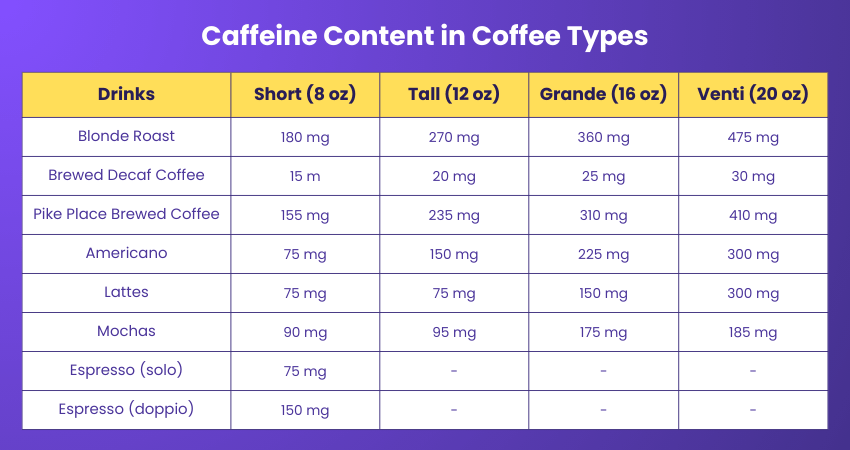
Dunkin Donuts is another popular chain that sells Coffee and doughnuts. The caffeine in coffee of their Coffee is as follows:
Here is the table based on the provided information:
Boost your career in Facilities Management with our Facilities Management Training - Register now!
What Factors Affect Caffeine Content?
Numerous factors can affect how much caffeine is in coffee, making some brews stronger than others. The type of bean, brewing method, grind size, and serving size all play a role in determining the final caffeine content in your cup. Let us see in detail:
1) Beans Types: Different coffee bean varieties naturally contain varying levels of caffeine
2) Roasting: Light roasts hold more caffeine, while dark roasts give richer flavours
3) Coffee Type: Brewed, espresso, instant, and decaf each have distinct caffeine levels
4) Serving Size: Larger cups or shots increase overall caffeine intake
5) Water Temperature: Cooler water slows down caffeine release during brewing
6) Pressure: Lower pressure reduces extraction speed, affecting caffeine levels
Other Sources of Caffeine
Caffeine isn’t found in coffee alone. It’s also present in a variety of everyday foods and beverages. Let’s explore how tea, soft drinks, energy drinks, and even chocolate contribute to daily caffeine intake.

1) Tea
Tea naturally contains caffeine, though the amount varies by type and brewing time. Green and black teas are common sources, offering a gentler boost compared to coffee.
2) Soft Drinks
Many soft drinks, particularly colas, contain added caffeine. Frequent consumption can still contribute significantly to daily caffeine intake.
3) Energy Drinks
Energy drinks are formulated with high caffeine content, often combined with stimulants. They provide a quick energy surge but should be consumed in moderation.
4) Chocolate
Chocolate, especially dark varieties, contains small amounts of caffeine. Though less than coffee or tea, it still adds to overall intake, particularly when consumed in larger portions.
Effects of Caffeine
Caffeine impacts several systems in the body, offering both benefits and potential risks. Its effects vary depending on the amount consumed, individual sensitivity, and overall health. Here’s how caffeine influences different body systems:
1) Central Nervous System: Boosts alertness, focus, and mood; excess may cause anxiety, headaches, or sleep issues.
2) Digestive & Excretory Systems: Increases stomach acid and urination; may trigger heartburn or discomfort.
3) Circulatory & Respiratory Systems: Temporarily raises heart rate and blood pressure; can relax airways and ease breathing.
4) Skeletal & Muscular Systems: Enhances muscle contraction and endurance; excessive intake may reduce calcium affecting bone health.
5) Reproductive System: High intake may affect fertility, pregnancy, or breastfeeding, influencing infant sleep and irritability.
Learn how to craft market-winning Product Management strategies by joining our Product Management Training now!
How Much Caffeine is Too Much?
Caffeine is safe for most people in moderate amounts, but excess intake can cause health issues. Since tolerance differs for each individual, it’s important to understand the factors that influence when caffeine becomes too much. Here are the key considerations.
1) Moderate caffeine use is generally safe, but high amounts can raise health concerns.
2) Sensitivity to caffeine varies widely depending on factors like weight, medical conditions, and medications.
3) Concentrated caffeine products, such as powders or liquids, are especially risky since even small miscalculations can cause harmful or toxic effects.
4) There is no one-size-fits-all limit, so being mindful of your total daily intake and practising moderation is the safest approach.
5) Pregnant individuals, children, and people with certain health conditions should limit caffeine more strictly to avoid complications.
Conclusion
Many coffee drinkers overlook How Much Caffeine is in Coffee, yet this knowledge is key to making healthier choices. By understanding differences in beans, roast levels, brewing methods, and serving sizes, you gain more control. Adjusting these factors allows you to enjoy coffee’s energy, focus, and flavour while reducing risks, creating a balanced and mindful daily coffee experience.
Understand different and recent Industry trends with our Industry Training - join now!
Frequently Asked Questions
Is Decaffeinated Coffee better?

Decaffeinated coffee is ideal for those sensitive to caffeine, offering flavour with fewer side effects. It retains many benefits of coffee, including antioxidants and mood support, but with minimal caffeine. Though not entirely caffeine-free, it helps reduce insomnia, jitters, and restlessness while promoting balance in daily consumption.
What are the tips for safe and healthy caffeine consumption?
Cutting back on caffeine works best gradually over 4–6 weeks. Reduce cups slowly or swap with decaf to ease the shift. Stay hydrated to avoid headaches, and try alternatives like herbal teas. Replace coffee breaks with healthy activities and focus on benefits such as better sleep, energy, and wellbeing.
What are the Other Resources and Offers Provided by The Knowledge Academy?
The Knowledge Academy takes global learning to new heights, offering over 3,000 online courses across 490+ locations in 190+ countries. This expansive reach ensures accessibility and convenience for learners worldwide.
Alongside our diverse Online Course Catalogue, encompassing 19 major categories, we go the extra mile by providing a plethora of free educational Online Resources like Blogs, eBooks, Interview Questions and Videos. Tailoring learning experiences further, professionals can unlock greater value through a wide range of special discounts, seasonal deals, and Exclusive Offers.
What is Knowledge Pass, and how does it work?
The Knowledge Academy’s Knowledge Pass, a prepaid voucher, adds another layer of flexibility, allowing course bookings over a 12-month period. Join us on a journey where education knows no bounds.
What are related courses and blogs provided by The Knowledge Academy?
The Knowledge Academy offers variousIndustry Training including Basic Barista Course, Floristry Introduction Course and Facilities Management Course. These courses cater to different skill levels, providing comprehensive insights into the What is a Barista?
Our Business Skills Blogs cover a range of topics related to Barista, offering valuable resources, best practices, and industry insights. Whether you are a beginner or looking to advance your skills as a Barista, The Knowledge Academy's diverse courses and informative blogs have you covered.

The Knowledge Academy


Global Training Provider
The Knowledge Academy is a world-leading provider of professional training courses, offering globally recognised qualifications across a wide range of subjects. With expert trainers, up-to-date course material, and flexible learning options, we aim to empower professionals and organisations to achieve their goals through continuous learning.

Upcoming Business Skills Resources Batches & Dates
Date
 Basic Barista Course
Basic Barista Course
Fri 1st May 2026
Basic Barista Course
Fri 24th Jul 2026
Basic Barista Course
Fri 16th Oct 2026

 If you wish to make any changes to your course, please


