


 Top Rated Course


We may not have the course you’re looking for. If you enquire or give us a call on +420 210012971 and speak to our training experts, we may still be able to help with your training requirements.
Benefits of Meditation | Health & Wellness
Michael Jones 17 April 2026Meditation is a practice that encompassing focus of the mind and eliminating distractions to promote relaxation, enhance self-awareness, and improve concentration. This blog will enumerate on the various Benefits of Meditation, like heightened focus and healthier management of thoughts and anxiety. Read on to learn more!

Training Outcomes Within Your Budget!
We ensure quality, budget-alignment, and timely delivery by our expert instructors.
Table of Contents
Relaxation, clarity and emotional balance - These components make up the ideal human life, opening the door for a holistic existence. The one surefire way to ensure such a life for yourself is through meditation. This time-tested practice is the perfect journey to inner peace and better health. Whether it’s deep breathing, mindfulness, or guided sessions, meditation delivers a simple yet powerful way to recharge the mind and body. This blog explores the main Benefits of Meditation, from mitigating stress and boosting self-awareness to extended attention span and reduced anxiety. So read on and bring lasting peace to your daily routine!
Table of Contents
1) What do We Mean by Meditation?
2) Life-transforming Benefits of Meditation
3) Benefits of Meditation for Students
4) What Happens if You Meditate Everyday?
5) What Happens After 1 Month of Meditation?
6) Conclusion
What do We Mean by Meditation?
Meditation is a practice that centres on directing the mind to cultivate mental clarity, relaxation, and emotional balance. It includes a broad range of techniques, such as mindfulness, focused attention, and breathwork, designed to enhance self-awareness and nurture inner peace. Consider the following points about meditation:
1) Meditation connects the mind and body, promoting both mental and physical peace.
2) It generally requires a greater pause than mindfulness and involves concentration rather than just attention.
3) Some forms of meditation focus on a specific sensation, such as:
a) Breathing
b) A sound
c) A visual image
d) A mantra (a repeated word or phrase)
4) Other meditation techniques involve:
a) Mindfulness
b) Nonjudgmental attention
c) Awareness of the present moment
5) Meditation can serve different purposes, including:
a) Finding a sense of calm
b) Connecting with the sensations of the body and mind
Life-transforming Benefits of Meditation
Meditation offers a wide range of benefits for the mind and body and ensures long-term holistic well-being. From alleviation of stress to its role in Pain Management, here are some key advantages that embracing meditation brings:
1) Alleviates Stress
Meditation makes the mind-body connection deeper. This activates your brain's relaxation response and reduces stress's physiological effects. Techniques such as guided imagery and progressive muscle relaxation play a crucial role in reducing stress. Meditation helps alleviate stress in the following ways:
Cortisol Regulation
a) Chronic stress raises cortisol levels, affecting overall health.
b) Meditation helps regulate cortisol production.
c) It reduces the harmful effects of prolonged stress on the body's systems.
Enhanced Resilience
a) Regular meditation enhances resilience.
b) It alters perception and response to stressors.
c) It encourages a mindful and non-reactive approach.
d) It helps individuals navigate challenges more effectively.
Emotional Regulation
a) Stress manifests as emotional turmoil.
b) Meditation fosters emotional regulation.
c) It creates space to observe and acknowledge emotions without overwhelm.
d) It promotes a sense of emotional balance.
2) Manages Anxiety
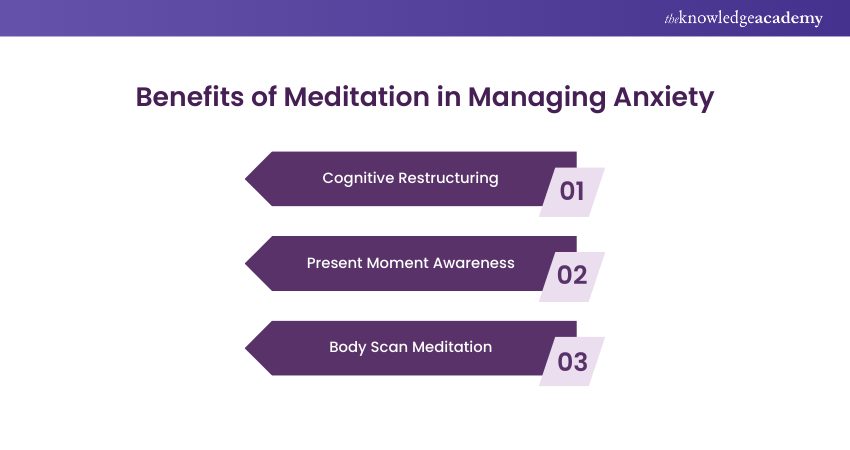
Meditation techniques, especially focused on mindful breathing, provide individuals with a tangible tool to manage anxiety. Deep, intentional breaths can help activate the parasympathetic nervous system, inducing a calming effect. Meditation helps manage anxiety in the following way:
Cognitive Restructuring
a) Anxiety is driven by distorted thinking patterns.
b) Meditation supports cognitive restructuring.
c) It helps challenge and reframe anxious thoughts.
d) It promotes a more balanced and realistic perspective.
Present Moment Awareness
a) Anxiety stems from anticipation of future events.
b) Meditation promotes present-moment awareness.
c) It helps break the cycle of anxious thoughts.
d) It fosters a sense of control over the mind.
Body Scan Meditation
a) Body scan meditation helps identify and release tension.
b) It provides physical and mental relief from anxiety.
c) It promotes relaxation and overall well-being.
Learn essential techniques to manage stress and perform various asanas in our Yoga Training - Register now!
3) Promotes Emotional Well-being
Meditation involves feelings of love and compassion towards oneself and others. Regular loving-kindness Meditation enhances emotional intelligence, promoting empathy and positive interpersonal relationships. Meditation fosters emotional well-being in the following way:
Acceptance of Emotions
a) Meditation promotes non-judgmental acceptance of emotions.
b) Encourages recognition of both positive and negative feelings.
c) Helps process and understand emotions effectively.
d) Reduces the impact of emotional turbulence.
Mindful Journaling
a) Combining meditation with mindful journaling enhances emotional expression.
b) Writing about emotions and experiences deepens self-awareness.
c) Facilitates emotional healing and personal growth.
Improved Stress Coping Mechanisms
a) Growing emotional intelligence enhances coping mechanisms.
b) Meditation provides tools to manage stress effectively.
c) Encourages responses to challenges with equanimity and compassion.
4) Boosts Self-awareness
A cornerstone of Meditation is observing thoughts without judgment. This process allows individuals to become more attuned to their habitual thought patterns and reactions, fostering self-awareness. Meditation boosts self-awareness in the following ways:
Exploration of Core Values
a) Meditation fosters deeper self-exploration.
b) It encourages reflection on core values and beliefs.
c) It promotes alignment of actions with one's authentic self.
d) It increases a sense of purpose and fulfilment.
Mindful Decision-making
a) Increased self-awareness improves mindful decision-making.
b) Meditation encourages choices aligned with personal values.
c) It supports a more meaningful and intentional life.
Breaking Habits
a) Sustained mindfulness practices enhance self-awareness.
b) It helps identify detrimental habits and thought patterns.
c) It supports breaking free from barriers to personal growth.
Recognise negative thinking patterns and cognitive distortions in our Cognitive Behavioural Therapy Training - Sign up now!
5) Extends Attention Span
Techniques like mindfulness Meditation focus on a specific point, such as the breath or a mantra. This sustained focus cultivates attentional control and improves the ability to concentrate. Meditation extends attention span in the following way:
Neuroplasticity
a) Regular meditation results in structural changes to the brain.
b) It improves areas related to attention and concentration.
c) It demonstrates neuroplasticity, the brain’s ability to adapt.
d) It strengthens cognitive functions through meditation.
Reduced Multitasking
a) Meditation promotes single-tasking in a distraction-filled world.
b) Trains the mind to focus on one task at a time.
c) Enhances concentration and cognitive efficiency.
d) Helps avoid the pitfalls of multitasking.
Enhanced Cognitive Performance
a) Extended attention span benefits go beyond meditation sessions.
b) Meditation enhances focused attention.
c) Leads to improved cognitive performance.
d) Positively impacts various aspects of life.
6) Potentially Mitigates Age-related Memory Loss
Studies suggest meditation may stimulate neurogenesis, which is the formation of new brain neurons. This supports cognition and reduce age-related memory decline.
Meditation mitigates age-related memory loss in the following ways:
Improved Hippocampal Activity
a) The hippocampus is crucial for memory, but it declines with age.
b) Meditation increases activity in the hippocampus.
c) It suggests a protective effect on memory function.
d) It supports cognitive health and longevity.
Mindful Ageing
a) Meditation promotes a mindful approach to ageing.
b) It siphons the focus on the present rather than memory loss concerns.
c) It cultivates a positive mindset towards cognitive health.
d) It supports overall cognitive well-being.
Long-term Cognitive Resilience
a) Research on long-term effects of meditation is ongoing.
b) Preliminary findings suggest cognitive resilience benefits.
c) Regular meditation may reduce age-related cognitive decline.
d) It supports sustained mental sharpness over time.
Discover a path to wellness with our Healthy Lifestyles Training – embrace a vibrant and balanced life today!
7) Cultivates Kindness
This practice involves sending positive intentions and well-wishes to oneself and others. Regular engagement in loving-kindness Meditation fosters a deep sense of compassion, promoting kindness in thoughts and actions. Meditation cultivates kindness in the following way:
Empathy Development
a) Meditation promotes empathy by promoting a sense of interconnectedness.
b) Encourages a shift in perspective towards mutual understanding.
c) Enhances compassionate awareness of others' experiences.
Altruistic Behaviours
a) Regular practice of loving-kindness meditation increases altruistic behaviours.
b) Cultivates kindness that extends beyond meditation sessions.
c) Positively impacts relationships and social interactions.
Reduced Hostility
a) Meditation reduces feelings of hostility.
b) Promotes increased prosocial behaviours.
c) Fosters kindness, leading to a positive and harmonious social environment.
8) May Aid in Overcoming Addictions
Meditation, particularly mindfulness-based interventions, is increasingly integrated into treatment programs. Mindfulness can help you develop a heightened awareness of cravings and triggers, empowering them to make healthier choices. Meditation aids in overcoming addictions in the following ways:
Reduced Impulsivity
a) Addiction is often linked to impulsive behaviours.
b) Meditation helps reduce impulsivity.
c) It creates a pause between stimulus and response.
d) It enables more deliberate and informed decision-making.
Emotional Regulation in Recovery
a) Meditation enhances emotional regulation.
b) It's crucial for addiction recovery.
c) It encourages observing emotions without reacting impulsively.
d) It reduces reliance on substances as a coping mechanism.
Building Resilience
a) Addiction recovery involves numerous challenges.
b) Meditation builds resilience and mental strength.
c) It helps individuals bounce back from setbacks.
d) It cultivates a positive mindset for long-term recovery.
9) Enhances Sleep Quality
Meditation triggers the relaxation response, promoting a physiological state conducive to sleep. Practicing techniques like progressive muscle relaxation and guided imagery effectively induce a sense of calm before bedtime. Meditation enhances sleep quality in the following ways:
Mindful Evening Routine
a) Meditation in the evening signals the body to wind down.
b) It creates a mindful transition to restful sleep.
c) It reduces racing thoughts and stress.
d) It enhances overall sleep quality.
Reduction in Insomnia Symptoms
a) Mindfulness meditation helps reduce insomnia symptoms.
b) It addresses both mental and physical aspects of sleep disturbances.
c) It provides a holistic approach towards improving sleep quality.
d) It supports deeper and more restful sleep.
Quality Over Quantity
a) Meditation prioritises sleep quality over just duration.
b) Practitioners often experience longer sleep durations.
c) It increases the depth and restfulness of sleep.
d) It contributes to overall better sleep experiences.
Discover the power to shape a healthy and vibrant life with our Active and Healthy Lifestyles Training – transform your well-being today!
10) Assists in Pain Management
Chronic pain is often a result of stress and tension. Meditation, emphasising the mind-body connection, allows individuals to observe and release physical tension, relieving pain symptoms. Meditation assists in Pain Management in the following way:
Changing Pain Perception
a) Mindfulness practices help shift pain perception.
b) It helps with acceptance and non-resistance to pain.
c) It reduces the subjective intensity of pain.
d) It improves Pain Management and coping strategies.
Improved Pain-coping Strategies
a) Meditation provides effective pain-coping strategies.
b) It reduces reliance on medication for pain management.
c) It complements existing pain management plans.
d) It nurtures a sense of control over well-being.
Mindful Movement Practices
a) Mindfulness in movement practices enhances flexibility.
b) It reduces muscle tension and promotes relaxation.
c) Combining Yoga or Tai Chi with meditation helps with Pain Management.
d) It delivers a holistic approach to mental and physical well-being.
11) Can Lower Blood Pressure
The relaxation response induced by Meditation directly impacts blood pressure. As the body enters a state of deep relaxation, blood vessels dilate, lowering blood pressure levels. Meditation helps lower blood pressure in the following ways:
Stress Reduction and Hypertension
a) Chronic stress contributes to Hypertension.
b) Meditation helps reduce stress levels.
c) Lowered stress leads to decreased blood pressure.
d) It reduces the risks of hypertension and related health issues.
Long-term Cardiovascular Benefits
a) Long-term meditation supports cardiovascular health.
b) It helps maintain lower blood pressure.
c) It contributes to overall heart health.
d) It promotes sustained well-being and resilience.
Heart-healthy Habits
a) Meditation promotes mindfulness in lifestyle choices.
b) It encourages healthier dietary habits and regular exercise.
c) It supports a holistic approach to cardiovascular health.
d) It complements traditional medical interventions.
12) Accessible From Anywhere
Meditation requires minimal resources, unlike many wellness practices that necessitate specific environments or equipment. A quiet space and a comfortable seat are often sufficient, making it a highly accessible practice. Various Types of Meditation cater to different preferences and schedules.
Whether a brief mindfulness session during a break or a more extended guided Meditation at home, the versatility of practices, as detailed in the Mindfulness Guide, ensures accessibility from virtually anywhere. The flexibility of Meditation allows individuals to integrate it into their daily routines seamlessly.

13) Enhanced Willpower
Meditation helps develop self-discipline as they are practices, that are specifically designed to help you be more mindful. This includes being more mindful about choices, managing stressful situations well and controlling cravings.
Constantly practising Meditation techniques helps build willpower and avoid unnecessary consumption of guilty pleasures.
14) Reduces Depression
If you suffer from depressive episodes and are looking for a way to manage them, you should consider Meditation. It is a great method to manage your negative thought processes that may lead to depressive spirals.
Another way Meditation helps reduce depression is that it helps you accept your surroundings for what it is. Often, depression is caused by unrealistic expectations from the world around us. Managing expectations and accepting reality lets us have a better outlook on life.
Start sculpting your path to a healthier you with Nutrition and Fitness Training – Join now!
Benefits of Meditation for Students
Meditation can benefit students, helping them navigate academic and personal challenges more effectively. Here are some key benefits:
1) Meditation helps students improve their attention span and focus, making concentrating on studies and absorbing information easier.
2) Regular meditation practice can significantly lower stress and anxiety levels, which are common among students, especially during exams.
3) Meditation can boost creativity and problem-solving skills essential for academic success.
4) Meditation promotes emotional stability, helping students manage their emotions and maintain a positive outlook.
5) Meditation has been proven to significantly improve memory retention and cognitive function.
6) Meditation can improve sleep quality, ensuring students are well-rested and ready to tackle their studies.
What Happens if You Meditate Everyday?
Meditating every day can lead to numerous benefits, including improved mental clarity, reduced stress and anxiety, better emotional regulation, and increased overall well-being.
What Happens After 1 Month of Meditation?
One month of meditation can result in overall improved well-being, increased mental clarity, greater presence in daily life, and improved sleep quality. For those dealing with depression, anxiety, and insomnia, meditation can serve as a healthy way to relieve stress and declutter the mind. Additionally, regular therapy sessions can complement the meditation process.
Conclusion
Meditation stands as a universally accessible practice for improving mental and emotional well-being. The diverse array of Meditation styles caters to individual preferences, each offering unique strengths and advantages. Exploring the Benefits of Meditation and adopting a meditation style aligned with personal goals presents an effective means to enhance one's quality of life, even with just a few minutes dedicated to practice each day.
Master Meditation techniques to manage and reduce stress through our Meditation Course – Sign up now!
Frequently Asked Questions
Is Meditation Better Than Therapy?

Meditation and therapy serve different purposes and can complement each other. Meditation helps reduce stress and promote relaxation, making it beneficial for mental well-being. Therapy, on the other hand, offers a structured support and guidance for dealing with deeper psychological issues and emotional challenges.
Can Meditation Boost Creativity?
Yes, Meditation fosters creativity by clearing the mind and enhancing cognitive flexibility. It encourages a state of relaxed awareness, which can lead to the free flow of ideas and innovative thinking.
What are the Other Resources and Offers Provided by The Knowledge Academy?
The Knowledge Academy takes global learning to new heights, offering over 3,000 online courses across 490+ locations in 190+ countries. This expansive reach ensures accessibility and convenience for learners worldwide.
Alongside our diverse Online Course Catalogue, encompassing 17 major categories, we go the extra mile by providing a plethora of free educational Online Resources like Blogs, eBooks, Interview Questions and Videos. Tailoring learning experiences further, professionals can unlock greater value through a wide range of special discounts, seasonal deals, and Exclusive Offers.
What is the Knowledge Pass, and how Does it Work?
The Knowledge Academy’s Knowledge Pass, a prepaid voucher, adds another layer of flexibility, allowing course bookings over a 12-month period. Join us on a journey where education knows no bounds.
What are the Related Courses and Blogs Provided by The Knowledge Academy?
The Knowledge Academy offers various Healthy Lifestyles Training, including Active Healthy Lifestyle Training, Cognitive Behavioural Therapy Training, Yoga Training, and Nutrition Courses. These courses cater to different skill levels, providing comprehensive insights into What is Mindfulness.
Our Health & Safety Blogs cover a range of topics related to Psychology and Mental Health, offering valuable resources, best practices, and industry insights. Whether you are a beginner or looking to advance your Health and Safety knowledge, The Knowledge Academy's diverse courses and informative blogs have you covered.

Michael Jones


Health and Safety Consultant and Compliance Trainer
Michael Jones is a seasoned health and safety expert with more than 15 years of experience in workplace safety, risk management, and compliance training. He has worked across construction, manufacturing, and corporate sectors, helping organisations meet legal requirements and create safer working environments. Michael’s training and writing are known for being practical, clear, and aligned with UK regulations.
View Detail


 If you wish to make any changes to your course, please


