


 Top Rated Course

We may not have the course you’re looking for. If you enquire or give us a call on +420 210012971 and speak to our training experts, we may still be able to help with your training requirements.
Whys Techniqueof Root Cause Analysis: Definition, Steps and Applications
John Davies 08 May 2026The 5 Whys Technique is an effective problem-solving approach used to identify the root cause of an issue by repeatedly asking “why” to find lasting solutions. It encourages critical thinking, reduces repeated failures and helps teams address problems at their source. It supports continuous improvement and ensures more reliable processes.
Home
 Resources
IT Service Management
Whys Techniqueof Root Cause Analysis: Definition, Steps and Applications
Resources
IT Service Management
Whys Techniqueof Root Cause Analysis: Definition, Steps and Applications
Resources
IT Service Management
Whys Techniqueof Root Cause Analysis: Definition, Steps and Applications

Training Outcomes Within Your Budget!
We ensure quality, budget-alignment, and timely delivery by our expert instructors.
Table of Contents

Ever wondered how a simple question like “Why?” could lead you straight to the root of a problem? The 5 Whys of Root Cause Analysis does just that. It’s a powerful yet straightforward tool used to peel back the layers of an issue until you reach its core. Whether you're solving technical glitches or improving business processes, asking “why” five times can reveal insights that surface-level fixes often miss.
Popular across industries such as IT, Healthcare, and Manufacturing, the 5 Whys methodology encourages critical thinking, reduces repeated failures, and supports long-term improvement. In this blog, we’ll explore what it is, how it works, and where it can be used. So read on and make a real difference in your workflow.
Table of Contents
1) 5 Whys Root-Cause Analysis – An Introduction
2) How to Conduct the 5 Whys of Root Cause Analysis?
3) 5 Whys Example
4) When to Use a 5 Whys Analysis?
5) What is a 5 Whys Template?
6) Benefits of Using a Template
7) Advantages and Limitations of the 5 Whys Methodology
8) Tips for Using the 5 Whys in Root Cause Analysis Technique
9) What are the Core Principles of RCA?
10) Conclusion
5 Whys Root-Cause Analysis – An Introduction
The 5 Whys RootCause Analysis is a simple, yet powerful method used to uncover the root cause of a problem by asking “Why?” multiple times, typically five. This structured approach helps teams move past surface-level symptoms and find the actual source of an issue, enabling more permanent and effective solutions.
First developed within the Toyota Production System, the 5 Whys technique is now widely applied across industries such as IT, Manufacturing and Healthcare. Its simplicity and flexibility make it suitable for both individual and team-based problem solving. Used correctly, it builds critical thinking skills, encourages continuous improvement and helps organisations prevent recurring problems.
How to Conduct the 5 Whys of Root Cause Analysis?
The 5 Whys in Root Cause Analysis follow a structured approach. Organisations can effectively apply this structured technique and gain valuable insights into the root cause of an issue. Here’s how you navigate the process:
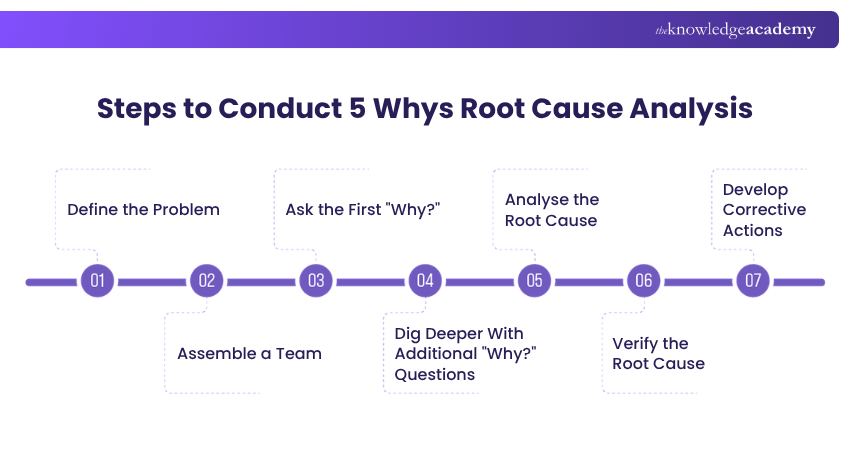
Step 1: Define the Problem
Begin by pinpointing the exact problem that requires analysis. Clarify the issue to ensure that your analysis is targeted and effective. This initial step lays a powerful groundwork for the entire investigative process, steering all subsequent actions towards discovering the root cause.
Step 2: Assemble a Team
Form a team with a direct connection to or knowledge of the issue. Incorporating a variety of viewpoints can enhance the analysis, leading to a more thorough understanding. Moreover, a team approach ensures a multifaceted examination of the problem.
For example, when attempting to fix the ERR_CONNECTION_TIMED_OUT Error, having a team with diverse expertise can help in identifying the root cause more effectively, whether it's related to network issues, server configurations, or other technical factors.
Step 3: Ask the First "Why?"
Kick off the inquiry by posing the initial question: “Why did this problem arise?” Aim to concentrate on the direct cause of the issue. Encourage all team members to engage in brainstorming and contribute their perspectives. The objective here is to unearth the most evident cause of the problem.
Step 4: Dig Deeper With Additional "Why?" Questions
Following each response from Step 3, continue the inquiry by asking “Why?” again, connecting each query to the preceding response. Continue this line of questioning to peel back the layers of causation.
While aiming to reach a minimum of five levels of questioning, the actual number may fluctuate based on the problem’s intricacy. This iterative questioning process is designed to reveal underlying causes, moving past immediate and apparent factors.
Step 5: Analyse the Root Cause
After progressing through the iterative “Why?” questions, scrutinise the final response you’ve arrived at following the fifth inquiry. This response indicates the fundamental cause, which is the primary factor whose resolution can avert the recurrence of the issue.
Delve into an in-depth analysis of this fundamental cause, assessing its influence on the problem and identifying recurring patterns, linkages, or systemic issues.
Step 6: Verify the Root Cause
To validate the accuracy of the identified fundamental cause, corroborate it with empirical data, firsthand observations, or other pertinent evidence. This step is essential as it offers authenticity and assurance to your analysis. Cross-checking the fundamental cause against trustworthy sources is crucial for substantiating its legitimacy.
Step 7: Develop Corrective Actions
Utilising the insights derived from your analysis, engage in brainstorming to formulate suitable corrective measures. These measures should be designed to confront the fundamental cause directly. They should aim to eradicate or diminish its effects
Focus on creating practical and achievable solutions that address the root cause and prevent similar issues in the future. Following this structured approach will help you apply the 5 Whys technique effectively in Root Cause Analysis. It is also important to involve key stakeholders, encourage open communication, and continuously look for ways to improve.
Learn how to identify and eliminate root causes with our Root Cause Analysis Training, sign-up Now!
5 Whys Example
Here's an example showing how 5 Whys in Root Cause Analysis works:
Problem Statement: The latest software updates newsletter wasn’t dispatched as scheduled.
5 Whys Analysis:
a) Why was the newsletter delayed? The software updates were not ready by the deadline.
b) Why weren’t the updates ready? The development team was still finalising new features.
c) Why were new features incomplete? A new Developer was not familiar with the necessary procedures.
d) Why did the new Developer lack knowledge of the procedures? They received inadequate training.
e) Why was the training insufficient? The Chief Technology Officer (CTO) believes that hands-on experience, rather than formal training, is more beneficial for new hires.
This analysis reveals the initial technical issue as a procedural problem, underscoring the importance of considering human factors in problem-solving. The 5 Whys technique delves deep into an issue to uncover its origin. Remember, the number “5” is not fixed; continue asking “Why” until you’ve thoroughly addressed the problem and can implement a viable solution.
When to Use a 5 Whys Analysis?
5 Whys is a popular tool for finding the root cause of a problem by asking “why” five times. It works best for simple or moderate problems, not complex or critical ones. To solve complex problems, you may need other methods like Cause-and-Effect Analysis or Failure Mode and Effects Analysis. Use 5 Whys when something goes wrong with a system or process. It can help you fix the problem quickly and effectively.
Don’t start with a solution in mind but follow the logic of the questions. 5 Whys is simple but flexible. It is often used in Lean Manufacturing to reduce waste and improve quality. It is also part of the Six Sigma approach to problem solving. When considering Causal Analysis vs Root Cause Analysis, the 5 Whys method is more aligned with Root Cause Analysis, as it seeks to trace back to the origin of an issue by repeatedly asking "why" until the fundamental cause is identified.
Shaping the leaders of tomorrow made easy with CITSM. Sign up for our Certified IT Service Manager (CITSM) Certification and deliver excellence, one service at a time!
What is a 5 Whys Template?
The 5 Whys Template is a foundational tool in Root Cause Analysis and problem-solving endeavours. An iterative questioning approach, using Root Cause Analysis Templates, facilitates the exploration of cause-and-effect relationships underlying specific issues. Beginning with a problem statement, teams engage in a series of "why" inquiries, typically repeated five times, to uncover the Root Cause systematically. The following are some of the commonly used templates for resolving issues easily:
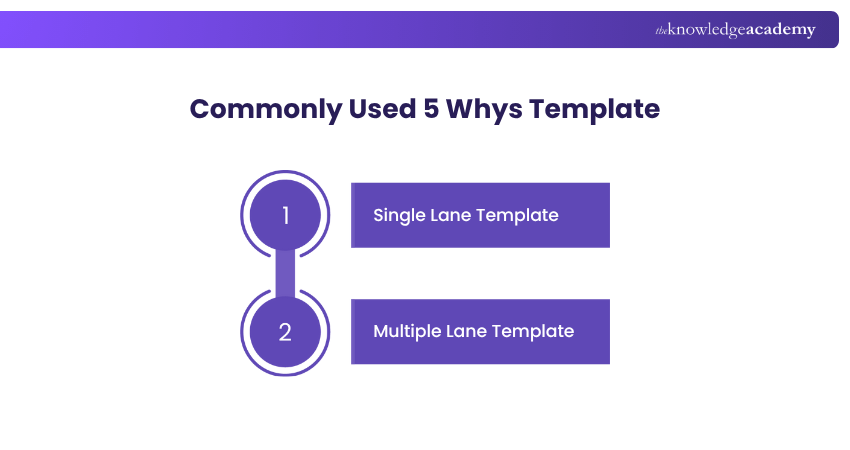
Single Lane Template
The Single Lane Template, within the 5 Whys framework, represents a streamlined approach where a single team or individual can learn How to Conduct Root Cause Analysis. This template guides users through a linear progression of questions, maintaining a focused trajectory toward identifying the root cause of a singular issue. Analogous to a single-lane road, it ensures traffic flows in a single direction without the complexity of multiple lanes or pathways.
Multiple Lane Template
The Multiple Lane Template introduces complexity, often depicted through a swimlane diagram. The process is segmented into multiple lanes, representing distinct departments, teams, or organisational facets.
This structure enables a comprehensive analysis of multifaceted problems involving various stakeholders. Swimlane diagrams aid in visualising and organising tasks, responsibilities, and workflows across different entities. They help facilitate the identification of inefficiencies and areas for enhancement.
Strengthen your Service Management skills with ITIL® 5 Service Certification – Join soon!
Benefits of Using a Template
Using a template for the 5 Whys technique ensures that the problem-solving process remains focused, structured, and repeatable across different teams or situations.
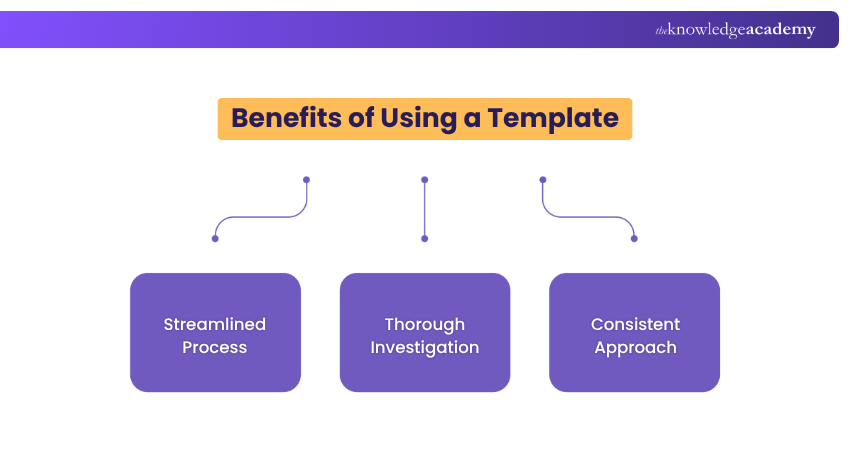
1) Streamlined Process
A structured template guides users through each step of the 5 Whys method. It reduces guesswork, saves time, and ensures a smoother and more efficient problem-solving experience.
2) Thorough Investigation
Templates encourage detailed analysis by prompting users to explore each “why” fully. This prevents rushed conclusions and helps uncover the true root cause of an issue.
3) Consistent Approach
Using a standardised template ensures all team members follow the same process. It improves communication, enables better collaboration, and delivers more reliable and repeatable outcomes.
Advantages and Limitations of the 5 Whys Methodology
The 5 Whys in Root Cause Analysis technique offers several advantages in uncovering the underlying problem. However, like any tool, it also has its limitations. Therefore, understanding its advantages and limitations is crucial for practical application. Delve into the advantages and disadvantages of Root Cause Analysis for insights. Let’s explore them:
Advantages of 5 Whys Methodology
The following are the key advantages of using the 5 Whys method in RCA:

Limitations of 5 Whys Methodology
Despite its existing advantages, there are some limitations of using the 5 Whys method in RCA as summarised below:

Tips for Using the 5 Whys in Root Cause Analysis Technique
Here are some tips for effectively using the 5 Whys technique:
a) Consistent Questioning Tempo: Keep a consistent rhythm in your questioning to fully grasp the issue before reaching any conclusions.
b) Flexibility in Application: The number “5” in the 5 Whys is merely a benchmark. Depending on the complexity of the problem, it may be necessary to delve deeper with additional “Why?” questions to identify the Root Cause.
c) Judicious Conclusion: Determine the appropriate moment to end the inquiry. Cease the “Why?” questions when you have collected enough relevant information, thus avoiding premature conclusions and ensuring a meticulous evaluation.
What are the Core Principles of RCA?
Root Cause Analysis (RCA) is guided by key principles:
1) Focus on identifying the true cause of a problem, not just symptoms
2) Rely on evidence-based analysis
3) Involve cross-functional teams
4) Use structured methods like the 5 Whys or Fishbone diagram
5) Implement lasting solutions to prevent recurrence
Conclusion
The 5 Whys in Root Cause Analysis is a powerful yet simple technique that promotes deep inquiry and collaborative problem-solving. While its limitations include potential subjectivity and a narrow focus, its simplicity and cost-effectiveness make it a valuable first step in detecting and addressing the underlying causes of issues to stop their recurrence.
Start your journey towards IT service excellence with ITIL® 5 Foundation Certification – Register now!
Frequently Asked Questions
How can Organisations Encourage a Culture of Using the 5 Whys for Continuous Improvement?

Organisations can foster a culture of using the 5 Whys for continuous improvement by:
1) Promoting open communication
2) Providing training and resources
3) Recognising and rewarding problem-solving efforts
4) Integrating the technique into standard operating procedures and performance evaluation processes
How can the 5 Whys Analysis be Used in Practice?
The 5 Whys Analysis can be used in practice by:
1) Identifying the root cause of problems
2) Implementing effective solutions to prevent recurrence
3) Improving processes and systems
4) Enhancing decision-making
5) Fostering a culture of continuous improvement
6) Driving organisational success
What are the Other Resources and Offers Provided by The Knowledge Academy?
The Knowledge Academy takes global learning to new heights, offering over 3,000+ online courses across 490+ locations in 190+ countries. This expansive reach ensures accessibility and convenience for learners worldwide.
Alongside our diverse Online Course Catalogue, encompassing 17 major categories, we go the extra mile by providing a plethora of free educational Online Resources like Blogs, eBooks, Interview Questions and Videos. Tailoring learning experiences further, professionals can unlock greater value through a wide range of special discounts, seasonal deals, and Exclusive Offers.
What is The Knowledge Pass, and How Does it Work?
The Knowledge Academy’s Knowledge Pass, a prepaid voucher, adds another layer of flexibility, allowing course bookings over a 12-month period. Join us on a journey where education knows no bounds.
What are the Related Courses and Blogs Provided by The Knowledge Academy?
The Knowledge Academy offers various ITIL® Certification, including Root Cause Analysis Course, ITIL® 5 Foundation Certification and ITIL® 5 Service Certification. These courses cater to different skill levels, providing comprehensive insights into How to Do Root Cause Analysis.
Our IT Service Management Blogs cover a range of topics related to the 5 Whys Technique, offering valuable resources, best practices, and industry insights. Whether you are a beginner or looking to advance your IT Service Management skills, The Knowledge Academy's diverse courses and informative blogs have got you covered.

John Davies


Cyber Security Governance & Assurance Specialist
John Davies is a cybersecurity expert specialising in governance, risk management, and compliance. With over 15 years in the field, he has led enterprise-wide security programmes across finance, healthcare and public sector organisations. His content provides practical guidance on building secure environments, managing risk and aligning with regulatory frameworks.

Upcoming IT Service Management Resources Batches & Dates
Date
 ITIL® 5 Foundation Certification
ITIL® 5 Foundation Certification
Mon 15th Jun 2026
ITIL® 5 Foundation Certification
Wed 17th Jun 2026
ITIL® 5 Foundation Certification
Mon 22nd Jun 2026
ITIL® 5 Foundation Certification
Wed 24th Jun 2026
ITIL® 5 Foundation Certification
Mon 29th Jun 2026
ITIL® 5 Foundation Certification
Wed 1st Jul 2026
ITIL® 5 Foundation Certification
Mon 6th Jul 2026
ITIL® 5 Foundation Certification
Wed 8th Jul 2026
ITIL® 5 Foundation Certification
Mon 13th Jul 2026
ITIL® 5 Foundation Certification
Wed 15th Jul 2026
ITIL® 5 Foundation Certification
Mon 20th Jul 2026
ITIL® 5 Foundation Certification
Wed 22nd Jul 2026
ITIL® 5 Foundation Certification
Mon 27th Jul 2026
ITIL® 5 Foundation Certification
Wed 29th Jul 2026
ITIL® 5 Foundation Certification
Mon 3rd Aug 2026
ITIL® 5 Foundation Certification
Wed 5th Aug 2026
ITIL® 5 Foundation Certification
Mon 10th Aug 2026
ITIL® 5 Foundation Certification
Wed 12th Aug 2026
ITIL® 5 Foundation Certification
Mon 17th Aug 2026
ITIL® 5 Foundation Certification
Wed 19th Aug 2026
ITIL® 5 Foundation Certification
Mon 24th Aug 2026
ITIL® 5 Foundation Certification
Wed 26th Aug 2026
ITIL® 5 Foundation Certification
Tue 1st Sep 2026
ITIL® 5 Foundation Certification
Mon 7th Sep 2026
ITIL® 5 Foundation Certification
Wed 9th Sep 2026
ITIL® 5 Foundation Certification
Mon 14th Sep 2026
ITIL® 5 Foundation Certification
Wed 16th Sep 2026
ITIL® 5 Foundation Certification
Mon 21st Sep 2026
ITIL® 5 Foundation Certification
Wed 23rd Sep 2026
ITIL® 5 Foundation Certification
Mon 28th Sep 2026
ITIL® 5 Foundation Certification
Wed 30th Sep 2026
ITIL® 5 Foundation Certification
Mon 5th Oct 2026
ITIL® 5 Foundation Certification
Wed 7th Oct 2026
ITIL® 5 Foundation Certification
Mon 12th Oct 2026
ITIL® 5 Foundation Certification
Wed 14th Oct 2026
ITIL® 5 Foundation Certification
Mon 19th Oct 2026
ITIL® 5 Foundation Certification
Wed 21st Oct 2026
ITIL® 5 Foundation Certification
Mon 26th Oct 2026
ITIL® 5 Foundation Certification
Wed 28th Oct 2026
ITIL® 5 Foundation Certification
Mon 2nd Nov 2026
ITIL® 5 Foundation Certification
Wed 4th Nov 2026
ITIL® 5 Foundation Certification
Mon 9th Nov 2026
ITIL® 5 Foundation Certification
Wed 11th Nov 2026
ITIL® 5 Foundation Certification
Mon 16th Nov 2026
ITIL® 5 Foundation Certification
Wed 18th Nov 2026
ITIL® 5 Foundation Certification
Mon 23rd Nov 2026
ITIL® 5 Foundation Certification
Wed 25th Nov 2026
ITIL® 5 Foundation Certification
Mon 30th Nov 2026
ITIL® 5 Foundation Certification
Wed 2nd Dec 2026
ITIL® 5 Foundation Certification
Mon 7th Dec 2026
ITIL® 5 Foundation Certification
Wed 9th Dec 2026
ITIL® 5 Foundation Certification
Sun 13th Dec 2026
ITIL® 5 Foundation Certification
Mon 14th Dec 2026
ITIL® 5 Foundation Certification
Mon 21st Dec 2026
ITIL® 5 Foundation Certification
Wed 23rd Dec 2026
ITIL® 5 Foundation Certification
Tue 29th Dec 2026

 If you wish to make any changes to your course, please


