


 Top Rated Course


We may not have the course you’re looking for. If you enquire or give us a call on +357 26030221 and speak to our training experts, we may still be able to help with your training requirements.
What is a Research Analyst? Skills, and Qualifications
William Brown 03 February 2026A Research Analyst collects, interprets, and analyses data to support informed decision-making and assess market trends, financial data, and industry insights. By doing so, they provide strategic recommendations. Their role spans various industries, requiring strong analytical skills, and expertise in data interpretation.

Training Outcomes Within Your Budget!
We ensure quality, budget-alignment, and timely delivery by our expert instructors.
Table of Contents

Let’s assume that a company is gearing up to launch a new product, but there’s a problem, they don’t know if the market is ready for it. Will customers be interested? Who are the competitors? What are the risks? This is where a Research Analyst becomes invaluable, digging deep into data to provide clear, evidence-based insights. But What is a Research Analyst, and why is this role so crucial, and what does it take to become one?
If you love uncovering patterns, analysing information, and turning data into strategy, this could be your ideal career path. In this blog, we’ll break down What is a Research Analyst, its key skills, qualifications, and career opportunities in this exciting field.
Table of Contents
1) What is a Research Analyst?
2) Research Analyst Roles and Responsibilities
3) Qualifications Required for a Research Analyst
4) Key Skills of a Research Analyst
5) How to Become a Research Analyst?
6) Average Salary of a Research Analyst
7) Jobs and Career Opportunities
8) Difference Between Financial Analyst and Research Analyst
9) Conclusion
What is a Research Analyst?
A Research Analyst collects, analyses, and translates records to support Decision-Making across industries like finance, advertising, and healthcare. They use statistical equipment to become aware of trends, resolve troubles, and present findings through reviews or visible aids.
By converting raw facts into actionable insights, Research Analysts play an essential element in strategic planning and commercial enterprise growth. Their information guarantees correct statistics analysis, permitting companies to make knowledgeable selections and adapt successfully in the data-driven realm.

Types of Research Analysts
Research Analysts specialise in various fields to meet industry needs and data analysis requirements. Their expertise enables businesses to make informed decisions by evaluating trends, financial performance, and market conditions. Here are the key types of Research Analysts:
1) Financial Research Analyst
These analysts assess financial data, company performance, and investment opportunities. They provide insights on stocks, bonds, and economic trends to support investment strategies.
2) Market Research Analyst
Market Analysts study consumer behaviour, industry trends, and competitor strategies. Their research helps businesses refine marketing plans, develop products, and improve customer engagement.
3) Equity Research Analyst
Focused on the stock market, equity analysts evaluate company financials, industry conditions, and stock performance. They provide investment recommendations based on detailed financial models.
4) Business Research Analyst
These analysts analyse business processes, industry developments, and operational efficiencies. Their findings help organisations optimise strategies, reduce risks, and improve productivity.
5) Data Research Analyst
These analysts work with large datasets, using statistical tools and machine learning to uncover trends. Their insights assist companies in making data-driven decisions for growth and innovation.
Research Analyst Roles and Responsibilities
Here the following are the roles and responsibilities of Research Analyst:
a) Data Collection & Analysis: Gather and interpret data from various sources to identify trends, patterns, and insights.
b) Market & Industry Research: Study industry trends, consumer behavior, and competitor strategies to support business decisions.
c) Financial Analysis: Evaluate financial statements, market trends, and investment opportunities for informed decision-making.
d) Report Preparation: Present findings through detailed reports, charts, and presentations to stakeholders.
e) Risk Assessment: Identify potential risks and opportunities in markets, investments, or business operations.
f) Forecasting & Trend Analysis: Predict future trends based on historical data and statistical models.
g) Data Visualisation: Use tools like Excel, Power BI, or Tableau to present data insights clearly.
Optimise workflows for maximum efficiency – sign up for our Business Process Mapping Training.
Qualifications Required for a Research Analyst
To embark on a career as a Research Analyst, certain educational and professional qualifications are essential:
1) Educational Background:
a) A Bachelor's Degree in fields such as:
i) Statistics
ii) Mathematics
iii) Economics
iv) Psychology
b) Master's degree can help you get better jobs but isn't always required
c) Many successful analysts also learn through online courses and training programmes
2) Technical Proficiency:
a) Must know how to use Data Analysis software
b) Important programs to learn:
i) Excel (most common)
ii) Statistical Package for Social Sciences (SPSS) or Statistical Analysis System (SAS) for statistics
iii) R or Python for advanced analysis
iv) Tableau or Power Business Intelligence (BI)for creating charts and graphs
3) Certifications:
While not always mandatory, certifications in Data Analysis or Marketing Research can bolster a candidate's qualifications.
Enhance your business analysis skills and drive impactful change with this Business Analyst Fundamentals Training – sign up today!
Key Skills of a Research Analyst
Success in the role of a Research Analyst requires a fusion of soft and technical skills:

a) Analytical Skills: The capacity to dissect complicated information units and extract significant insights.
b) Quantitative Skills: Proficiency in statistical strategies and numerical analysis to interpret statistics as it should be.
c) Communication Skills: Effectively conveying findings to each technical and non-technical audiences through written reviews and displays.
d) Attention to Detail: Maintaining the integrity of research results by means of ensuring precision in data evaluation and reporting.
e) Problem-solving Abilities: Applying important decisions to cope with research demanding situations and drive innovative solutions.
How to Become a Research Analyst?
Becoming a Research Analyst requires a clear path, starting with the foundational step of education. Here's how you can begin your journey:
1) Obtain a Bachelor's Degree
Begin with a degree in mathematics, finance, business, or economics, typically completed in three years. This provides foundational knowledge and skills essential for the role.
2) Pursue Postgraduate Education
Many employers prefer applicants holding a Master’s in Business Administration (MBA). Additionally, a postgraduate degree or diploma is required to become a SEBI-registered Research Analyst.
3) Complete an Internship
Internships in sectors like Banking, Financial Services and Insurance (BFSI), consulting firms, or government organisations help gain practical experience and familiarity with job responsibilities.
Empower your career with professional skills – register for our Introduction to Business Analytics Training now!
4) Gain Relevant Certifications
Certifications like Chartered Financial Analyst (CFA) or Business Analyst Course add value to your profile and demonstrate expertise in research processes.
5) Apply for Research Analyst Positions
Tailor your CV with job-specific keywords to enhance your chances of securing a Research Analyst position. Utilise job portals like Indeed to explore opportunities.
Average Salary of a Research Analyst
Here's an overview of the average salaries for Research Analysts categorised by experience level:
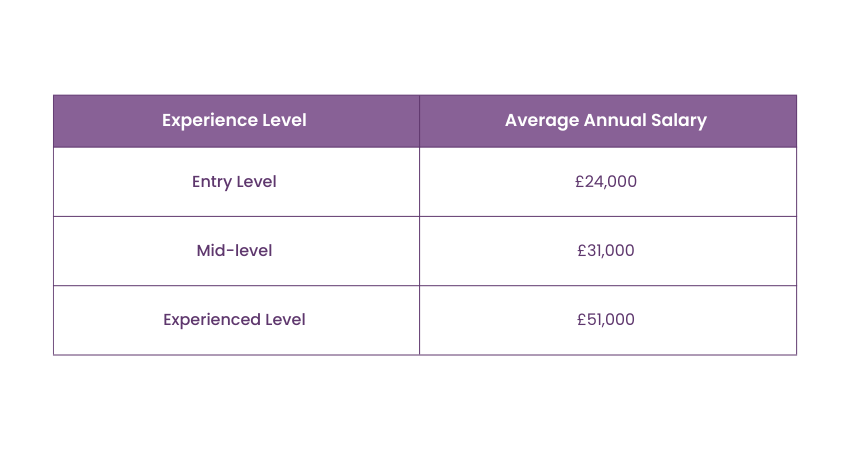
Source: Payscale
Jobs and Career Opportunities
Here are some of the top career paths in this field:
a) Market Research Analyst: Helps businesses understand what customers want, spot trends, and stay ahead of competitors.
b) Financial Analyst: Evaluates investments, market risks, and financial trends to help businesses and investors make smarter financial choices.
c) Business Intelligence Analyst: Transforms complex data into clear insights that help companies improve efficiency and make better decisions.
d) Healthcare Research Analyst: Examines medical trends, patient data, and healthcare policies to support innovation in the healthcare industry.
e) Policy & Economic Analyst: Studies economic trends and public policies to assess their impact on industries, businesses, and society.
Difference Between Financial Analyst and Research Analyst
While both Financial Analysts and Research Analysts work with data to make informed decisions, their recognition areas and methodologies differ extensively. Understanding certain distinctions lets you understand which career path better suits your hobbies and abilities. Let's talk about them:

Conclusion
A Research Analyst is essential for businesses looking to make data-driven decisions with confidence. From analysing trends to identifying opportunities, their work shapes smarter strategies across industries. Understanding What is a Research Analyst and the skills required can help you decide if this rewarding career is the right fit for you.
Take the next step in business analysis – sign in for Business Analyst Course today and unlock new opportunities!
Frequently Asked Questions
What is a Research Analyst Scope?

The scope of a Research Analyst is vast, spanning industries such as finance, healthcare, marketing, and government. They gather and analyse data to provide valuable insights, support strategic decisions, and influence business outcomes across various sectors.
What is the Difference Between a Research Analyst and a Data Analyst?
A Research Analyst specialises in collecting, interpreting, and presenting both qualitative and quantitative data to aid decision-making in sectors such as finance and marketing. In contrast, a Data Analyst primarily handles large datasets, employing statistical tools like SQL and Python to identify patterns, trends, and insights.
What are the Other Resources and Offers Provided by The Knowledge Academy?
The Knowledge Academy takes global learning to new heights, offering over 3,000+ online courses across 490+ locations in 190+ countries. This expansive reach ensures accessibility and convenience for learners worldwide.
Alongside our diverse Online Course Catalogue, encompassing 19 major categories, we go the extra mile by providing a plethora of free educational Online Resources like Blogs, eBooks, Interview Questions and Videos. Tailoring learning experiences further, professionals can unlock greater value through a wide range of special discounts, seasonal deals, and Exclusive Offers.
What is The Knowledge Pass, and How Does it Work?
The Knowledge Academy’s Knowledge Pass, a prepaid voucher, adds another layer of flexibility, allowing course bookings over a 12-month period. Join us on a journey where education knows no bounds.
What are the Related Courses and Blogs Provided by The Knowledge Academy?
The Knowledge Academy offers various Business Analyst Course, including Statistics Course, Certified Business Analyst Professional (CBA-PRO) Course, and Business Analyst Fundamentals Training. These courses cater to different skill levels, providing comprehensive insights into Business Analysis Services.
Our Business Analysis Blogs cover a range of topics related to Analysts, offering valuable resources, best practices, and industry insights. Whether you are a beginner or looking to advance your Business Analyst skills, The Knowledge Academy's diverse courses and informative blogs have got you covered.

William Brown


Senior Business Analyst and Strategic Advisor
William Brown is a senior business analyst with over 15 years of experience driving process improvement and strategic transformation in complex business environments. He specialises in analysing operations, gathering requirements and delivering insights that support effective decision making. William’s practical approach helps bridge the gap between business goals and technical solutions.
View Detail

 If you wish to make any changes to your course, please


