


 Top Rated Course

We may not have the course you’re looking for. If you enquire or give us a call on +44 1344 203999 and speak to our training experts, we may still be able to help with your training requirements.
What is Planning: Features, Types, and Process
The Knowledge Academy 27 March 2026Planning sets objectives, defines strategies, and organises actions to achieve goals efficiently, reducing uncertainty and improving decision-making. It also guides teams to work in the same direction and use resources wisely. With clear plans, organisations can avoid problems, stay focused, and reach their goals on time.

Training Outcomes Within Your Budget!
We ensure quality, budget-alignment, and timely delivery by our expert instructors.
Table of Contents
You open your laptop with the best intentions. Five minutes later, you are answering messages, digging through scattered notes, jumping between tabs, and wondering where to even begin. Before you know it, the day has slipped by and the most important work is still waiting. It is not a lack of effort. It is a lack of direction. This is exactly where Planning makes the difference.
In this blog, we will discuss What is Planning, why it matters, and how it shapes better decisions. We will also explore its key features, types, steps, and limitations, and learn how strategic, tactical, and operational plans work together to keep organisations focused, efficient, and successful.
Table of Contents
1) What is Planning?
2) Importance of Planning
3) Features of Planning
4) Different Types of Planning
5) The Planning Process
6) Limitations of Planning
7) Strategic, Tactical and Operational Plans: Key Differences
8) Conclusion
What is Planning?
Planning is like a blueprint for the work we want to do in the future. It is a thinking process that uses imagination, judgement, and preparation before taking action. Planning helps us set clear goals, explore different options, and choose the best way to achieve those goals. It is a key function of management because it guides all other activities.
Planning is not a one-time activity. It is a continuous process where decisions are made at every step to make sure the work moves in the right direction. In short, Planning means thinking ahead, setting objectives, and deciding the best actions to reach those objectives successfully.
Planning also answers important questions such as:
What do we want to achieve?
How will we achieve it?
When will each step be completed?
Who will be responsible for different tasks?

Importance of Planning
Planning plays an important role in the success of any business or activity. Here are some key reasons why Planning is important:
1) Planning Provides Direction: Planning gives a clear purpose and path for the organisation. It ensures daily work supports long-term goals and reduces confusion.
2) Planning Unifies Efforts: A plan helps everyone understand priorities and responsibilities. It improves coordination and prevents teams from working in different directions.
3) Planning Saves Time and Money: Good Planning reduces waste and unneeded effort. It helps us use resources wisely and improves overall efficiency.
4) Planning Reduces Uncertainty: Planning prepares the organisation for future challenges. It helps predict risks and make smart choices to avoid problems.
5) Planning Supports Better Decisions: Plans provide guidelines for choosing the best options. Without Planning, decisions may be unorganised or based on personal choices.
6) Planning Encourages Creativity: Planning pushes managers to think ahead and find better ways of working. It supports new ideas and improvements.
7) Planning Boosts Employee Morale: When people know what is expected, they perform better and feel more confident. Being part of Planning also motivates employees.
8) Planning Improves Control: Plans act as standards to check progress. They help correct mistakes and ensure work stays on track.
Acquire expert knowledge in fostering effective business partnerships with our Building Business Relationships Course – Register now!
Features of Planning
Planning has important features that make it a vital part of management. These features show how Planning supports the success of an organisation:
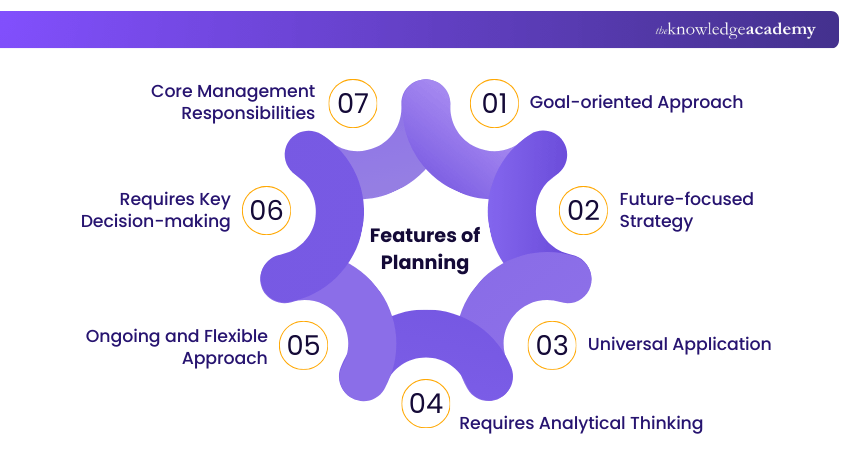
1) Goal-oriented Approach
Planning focuses on clear objectives. It keeps the organisation on track and avoids activities that do not support its goals. Clear goals help everyone understand what success means and how to achieve it.
2) Future-focused Strategy
Planning looks ahead and prepares the organisation for future situations. It reduces uncertainty by helping managers think in advance, which builds confidence and supports new opportunities.
3) Universal Application
Planning is used in all types of organisations, like businesses, schools, hospitals, and even at home. It keeps work organised and shows that Planning is important for everyone, no matter the size or type of activity.
4) Requires Analytical Thinking
Planning involves careful study and logical thinking. Managers must analyse information, compare different options, and choose the best way forward. This improves problem-solving and reduces the chance of making wrong decisions.
5) Ongoing and Flexible Approach
Planning is not a one-time task. As situations change, plans must also change to stay effective. This flexibility helps the organisation respond to challenges and keeps work moving smoothly and confidently.
6) Requires Key Decision-making
Planning involves choosing the best actions, setting priorities, and using resources wisely. Managers must make strong decisions to ensure progress. Good decision-making supports success and avoids mistakes.
7) Core Management Responsibilities
Planning is the first and most important function of management. It provides the base for organising, directing, staffing, and controlling. Without Planning, other activities would lack direction and purpose.
Build empathy and emotional intelligence for better customer interactions with our Exceptional Customer Service Training – Join now!
Different Types of Planning
Businesses use three major types of Planning based on levels and time periods. Let’s discuss in detail:
1) Strategic Planning
Strategic Planning is long-term Planning done by top management. It usually covers three to five years or more and focuses on the organisation’s vision, mission, and major goals, such as entering new markets or launching new products.
2) Tactical Planning
Tactical Planning is medium-term Planning done by middle managers. It breaks strategic plans into smaller, achievable actions and usually covers one to three years. Examples include marketing plans or improving production capacity.
3) Operational Planning
Operational Planning is short-term Planning handled by lower-level management or supervisors. It includes the day-to-day tasks needed to run the business. Examples include work schedules, daily targets, and routine processes.
The Planning Process
Planning must follow a step-by-step process to ensure success. The main Planning steps are:

Defining Objectives
The first step is setting clear goals. These should be Specific, Measurable, Achievable, Relevant, and Time-bound (SMART). Everyone must understand what they aim to achieve so the team stays focused from the start.
Identifying Available Resources
Managers check what resources they have, such as employees, budget, time, and technology. This helps create a plan that is realistic and workable. Knowing resources in advance prevents shortages and delays.
Developing Strategies
Managers explore different ways to achieve goals. They compare all strategies and choose the one that can deliver the best results. This step helps in selecting the smartest and most efficient approach.
Creating Action Plans
After choosing the strategy, smaller tasks are assigned to individuals or teams. Responsibilities, deadlines, and expected results are clearly mentioned. A detailed action plan ensures that everyone knows their role.
Implementation and Performance Monitoring
Plans are put into action. Managers then check progress regularly and make changes if needed. This ensures everything stays on track. Monitoring helps identify problems early and improve performance.
Learn smart techniques to prioritise tasks and boost daily productivity. Join our Time Management Training today!
Limitations of Planning
Planning is helpful, but it also has some drawbacks that organisations should keep in mind:
Rigidity in Execution
Planning can make work less flexible. People may continue to follow the plan even if situations change, which can slow down progress. It becomes difficult to adjust quickly when something unexpected happens.
Time Consuming and Costly
Planning takes a lot of time, effort, and money. It involves meetings and research, which can delay action and increase costs. This may make organisations slow in responding to new opportunities.
Resistance from Employees
Some employees may not like changes introduced through Planning. They may feel worried or accept the new plan slowly, which can affect teamwork. This resistance can reduce motivation and make progress difficult.
Creates Illusion of Safety
Planning does not guarantee success. If people believe everything will go perfectly, they may ignore sudden risks or problems. Unexpected challenges can still appear even with a good plan, causing delays.
Possible Managerial Weaknesses
Planning depends on the skills of managers. If managers choose the wrong ideas or make poor decisions, the entire plan may fail. Poor judgement at the top can hurt the whole organisation and slow progress.
Impede Creativity and Adaptability
Strict Planning can reduce creativity. Employees may avoid trying new methods because they feel they must always follow the plan. This can stop the organisation from improving and growing.
Strategic, Tactical and Operational Plans: Key Differences
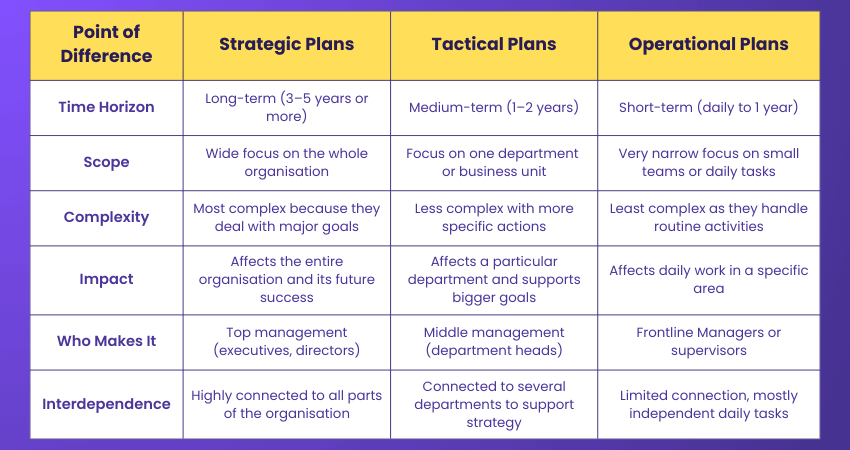
Organisations use different plans to achieve their goals, each with its own purpose and level. The table below shows how Strategic, Tactical, and Operational Plans differ:
Conclusion
Understanding What is Planning helps organisations set goals, use resources wisely, and stay prepared for the future. With proper Planning, teams can work together smoothly and avoid unnecessary problems. Even though there are some limitations, Planning provides direction and confidence. It plays a key role in helping businesses grow, improve performance, and achieve long-term success.
Learn how to maximise your potential, leading to a more fulfilling life. Join our Personal Development Courses now!
Frequently Asked Questions
What is Long-term Planning?

Long-term planning focuses on goals set for the distant future, usually more than three years ahead. It supports growth, expansion, and sustained success.
Which Word Means to Plan Something Bad?
The word “conspire” means to secretly plan something harmful or illegal with others. Other similar words include plot and scheme.
What are the Other Resources and Offers Provided by The Knowledge Academy?
The Knowledge Academy takes global learning to new heights, offering over 3,000+ online courses across 490+ locations in 190+ countries. This expansive reach ensures accessibility and convenience for learners worldwide.
Alongside our diverse Online Course Catalogue, encompassing 19 major categories, we go the extra mile by providing a plethora of free educational Online Resources like Blogs, eBooks, Interview Questions and Videos. Tailoring learning experiences further, professionals can unlock greater value through a wide range of special discounts, seasonal deals, and Exclusive Offers.
What is The Knowledge Pass, and How Does it Work?
The Knowledge Academy’s Knowledge Pass, a prepaid voucher, adds another layer of flexibility, allowing course bookings over a 12-month period. Join us on a journey where education knows no bounds.
What are the Related Courses and Blogs Provided by The Knowledge Academy?
The Knowledge Academy offers various Personal Development Courses, including the Strategic Planning and Thinking Course, Attention Management Training, and the Introduction to Managing Budgets Course. These courses cater to different skill levels, providing comprehensive insights into Short-Term Goals.
Our Business Skills Blogs cover a range of topics related to Planning, offering valuable resources, best practices, and industry insights. Whether you are a beginner or looking to advance your planning skills, The Knowledge Academy's diverse courses and informative blogs have got you covered.

The Knowledge Academy


Global Training Provider
The Knowledge Academy is a world-leading provider of professional training courses, offering globally recognised qualifications across a wide range of subjects. With expert trainers, up-to-date course material, and flexible learning options, we aim to empower professionals and organisations to achieve their goals through continuous learning.

Upcoming Business Skills Resources Batches & Dates
Date
 Strategic Planning and Thinking Course
Strategic Planning and Thinking Course
Fri 24th Jul 2026
Strategic Planning and Thinking Course
Fri 2nd Oct 2026

 If you wish to make any changes to your course, please


