


 Top Rated Course

We may not have the course you’re looking for. If you enquire or give us a call on +44 1344 203999 and speak to our training experts, we may still be able to help with your training requirements.
Critical Thinking Skills: A Complete Guide
Benjamin Walker 31 March 2026Critical Thinking Skills help you analyse and evaluate information objectively, enabling logical decisions and effective problem-solving in situations. They also improve your ability to question assumptions and consider different viewpoints. As a result, you can solve problems more effectively and make informed choices.

Training Outcomes Within Your Budget!
We ensure quality, budget-alignment, and timely delivery by our expert instructors.
Table of Contents
Have you ever faced a tough decision, a complex problem, or conflicting information that made it hard to choose the right path? In such moments, Critical Thinking Skills become essential, helping you analyse situations clearly, question assumptions, and make informed decisions with confidence.
This blog explores the meaning, types, and real-world applications of Critical Thinking. It also covers practical steps to improve your decision-making abilities. Ready to strengthen your thinking and handle challenges more effectively? Let’s get started!
Table of Contents
1) What is Critical Thinking?
2) Essential Critical Thinking Skills
3) How to Develop Critical Thinking Skills?
4) Barriers to Critical Thinking
5) What are the Examples of Critical Thinking Skills?
6) Can Critical Thinking Be Learned?
7) Conclusion
What is Critical Thinking?
Critical Thinking is a way of thinking where you actively question, analyse, interpret, and evaluate information before making a judgement. It involves carefully examining what you read, hear, say, or write so you can reach conclusions based on reliable evidence and logical reasoning.
It is not about being negative or focusing only on faults. Instead, it helps you clarify your thoughts, break down complex problems, and understand information more deeply. Critical Thinking is a skill that develops over time through learning and practice, enabling you to make informed decisions and better judgements in real-life situations.

Essential Critical Thinking Skills
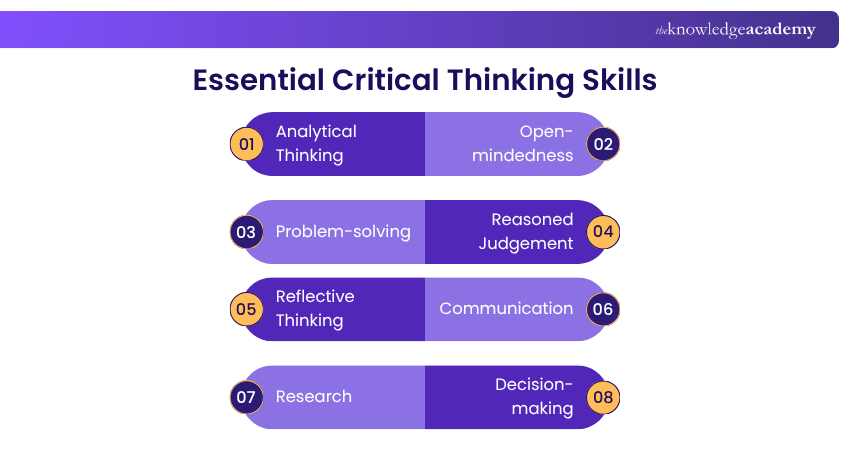
Critical Thinking is important for success in everyday life, education, and professional settings. Here are eight key Critical Thinking Skills to develop:
1) Analytical Thinking
Analytical Thinking entails evaluating information from diverse sources to draw well-founded conclusions. It helps individuals overcome cognitive biases and manage complex issues effectively. Analytical thinkers excel at:
a) Identifying patterns and trends
b) Breaking down intricate problems into manageable parts
c) Recognising cause-and-effect relationships
d) Assessing the validity of arguments and evidence
Example: A Data Analyst interprets sales figures to identify patterns that guide marketing strategies.
2) Open-mindedness
Open-mindedness is the readiness to consider new ideas, arguments, and perspectives without prejudice. It encourages unbiased analysis and decision-making by acknowledging multiple viewpoints. Key traits include:
a) Willingness to explore alternative ideas
b) Suspending judgment until evidence is evaluated
c) Accepting constructive feedback
d) Flexibility to revise beliefs based on new information
Example: A Team Leader welcomes unconventional suggestions during a product development meeting, resulting in an innovative solution.
3) Problem-solving
Problem-solving is integral to Critical Thinking, enabling individuals to identify issues, generate solutions, and implement effective strategies. This skill is particularly valuable in management and entrepreneurship. Steps include:
a) Clearly defining the problem
b) Gathering relevant information
c) Brainstorming and evaluating solutions
d) Selecting and implementing the best option
e) Reviewing outcomes to refine future approaches
Example: A school principal addresses low student engagement by consulting experts, surveying students, and introducing a balanced, real-world-focused curriculum.
4) Reasoned Judgement
Reasoned judgment includes making thoughtful decisions based on logical analysis and careful consideration of alternatives. It requires:
a) Objectively evaluating evidence and arguments
b) Assessing the credibility and relevance of information
c) Considering diverse perspectives
d) Drawing conclusions through logical reasoning
Example: A science teacher designs an experiment, analyses results methodically, and forms evidence-based conclusions.
5) Reflective Thinking
Reflective Thinking is the process of evaluating one’s own thoughts, actions, and decisions to learn and improve. It fosters continuous development and better problem-solving. Reflective thinkers:
a) Critique personal assumptions and biases
b) Integrate insights from diverse experiences
c) Apply lessons to enhance future actions
d) Continuously refine their thought processes
Example: A community organiser evaluates a recent public event. They identify areas of success and opportunities for improvement.
Think it’s impossible? Our beginner-friendly guide will help you Solve a Rubik’s Cube in no time!
6) Communication
Effective Communication is important for articulating ideas clearly and persuasively. It supports teamwork, leadership, and knowledge-sharing. Strong communicators:
a) Convey complex ideas with clarity
b) Actively listen and comprehend diverse viewpoints
c) Tailor their style to suit different audiences
d) Construct persuasive arguments
Example: A manager introduces a new policy to her team, addressing concerns and ensuring clarity about its implications.
7) Research
Research Skills enable critical thinkers to gather, assess, and synthesise information from credible sources. This is essential in academic and professional fields requiring ongoing learning. Key aspects include:
a) Identifying trustworthy and relevant sources
b) Evaluating bias and reliability
c) Synthesising findings into coherent conclusions
d) Recognising knowledge gaps
Example: A journalist cross-checks information from multiple credible sources before reporting on a controversial issue.
8) Decision-making
Decision-making is the culmination of Logical Thinking and Critical Thinking Skills, involving logical reasoning, risk assessment, and selecting the best course of action. Key elements include:
a) Defining criteria for evaluation
b) Considering short-term and long-term outcomes
c) Balancing logic with intuition
d) Managing uncertainty and risk
Example: A homeowner weighs costs, benefits, and future implications before investing in solar panels.
Learn how to enhance your well-being with our Stress Management Training. Join now!
How to Develop Critical Thinking Skills?
Improving Critical Thinking Skills involves a combination of practice, reflection, and learning. Here are some effective strategies to help you enhance your thinking abilities:
1) Ask Questions
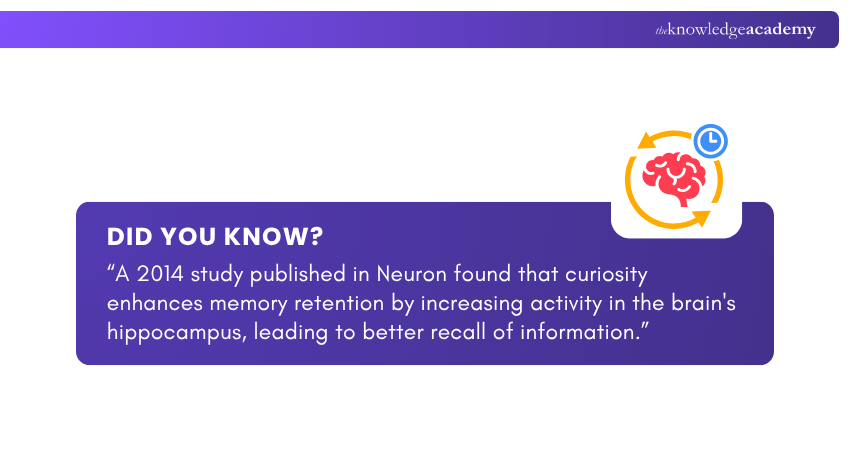
Asking questions is the first step in developing Critical Thinking. By questioning “why,” “how,” and “what if,” you gain a deeper understanding of a topic. It also helps you avoid assumptions and encourages curiosity-driven learning.
2) Gather Information
Before forming an opinion, it is important to collect information from multiple reliable sources. This ensures your understanding is accurate, balanced, and based on facts rather than incomplete or misleading data.
3) Analyse Assumptions
Critical Thinking requires you to identify and question assumptions, including your own. Recognising biases and challenging pre-existing beliefs allows you to think more objectively and make better decisions.
4) Consider Different Perspectives
Looking at different viewpoints helps you understand a situation more clearly and objectively. Engaging with diverse opinions broadens your thinking and prevents one-sided conclusions and biased judgement.
5) Reflect on Your Thinking Process
Reflection helps you evaluate how you think and make decisions. By reviewing your reasoning and learning from past mistakes, you can continuously improve your thought process over time effectively.
6) Practice Problem-solving
Regularly solving problems helps strengthen analytical thinking. Whether through real-life situations or activities like puzzles, applying logic improves your ability to evaluate options and make sound decisions.
7) Communicate Effectively
Clear communication is an essential part of Critical Thinking. It involves expressing your ideas logically and listening carefully to others, allowing you to assess different arguments before forming conclusions.
Elevate your listening skills to improve relationships- start learning with us. Register for Active Listening Training now!
Barriers to Critical Thinking
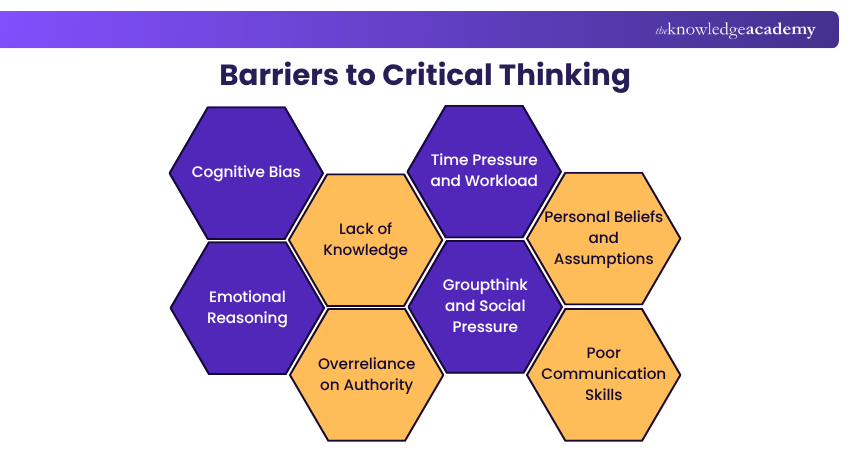
Barriers to Critical Thinking limit clear and logical thinking, affecting how decisions are made. Let’s look at the key barriers in detail:
1) Cognitive Bias:
Mental shortcuts that distort thinking, such as favouring familiar ideas or first impressions. Awareness and questioning assumptions help reduce bias.
2) Emotional Reasoning:
Letting emotions like fear or frustration influence decisions instead of facts. Managing emotions improves objectivity.
3) Lack of Knowledge:
Insufficient or unreliable information leads to poor conclusions. Continuous learning and checking sources are essential.
4) Overreliance on Authority:
Blindly accepting expert or senior opinions without questioning limits independent thinking. Critical evaluation is important.
5) Groupthink and Social Pressure:
The desire to agree with others prevents sharing different ideas, leading to weak decisions. Encouraging open discussion helps.
6) Time Pressure and Workload:
Rushed decisions and heavy workloads reduce deep analysis. Proper time management improves thinking quality.
7) Personal Beliefs and Assumptions:
Pre-existing views can limit openness to new ideas. Reflecting on biases helps maintain objectivity.
8) Poor Communication Skills:
Unclear expression or misunderstanding of ideas affects analysis. Strong communication supports effective thinking.
Acquire new skills crucial for workplace efficiency and effectiveness with our Personal Development Courses – Register now!
What are the Examples of Critical Thinking Skills?
Critical Thinking Skills are the abilities that help you analyse information, evaluate situations, and make informed decisions. These skills allow individuals to think clearly, question assumptions, and solve problems effectively.
1) Analysis:
The ability to break down complex information into smaller parts to understand it better. This helps identify patterns, relationships, and key details.
2) Evaluation:
Assessing information, arguments, or solutions to determine their accuracy and reliability. It involves judging whether something is logical, credible, or useful.
3) Problem-solving:
Identifying issues and finding practical solutions by considering different options and outcomes.
4) Logical Reasoning:
Using facts and evidence to draw clear and rational conclusions instead of relying on assumptions or emotions.
5) Decision-making:
Choosing the best course of action after carefully analysing available information and possible consequences.
6) Open-mindedness:
Being willing to consider different viewpoints and accept new ideas, even if they challenge your beliefs.
7) Questioning Skills:
Asking relevant and thoughtful questions to gain a deeper understanding and uncover hidden issues.
8) Interpretation:
Understanding and explaining information, data, or situations accurately to make sense of them.
Can Critical Thinking be Learned?
Yes, Critical Thinking can be learned and developed over time. It is not just an inborn talent but a skill that can be cultivated through consistent practice and effort, in both personal and professional settings.
By regularly questioning assumptions, analysing different perspectives, and evaluating evidence, individuals can strengthen their thinking abilities. Like a muscle, Critical Thinking improves with active use and structured learning, helping people make more logical and informed decisions.
Conclusion
Critical Thinking empowers you to analyse situations clearly, question assumptions, and make confident decisions. By recognising barriers and practising regularly, you can strengthen your Critical Thinking Skills over time. Stay curious, challenge your thinking, and keep learning to make smarter choices in every aspect of life.
Master your schedule with expert Time Management Training – Join today!
Frequently Asked Questions
How Do I Say I Have Critical Thinking Skills?

Highlight your skills to analyse complex problems, evaluate information objectively, and make informed decisions. Share examples of problem-solving, decision-making, or innovative ideas in professional or academic settings.
How Can You Identify if Someone is a Critical Thinker?
A critical thinker demonstrates analytical skills, open-mindedness, logical reasoning, and effective problem-solving. They question assumptions, consider diverse perspectives, communicate clearly, and base decisions on evidence rather than emotions or biases.
What are the Other Resources and Offers Provided by The Knowledge Academy?
The Knowledge Academy takes global learning to new heights, offering over 3,000+ online courses across 490+ locations in 190+ countries. This expansive reach ensures accessibility and convenience for learners worldwide.
Alongside our diverse Online Course Catalogue, encompassing 17 major categories, we go the extra mile by providing a plethora of free educational Online Resources like Blogs, eBooks, Interview Questions and Videos. Tailoring learning experiences further, professionals can unlock greater value through a wide range of special discounts, seasonal deals, and Exclusive Offers.
What is The Knowledge Pass, and How Does it Work?
The Knowledge Academy’s Knowledge Pass, a prepaid voucher, adds another layer of flexibility, allowing course bookings over a 12-month period. Join us on a journey where education knows no bounds.
What are the Related Courses and Blogs Provided by The Knowledge Academy?
The Knowledge Academy offers various Personal Development Courses, including Self-Management Training, Attention Management Training, and Sentiment Analysis Training. These courses cater to different skill levels, providing comprehensive insights into Ways to Improve Yourself.
Our Business Skills Blogs cover a range of topics related to Critical Thinking, offering valuable resources, best practices, and industry insights. Whether you are a beginner or looking to advance your analytical skills, The Knowledge Academy's diverse courses and informative blogs have got you covered.

Benjamin Walker


Leadership Development Coach and Management Consultant
Benjamin Walker is a leadership coach and business consultant with over 18 years of experience in guiding organisations through strategic growth and transformation. He specialises in developing leadership capabilities at all levels, from emerging managers to executive teams. Benjamin’s work focuses on practical leadership, team dynamics, and performance management.
View Detail
Upcoming Business Skills Resources Batches & Dates
Date
 Attention Management Training
Attention Management Training
Fri 28th Aug 2026
Attention Management Training
Fri 11th Dec 2026

 If you wish to make any changes to your course, please


