


 Top Rated Course

We may not have the course you’re looking for. If you enquire or give us a call on + 1-866 272 8822 and speak to our training experts, we may still be able to help with your training requirements.
What is Leadership? A Complete Guide to Meaning and Impact
Elizabeth Clark 14 July 2026Leadership is the art of motivating and guiding teams toward shared goals through vision, communication, emotional intelligence, and adaptability. It consistently builds trust and actively encourages team collaboration. Effective leaders inspire continuous growth and genuinely help individuals achieve their full potential.

Training Outcomes Within Your Budget!
We ensure quality, budget-alignment, and timely delivery by our expert instructors.
Table of Contents
Understanding 'What is Leadership' is essential in today’s fast-paced world. It goes beyond managing tasks; it’s about inspiring people, fostering collaboration, and guiding teams toward shared goals with vision and empathy.
Great leaders not only drive results but also nurture growth, trust, and engagement within their teams. In this blog, we’ll explore the key qualities, strategies, and mindset that make leadership truly effective.
Table of Contents
1) What is Leadership?
2) What is the Importance of Leadership?
3) Characteristics of an Effective Leader
4) Leadership Styles
5) Types of Leadership Styles
6) How to Become a Better Leader?
7) How Does Leadership Impact Team Performance?
8) Conclusion
What is Leadership?
Leadership isn’t just about the actions of one person in charge. It is a social process that happens when individuals work together to achieve results they could not accomplish alone. At its core, leadership creates three key outcomes: shared direction, alignment among team members, and strong mutual commitment.
Rather than focusing only on skills or positional authority, this view emphasises how people interact, influence one another, and contribute collectively to shared goals. When direction, alignment, and commitment are present, leadership is effective and helps teams thrive.

What is the Importance of Leadership?
Making tough decisions is often essential for the success and growth of a business. Therefore, businesses rely on leaders with strong competencies and Emotional Intelligence (EI) to navigate these challenges effectively. Leadership and Organisational Behaviour PDF highlights how leadership skills become even more crucial during times of crisis. Let's delve deeper into the significance of leadership.
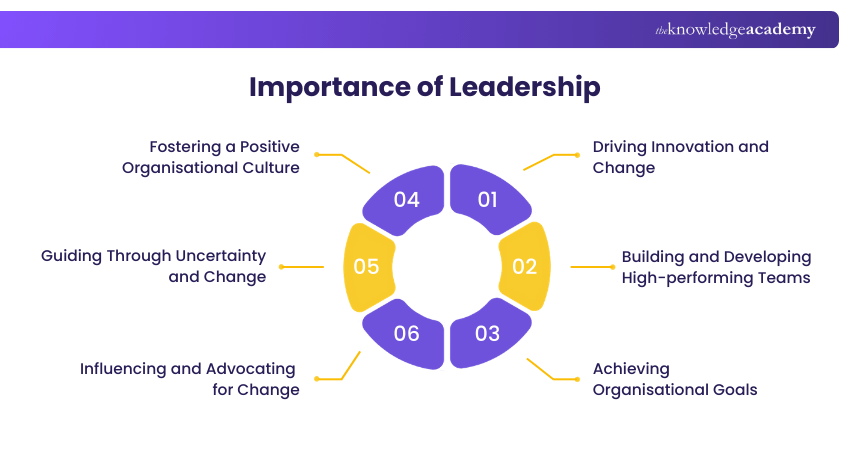
1) Driving Innovation and Change
Fostering innovation and change is crucial for organisations' and communities' continual growth and sustainability. Leaders with an innovative mindset can cultivate an environment that encourages creativity, risk-taking, and novel ideas. They empower teams through positive mindsets and curiosity to pose out-of-the-box questions.
2) Building and Developing High-performing Teams
Outstanding Leadership plays a key role in developing the productivity and performance levels within the team. Influential Leaders understand the value of collaborating with people from diverse cultural backgrounds and sharing different skills and ideas. They create a welcoming space where every team member feels valued and involved. This helps cultivate the best in their team and drives organisational success.
3) Achieving Organisational Goals
Leadership is crucial for to motivate team members toward organisational goals and strategic initiatives. Leaders provide direction and clarity by articulating a compelling vision and establishing achievable objectives. They align the efforts of individuals towards a shared purpose and mobilise resources. Their ability to make informed decisions, solve problems, and navigate challenges is instrumental in overcoming obstacles and steering the organisation towards success.
4) Fostering a Positive Organisational Culture
Leaders are essential in changing the culture of their teams. They set an exemplary example for their team by fostering values like honesty, openness, and respect. Additionally, they are able to foster an atmosphere of cooperation and inclusivity where diverse perceptions are respected and treasured.
5) Guiding Through Uncertainty and Change
The role of the leader becomes even vital critical during uncertain times and sudden organisational changes. Their performance during such times promotes a sense of stability, guidance, and direction. They never lose their calmness, communicate openly, and constantly motivate their teams. By demonstrating resilience and adaptability, Leaders can inspire confidence and help individuals navigate ambiguity and adversity.
6) Influencing and Advocating for Change
Effective leaders drive positive change within their communities and society by leveraging their influence and platforms. They address social issues, promote inclusivity, and support initiatives aligned with their values. By collaborating with Stakeholders and forming strategic alliances, they help shape society and leave a lasting impact on the world around them.
Want to empower your team to be at their best? Learn how to create a positive business environment in our Leadership and Management Skills Course!
Characteristics of an Effective Leader
Effective leaders possess unique qualities that enable them to inspire, guide, and bring out the best in their teams. To explore these leadership traits in more depth, refer to our Characteristics of Leadership PDF as a comprehensive resource. Let’s delve into some of the key qualities that define effective leaders.
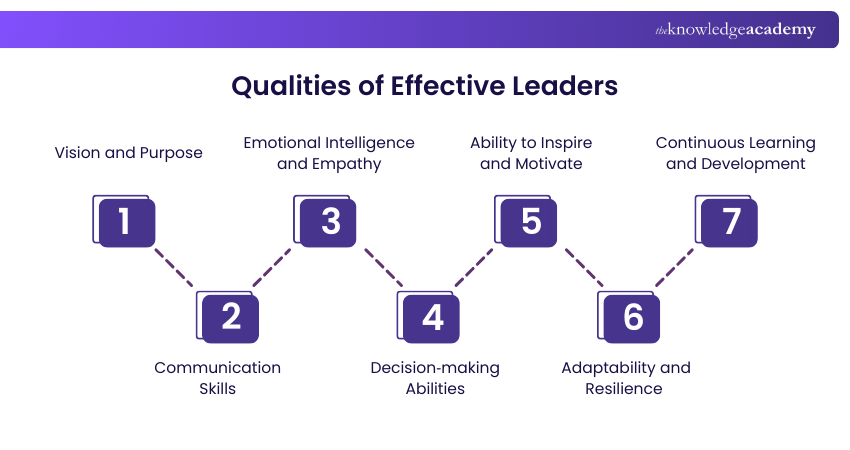
An effective leader combines a clear sense of direction with the ability to build trust, communicate well, and adapt to change. These traits help guide teams and organisations toward shared goals, fostering engagement and long‑term success.
1) Vision and Purpose
Great leaders have a compelling vision that shapes direction and inspires commitment, helping people connect daily work to meaningful outcomes. They clearly define where the organisation is heading and why it matters.
2) Communication Skills
Strong communicators articulate ideas clearly and listen actively, ensuring information flows both ways with understanding and trust. They tailor their messages so diverse audiences stay aligned and motivated.
3) Emotional Intelligence and Empathy
Emotionally intelligent leaders understand their own feelings and those of others, using this insight to manage relationships and support team wellbeing. Empathy helps them connect, resolve conflicts, and create an inclusive environment.
4) Decision‑making Abilities
Effective leaders make timely, well‑informed decisions by weighing options and anticipating potential impacts. They balance analytical thinking with confidence, steering their teams through uncertainty with clarity.
5) Ability to Inspire and Motivate
Leaders inspire by connecting people’s efforts to a greater purpose and recognising contributions that matter. Their enthusiasm and belief in the vision energise others to give their best.
6) Adaptability and Resilience
Adaptable leaders stay flexible in the face of change, adjusting strategies as needed and embracing new opportunities. Resilience helps them recover from setbacks and model composure for their teams during challenges.
7) Continuous Learning and Development
Top leaders never stop learning, constantly updating skills to remain relevant in evolving environments. They model curiosity and growth, encouraging their teams to pursue development and improvement.
Master the art of People Management and team Leadership – sign up for our Successful People Management and Team Leadership Course today!
Leadership Styles
This table summarises the prominent leadership styles practiced in businesses and organisations across industries:
Types of Leadership Styles
Effective leadership adapts to people and situations. Knowing different leadership styles helps guide teams and achieve goals successfully.
a) Transformational Leadership: Leaders who inspire change focus on motivating their teams toward a compelling vision, encouraging growth and high performance by helping people see the bigger purpose behind their work.
b) Delegative Leadership: Also known as laissez‑faire, this hands‑off style gives team members autonomy to make decisions, which works well when employees are skilled and self‑driven.
c) Authoritative Leadership: Leaders set a clear direction and encourage followers to “come with me,” providing guidance and motivation while building trust in the leader’s vision.
d) Transactional Leadership: This style focuses on structured goals, clear expectations, and a system of rewards and consequences to drive performance and maintain routine operations.
e) Participative Leadership: Also called democratic leadership, it involves team members in decision‑making, strengthening collaboration and ownership by valuing diverse input.
f) Servant Leadership: Leaders put the needs and development of their people first, creating strong relationships and helping others achieve their full potential while fostering trust and a supportive culture.
Leverage AI technology to elevate your leadership skills in our Certified Artificial Intelligence for Leaders Training - Sign up now
How to Become a Better Leader?
Now that you have understood “What is Leadership?” and its significance, let’s explore the critical Leadership Skills that are important for effective leadership. Preparing for Leadership Interview Questions can also help you identify key skills that employers look for.
Referring to the Leadership Tools Guide can provide valuable insights into essential strategies and techniques for honing leadership abilities. Here are a few actionable steps to develop Leadership Skills and elevate your Leadership Quality: Here are a few actionable steps to develop Leadership Skills and elevate your Leadership Quality:
1) Engage in Continuous Self-reflection: Cultivate self-awareness within yourself, a fundamental aspect of effective Leadership. Reflect on your strengths, weaknesses, values, and goals regularly. Evaluate how your actions align with your Leadership vision and actively seek improvement opportunities.
2) Embrace Feedback and Constructive Criticism: Foster an environment of openness and transparency by encouraging constructive feedback from your team, peers, and superiors. This feedback and criticism serve as valuable tools for personal growth and the identification of blind spots and areas in need of improvement.
3) Seize Leadership Opportunities:Identify leadership prospects within your personal and professional environments. Volunteer for challenging projects, assume leadership roles in community organisations and take charge to provide direction to your team.
4) Embrace Mentorship and Coaching:Seek support from mentors and coaches who can offer career-driven insights, share their past experiences, and challenge your perspectives. Additionally, try mentoring someone else by reinforcing your own leadership skills.
5) Lead by Example: Demonstrate the behaviour you wish to see in your team. Exhibit integrity, a strong work ethic, and unwavering commitment to your values. This aligns with the principles of Leadership in Organisational Behaviour as it not only establishes a positive example but also cultivates trust and respect among team members.
How Does Leadership Impact Team Performance?
Leadership directly influences team performance by setting clear goals, encouraging collaboration, and motivating members to achieve shared objectives. Effective leaders improve productivity and help teams complete tasks more efficiently. They also build trust, boost morale, support adaptability to change, and improve retention by recognising and developing talent.
Conclusion
Leadership shapes how teams collaborate, grow, and achieve meaningful results. Understanding 'What is Leadership' helps individuals recognise the value of vision, adaptability, and the right leadership style in guiding others effectively. By developing these qualities, leaders can inspire trust, drive progress, and create lasting impact within their organisations.
Take your Leadership skills to the next level by signing up for our Leadership Courses today!
Frequently Asked Questions
What are the Key Skills of Leadership?

Key leadership skills include:
a) Communication
b) Relationship building
c) Decision-making
d) Conflict Management
e) Negotiation
f) Critical thinking
g) Self-awareness
h) Adaptability
Is Leadership Only Important for Managers?
No, leadership is not limited to managers. Individuals at any level can demonstrate leadership by taking initiative, influencing others positively, and contributing to team goals. Practising leadership skills helps employees build trust, improve collaboration, and drive better outcomes.

Elizabeth Clark


Senior Leadership Trainer and Business Strategist
Elizabeth Clark is a senior trainer and strategist with a strong background in leadership, business management, and operational improvement. With more than 15 years of experience, she has worked with leaders across industries to enhance their influence, communication, and strategic planning skills. Her writing is known for being insightful and focused on real-world leadership challenges.
View Detail

 If you wish to make any changes to your course, please


