Who Should Attend this Counselling Course?
This Counselling Course is designed for individuals who want to strengthen their communication, listening, helping, and interpersonal skills. It is particularly relevant to professionals whose roles involve supporting, guiding, communicating with, or understanding others. This course can benefit:
- Social Workers
- Psychologists
- Mental Health Practitioners
- Life Coaches
- Human Resources Professionals
- Educators
- Community Service Managers
- Rehabilitation Counsellors
Prerequisites for the Counselling Course
There are no formal prerequisites to attend this Counselling Course. However, an interest in developing communication, listening, and helping skills can help delegates engage effectively with the training.
Counselling Course Overview
Counselling Skills Training introduces delegates to counselling, helping approaches, and the Lifeskills Counselling Model. It covers communication, active listening, questioning, feedback, self-disclosure, and understanding client perspectives.
Delegates develop practical knowledge of clarifying problems, planning interventions, and building supportive counselling relationships. They also explore personal counselling, self-help, and Continuing Professional Development.
This 1-Day course by The Knowledge Academy helps delegates apply counselling and helping techniques more effectively in supportive interactions. They will be able to listen attentively, respond to concerns appropriately, and build more constructive helping relationships.
Counselling Course Objectives
- To understand counselling, helping, and the Lifeskills Counselling Approach
- To develop effective communication and active listening skills
- To understand and apply the stages of the Lifeskills Counselling Model
- To develop questioning, challenging, feedback, and self-disclosure skills
- To understand how to choose and plan appropriate interventions
- To explore personal counselling, self-help, and Continuing Professional Development
Upon completing this Counselling Course, delegates will understand key counselling principles and apply essential communication and listening skills. They will also understand problem clarification, intervention planning, supportive client interaction, and continued professional development.
Key Benefits of Taking this Counselling Course
This Counselling Course develops practical communication and helping skills that can be valuable across professional and everyday interactions. Key benefits include:
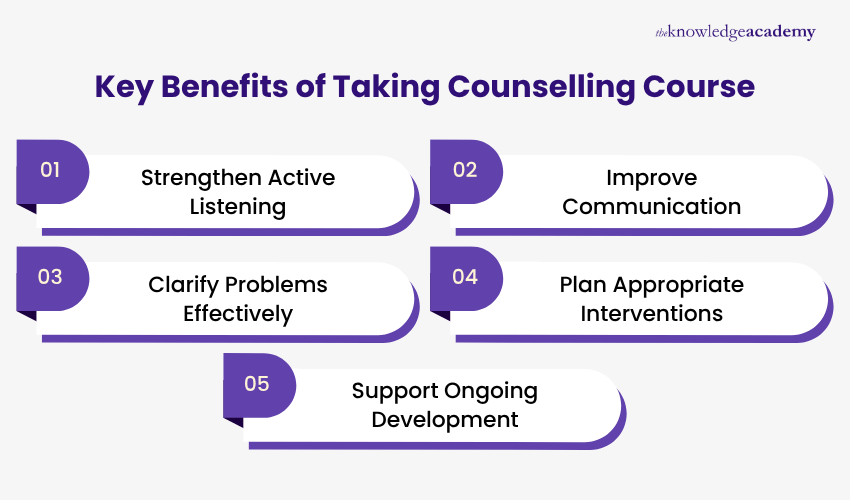
- Strengthen Active Listening: Develop skills to listen attentively and better understand another person’s perspective.
- Improve Communication: Build questioning, feedback, and self-disclosure skills for clearer and more supportive conversations.
- Clarify Problems Effectively: Use questioning and challenging skills to explore concerns and improve understanding.
- Plan Appropriate Interventions: Learn how to choose and plan interventions based on client needs and relevant considerations.
- Support Ongoing Development: Explore personal counselling, self-help, and Continuing Professional Development to strengthen future learning.
How this Counselling Course Fits Your Career Goals
This course develops foundational counselling and helping skills that can support people-focused work or further study. It can also provide a useful base for delegates considering a career in counselling or continued development in counselling-related areas.
- Support and Wellbeing Roles: Build listening and communication skills that can support roles focused on guidance, wellbeing, and interpersonal support.
- Care and Education Roles: Develop supportive communication skills that can be useful when working with individuals in care or learning environments.
- People-focused Roles: Strengthen questioning, feedback, and active listening skills for roles involving regular interaction and relationship building.
- Further Counselling-related Study: Gain foundational knowledge of counselling models, interventions, and helping skills that can support progression into further training.





 If you miss out, enquire to get yourself on the waiting list for the next day!













 If you wish to make any changes to your course, please


