


 Top Rated Course

We may not have the course you’re looking for. If you enquire or give us a call on +41 315281584 and speak to our training experts, we may still be able to help with your training requirements.
Asset Performance Management: Components, Benefits & Strategy
James Smith 14 February 2026Asset Performance Management (APM) uses data and analytics to monitor assets, predict issues, and optimise maintenance to boost reliability and efficiency. This blog explores the essence of APM, its benefits, implementation steps, and its distinction from Asset Lifecycle Management (ALM). Read further to know more.

Training Outcomes Within Your Budget!
We ensure quality, budget-alignment, and timely delivery by our expert instructors.
Table of Contents

Managing assets is no longer just about fixing things when they break. Today, it's about staying ahead, making smart moves, and keeping systems running at their best. Asset Performance Management (APM) helps achieve this with insight, technology, and precision.
This blog dives into what Asset Performance Management. You will know what it means, how it works, and why it matters. From key benefits to real-world strategies, get a clear view of how APM can elevate your operations. Ready to make better use of every asset? Let’s get started.
Table of Contents
1) What is Asset Performance Management?
2) Steps Involved in Asset Performance Management (APM)?
3) Benefits of Asset Performance Management
4) How to Build an Effective APM Program?
5) Key Differences Between ALM and APM
6) What is an APM Strategy?
7) What is APM Maintenance?
8) Conclusion
What is Asset Performance Management?
APM encompasses strategies, processes, and technologies aimed at maximising the performance and reliability of physical assets throughout their lifecycle. It involves a holistic approach that integrates maintenance, reliability, risk management, and operational excellence to ensure assets operate optimally, minimise downtime, and consistently deliver value.

Steps involved in Asset Performance Management (APM)?
Asset Performance Management is a strategic approach to enhancing how physical assets deliver value. It blends data, technology, and insights to help businesses make smarter decisions about asset care and investment.
1) Asset Identification: Pinpoint critical equipment and map their operational roles.
2) Performance Monitoring: Track functionality using real-time dashboards and smart sensors.
3) Condition Assessment: Analyse asset health through inspections and diagnostic tools.
4) Predictive Analytics: Anticipate failures by spotting trends and behavioural patterns early.
5) Maintenance Optimisation: Fine-tune service schedules for minimal disruption and cost.
6) Performance Measurement: Evaluate outcomes with clear metrics tied to reliability and efficiency.
By aligning these steps, companies can stretch asset value, trim downtime, and boost returns across the board.
Prepare with Confidence – Get the APM PMQ Study Guide and ace your project management certification!
Benefits of Asset Performance Management
APM offers several advantages for organisations across diverse industries. Let's delve into some of the key benefits:
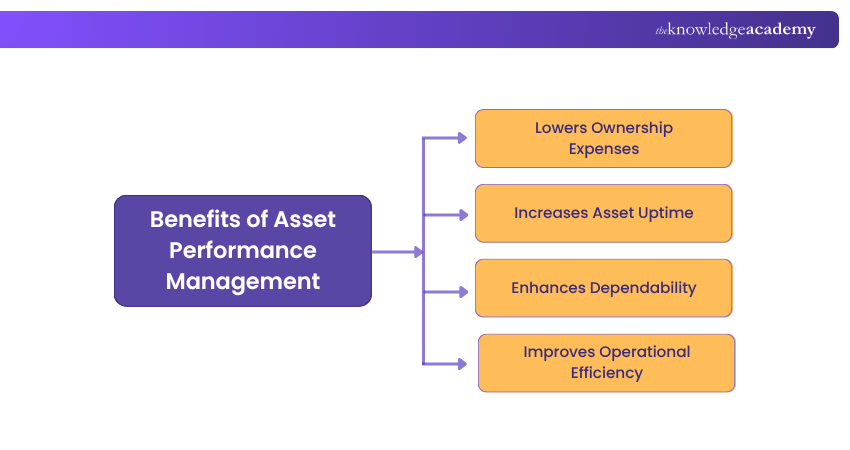
1) Lowers Ownership Expenses
Businesses can implement various maintenance strategies and use predictive analytics to optimise their maintenance schedules. This approach reduces unexpected breakdowns and repairs, leading to reduced maintenance costs and lower total ownership expenses over the asset's lifecycle.
2) Increases Asset Uptime
APM improves asset reliability and availability. Its continuously monitoring, timely maintenance, and predictive analytics feature ensures that assets operate at peak performance levels. This increases uptime and minimising unplanned downtime. APM also help improve productivity and revenue generation for organisations.
3) Enhances Dependability
Reliable assets are important for maintaining smooth operations and meeting customer demands. APM help enterprises to enhance asset reliability and performance consistency. It identifies potential issues before they escalate and nurtures a culture of dependability, as seen in APM Case Studies. APM also ensures that assets operate well and meet production targets.
4) Improves Operational Efficiency
Efficient Asset Performance directly impacts overall operational efficiency. It optimises maintenance practices, streamlines workflows, and eliminates bottlenecks. This leads to improved resource utilisation and reduced waste. As APM maximises asset productivity and reduce downtime, it enhances operational efficiency and business success.
Learn the key to achieve excellence in every aspect with our Senior Management Training.Join today!
How to Build an Effective APM Program?
Establishing a strong Asset Performance Management program takes planning, focus, and the right tools. The aim is to protect key infrastructure, reduce inefficiencies, and make smarter maintenance choices across the asset lifecycle. Below given is how you should build an effective APM program:
Identify Your Most Critical Assets
Begin by mapping out which assets drive the most value or pose the greatest risk if they fail. Prioritise equipment based on usage, cost impact, safety concerns, and operational importance.
Understanding asset roles within your processes helps target improvement efforts effectively. This focus ensures resources are allocated where they’ll have the greatest influence on reliability, output, and long-term savings.
Deploy Asset Performance Management Software
Select a solution that delivers instant visibility into asset conditions and fits seamlessly with your current infrastructure. The right system should support continuous monitoring through automated data feeds and intelligent diagnostics.
Prioritise tools that enable informed decisions by gathering accurate, up-to-the-minute information. This approach helps detect anomalies early, streamline responses, and maintain steady operational flow.
Use Preventive and Predictive Maintenance Tactics
Move away from last-minute fixes and adopt a structured maintenance schedule tailored to asset behaviour. This proactive mindset reduces interruptions and extends equipment life.
Leverage data-driven insights to uncover hidden trends and subtle changes. Spotting potential faults in advance empowers teams to respond quickly, avoid breakdowns, and keep operations running smoothly.
Elevate your career with our Performance Management Training– Register today!
Key Differences Between ALM and APM
Asset Lifecycle Management (ALM) and Asset Performance Management (APM) revolve around managing assets. However, they serve different purposes and focus on diverse aspects of Asset Management System. Here's a breakdown of the key differences between ALM and APM:

What is an APM Strategy?
An APM strategy is a focused plan to improve asset reliability, safety, and output. It uses real-time data to monitor equipment conditions and detect early signs of failure. This proactive method helps prevent breakdowns before they disrupt operations. Businesses can reduce unexpected costs and extend machinery life with better control.
It involves ranking asset importance, applying predictive tools, and scheduling smart maintenance. Insights from performance trends bring in decisions and resource allocation. Condition-based checks replace guesswork with precision. The result is steady performance, fewer delays, and stronger returns on investment.
What is APM Maintenance?
APM Maintenance uses smart tools to keep equipment running smoothly. It relies on sensors, tracking systems, and condition data. Teams act early by spotting signs of wear or faults. This avoids sudden stoppages and boost's reliability over time. It supports safer operations through timely, targeted action.
It shifts the focus from reactive tasks to informed planning. Repairs are done only when needed, not by routine. Costs drop while efficiency climbs. The process brings better control, fewer risks, and longer-lasting assets. It also helps align maintenance goals with business performance.
Conclusion
Thus, Asset Performance Management helps improve how assets perform using data, tools, and expert insights. It reduces downtime and supports smarter decisions. Add Business Performance Management to align daily operations with bigger goals. Together, they drive real progress. Stay ahead, cut waste, and boost output. Start now and take your business further with confidence and clarity.
Unleash your team's full potential with our Introduction to Managing People Training- join us now!
Frequently Asked Questions
Why Is It Important to Measure Asset Performance?

Measuring Asset Performance is important for identifying inefficiencies. This prevents unexpected breakdowns and optimises maintenance schedules. It helps maximise asset uptime, extend asset lifespan, and reduce operational costs. This helps businesses improve productivity and profitability.
What is the Future of Asset Performance Management?
The future of Asset Performance Management (APM) lies in AI-driven analytics, and real-time monitoring. It is also related to predictive maintenance. Enhanced IoT integration and digital twins will enable smarter decision-making. It will reduce downtime and costs while boosting asset efficiency and lifespan in industrial environments.
What Are the Other Resources and Offers Provided by the Knowledge Academy?
The Knowledge Academy takes global learning to new heights, offering over 3,000+ online courses across 490+ locations in 190+ countries. This expansive reach ensures accessibility and convenience for learners worldwide.
Alongside our diverse Online Course Catalogue, encompassing 19 major categories, we go the extra mile by providing a plethora of free educational Online Resources like Blogs, eBooks, Interview Questions and Videos. Tailoring learning experiences further, professionals can unlock greater value through a wide range of special discounts, seasonal deals, and Exclusive Offers.
What Is Knowledge Pass, and How Does It Work?
The Knowledge Academy’s Knowledge Pass, a prepaid voucher, adds another layer of flexibility, allowing course bookings over a 12-month period. Join us on a journey where education knows no bounds.
What are the Related Courses and Blogs Provided by The Knowledge Academy?
The Knowledge Academy offers various Management Courses, including the Performance Management Training, Business Process Improvement Training, and Productivity and Time Management Training. These courses cater to different skill levels, providing comprehensive insights into Transformational Leadership.
Our Business Skills Blogs cover a range of topics related to Performance Management, offering valuable resources, best practices, and industry insights. Whether you are a beginner or looking to advance your Business skills, The Knowledge Academy's diverse courses and informative blogs have got you covered.

James Smith


Digital Marketing Manager and Trainer
James Smith is a digital marketing professional with over a decade of experience in SEO, content strategy, paid media and analytics. He has supported both SMEs and global brands in transforming their digital presence. James’s writing and training are rooted in results-driven tactics and the latest marketing trends.
View Detail
Upcoming Business Skills Resources Batches & Dates
Date
 Introduction to Supplier Management
Introduction to Supplier Management
Fri 17th Jul 2026
Introduction to Supplier Management
Fri 9th Oct 2026

 If you wish to make any changes to your course, please


