




We may not have the course you’re looking for. If you enquire or give us a call on +55 8000201623 and speak to our training experts, we may still be able to help with your training requirements.
Workplace Harassment: Discrimination & Bullying at Work
William Brown 07 February 2026Workplace harassment is any unwanted behaviour that undermines dignity or creates a hostile environment. It can be verbal, physical, written, or digital, and includes bullying, discrimination, or intimidation. Preventing harassment ensures a safe, respectful, and inclusive work culture for all employees.

BCS Practitioner Certificate in Being an IT Business Partner Training
 Top Rated Course
Top Rated Course
Exclusive 40% OFF
Training Outcomes Within Your Budget!
We ensure quality, budget-alignment, and timely delivery by our expert instructors.
Table of Contents
Ever heard comments like, "You’re too old to keep up with this job", "Your work is pathetic”, "Women aren’t suited for leadership roles". Undoubtedly, these words are heartbreaking and are enough to scatter your dignity into pieces. Such remarks have been rooted down to Workplace Harassment for ages and need immediate attention to safeguard employees' well-being. This blog explains Workplace Harassment, its types and how you can protect your rights effectively.
Table of Contents
1) Understanding Workplace Harassment?
2) What Constitutes Harassment?
3) Types of Workplace Harassment
4) Harassment Related to a Protected Characteristic
5) How to Report Workplace Harassment?
6) Differences Between Bullying and Harassment
7) Conclusion
Understanding Workplace Harassment?
Workplace Harassment remains one of the most pressing issues across organisations today, taking several forms such as bullying, mobbing, discrimination, and workplace aggression. According to the latest Chartered Institute of Personnel and Development (CIPD) report, one in four employees experienced some form of harassment or conflict at work over the past year.
The most pervasive types of harassment reported:
a) 31% of employees reported being publicly humiliated or criticised at work.
b) 43% experienced verbal abuse, including shouting and insults.
c) 35% faced workplace conflicts or arguments with colleagues or superiors.
d) Only 36% felt their complaints or conflicts were effectively resolved despite existing company policies.
These figures reveal a significant gap between employee experiences and employer action, underlining the urgent need for stronger preventative frameworks, improved reporting mechanisms, and consistent enforcement of anti-harassment policies in workplaces.

What Constitutes Harassment?
Workplace Harassment refers to any unwelcome behaviour that causes physical, emotional, or psychological distress to an employee. It can take many forms and often violates a person’s dignity or creates an intimidating atmosphere at work.
Unwanted Conduct
This includes inappropriate actions, gestures, or remarks that are offensive, demeaning, or discriminatory, whether intentional or not.
Impact on Dignity
Harassment undermines an individual’s self-worth, respect, and confidence, making them feel devalued or unsafe in their professional environment.
Hostile Environment
When repeated behaviours create fear, discomfort, or tension in the workplace, it leads to a toxic or hostile work environment that affects productivity and mental well-being.
Get all the essentials with relation to organisational behaviour and ace it through the BCS Foundation Certificate in Organisational Behaviour.
Types of Workplace Harassment
Workplace Harassment goes by various names, but here are some of the most experienced Harassment types:
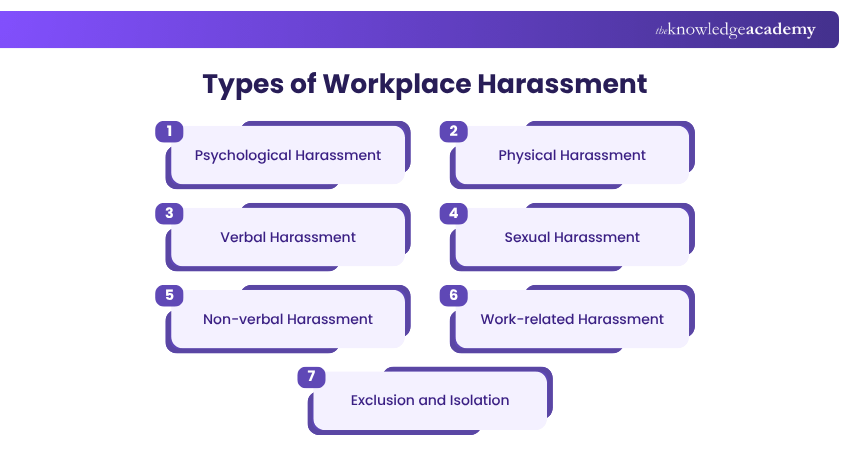
1) Psychological Harassment
This is when someone tries to break your spirit without lifting a finger.
a) Includes constant nitpicking, sarcastic remarks, or silent disapproval stares.
b) It is sneaky and often disguised as "just feedback."
c) Over time, it chips away at confidence and peace of mind.
d) A positive work culture and open support can help spot it early.
2) Physical Harassment
This happens when personal space is treated like a public park.
a) Includes unwanted touching, pushing, or blocking someone’s path.
b) Even small gestures feel huge when repeated or aggressive.
c) It creates discomfort and makes people want to teleport out of the situation.
d) Clear boundaries and zero-tolerance rules keep everyone safe.
3) Verbal Harassment
This is when words are used as weapons instead of communication.
a) Includes rude jokes, mocking comments, or “just kidding” insults.
b) Can happen in meetings, messages, or even passing comments.
c) It slowly affects confidence and mood, even if brushed off at first.
d) Encouraging respectful humour and speech keeps the workspace healthy.
4) Sexual Harassment
This occurs when someone mistakes the workplace for a dating show.
a) Includes unwanted compliments, comments, or suggestive behaviour.
b) It makes the atmosphere tense instead of productive.
c) Many hesitate to speak up, thinking it will be dismissed.
d) Awareness and safe reporting channels help maintain respect.
5) Non-verbal Harassment
This is when looks and gestures do the talking, and not in a good way.
a) Includes staring, eye-rolling, or displaying offensive visuals.
b) Even without a word spoken, discomfort is loud and clear.
c) It affects how safe and included someone feels at work.
d) Gentle reminders and visual etiquette go a long way.
6) Work-related Harassment
Workplace bullying and harassment happen when tasks are handed out like punishments, not responsibilities.
a) Includes giving impossible deadlines or leaving someone out of key info.
b) Feels like being set up for failure even when trying your best.
c) Reduces motivation and creates unnecessary stress.
d) Fair task assignment keeps productivity and morale balanced.
7) Exclusion and Isolation
This is when someone gets treated like the invisible employee of the month.
a) Includes being left out of chats, invites, or team decisions.
b) Sends a quiet but strong message of “you don’t belong here.”
c) Can leave people feeling disconnected from the team.
d) Simple inclusivity gestures make a big difference in workplace culture.
Make your business the best one in the market through the BCS Practitioner Certificate in Being an IT Business Partner.
Harassment Related to a Protected Characteristic
Harassment in the workplace is defined by its impact, not intent. Even if harm was unintentional, behaviour that causes distress or creates a hostile atmosphere can still be considered harassment. Employees must remain mindful of their actions, as even seemingly harmless conduct can be perceived as offensive or degrading in a professional environment.
Relevant Protected Characteristics
The Equality Act 2010 protects individuals from harassment based on the following characteristics: age, disability, gender reassignment, race, religion or belief, gender, and sexual orientation. These safeguards ensure that everyone is treated with dignity, fairness, and respect in the workplace.
How to Report Workplace Harassment?
Each company has an HR department to help employees during serious situations, ensuring their well-being and employment stability. Good HR practices are crucial when employees experience discomfort, danger, or feeling threatened by a coworker.
Although numerous organisations possess strong anti-Harassment policies, smaller organisations may lack them. Here’s how one can report Workplace Harassment:
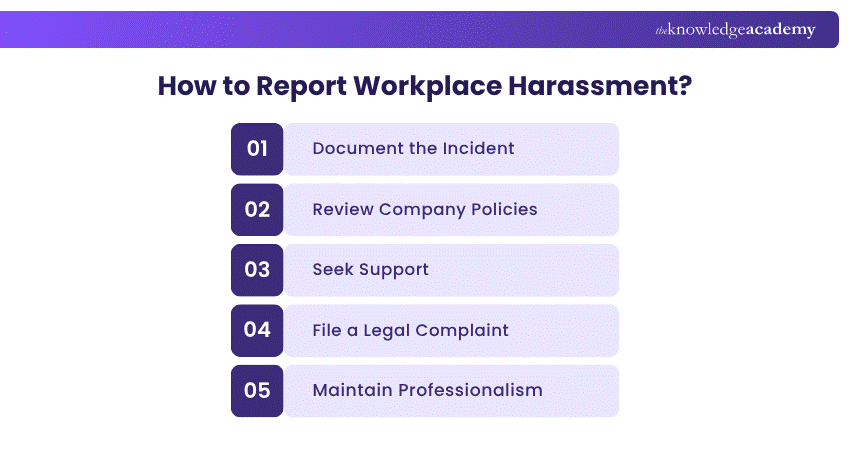
a) Document the Incident: Retain a detailed record of the Harassment along with date, time, location and witnesses.
b) Review Company Policies: Educate yourself about the organisation’s harassment procedures and policies.
c) Seek Support: Consult a workplace advocate or trustworthy coworker to gain emotional support
d) File a Legal Complaint: File a complaint to the HR department
e) Maintain Professionalism: Maintain professionalism throughout the reporting process
Develop key business analysis skills and earn the BCS Foundation Certificate in Business Analysis to stand out.
Differences Between Bullying and Harassment
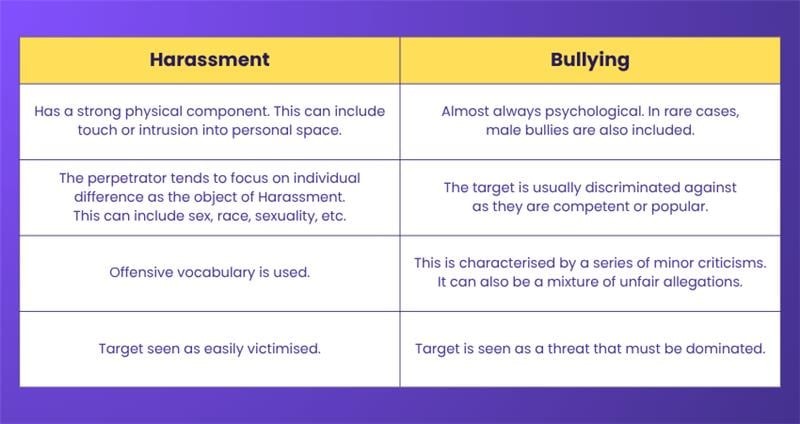
Understanding ‘What is Workplace Harassment’ and how it differs from bullying helps create safer and more respectful work environments. Recognising the subtle and direct forms of harassment and bullying is the first step toward prevention and building a culture of dignity at work.
Conclusion
Workplace Harassment is a usual issue that require immediate attention. From sexual misbehaviour to psychological abuse, it can take up many forms. If you experience such inappropriate misconduct or action in workspace, don’t hesitate to file a report to the Human Resource department. This protects your mental health and dignity, paving a more supportive and efficient workplace environment for other employees.
Advance your career with the BCS International Diploma in Business Analysis and demonstrate in-depth BA expertise.
Frequently Asked Questions
What are the Signs of Harassment at Work?

Bullying, exclusion, menacing, passing inappropriate comments, unwanted touching, or verbal abuse are key signs of Workplace Harassment. It is mentally damaging and impacts an employee adversely. This is why firms must come up with rules promoting a better work culture.
What are the Examples of Harassment at Work?
Harassment at work comes in many forms. It includes rude jokes or insults. Unwanted touching is also Harassment. So are sexual comments or advances. Bullying or threats count too. Mocking someone’s race, gender, or disability is not okay. All of this creates a toxic workplace.
What are the Other Resources and Offers Provided by The Knowledge Academy?
The Knowledge Academy takes global learning to new heights, offering over 3,000+ online courses across 490+ locations in 190+ countries. This expansive reach ensures accessibility and convenience for learners worldwide.
Alongside our diverse Online Course Catalogue, encompassing 19 major categories, we go the extra mile by providing a plethora of free educational Online Resources like Blogs, eBooks, Interview Questions and Videos. Tailoring learning experiences further, professionals can unlock greater value through a wide range of special discounts, seasonal deals, and Exclusive Offers.
What is The Knowledge Pass, and How Does it Work?
The Knowledge Academy’s Knowledge Pass, a prepaid voucher, adds another layer of flexibility, allowing course bookings over a 12-month period. Join us on a journey where education knows no bounds.
What are the Related Courses and Blogs Provided by The Knowledge Academy?
The Knowledge Academy offers various Business Analysis Courses, including the BCS Certificate in Business Analysis Practice, BCS Practitioner Certificate in Being an IT Business Partner Training, and BCS Foundation Certificate in Organisational Behaviour. These courses cater to different skill levels, providing comprehensive insights into Factors Affecting Organisational Behaviour.
Our Business Analysis Blogs cover a range of topics related to Ethics, offering valuable resources, best practices, and industry insights. Whether you are a beginner or looking to advance your Business Analysis skills, The Knowledge Academy's diverse courses and informative blogs have got you covered.

William Brown


Senior Business Analyst and Strategic Advisor
William Brown is a senior business analyst with over 15 years of experience driving process improvement and strategic transformation in complex business environments. He specialises in analysing operations, gathering requirements and delivering insights that support effective decision making. William’s practical approach helps bridge the gap between business goals and technical solutions.
View Detail
Upcoming Business Analysis Resources Batches & Dates
Date
 BCS Practitioner Certificate in Being an IT Business Partner Training

 If you wish to make any changes to your course, please


