


 Top Rated Course

We may not have the course you’re looking for. If you enquire or give us a call on +55 8000201623 and speak to our training experts, we may still be able to help with your training requirements.
What is Credit Management and What are its Benefits?
The Knowledge Academy 02 April 2026Credit Management is the process of granting and monitoring customer credit to reduce risk, ensure timely payments, and improve business cash flow. By setting clear credit policies and assessing customer creditworthiness, businesses can make informed financial decisions and maintain long-term business stability.

Training Outcomes Within Your Budget!
We ensure quality, budget-alignment, and timely delivery by our expert instructors.
Table of Contents

Late payments are more than a minor inconvenience for businesses. In fact, they cost the UK economy around £11 billion every year, showing the real impact of delayed payments on businesses. This leads to cash flow problems, missed opportunities, and added stress. This is where Credit Management becomes essential, helping businesses stay financially stable and reduce risks.
It helps businesses maintain steady cash flow and avoid debts. By setting clear policies, assessing customer reliability, and monitoring payments, organisations can improve financial control, strengthen customer relationships, and support long-term growth. In this blog, you will learn about what is Credit Management, its benefits, components, stages, and more. Let’s begin!
Table of Contents
1) What is Credit Management?
2) Benefits of Credit Management
3) What Does Good Credit Management Look Like?
4) Key Components of Credit Management
5) Credit Management Process
6) What Does Good Credit Management Look Like?
7) How to Develop a Credit Management Strategy?
8) What is the Objective of Credit Management?
9) What are the 5 Cs of Credit Management?
10) Is Credit Management a Debt Collector?
11) Conclusion
What is Credit Management?
Credit Management is the process of assessing a customer’s creditworthiness and deciding if they are eligible to receive credit. It involves checking a buyer’s financial background and setting credit limits to ensure payments are made on time. The primary purpose of Credit Management is to reduce the risk of non-payment while maintaining a healthy cash flow.
For instance, imagine you own an electronic store that offers a “Buy Now, Pay Later” option. A customer wants to purchase a TV without paying the full amount upfront, so you assess their ability to pay over time by reviewing their financial history. This leads to setting clear monthly payments and due dates. If the customer makes payments regularly, your Credit Management process is working well, and if not, it indicates a need for review.

Benefits of Credit Management
By implementing effective Credit Management practices, companies can encourage the maintenance of financial stability and long-term growth. Here are the key benefits of effective Credit Management:
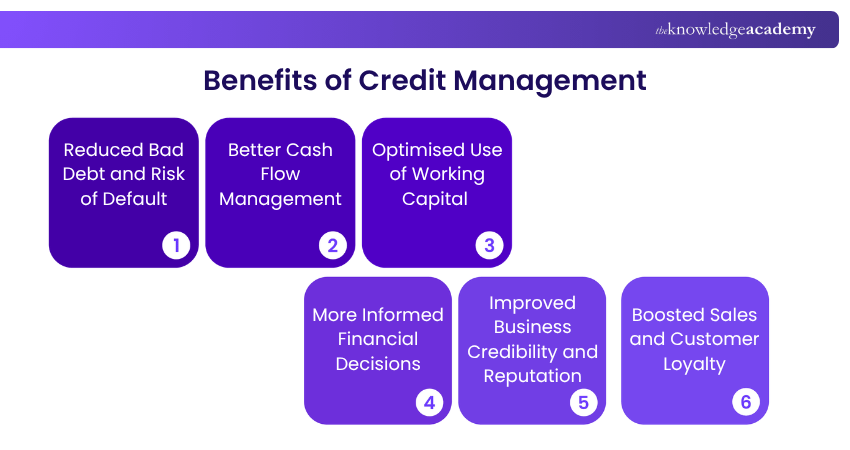
1) Reduced Bad Debt and Risk of Default
Proper Credit Management involves assessing client creditworthiness and setting clear credit terms. This reduces the risk of non-payment and helps prevent bad debt accumulation, ultimately protecting profit margins and reducing financial stress.
2) Better Cash Flow Management
Timely payments driven by solid Credit Control ensure that cash keeps flowing steadily. This enables businesses to cover operational costs, invest in growth opportunities, and meet financial obligations without disruption.
Drive financial success with advanced cash forecasting skills- register for our Cash Flow Training!
3) Optimised Use of Working Capital
With fewer overdue invoices and improved collections, companies can allocate working capital more efficiently. This helps maintain liquidity, invest strategically, and avoid borrowing unnecessarily, leading to better financial performance.
4) More Informed Financial Decisions
By regularly reviewing credit exposure and payment trends, businesses gain valuable insights into customer behaviour. This helps in setting realistic credit limits, improving budgeting, and aligning financial decisions with broader business goals.
5) Improved Business Credibility and Reputation
A consistent and professional approach to credit signals strong financial discipline. These build trust with clients, suppliers, and investors, enhancing your reputation and attracting more business partnerships.
6) Boosted Sales and Customer Loyalty
When credit is offered strategically, it becomes a sales enabler. Customers appreciate flexible payment options, which can lead to increased purchase volume and long-term loyalty, provided the credit terms are well managed.
Improve financial stability and decision-making with the practical Cash Flow Management Course – Register today!
What Does Good Credit Management Look Like?
Good Credit Management is built on strong processes, clear communication, and consistent monitoring. Let’s look at its key features.
1) Attention to Detail
Strong Credit Management starts with assessing the creditworthiness of customers. This involves reviewing financial information, credit history, past payment behaviour, and relevant industry factors, offering credit only when it aligns with the customer's ability to pay.
2) Clear Credit Policy
Credit policy sets out clear and consistent rules for offering credit. It defines credit limits, payment terms, interest charges, and penalties for late payments. A well-documented policy helps ensure fairness, transparency, and consistency across the customer base.
3) Accurate Terms and Conditions
Terms and conditions support the sales contract and protect both the business and its customers. They outline payment terms, accepted payment methods, and contractual rights, such as late payment interest, keeping customer responsibility clear from the outset.
4) Regular Customer Monitoring
Credit Management involves regular monitoring of customer accounts to identify early signs of payment difficulties. This includes analysing payment trends, overdue balances, and changes in customer’s financial position, reducing the risk of bad debts.
5) Clear Collection Pathways
A collection strategy is essential for handling late payments. It outlines the steps to follow when payments are missed, such as written reminders or follow-up calls. This helps customers understand the consequences of non-payment and the actions needed to resolve the issue.
6) AI and Automation Usage
Credit Management relies on Artificial Intelligence and automation to improve efficiency and accuracy. These tools track invoices, monitor payments, send reminders, and manage collection workflows. This reduces manual effort, reduces errors, and increases response time.
Key Components of Credit Management
Credit Management involves several critical components that ensure efficient financial operations and risk mitigation. Each component is designed to assess, monitor, and control credit-related decisions, aligning with a company's financial goals.
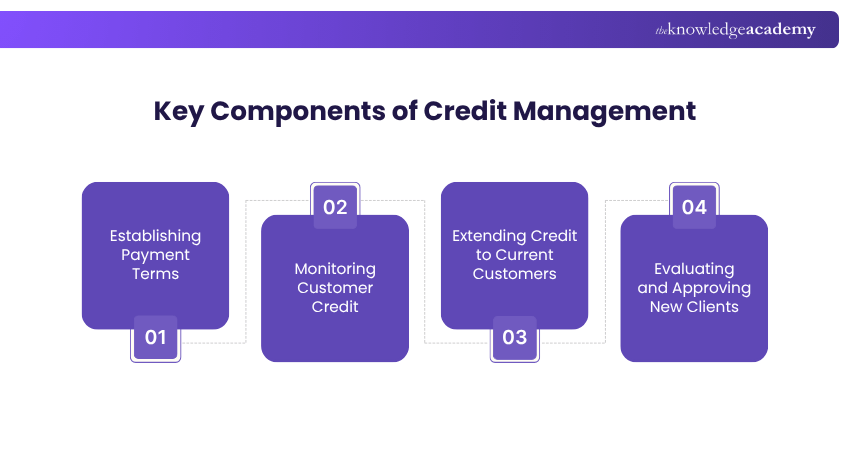
1) Establishing Payment Terms
Setting clear payment terms assesses when invoices are due and what fees apply for late payments. It works by balancing competitiveness by maintaining a healthy cash flow and minimising risk.
2) Monitoring Customer Credit
Ongoing monitoring makes sure that customers stay within their credit limits and are able to meet payment obligations, which helps manage risk and maintain financial stability. This ensures customers stay within credit limits and meet payment obligations.
3) Extending Credit to Current Customers
Offering additional credit to existing customers can boost sales, loyalty, and order volumes. Credit terms are often adjusted based on a customer’s payment history. Additional credit is offered based on payment history and strengthens customer loyalty.
4) Evaluating and Approving New Clients
Assessing new clients’ financial health helps minimise risk. Quick yet thorough evaluations are key to onboarding clients while maintaining financial security. New clients are assessed quickly and carefully to reduce risk and maintain financial stability.
Elevate your financial management with our Treasury Management Training – sign up today!
Credit Management Process
The Credit Management process involves several essential stages that help businesses evaluate, approve, and manage credit efficiently. Each stage is designed to minimise financial risks while maximising profitability through informed credit decisions. Let’s look at the Credit Management process below:

1) Establishing a Credit Policy
In Credit Management, a clear credit policy sets the foundation for every credit decision. It defines key terms, such as credit limits, payment periods, late fees, and early payment discounts. It also outlines how customers are evaluated and how overdue accounts are handled, ensuring consistency across the organisation.
2) Collecting Credit Applications From Customers
Businesses gather important details from customers through a credit application. This includes financial information, payment history, bank references, and requested credit amounts. These details are helpful for assessing whether a customer is reliable enough to receive credit.
3) Conducting Credit Research
At this stage of Credit Management, businesses evaluate the customer’s creditworthiness using methods such as the five Cs of credit: character, capacity, capital, collateral, and conditions. Also, additional data from credit bureaus may be used to make a well-informed financial decision.
4) Approving or Denying Credit Requests
Based on the analysis gathered, the business decides whether to approve or reject the credit request. Larger or higher-risk requests may involve multiple decision-makers to ensure accuracy and minimise any potential financial risk.
5) Continuously Monitoring Customer Credit
Credit Management does not end after approval. Businesses must regularly track payments and review customer accounts. Ongoing monitoring helps businesses identify risks early, maintain cash flow, and adjust credit terms if needed.
Turn cash planning into business strength with the Cash Management Course – Sign up now!
What Does Good Credit Management Look Like?
Good Credit Management is built on strong processes, clear communication, and consistent monitoring. Let’s explore the key features of effective Credit Management:
1) Attention to Detail
Strong Credit Management starts with assessing the creditworthiness of customers. This involves reviewing financial information, credit history, past payment behaviour, and relevant industry factors, ensuring credit is offered only when it aligns with the customer’s ability to pay.
2) Clear Credit Policy
Credit policy sets out clear and consistent rules for offering credit. It defines credit limits, payment terms, interest charges, and penalties for late payments. A well-documented policy helps ensure fairness, transparency, and consistency across the customer base.
3) Accurate Terms and Conditions
Terms and conditions support the sales contract and protect both the business and its customers. They outline payment terms, accepted payment methods, and contractual rights, such as late payment interest, keeping customer responsibility clear from the outset.
4) Regular Customer Monitoring
Credit Management involves regular monitoring of customer accounts to identify early signs of payment difficulties. This includes analysing payment trends, overdue balances, and changes in customer’s financial positions, reducing the risk of bad debts.
5) Clear Collection Pathways
A collection strategy is essential for handling late payments. It outlines the steps to follow when payments are missed, such as written reminders or follow-up calls. This helps customers understand the consequences of non-payment and the actions needed to resolve the issue.
6) AI and Automation
AI and automation will be very important in modern credit and collections as businesses move towards digital processes. In Credit Management, they help automate tasks, such as tracking invoices, monitoring payments, and sending reminders. This saves time, improves accuracy, and gives businesses better control over outstanding payments.
How to Develop a Credit Management Strategy?
Developing a solid Credit Management Strategy is crucial for maintaining healthy cash flow and reducing financial risk. It ensures your business only extends credit to trustworthy clients, sets clear expectations, and manages overdue payments effectively. Below are four key steps to help you build a reliable and proactive Credit Management process.
1) Define Your Credit Management Framework
Start by establishing a clear, company-wide policy that defines responsibilities, credit terms, and procedures. Form your credit control rules like KYC, risk appetite, Days Sales Outstanding targets, and distribute roles across teams for accountability and transparency.
2) Assess Client Creditworthiness
Conduct upfront and periodic credit checks using sources like credit bureaus, financial statements, and trade references. Evaluate payment history, industry risks, and financial stability before extending credit.
3) Support Credit and Debt Management with Proper Documentation
Document everything, such as signed credit agreements, clear payment terms, defined credit limits, and late fee policies. Create a living policy that evolves with business size and risk conditions.
4) Track Client Payment Progress
Monitor payment behaviour and automate follow-ups, first reminders, then formal notices if overdue. Review credit limits regularly and escalate persistent issues to debt collection or credit insurance as needed.
Turn numbers into better decisions and decode financial statements with clarity by joining the Accounting and Financial Statement Analysis Training today!
What is the Objective of Credit Management?
The main objective of Credit Management is to ensure timely customer payments while minimising the risk of bad debts. It helps maintain a healthy cash flow, supports business growth, and strengthens customer relationships by setting appropriate credit limits and enforcing consistent policies.
What are the 5 Cs of Credit Management?
The 5Cs of Credit Management help businesses assess the creditworthiness of customers before offering credit. Each focuses on a different aspect of a customer’s financial behaviour and ability to meet credit obligations.
1) Character: It shows a customer’s credit history and repayment behaviour based on credit reports and past borrowing. It helps to ensure reliability and influences approval, terms, and interest rates.
2) Capacity: It shows the customer’s ability to repay using income, cash flow, and debt-to-income ratio. A strong capacity indicates financial stability and lower repayment risk.
3) Capital: It refers to financial reserves, assets, and liquidity that a customer can use to support repayment. A higher capital provides a safety buffer if cash flow issues arise.
4) Collateral: It is the additional security provided for high-value credit, such as deposits or guarantees. It helps to reduce potential losses in case repayment fails.
5) Conditions: It includes credit terms, repayment schedules, fees, and external factors, such as economic trends. These factors affect the risk level and increase repayment likelihood.
Is Credit Management a Debt Collector?
Credit Management is not similar to debt collection, but it often includes debt collection as part of its process. It focuses on assessing creditworthiness, setting payment terms, and monitoring customer accounts to prevent payment issues. When invoices become overdue, debt collection comes into play to recover money on behalf of the business.
Conclusion
Credit Management plays a crucial role in keeping a business financially healthy by reducing payment risks, improving cash flow, and supporting better decision-making. From setting clear credit policies to using AI and automation for faster processes, it helps organisations stay in control of customer payments. This supports stronger financial stability and builds long-term business growth.
Build a strong financial career and understand numbers better – Start learning Accounting Courses Today!
Frequently Asked Questions
What is the Objective of Credit Management?

The objective of Credit Management is to improve cash flow and protect profits by reducing bad debts and financial risk. It helps businesses set suitable credit limits, collect payments faster, and maintain healthy working capital to support long-term financial stability.
Is Credit Management a Skill?
Yes, Credit Management is a skill that involves assessing creditworthiness, managing borrowing, and repayments. Credit Managers use financial analysis, decision-making, and communication skills to decide who can receive credit, set fair terms, and help customers maintain a good positive record.
What are the Other Resources and Offers Provided by The Knowledge Academy?
The Knowledge Academy takes global learning to new heights, offering over 3,000+ online courses across 490+ locations in 190+ countries. This expansive reach ensures accessibility and convenience for learners worldwide.
Alongside our diverse Online Course Catalogue, encompassing 17 major categories, we go the extra mile by providing a plethora of free educational Online Resources like Blogs, eBooks, Interview Questions and Videos. Tailoring learning experiences further, professionals can unlock greater value through a wide range of special discounts, seasonal deals, and Exclusive Offers.
What is The Knowledge Pass, and How Does it Work?
The Knowledge Academy’s Knowledge Pass, a prepaid voucher, adds another layer of flexibility, allowing course bookings over a 12-month period. Join us on a journey where education knows no bounds.
What are the Related Courses and Blogs Provided by The Knowledge Academy?
The Knowledge Academy offers various Accounting Courses, including the Introduction to Credit Control Course, Accounting and Financial Statement Analysis Training, and Cash Flow Training. These courses cater to different skill levels, providing comprehensive insights into Cash Flow vs Profit.
Our Accounting and Finance Blogs cover a range of topics related to Credit Management, offering valuable resources, best practices, and industry insights. Whether you are a beginner or looking to advance your Financial Management skills, The Knowledge Academy's diverse courses and informative blogs have got you covered.

The Knowledge Academy


Global Training Provider
The Knowledge Academy is a world-leading provider of professional training courses, offering globally recognised qualifications across a wide range of subjects. With expert trainers, up-to-date course material, and flexible learning options, we aim to empower professionals and organisations to achieve their goals through continuous learning.

Upcoming Accounting and Finance Resources Batches & Dates
Date
 Credit Control Course
Credit Control Course
Fri 21st Aug 2026
Credit Control Course
Fri 4th Dec 2026

 If you wish to make any changes to your course, please


