


 Top Rated Course

We may not have the course you’re looking for. If you enquire or give us a call on +55 8000201623 and speak to our training experts, we may still be able to help with your training requirements.
How to Deal with Negative People: An Ultimate Guide
James Smith 18 February 2026To deal with negative people, set boundaries to limit their influence, don’t take their words personally, and avoid arguments that pull you into their mindset. There are strategies for staying calm, assertive, and positive in such situations. Learn how to protect your energy, handle conflicts wisely, and build emotional resilience.

Training Outcomes Within Your Budget!
We ensure quality, budget-alignment, and timely delivery by our expert instructors.
Table of Contents
At work, at home, or even online, negative people show up in every part of your life. And unless you’re prepared, their energy can easily weigh you down. Whether it is a colleague who complains, a family member who criticises, or a friend who always sees the worst, their negativity can quickly seep into your thoughts, impacting your focus and overall well-being.
The good news? You don’t have to let their behaviour control your mood. By learning how to recognise negative patterns, you can protect your peace of mind even in the most difficult interactions.
Table of Contents
1) Common Traits of Negative People
2) How to Deal with Negative People?
3) How to Maintain Positivity in the Presence of Negative Individuals?
4) What Causes a Person to be Negative?
5) Why do Negative People Affect Much?
6) Conclusion
Common Traits of Negative People
To effectively manage the influence of negative individuals in our lives, it is important to understand the common features that they share. By identifying these patterns, we can better prepare ourselves to deal with negative interactions and maintain our well-being. Some common traits of negative people include the following:
1) They are Always Worried
Negative individuals often have a pessimistic outlook, constantly imagining worst-case scenarios. Their focus on potential problems fuels ongoing worry and anxiety. This preoccupation with negative outcomes distracts them from the present and prevents them from recognising positive possibilities, leaving them stuck in a cycle of fear and doubt.

2) They are Never Supportive
Negative People are rarely encouraging or positive, instead opposing or criticising the efforts of others. Criticism from such people concentrates on faults or weaknesses, highlighting what went wrong instead of recognising positives. This behaviour may damage confidence and impede personal development, generating a negative and demotivating environment.
3) They Never Fail to Outperform You
Negative individuals often feel a sense of inadequacy and insecurity about themselves. To compensate for these feelings, they resort to outperforming others to elevate their self-esteem. This behaviour serves to validate their worthiness in their own eyes and assert their dominance over others, fulfilling their need for validation and control in social interactions.
4) They are Persistent Complainers
Constant complaints without seeking solutions reflect a mindset focused solely on problems rather than proactive problem-solving. This behaviour may create a cycle of dissatisfaction and impede personal growth and development. Negative People who frequently express their problems without actively working towards resolutions may become stuck in a cycle of dissatisfaction and frustration.
5) They are consistently the victim
Negative People prefer to have an attitude of victimisation, blaming their faults or difficulties on external forces beyond their control. This viewpoint releases them of responsibility for their actions and prevents them from facing their involvement in shaping their surroundings. As a result, people may refuse to accept responsibility in some situations and instead blame external factors for their imagined failures.
Transform challenges into solutions for more harmonious communities with our Anti-Social Behaviour Management Training – Join soon!
How to Deal with Negative People?
To learn How to Deal with Negative People, here are some of the effective strategies. So, let’s take a quick look at each of them and mitigate the impact of negativity in your life:

1) Listen Without Bias
Active listening involves completely engaging with the individual who is speaking, focusing on their words and facial expressions without stopping or giving judgment. This allows you to gain knowledge about the fundamental reasons for their negative behaviour, such as prior experiences, fears, or unfulfilled desires, which promotes empathy and allows more effective communication and conflict resolution.
2) Take Command of Your Time
Spending less time with Negative People is important for protecting your mental and emotional health. Excessive exposure to their pessimism can gradually erode your positivity and drag you down emotionally. By setting boundaries and managing your interactions, you retain control over your environment and preserve your sense of optimism.
3) Try to Diffuse Their Negativity
Redirecting conversations to more positive topics is gently redirecting discussions away from unpleasant topics and towards positive or helpful concepts, thus shifting attention to solutions rather than problems. When necessary, offering answers to their worries means providing practical guidance or support to help solve the underlying causes generating their negativity. This, in turn, creates a sense of empowerment and achievement.
4) Accept Individuals as They Are
Understanding that you cannot change someone's personality means knowing the inherent complexity of individual features and behaviours. It highlights the importance of accepting others for who they are instead of trying to push them into aligning with our expectations or goals, resulting in healthier relationships based on understanding and respect.
5) Accept Responsibility
Refusing to engage in the role of victim is avoiding the loop of assigning blame or guilt in interpersonal problems and instead focusing on finding solutions and understanding. Taking responsibility for one's actions and emotions involves recognising personal accountability for one's behaviour and feelings, as well as allowing one to control reactions and decisions positively.
6) Do not Take Anything Personally
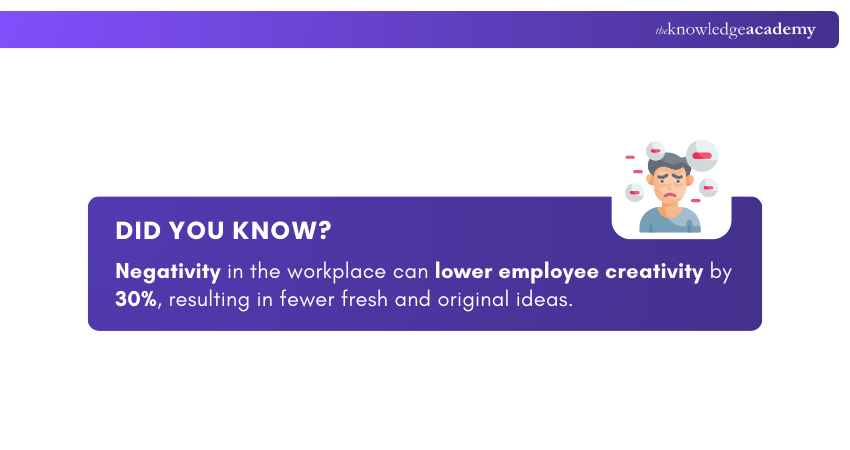
Understanding that a negative person's attitude represents their inner problems requires recognising that their negativity, criticism, or complaints stem from unresolved problems, insecurities, or past experiences. It is critical to understand that their acts are not a reflection of your value but rather an indication of their own inner conflicts.
7) Establish Boundaries
Setting strong limits involves clearly expressing what actions you will and will not accept from Negative People. This may include limiting your time with them, avoiding engaging in toxic talks, and highlighting your need for positivity in your interactions. Establishing these limits protects your mental and emotional health, allowing you to live a peaceful and positive life.
8) Act with Intention Rather than React
Responding to negative behaviour calmly involves maintaining composure and emotional stability and refraining from escalating the situation with anger or frustration. Thoughtful responses entail taking a moment to consider the best course of action, considering the underlying motivations of the negative behaviour and choosing a constructive approach to address it effectively.
9) Understand How to Manage Negative Ideas and Emotions
Interactions with negative people can trigger harmful thoughts and feelings. Mindfulness practices like deep breathing or meditation help restore calm. Engaging in hobbies improves well-being, while support from friends or professionals provides guidance and relief, making it easier to process and reduce negativity.
10) Avoid Toxic Positivity
Always pretending to be cheerful around negative people can make things worse. It may seem like you don’t care about their feelings and can be seen as one of the Toxic Traits of forced positivity. This toxic positivity can even make people feel misunderstood and alone. Instead, acknowledge that things are tough and offer empathy rather than empty cheerfulness.
11) Be Safe and Prioritise Your Well-being
If relationships with a negative individual become toxic or rude, your safety must come first. Understand that in order to protect your mental and emotional well-being, you may need to avoid these types of people. This allows you to create an environment that is more favourable to personal development and enjoyment.
Build stronger relationships with people with our Performance Management Training – Join soon!
How to Maintain Positivity in the Presence of Negative Individuals?
Negativity from others may challenge our confidence, but it does not have to define it. Let's have a look at effective methods for maintaining a positive mindset despite negative influences:
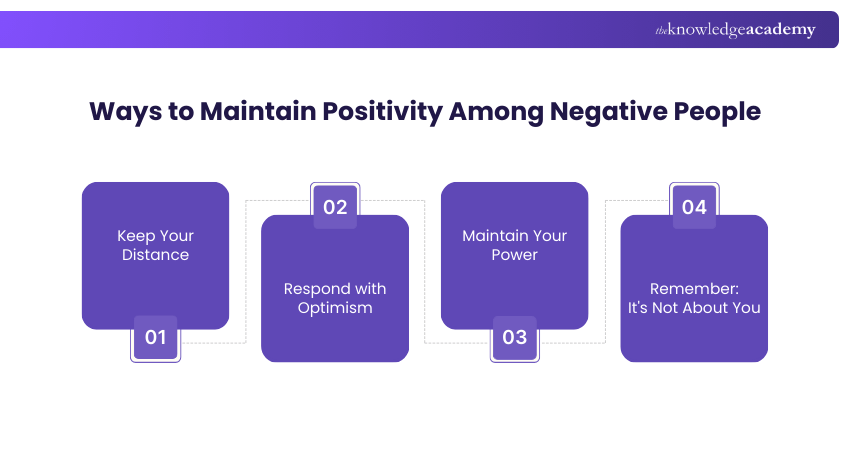
1) Keep Your Distance
Limiting contact with negative people is important for maintaining one's mental and emotional wellness. Individuals can keep a positive mentality by reducing their contact with negativity. This proactive approach allows for a greater focus on personal development and good relationships.
2) Respond with Optimism
When faced with negativity, responding positively can be a successful strategy for creating a more productive environment. This can include speaking encouraging words to others or redefining challenging circumstances in a more positive light, so changing your perspective and creating a mindset focused on solutions and growth instead of focusing on failures.
3) Maintain Your Power
It is important not to let negative people dominate your emotions or influence your state of mind. You can maintain control over your emotions and reactions by depending on your inner strength and resilience. It allows you to deal with difficult relationships with consistency and confidence while maintaining your emotional well-being.
4) Remember: It's Not About You
It's important to understand that a negative person's behaviour can frequently be the result of internal conflicts instead of any weaknesses on your part. Their negativity could be an escape plan for unresolved issues or fears, often linked to antisocial behaviour. Understanding this allows you to avoid taking their enmity personally and retain a greater sense of self-worth.
Turn conflicts into opportunities and enhance teamwork with our Conflict Management Training – Sign up Now!
What Causes a Person to be Negative?
In a perfect world, everyone would stay positive and treat others with kindness. But real life is different, with painful experiences, stress, or past hurts that can leave people with fears and insecurities that shape how they act. Sometimes negativity comes from low confidence, mental health struggles like anxiety or depression, or growing up in a critical environment.
Environmental influences, like growing up in a critical or pessimistic household, can reinforce these patterns. Understanding these root causes helps you see negativity as a reflection of inner struggles, not necessarily a personal attack. With awareness, patience, and support, people can slowly change their outlook and learn healthier ways to deal with challenges.
Why do Negative People Affect us so Much?
Negative people affect us strongly because emotions are contagious. Constant exposure to criticism, complaining, or pessimism can influence thoughts and moods, leading to stress, reduced motivation, and self-doubt. Their behaviour often demands attention, diverting focus from personal priorities.
Empathetic individuals may absorb negativity more deeply, feeling responsible for fixing problems, which adds extra emotional weight. This combination of emotional drain and distraction explains why interactions with negative people can feel overwhelming.
Conclusion
Although dealing with negativity can be difficult, you can reduce its effects and preserve your sense of humour by using the appropriate techniques. Understanding How to Deal with Negative People, common characteristics, healing methods, and setting boundaries can help you manage relationships with negative people and protect your well-being.
Elevate your potential and empower your team - Join our Personal & Organisational Development Course today!
Frequently Asked Questions
How to Stay Away from Negative People?

Staying away from negative people means limiting contact, setting clear boundaries, and focusing on positive relationships. Redirect conversations toward constructive topics, engage in uplifting activities, and choose supportive environments that protect emotional well-being and encourage personal growth are the ways of managing negative people.
How do I Remove Negative Energy from Myself?
Meditation, exercise, or spending time in nature can help you eliminate your thoughts and remove negativity. Surround yourself with positive people, practise appreciation, and let go of past wounds with forgiveness and acceptance.
What are the other resources and offers provided by The Knowledge Academy?
The Knowledge Academy takes global learning to new heights, offering over 3,000+ online courses across 490+ locations in 190+ countries. This expansive reach ensures accessibility and convenience for learners worldwide.
Alongside our diverse Online Course Catalogue, encompassing 19 major categories, we go the extra mile by providing a plethora of free educational Online Resources like Blogs, eBooks, Interview Questions and Videos. Tailoring learning experiences further, professionals can unlock greater value through a wide range of special discounts, seasonal deals, and Exclusive Offers.
What is the Knowledge Pass, and how does it work?
The Knowledge Academy’s Knowledge Pass, a prepaid voucher, adds another layer of flexibility, allowing course bookings over a 12-month period. Join us on a journey where education knows no bounds.
What are related Leadership Courses and blogs provided by The Knowledge Academy?
The Knowledge Academy offers various Management Courses, including Introduction to Managing People, Introduction to Supplier management, Managing Remote Teams and Personal & Organisational Development. These courses cater to different skill levels, providing comprehensive insights into Management Skills.
Our Business Skills Blogs cover a range of topics related to Leadership, offering valuable resources, best practices, and industry insights. Whether you are a beginner or looking to advance your Leadership Skills, The Knowledge Academy's diverse courses and informative blogs have you covered.

James Smith


Digital Marketing Manager and Trainer
James Smith is a digital marketing professional with over a decade of experience in SEO, content strategy, paid media and analytics. He has supported both SMEs and global brands in transforming their digital presence. James’s writing and training are rooted in results-driven tactics and the latest marketing trends.
View Detail
Upcoming Business Skills Resources Batches & Dates
Date
 Introduction to Managing People
Introduction to Managing People
Fri 24th Jul 2026
Introduction to Managing People
Fri 9th Oct 2026

 If you wish to make any changes to your course, please


