




We may not have the course you’re looking for. If you enquire or give us a call on +1800812339 and speak to our training experts, we may still be able to help with your training requirements.
Workplace Accessibility: Benefits, Laws and Best Practices
William Brown 27 April 2026Workplace Accessibility ensures inclusive environments by removing physical and digital barriers, enabling equal opportunities for all employees. It also fosters a sense of belonging, improves productivity, and strengthens teamwork and collaboration by allowing every employee to contribute their skills without limitations.

BCS Practitioner Certificate in Being an IT Business Partner Training
 Top Rated Course
Top Rated Course
Exclusive 40% OFF
Training Outcomes Within Your Budget!
We ensure quality, budget-alignment, and timely delivery by our expert instructors.
Table of Contents
Think about the frustration when a website doesn’t load or a link doesn’t work. Now imagine that’s your daily work experience because digital tools aren’t accessible. Accessibility in the Workplace changes this story by ensuring offices and digital spaces are inclusive, seamless, and fair for every employee.
In this blog, we’ll uncover the true meaning of Workplace Accessibility, why it’s so important, and the different forms it can take. We’ll also explore the benefits of accessible environments and share proven practices that help organisations break inclusive accessibility barriers.
Table of Contents
1) What is Accessibility in the Workplace?
2) Why Accessibility is Important in the Workplace
3) Types of Accessibility at Work
4) Creating an Inclusive Workplace with Accessible Features
5) Benefits of an Accessible Workplace
6) Disability Inclusion Best Practice
7) Conclusion
What is Accessibility in the Workplace?
Accessibility in the Workplace means making sure all employees, including disabled employees, can do their jobs easily and fairly. It is about removing problems that make work hard, like moving around, using tools, or joining activities. This can include things like ramps, wide doors, screen readers, or simple websites.
It also means making a Workplace where everyone feels welcome and supported. Accessibility helps employees use their skills without trouble and gives equal chances to succeed. When a Workplace has good disabled access, disabled people can work easily, feel respected, and be more productive.

Why Accessibility is Important in the Workplace
Making Workplaces accessible gives many benefits to an organisation:
1) Support More People: Accessible Workplaces help employees, visitors, customers, and future workers, including disabled staff.
2) Reduce Adjustment Requests: Making Workplaces accessible early means fewer special changes are needed later, making things easier for HR.
3) Encourage Inclusivity: Accessibility creates a Workplace where people respect, support, and work well with each other.
4) Prevent Discrimination: Accessibility makes work fair, follows the law, and supports good values.
5) Boost Morale: When needs are met, employees feel happier, work better, and stay longer.
6) Show Equality Commitment: Accessibility proves the organisation values fairness and attracts a wide range of people.
Acquire knowledge of effective analysis techniques with our BCS Certificate in Business Analysis Practice – Join now!
Types of Accessibility at Work
In an inclusive work environment, all employees can equally take part. Accessibility encompasses physical, digital, and social accessibility, helping both non-disabled and disabled workers thrive together.

1) Digital Accessibility Examples
Websites, software, and documents should be easy for everyone to use, including those relying on screen readers or needing formats like audio or braille. Communication should also be simple and inclusive, avoiding unnecessary technical terms.
2) Social Accessibility Examples
A socially accessible Workplace values diversity, Equity, inclusion, and belonging, ensuring everyone feels welcome. This includes DEIB training for employees and flexible options like remote work or short-term leave to support different needs.
3) Physical Accessibility Examples
Physical accessibility means creating barrier-free spaces with ramps, wide doorways, elevators, and accessible restrooms. It also includes assistive technologies like screen readers, ergonomic keyboards, and adaptable furniture such as custom seating or adjustable desks.
Learn Agile values, roles, and practices to manage and deliver projects more effectively. Join our BCS Foundation Certificate in Agile now!
Creating an Inclusive Workplace with Accessible Features
For a long time, the focus in the Workplace has mainly been on installing lifts, ramps, and accessible toilets for better disabled access. Actually, overcoming accessibility issues in the Workplace requires much more effort than is often believed. There are several steps you can take to ensure your company is open to everyone.

1) Adapting the Workspace
Workplaces can be adapted by providing nearby parking spots, step-free building access, automated doors, elevators with tactile buttons, sloped pathways, braille signage, and accessible toilets. Simple adjustments like lower reception desks and accessible kitchen facilities also make a big difference.
2) Modifying the Work Environment
Changes such as rearranging office layouts for wheelchair access, using daylight-simulating bulbs, installing hearing loop systems in meeting rooms, or relocating teams to accessible floors help create a more inclusive environment.
3) Acquiring or Modifying Specialised Equipment
Specialised tools like one-handed keyboards, ergonomic mice, adjustable desks, supportive chairs, and transcription or speech recognition software make work more accessible. Employers are also required to conduct display screen equipment (DSE) assessments to identify employee needs.
4) Providing Assisted Support
Assistance can include text-to-speech software for reading digital content or assigning personal support staff when required. These tools make everyday tasks easier and help employees work independently with greater confidence.
5) Offering Training
Inclusive training should cover awareness of disabilities, diversity, and inclusion, while also ensuring e-learning and meetings provide captions or subtitles for those with hearing challenges. Regular training sessions also promote empathy and encourage respectful interactions across the Workplace.
6) Flexible Working Patterns
Offering remote work, flexible schedules, or adjusted working hours can support employees with varying needs and improve overall accessibility. Such flexibility helps balance work and personal responsibilities, boosting both morale and productivity.
Build strong engineering skills and advance your career. Join our BCS Practitioner Certificate in Requirements Engineering now!
Benefits of an Accessible Workplace
People with disabilities often find it harder to get jobs than others. But the benefits of an accessible Workplace are not only about giving jobs to disabled people. When organisations focus on accessibility, they build a Workplace that is inclusive, supportive, and productive for everyone. This leads to a stronger and more successful business.
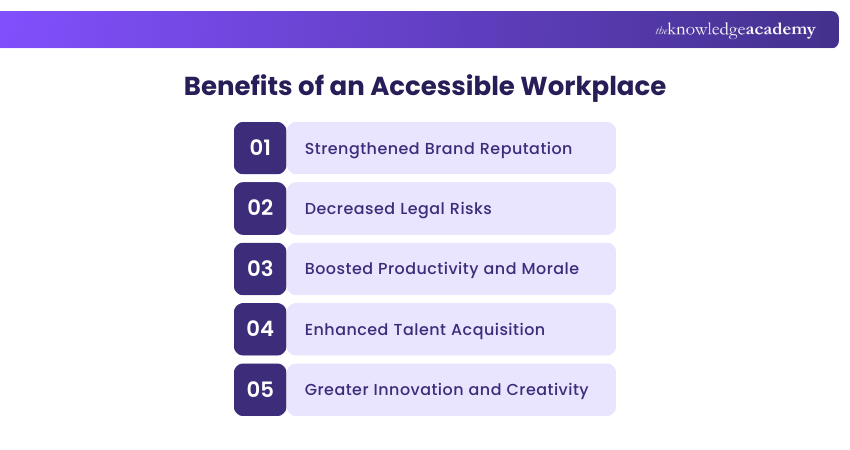
1) Strengthened Brand Reputation: Accessibility shows social responsibility and builds a positive image.
2) Decreased Legal Risks: Compliance prevents lawsuits, penalties, and discrimination claims.
3) Boosted Productivity and Morale: Accessibility helps employees feel valued and perform better.
4) Enhanced Talent Acquisition: Inclusive Workplaces attract diverse and skilled candidates.
5) Greater Innovation and Creativity: Accessibility brings fresh ideas through diverse perspectives.
Disability Inclusion Best Practices
These are some of the best practices for organisations that want to lead to inclusive accessibility.
1) Leadership Commitment: Leaders should support inclusion, set clear goals, and give needed resources.
2) Accessible Workplaces: Make offices, tools, and websites easy for everyone to use, ensuring disabled people have full disabled access.
3) Inclusive Hiring: Post jobs clearly, make applications fair, and give interview support for disabled staff.
4) Support Facilities: Provide flexible hours, helpful tools, and a simple process for requests.
5) Culture of Belonging: Start groups, mentorships, and awareness events so everyone feels included.
6) Employee Training: Teach staff about disability, kind language, and how to support colleagues.
7) Measure Progress: Check goals, collect feedback, and share success stories to keep improving.
Conclusion
Focusing on Workplace Accessibility creates a fair and supportive environment where everyone can contribute without barriers. It improves employee morale, increases productivity, and attracts diverse talent, helping businesses grow stronger and more innovative. Accessible practices also reduce legal risks and enhance brand reputation. By making accessibility a priority, organisations build a general culture that benefits both employees and the company’s long-term success.
Gain complimentary Professional membership benefits when you successfully certify. Join our Business Analysis Courses now!
Frequently Asked Questions
What are the Objectives of Accessibility?

Making sure that people with disabilities can access information, services, and products without barriers is crucial for making their lives easier and more fulfilling. The goal of accessibility is to eliminate these barriers and provide equal freedom for everyone, regardless of their disabilities.
What are the Main Rules of Accessibility?
Accessible Work Environment involves providing physical accommodation, assistive technology, accessible communication, inclusive policies, and flexible work options. These measures ensure equal access and opportunities for all employees, fostering an inclusive work environment.
What are the Other Resources and Offers Provided by The Knowledge Academy?
The Knowledge Academy takes global learning to new heights, offering over 3,000 online courses across 490+ locations in 190+ countries. This expansive reach ensures accessibility and convenience for learners worldwide.
Alongside our diverse Online Course Catalogue, encompassing 19 major categories, we go the extra mile by providing a plethora of free educational Online Resources like Blogs, eBooks, Interview Questions and Videos. Tailoring learning experiences further, professionals can unlock greater value through a wide range of special discounts, seasonal deals, and Exclusive Offers.
What is The Knowledge Pass, and How Does it Work?
The Knowledge Academy’s Knowledge Pass, a prepaid voucher, adds another layer of flexibility, allowing course bookings over a 12-month period. Join us on a journey where education knows no bounds.
What are the Related Courses and Blogs Provided by The Knowledge Academy?
The Knowledge Academy offers various Business Analysis Courses, including the BCS Practitioner Certificate in Being an IT Business Partner, BCS Certificate in Business Analysis Practice, and the BCS Practitioner Certificate in Requirements Engineering. These courses cater to different skill levels, providing comprehensive insights into the Business Process.
Our Business Analysis Blogs cover a range of topics related to Workplace Accessibility, offering valuable resources, best practices, and industry insights. Whether you are a beginner or looking to advance your Business Analysis skills, The Knowledge Academy's diverse courses and informative blogs have got you covered.

William Brown


Senior Business Analyst and Strategic Advisor
William Brown is a senior business analyst with over 15 years of experience driving process improvement and strategic transformation in complex business environments. He specialises in analysing operations, gathering requirements and delivering insights that support effective decision making. William’s practical approach helps bridge the gap between business goals and technical solutions.
View Detail
Upcoming Health & Safety Resources Batches & Dates
Date
 BCS Practitioner Certificate in Being an IT Business Partner Training

 If you wish to make any changes to your course, please


