


 Top Rated Course

We may not have the course you’re looking for. If you enquire or give us a call on +44 1344 203 999 and speak to our training experts, we may still be able to help with your training requirements.
What is Crisis Management: All You Need to Know
Olivia Taylor 09 March 2026Crisis Management is the process of preparing for and responding to unexpected events to protect operations, reputation, and stakeholders. These crises can include natural disasters, cyber breaches, public health crises, reputation crises, and financial crises that can disrupt operations and damage reputations.

Training Outcomes Within Your Budget!
We ensure quality, budget-alignment, and timely delivery by our expert instructors.
Table of Contents
The sad reality about disasters is that they don't come knocking; they just barge in! One moment your business is running smoothly, the next you're facing a flood of confusion, panic and tough decisions. Be it natural disasters, cyberattacks, or PR issues, they can all disrupt operations and damage reputations. That’s where Crisis Management comes in. Think of it as your company’s emergency toolkit, ready to guide you through the storm.
It’s the process of preparing for, handling and recovering from unexpected events to protect a business’s people, assets, and image. This blog breaks down What is Crisis Management and how to handle the unexpected like a pro. So read on and build the mindset you need to master any crisis!
Table of Contents
1) What is Crisis Management?
2) Importance of Crisis Management
3) Types of Crises
4) How to Develop a Crisis Management Plan?
5) What to Include in a Crisis Management Plan?
6) How to Test a Crisis Management Plan?
7) The Five Stages of Crisis Management
8) What is the Golden Rule of Crisis Management?
9) Conclusion
What is Crisis Management?
Crisis Management is a structured process used by organisations to identify and respond to critical events. These events may include unexpected threats or disruptions that could affect an organisation’s people, assets or operations. Proper preparation requires a well-developed Crisis Management plan that supports a timely response.
Focusing on crisis management also helps organisations reduce the wider impact of such events. In addition to immediate risks, crises can trigger ripple effects on brand reputation, customer trust, employee morale and supply chains.
Importance of Crisis Management
The importance of Crisis Management cannot be overlooked. It equips organisations with the ability to deal with adverse situations efficiently so that the risk of big repercussions is rather low. The best practices of Crisis Management ensure:

Types of Crises
Now that you’ve got a basic understanding of What is Crisis Management, it’s time to delve into its types. A crisis can come from outside events, like natural disasters, or inside mistakes, such as poor employee actions. Internal crises, like unsafe behaviour or bad service, can be prevented or managed if companies enforce clear rules, ethics, and safety policies, helping reduce risks and protect the organisation’s reputation. Here are the main types of crises:
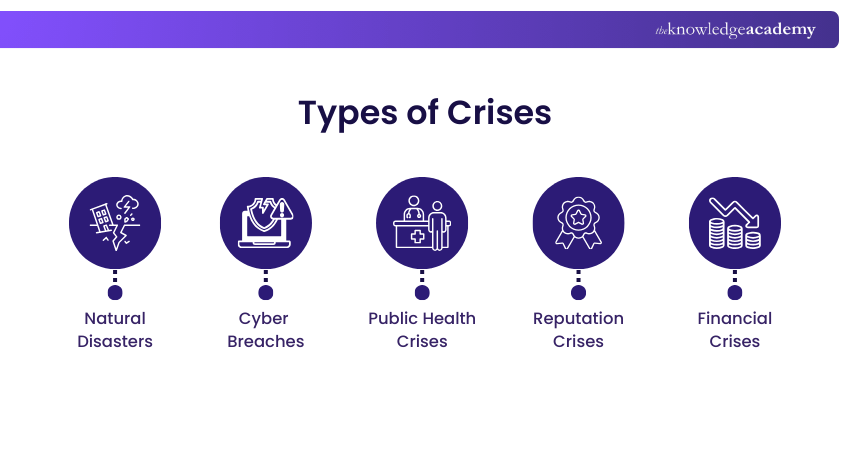
1) Natural Disasters
Hurricanes, floods, and earthquakes are some of the natural disasters. In these events, the entire community will be affected, meaning that there will be disruptions in many places. Businesses will need preparation regarding its safety, including its employees, and continuity in services.
2) Cyber Breaches
Organisations facing an increasingly digital world will face the challenge of cybersecurity breaches. Data breaches, ransomware attacks, and identity thefts cause critical financial and reputational damage. Quick detection, fast containment, and speedy recovery happen in effective Crisis Management for this area.
3) Public Health Crises
Pandemics and health emergencies, as had been seen by the unfolding of the COVID-19 breakout, demand all-inclusive Crisis Management exercises. Companies will need to care for health and safety while striving for the fluid adjustment measures for fast-changing guidelines and shifts in public opinion.
4) Reputation Crises
Reputation crises arise due to numerous reasons like, unethical practices, public relations disasters or negative publicity. The management of such crises is a part of Effective Communication in addition to ensuring the system in place to regain the trust of the stakeholders.
5) Financial Crises
These are crises in the finances of an organisation and are majorly caused due to economic downturn, fraudulence or mismanagement. The very effectiveness of an organisation can be called into question due to financial crises. A good Crisis Management procedure thus not only comprises Risk Analysis but also corrective measures toward regaining financial health.
Turn untapped potential into steady performance! Sign up for our Performance Management Training now!
How to Develop a Crisis Management Plan?
Effective Crisis Management plans rely on clear, rapid communication supported by critical Event Management technology. This technology helps organisations protect people, safeguard assets, and restore normal operations efficiently. A comprehensive plan must address five key areas during any crisis:
1) People: Employees are an organisation’s most valuable asset. During a crisis, teams must quickly determine whether individuals are at risk and communicate effectively with employees, customers and visitors before, during and after the event.
2) Facilities and Critical Infrastructure: Organisations must monitor facilities and infrastructure to determine whether they have been affected or could be impacted as the situation develops.
3) Technology: Systems and digital assets must remain secure and accessible. Backup systems should be available in case of failures, and the plan should identify responsible teams who can resolve outages or security issues quickly.
4) Business Operations: Maintaining business continuity is crucial. Organisations must plan how essential processes will continue during disruptions and identify which services or customers may be affected.
5) Brand Reputation: Reputation Management is also vital. The way an organisation responds to a crisis can significantly influence public perception and long-term trust.
What to Include in a Crisis Management Plan?
From Risk Analysis to post-crisis assessment, there are many things to include in your Crisis Management Plan. Let’s explore these elements:
1) Risk Analysis
a) A Risk Analysis identifies and ranks the possible risks your company might face.
b) It organises risks based on how likely they are to occur.
c) Incorporating Risk Management in your emergency response plan adds clarity and structure.
d) It helps new leaders quickly understand key risks during a management change.
2) Activation Protocol
a) The activation protocol sets the conditions for when a crisis response should begin.
b) It helps decide the right moment to act based on the seriousness of the situation.
c) For instance, action may be delayed until the crisis reaches a specific level of business impact.
d) Once that threshold is met, the Crisis Management team responds.
3) Emergency Contacts
a) Add key emergency contact information to your crisis plan to speed up response times.
b) This ensures quick access to external help when needed.
c) Your contact list should include the local police, fire department, and hospital first responders.
d) Don't forget to include plumbers, electricians, poison control, and other relevant emergency services.
e) Tailor the list to match the specific risks identified in your Risk Analysis.
Leading with purpose starts with learning the principles! Sign up for our Introduction to Management Training now!
4) Response Procedures
a) The activation protocol defines when the crisis response team should begin taking action.
b) Response procedures outline what each team member must do once the plan is triggered.
c) Use a roles and responsibilities matrix (RACI chart) to assign tasks.
d) A RACI chart shows who is responsible, accountable, consulted, and informed.
e) It helps identify who communicates with the public and who handles internal communication with employees.
f) Such clarity is important for smooth coordination and avoids confusion during a crisis.
5) External Crisis Communication Strategy
a) A crisis can affect both internal operations and external parties.
b) You must inform key external stakeholders and the public if the crisis becomes widespread.
c) Develop an external communication strategy as part of your crisis plan.
d) Clearly define who will share updates with the public or media.
e) Assign someone to handle and respond to feedback from stakeholders and the public.
f) This ensures timely, clear, and consistent communication during a crisis.
6) Post-crisis Assessment
a) A post-crisis assessment helps your team review the response after the crisis.
b) It highlights what worked well and what needs improvement.
c) Use the findings to update your Crisis Management plan.
d) Apply lessons learned to strengthen future response procedures.
e) This process helps reduce the impact of future crises on your business.
How to Test a Crisis Management Plan?
Crisis plans must be evaluated using realistic scenarios. Simulating natural or human-made emergencies that are likely to affect the organisation is considered best practice. For example, organisations located in coastal regions may conduct hurricane preparedness drills. Scenario-based testing helps confirm that contact details are accurate, communication messages are ready, and emergency notifications function properly.
Testing also allows organisations to uncover potential challenges, such as:
1) Email Fatigue: Employees may overlook important alerts if they receive too many emails. Organisations should use communication channels that ensure urgent messages are seen.
2) Time Delays: During emergencies, slow manual processes can hinder response. Automating crisis procedures with clear policies and digital tools can improve efficiency.
3) Human Error: High-pressure situations increase the likelihood of mistakes. Regular drills help teams become confident and familiar with the crisis response process.
4) Dispersed Workforce: With many teams working remotely, coordination can become more difficult. Testing helps ensure that distributed teams can still respond effectively during a crisis.
Hone your skills for managing people, projects and progress in our Management Courses - Register now!
The Five Stages of Crisis Management
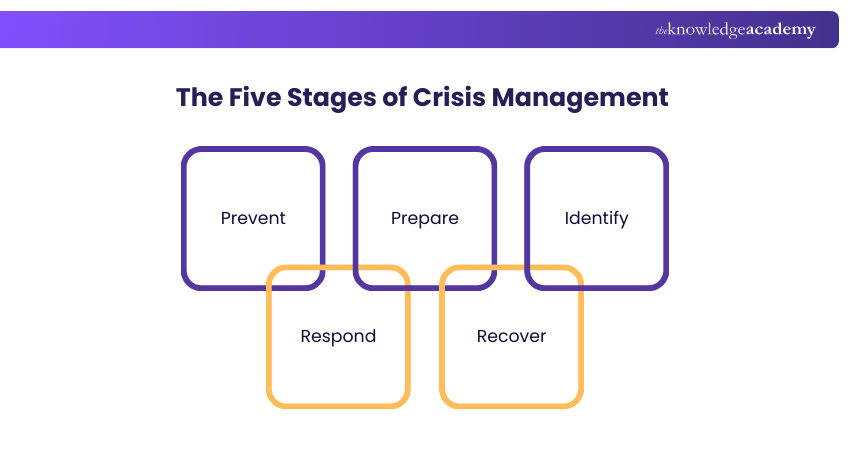
Crisis Management comprises five core stages that will guide organisations through the process effectively in handling crises.
1) Prevent: Identify potential hazards and implement measures to prevent crises from occurring, ensuring proactive Risk Management.
2) Prepare: Establish a Crisis Management plan which requires communication, team roles, and rules for taking response action.
3) Identify: Quickly recognise when a critical event is unfolding. Activate the Crisis Management plan to mobilise resources and response efforts.
4) Respond: Implement the Crisis Management plan with immediate effective action to contain the situation.
5) Recover: Assess the impact and commence recovery operations back to normal service provision.
From managing change to driving it, master the executive edge with our Senior Management Training - Sign up now!
What is the Golden Rule of Crisis Management?
The Golden Rule of Crisis Management is to be proactive rather than reactive. This means organisations must identify potential threats early on and prepare clear plans to respond before a crisis actually occurs. Being prepared helps minimise damage and allows businesses to act quickly and effectively when unexpected events happen.
In simple terms, the rule emphasises anticipating risks, planning responses and acting early instead of waiting until a crisis escalates. This proactive approach protects people, operations and reputation while bolstering an organisation’s ability to recover quickly.
Conclusion
Crisis Management helps organisations handle sudden problems with strength and flexibility. By understanding What is Crisis Management, knowing the types of crises, creating solid plans, and communicating clearly, businesses can protect their reputation, keep people safe, and recover more easily. Taking a proactive approach prepares them for tough times and builds a strong, resilient culture that can face any challenge.
Master the art of blending empathy and efficiency in our Introduction to Managing People Course - Sign up now!
Frequently Asked Questions
How to Manage a Personal Crisis?

Managing a personal crisis involves acknowledging your feelings, seeking support from professionals or friends and creating a plan. You must prioritise self-care by indulging in activities that bring you peace. Focus on small, manageable steps to regain control, and remember that it’s okay to ask for help when needed.
What are the Four Pillars of Crisis Management?
The four pillars of Crisis Management include preparedness, response, recovery, and mitigation.
a) Preparedness involves planning and training.
b) Response is the immediate action taken during a crisis.
c) Recovery focuses on restoring normalcy.
d) Mitigation aims to reduce the effect of future crises through Risk Management strategies.
What are the Other Resources and Offers Provided by The Knowledge Academy?
The Knowledge Academy takes global learning to new heights, offering over 3,000+ online courses across 490+ locations in 190+ countries. This expansive reach ensures accessibility and convenience for learners worldwide.
Alongside our diverse Online Course Catalogue, encompassing 17 major categories, we go the extra mile by providing a plethora of free educational Online Resources like Blogs, eBooks, Interview Questions and Videos. Tailoring learning experiences further, professionals can unlock greater value through a wide range of special discounts, seasonal deals, and Exclusive Offers.
What is The Knowledge Pass, and How Does it Work?
The Knowledge Academy’s Knowledge Pass, a prepaid voucher, adds another layer of flexibility, allowing course bookings over a 12-month period. Join us on a journey where education knows no bounds.
What are the Related Courses and Blogs Provided by The Knowledge Academy?
The Knowledge Academy offers various Management Courses, including the Management Training for New Managers Course, Crisis Management Training and the Introduction to Management Course. These courses cater to different skill levels, providing comprehensive insights into Crisis Management Job Description.
Our Business Skills Blogs cover a range of topics related to Crisis Management, offering valuable resources, best practices, and industry insights. Whether you are a beginner or looking to advance your Crisis Management skills, The Knowledge Academy's diverse courses and informative blogs have got you covered.

Olivia Taylor


Chartered Accountant and Financial Training Specialist
Olivia Taylor is a qualified chartered accountant with over a decade of experience in financial management, auditing and corporate reporting. Having worked with leading firms in both the public and private sectors, Olivia brings clarity to complex financial topics. Her writing focuses on helping professionals build confidence in key areas of accounting, compliance and financial planning.
View Detail
Upcoming Accounting and Finance Resources Batches & Dates
Date
 Crisis Management Training
Crisis Management Training
Fri 10th Apr 2026
Crisis Management Training
Fri 10th Jul 2026
Crisis Management Training
Fri 2nd Oct 2026

 If you wish to make any changes to your course, please


