


 Top Rated Course

We may not have the course you’re looking for. If you enquire or give us a call on +44 1344 203 999 and speak to our training experts, we may still be able to help with your training requirements.
What is Construction Management: Complete Guide
James Smith 04 December 2025Construction Management involves planning, coordinating, and overseeing building projects to ensure timely, on-budget, and high-quality delivery. It also covers managing resources, handling risks, ensuring safety, and maintaining clear communication among all teams. Construction Managers ensure the work is done safely and per the design.

Training Outcomes Within Your Budget!
We ensure quality, budget-alignment, and timely delivery by our expert instructors.
Table of Contents
Steel beams rising, bricks being laid, concrete foundations being set, and teams working in perfect sync! This is the picture of an ideal construction site, heading towards a powerful final product that stands the storm of time. This is where Architects, Engineers, Labourers and Contractors join hands to build something remarkable, ultimately spotlighting the importance of Construction Management. But exactly What is Construction Management?
It is a specialised field that manages the planning, coordination, and execution of construction projects from start to finish. From skyscrapers to bridges, Construction Managers are the visionaries who transform blueprints into breathtaking structures, keeping projects on track, safe, and built to last. This blog explores What is Construction Management in detail, outlining its phases, importance, essential skills, principles and more. So read on!
Table of Contents
1) What is Construction Management?
2) The Importance of Construction Management in the Industry
3) Functions in Construction Management
4) Construction Management vs Project Management: What's the Difference?
5) Construction Management Phases
6) How to Become a Construction Manager?
7) What are the 5 Principles of Construction Management?
8) What Does a Construction Manager do?
9) Conclusion
What is Construction Management?
Construction Management is all about strategic planning and supervision of Construction projects from start to completion. It necessarily involves overseeing all aspects of a project, from initial design to procurement, Construction, and project close-out. Advancements in technology have further transformed this field by providing tools for precise scheduling, budgeting, and building information modelling.
Moreover, Construction Managers act as the central hub. They mainly facilitate collaboration among Stakeholders, including Architects, Engineers, Contractors, and Suppliers.Construction Management's main objective is to ensure timely, cost-effective project delivery while maintaining the highest quality standards. Thus, Construction Managers play a vital role in achieving this, building strong client relationships and ensuring successful construction endeavours.

The Importance of Construction Management in the Industry
Construction Management is crucial because it makes sure projects are completed within the set budget, on time, and to the required quality standards. Here are its benefits:
1) Construction Management ensures effective planning, coordination, and control from start to finish.
2) It minimises risks and increases overall productivity.
3) It facilitates clear communication among Stakeholders.
4) It allocates resources efficiently for optimal use.
5) It strengthens compliance with safety regulations.
6) It contributes to successful project outcomes and client satisfaction.
Functions in Construction Management
Construction Management services comprise the following functions and tasks for fulfilling the objectives and requirements of the construction project:
Cost Management
Construction Managers are responsible for tracking and controlling project expenses throughout the construction process. They make sure that the work stays within the allocated budget. They also forecast future costs to avoid overspending.
Schedule Management
They create and maintain a master timeline that outlines every construction activity. The schedule is regularly updated to reflect real-time progress and helps them address any delays.
Quality Management
Construction Managers also develop, implement and monitor quality assurance and quality control protocols at every stage of construction. This is important to meet the owner’s expectations and objectives. They make sure that all materials and workmanship align with industry standards and project specifications.
Safety Management
They establish and enforce safety procedures to protect workers on-site and make sure that the building is safe before occupancy. This includes providing ongoing safety training and strict adherence to regulatory guidelines to prevent accidents.
Change Management
If some change needs to be added to the original construction plan, Construction Managers assess, carry out, and document these modifications. Key stakeholders must approve all changes, which must be reflected in updated costs and timelines.
Inspections
Construction Managers must perform regular inspections throughout the construction process. This helps them verify the quality of work, safety measures and legal compliance. They document findings and promptly address issues to keep the project on track.
Documentation
Throughout the construction lifecycle, they maintain detailed records of all project-related communication, procedures, approvals, and change orders. Proper documentation helps resolve disputes and ensures compliance with regulatory and client requirements.
Be prepared to respond effectively in emergencies with our First Aid at Work Course – join now!
Construction Management vs Project Management: What's the Difference?
Here are the key differences between Construction Management and Project Management:

Construction Management Phases
Construction Management includes crucial stages such as planning, procurement, preconstruction, construction and Close-out. Let’s explore these phases in detail:
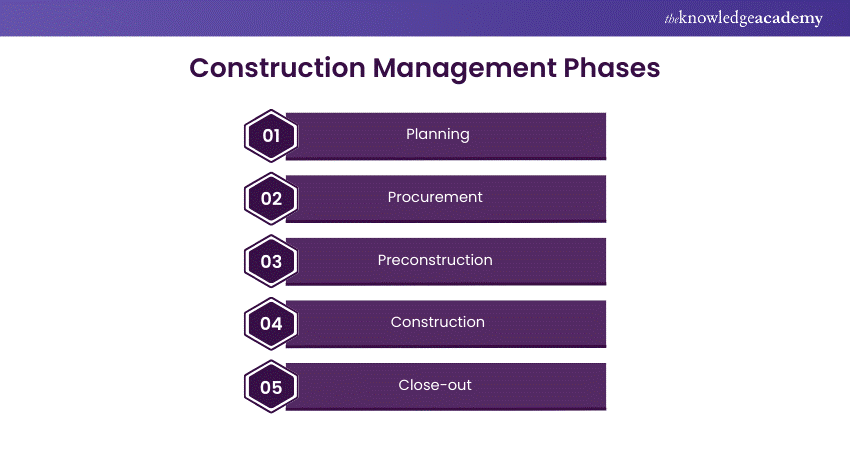
1) Planning
A thorough plan is crucial before construction begins. Construction Managers should include the following factors in their planning phase:
a) Budgeting: Construction Managers should estimate costs for materials, labour, equipment, and other expenses. In addition, they should ensure that the project remains financially viable.
b) Resource Allocation: Effective resource allocation is key. Construction Managers should determine the required resources for each project phase to avoid shortages or inefficiencies.
c) Risk Assessment: Planning also involves identifying potential risks and developing mitigation strategies. Construction Managers can anticipate challenges such as weather delays, labour shortages, or design changes.
d) Coordination: This phase highly prioritises close coordination with Architects, Engineers, and other stakeholders. It requires Construction Managers’ collaboration to align plans, address design considerations, and ensure feasibility.
2) Procurement
This phase is about laying the groundwork for the entire project by obtaining the necessary permits and other materials. It includes the following activities:
a) Permits and Legal Framework: Procurement involves obtaining permits and licenses required for Construction to begin. Construction Managers also navigate the legal landscape, ensuring compliance with local building codes and regulations.
b) Contractor Selection: Construction Managers play a pivotal role in selecting contractors and Subcontractors. They evaluate bids, negotiate contracts, and ensure that the chosen parties can meet project requirements.
c) Material Acquisition: Procuring materials is a critical aspect. Construction Managers thus work to source quality materials within budget constraints, considering factors like availability, cost, and delivery schedules.
d) Financial Framework: Establishing the financial framework is crucial. Hence, Construction Managers create budgets, monitor expenses, and ensure that procurement stays within the allocated budget.
Don’t let safety slip away! Elevate your awareness on working at heights with our Working at Height Training – Sign up now!
3) Preconstruction
In this phase, Construction Managers work with Architects and Engineers to finalise design plans. This stage meets project specifications by including the following activities:
a) Cost Estimation: Construction Managers estimate costs for materials, labour, permits, and other expenses. They create accurate cost projections to inform budgeting and procurement decisions.
b) Hiring Subcontractors: Preconstruction involves selecting Subcontractors for specialised tasks. Therefore, Construction Managers should evaluate Subcontractor bids, negotiate contracts, and ensure that they align with other project requirements.
c) Site Preparation: Preparing the Construction site is essential for smooth project execution. Construction Managers should oversee site clearing, grading, and utility installations to ready the site for Construction activities.
d) Logistics Planning: Logistics plays a crucial role. Construction Managers’ plans for equipment deliveries, material storage, and site access should optimise workflow and minimise disruptions.
4) Construction
The Construction phase is when the project plan is put into action. Construction Managers ensure work progresses within this phase, which comprises the following:
a) Managing Resources: Construction Managers are responsible for efficiently managing labour, equipment, and materials. They further ensure that resources are properly utilised to avoid delays and cost overruns.
b) Quality Control: Maintaining quality standards is paramount. Construction Managers thus conduct regular inspections, enforce Quality Control measures, and address each deviation promptly.
c) Safety: Health and Safety in Construction is a top priority. As a result, Construction Managers implement safety protocols, conduct safety training, and ensure compliance with Health and Safety regulations.
d) Communication: Effective Communication is essential to coordinate activities among various teams. Construction Managers, therefore, facilitate clear communication channels to address issues promptly and keep stakeholders informed.
5) Close-out
The close-out phase involves thorough inspections and ensuring that all work meets quality standards. Construction Managers, therefore, look after the following deficiencies throughout this phase:
a) Client Walkthroughs: Construction Managers coordinate client walkthroughs to review completed work. They also address multiple client concerns to ensure satisfaction before project handover.
b) Occupancy Permits: Obtaining the necessary permits for occupancy is crucial. Thus, Construction Managers liaise with authorities to secure occupancy permits. Additionally, they verify that the building meets safety and code requirements.
c) Project Documentation: Close-out mostly involves compiling and organising all project documentation. Construction Managers, thus, should gather warranties, permits, as-built drawings, and other essential documents to hand over to the owner.
d) Handing Over: The final step is project handover to the owner. Construction Managers should ensure a smooth transition, providing training on systems and maintenance.
How to Become a Construction Manager?
To become a Construction Manager, you can get a university degree or complete a degree apprenticeship. You can explore these steps:
University Degree
You'll likely need a foundation degree, a higher national diploma, or a degree to gain the qualifications required to become a Construction Manager. Subjects you might study can include the following:
a) Construction Engineering
b) Construction Site Management
c) Building Engineering
d) Building studies
e) Civil Engineering
f) Estimating
g) Surveying
Degree Apprenticeship
Consider completing a construction degree apprenticeship in one of two subjects:
a) Design and Construction Management
b) Construction Site Management
Build a workplace culture where safety leads the way! Sign up for our Health & Safety in the Workplace Courses now!
What are the 5 Principles of Construction Management?
The five principles of Construction Management are:
1) Environmental Protection: Work must be environmentally friendly.
2) Safety: It must follow the highest safety criteria.
3) Speed: It must be completed in the shortest possible time.
4) Economy: It must overcome constraints at the lowest cost.
5) Aesthetics: It must portray artistic flavour.
What Does a Construction Manager do?
A Construction Manager plans and oversees building projects from start to finish. In this role, you'll be reviewing project plans to estimate timelines, budgets, cash flow, and staffing needs. You may have to handle one or several projects at the same time. Here are the main responsibilities:
1) Cost Management: Construction Managers keep track of all costs, manage the budget, and plan for any changes that could affect expenses.
2) Contract Administration: They prepare contracts for subcontractors and suppliers and handle contractor payments.
3) Health and Safety Management: They make sure safety rules are followed, prepare safety documents, and regularly check that everything is in place to protect workers.
4) Quality Management: They deliver work that meets client expectations and quality standards, do regular checks, and use quality systems to avoid delays, reduce fixes, and build good working relationships
Conclusion
Construction Management is the backbone of successful projects as it ensures efficiency, safety, and quality from start to finish. It requires the perfect blend of strategic planning, technical expertise, and strong leadership to bring structures to life. If you are pursuing this role or wondering How to Become a Construction Safety Manager, understanding What is Construction Management opens endless opportunities.
Blend vision with precision and elevate your Construction Management skills with our Construction Management Course – sign up now!
Frequently Asked Questions
Which is the Most Important Principle in Construction Management?

Safety is the most crucial principle of Construction Management. Therefore, ascertaining a safe work environment for all Construction workers and adhering to safety protocols is paramount.
How do Construction Managers Handle Cost Estimation and Budgeting?
Construction Managers handle cost estimation and budgeting by meticulously estimating costs for materials, labour, and other expenses. They should specifically create and manage budgets to ensure that projects stay within financial constraints.
What are the Other Resources and Offers Provided by The Knowledge Academy?
The Knowledge Academy takes global learning to new heights, offering over 3,000 online courses across 490+ locations in 190+ countries. This expansive reach ensures accessibility and convenience for learners worldwide.
Alongside our diverse Online Course Catalogue, encompassing 19 major categories, we go the extra mile by providing a plethora of free educational Online Resources like Blogs, eBooks, Interview Questions and Videos. Tailoring learning experiences further, professionals can unlock greater value through a wide range of special discounts, seasonal deals, and Exclusive Offers.
What is the Knowledge Pass, and how Does it Work?
The Knowledge Academy’s Knowledge Pass, a prepaid voucher, adds another layer of flexibility, allowing course bookings over a 12-month period. Join us on a journey where education knows no bounds.
What are the Related Courses and Blogs Provided by The Knowledge Academy?
The Knowledge Academy offers various Health & Safety in the Workplace Courses, including Construction Management Course, First Aid at Work Course, and Manual Handling at Work. These courses cater to different skill levels, providing comprehensive insights into What is Construction Risk Assessment.
Our Health & Safety Blogs cover a range of topics related to Construction Management, offering valuable resources, best practices, and industry insights. Whether you are a beginner or looking to advance your Construction Management skills, The Knowledge Academy's diverse courses and informative blogs have got you covered.

James Smith


Digital Marketing Manager and Trainer
James Smith is a digital marketing professional with over a decade of experience in SEO, content strategy, paid media and analytics. He has supported both SMEs and global brands in transforming their digital presence. James’s writing and training are rooted in results-driven tactics and the latest marketing trends.
View Detail
Upcoming Health & Safety Resources Batches & Dates
Date
 Construction Management Training Course
Construction Management Training Course
Fri 29th May 2026
Construction Management Training Course
Fri 28th Aug 2026
Construction Management Training Course
Fri 27th Nov 2026

 If you wish to make any changes to your course, please


