


 Top Rated Course

We may not have the course you’re looking for. If you enquire or give us a call on 01344 203999 and speak to our training experts, we may still be able to help with your training requirements.
14 Top Competency Based Interview Questions and Answers
Sophia Ellis 05 December 2025Ready to ace your Competency Based Interview? This blog covers essential Competency Based Interview Questions that help you highlight your skills and real-world experience. Dive into craft standout answers and confidently secure the job you’ve been aiming for with ease. Unlock your potential and shine in your next interview!

Training Outcomes Within Your Budget!
We ensure quality, budget-alignment, and timely delivery by our expert instructors.
Table of Contents
Get set to impress future employers with your skill set! Competency Based Interview Questions are your chance to shine. These questions focus on the key skills and behaviours that lead to success in your target job. They’re not just about what you know; they’re about showcasing your real-world experience with stories of how you’ve succeeded in the past.
This blog is your ticket to ace those interviews. It’ll walk you through the ins and outs of Competency Based Interview Questions, helping you craft answers that show you’re the perfect fit. Dive in to transform your interview into an unforgettable story of your career wins, and make sure to include insightful Questions to Ask at the End of Your Interview to leave a strong impression.
Table of Contents
1) What are Competency Interview Questions?
2) Competency Based Interview Questions with Answers
a) What will your skills and ideas bring to this company?
b) Give an example of a time you've had to improvise to achieve your goal.
c) What do you believe to be your greatest professional achievement so far?
d) How do you manage conflict when working as part of a team?
e) Have you ever been asked to do something you disagree with? How did you manage that request?
f) How do you usually contribute most positively to a team?
g) Describe a time when you had to consider conflicting workloads while planning a task or project.
h) Give an example of when you had to change plans at the last minute.
i) What types of changes have you experienced in your career, and how did you manage them?
j) What was the last big decision you had to Make?
3) How Can a Competency Based Interview Be Passed?
4) How to Score High in Competency Interviews?
5) Conclusion
What are Competency Interview Questions?
Competency interview questions are designed by employers to assess your skills, knowledge, and behaviours relevant to the role you're applying for. These open-ended questions often ask for specific examples from your experience to demonstrate how you handle various situations. The STAR technique is frequently used to structure responses:
a) Situation: Describe a relevant scenario
b) Task: Outline your role in the situation
c) Action: Explain the steps you took to address the issue
d) Result: Share the outcome of your actions
This approach allows you to give clear, structured examples that highlight your abilities, thought process, and impact in previous roles, helping employers gauge if you're the right fit for the position.
Competency Based Interview Questions with Answers
Competency-based interview questions focus on how your past experiences demonstrate your skills and abilities. In this section, we’ll break down key questions and provide example answers to help you excel in your next interview.
1) What will your skills and ideas bring to this company?
This question aims to understand how your unique abilities and ideas will contribute to the company’s growth.
Sample Answer:
“I bring skills in project management, problem-solving, and communication that will enhance efficiency and teamwork. My ability to think strategically and innovate will support company growth. I aim to contribute fresh ideas, improve workflows, and strengthen relationships with both clients and colleagues.
By aligning my skills with the company’s objectives, I can help drive both short-term success and long-term goals, improving overall business outcomes.”
2) Give an example of a time you've had to improvise to achieve your goal.
This question aims to assess your adaptability and problem-solving abilities in unexpected situations.
Sample Answer:
“During a product launch, we faced unexpected supply chain delays. I improvised by reorganising priorities, coordinating with the marketing team to begin promotional activities early, and adjusting timelines.
By communicating clearly with all stakeholders and finding creative solutions, we were able to meet the launch deadline successfully. This experience demonstrated my ability to think quickly, manage challenges, and still achieve objectives under pressure.”
3) What do you believe to be your greatest professional achievement so far?
This question aims to learn more about your sense of accomplishment and what you value in your career.
Sample Answer:
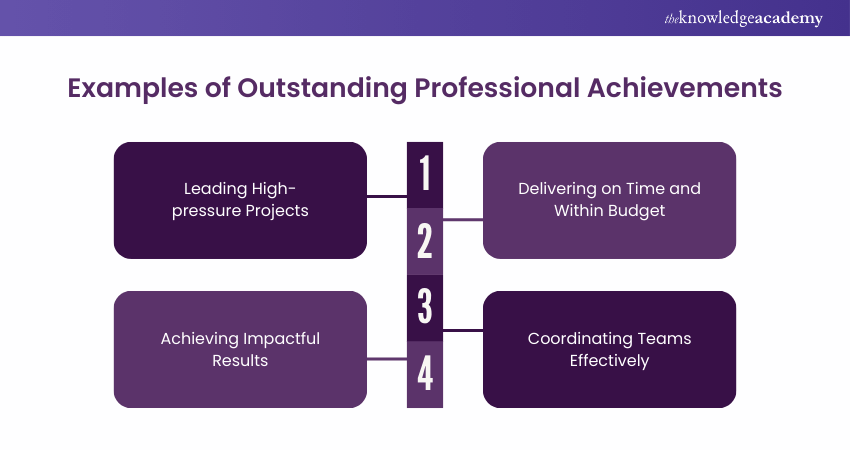
“My greatest professional achievement was leading a team through a high-pressure project to deliver it on time and within budget. Despite resource constraints, I effectively coordinated tasks, communicated with team members, and resolved obstacles.
The project’s success resulted in a significant increase in client satisfaction, and the company received additional business. This achievement showcased my leadership, problem-solving, and teamwork skills in achieving tangible results.”
4) How do you manage conflict when working as part of a team?
This question aims to evaluate your ability to handle conflicts and maintain a positive team dynamic.
Sample Answer:
“I manage conflict by encouraging open communication and active listening. When conflict arises, I ensure all team members have a chance to share their views. I focus on identifying the root cause and finding a solution that aligns with our common goals.
For example, in a past project, I facilitated a discussion between conflicting team members, which helped resolve the issue and improved collaboration. My approach fosters trust and promotes a productive team environment.”
5) Have you ever been asked to do something you disagree with? How did you manage that request?
This question aims to assess your capacity to manage difficult situations while maintaining professionalism.
Sample Answer:
“Yes, I’ve been asked to implement strategies that I initially disagreed with. In such cases, I professionally express my concerns and provide data-backed reasoning. For instance, when I disagreed with a proposed marketing tactic, I presented alternative strategies supported by research.
Through a respectful discussion, we found a compromise. This approach helped preserve the relationship while ensuring that the final decision was aligned with both my concerns and the team’s objectives.”
6) How do you usually contribute most positively to a team?
This question aims to understand the unique strengths you bring to a team environment.
Sample Answer:
“I contribute by fostering collaboration and maintaining a positive, solution-oriented attitude. I offer support where needed, share ideas, and encourage others to contribute. My organisational skills help ensure that tasks are completed efficiently, and I focus on keeping team morale high.
In my previous role, I frequently helped colleagues brainstorm solutions to challenges, and my ability to stay calm under pressure often helped keep the team focused on our objectives.”
Get IIBA-certified in Business Analysis and elevate your career to new heights with our IIBA® Certification of Competency in Business Analysis (CCBA®) Course today!
7) Describe a time when you had to consider conflicting workloads while planning a task or project.
This question aims to assess your time management and prioritisation skills when handling multiple responsibilities.
Sample Answer:
“During a project, I had to balance multiple competing deadlines and responsibilities. I assessed the urgency and impact of each task, communicated with team members, and reallocated resources where necessary.
By breaking the tasks into manageable parts and setting clear priorities, I ensured that all responsibilities were met. This approach allowed us to stay on track, meet deadlines, and deliver quality results while reducing stress and confusion among the team.”
8) Give an example of when you had to change plans at the last minute.
This question aims to evaluate your ability to remain flexible and adjust to unexpected changes.
Sample Answer:
“During a product launch, a technical issue required us to change our approach at the last minute. We had to delay the launch by a week to resolve the issue. I communicated this change to both the team and customers, ensuring transparency.
Despite the last-minute alteration, we quickly adjusted our marketing and logistics plans. The launch was ultimately successful, and the decision to delay allowed us to address critical issues, ensuring a smooth and impactful rollout.”
9) What types of changes have you experienced in your career, and how did you manage them?
This question aims to understand your adaptability and how you handle professional transitions.
Sample Answer:
“A major change in my career was transitioning into a leadership role. To manage this shift, I focused on learning new skills, such as effective delegation, team-building, and decision-making. I sought mentorship and feedback from experienced leaders, and I gradually adapted to my new responsibilities.
By staying open to feedback and continuously developing my leadership skills, I successfully navigated the transition and helped my team thrive during the change.”
10) What was the last big decision you had to Make?
This question aims to assess your decision-making process and ability to handle important choices.
Sample Answer:
“The last big decision I made was selecting a new software tool for the team. I conducted research, consulted with key stakeholders, and weighed the advanatages and disadvanatages of different options. After careful consideration, I chose the solution that aligned best with our team’s needs and long-term goals.
The decision led to improved efficiency and collaboration within the team. The software has since been instrumental in streamlining our processes and increasing productivity.”
11) What are Your Greatest Strengths?
This question aims to uncover your key competencies and how they align with the role's requirements.
Sample Answer:
"An essential asset of mine lies in my adeptness at swiftly adjusting to novel circumstances and efficiently acquiring new skills. This capability has empowered me to excel in dynamic settings, tackling various challenges with assurance.
Moreover, my robust analytical acumen and meticulous attention to detail facilitate the identification of improvement opportunities and the implementation of impactful solutions. Nevertheless, I persistently strive to enhance my time management abilities to maximise productivity."
12) What Have you Achieved Elsewhere?
This question delves into your past accomplishments and contributions in previous roles.
Sample Answer:
"In my previous role, I played a key role in implementing a new Customer Relationship Management System, which resulted in a significant increase in customer satisfaction and retention rates.
Additionally, I spearheaded a cross-functional project that streamlined our internal communication processes, leading to a 20% reduction in project completion time. These achievements reflect my ability to drive positive change and deliver tangible results in a professional setting."
13) Tell me about a time when you demonstrated integrity and professionalism.
This question aims to assess your ability to maintain ethical behaviour and professionalism in challenging situations.
Sample Answer:
“In my previous job, I was responsible for handling sensitive client information. On one occasion, I noticed a colleague inadvertently shared confidential data with the wrong party. I immediately informed my manager and took steps to rectify the error, ensuring the client’s privacy was protected.
I maintained transparency throughout the process, demonstrating both integrity and professionalism by following the proper protocols and addressing the issue promptly.”
14) How do you deal with working under pressure?
This question aims to understand your capacity to manage stress and maintain performance during challenging situations.
Sample Answer:
“When working under pressure, I focus on staying organised and prioritising tasks. For example, during a major project deadline, I broke the project into smaller tasks and delegated responsibilities within the team.
I also made sure to remain calm, communicated regularly with team members to manage expectations, and ensured we stayed focused on the key deliverables. By maintaining a clear structure and staying positive, I successfully met the deadline without compromising on quality. When asked unique interview questions about how I handle pressure and tight deadlines, I can share specific strategies like these that help ensure successful project outcomes.
How Can a Competency Based Interview Be Passed?
To pass a competency interview, share real examples from your work using the STAR method: describe the Situation, Task you faced, Actions you took, and Results you achieved. Match your stories to the job requirements.
How to Score High in Competency Interviews?
To score high in competency interviews, prepare specific examples of your achievements ahead of time. Use the STAR method, focus on measurable results, and connect your experiences directly to what the job needs.
Develop your skills and elevate your career with expert Personal Development Courses – join now!
Conclusion
Competency-Based Interview Questions provide valuable insights into candidates' abilities, experiences, and suitability for a role. By preparing thoughtful responses for such interviews, including those related to Critical Thinking Interview Questions, you can enhance your chances of success. Remember to highlight your unique contributions to stand out as a top candidate.
Ace interviews and land your dream job with our comprehensive Job Search Course – book your spot now!
Frequently Asked Questions
Upcoming Business Skills Resources Batches & Dates
Date
 Interview Skills Training
Interview Skills Training
Fri 31st Jul 2026
Interview Skills Training
Fri 23rd Oct 2026

 If you wish to make any changes to your course, please


