


 Top Rated Course

We may not have the course you’re looking for. If you enquire or give us a call on +43 720 115337 and speak to our training experts, we may still be able to help with your training requirements.
What is NoSQL? Features and Examples: A Comprehensive Guide
Richard Harris 23 April 2026NoSQL is a non-relational database approach designed to handle large, diverse, and fast-changing data with flexibility, scalability, and high versions. Ideal for Big Data and real-time applications, it supports key-value, document, column, and graph-based storage systems. It allows you to store data without a fixed structure.

Training Outcomes Within Your Budget!
We ensure quality, budget-alignment, and timely delivery by our expert instructors.
Table of Contents

Ever felt like your database just can’t keep up with your app’s needs? That’s so common today. As modern applications handle more users and real-time data, traditional relational databases often hit performance and scalability limits. That’s where NoSQL makes the difference.
It offers a flexible, schema-less way to store data and grow user bases. Imagine being able to store unstructured data, scale across multiple servers, and maintain high availability with minimal effort. NoSQL makes it possible. In this blog, we’ll explore What is NoSQL, its key features, types and some real-world examples. Let’s dive in!
Table of Contents
1) What is NoSQL?
2) Key Features of NoSQL
3) What are the Types of NoSQL Databases?
4) Examples of NoSQL
5) What are the Use Cases of NoSQL Databases?
6) Benefits of NoSQL
7) Drawbacks of NoSQL
8) Conclusion
What is NoSQL?
NoSQL, short for “Not Only SQL,” refers to a broad class of non-relational Database Management systems. Unlike SQL databases, which store data in rows and columns with fixed schemas, NoSQL databases use flexible, schema-less storage and dynamic models to handle a wide range of data types.
They come in different forms based on how they store and organise data. The four main types are:
1) Document-based (e.g., JSON or BSON files)
2) Key-value stores (simple lookup using a unique key)
3) Wide-column stores (grouped by columns instead of rows)
4) Graph databases (focused on relationships between data)
Key Features of NoSQL
Let’s explore the key features that make NoSQL stand out:
1) Support for Multiple Data Models
1) Compatible with key-value, document, column, and graph models
2) Handles unstructured, semi-structured, and structured data with ease
3) Can store many types of data: text, images, user profiles, logs, and more
4) Ideal for applications that evolve frequently or deal with diverse data formats
2) Enhanced Scalability & Availability
1) Easily scales horizontally by adding more servers as needed
2) Distributes data across nodes to improve performance and load handling
3) Auto-replication ensures continuous availability even during failures
4) Handles large volumes of data with high read or write throughput
3) Global Data Distribution
1) Replicates data across multiple cloud regions or data centres
2) Enables fast read or write operations from anywhere in the world
3) Helps reduce delays and keeps your app fast for everyone
4) Outperforms traditional centralised databases in distributed environments
4) Minimal Downtime
1) Distributed architecture provides automatic failover to healthy nodes during outages
2) Self-healing features and automated backups ensure stability
3) Supports 24/7 uptime which is critical for apps with global or high traffic needs
4) Ensures uninterrupted service even during maintenance
What are the Types of NoSQL Databases?
NoSQL databases come in several types, each designed to handle data in unique ways. Choosing the right one depends on your project’s needs, data structure, and performance goals. Here are the five main types of NoSQL databases:

1) Key-value Pair
This is the simplest NoSQL database type, where data is stored as a pair, like a unique key and its associated value.
1) Think of it like a dictionary: 'City' : 'Chicago'
2) The value can be a string, JSON, or even a binary object (BLOB)
3) Fast and efficient for storing large volumes of simple, schema-less data
Best for:
Caching, shopping carts, user sessions, and fast lookups in eCommerce or real-time apps.
Advantages:
Fast data access with simple key-based lookups, flexible storage, and easy horizontal scaling.
Limitations:
Not ideal for complex queries or updating just part of a value.
Examples:
Redis, DynamoDB, Riak, Amazon SimpleDB, and Oracle Berkeley DB.
2) Column
Also known as wide-column stores, these databases store data in columns instead of rows. They are grouped into column families.
1) Each row doesn’t have to contain the same columns
2) Values are stored together by column
3) Enables fast reading and aggregation operations
Best for:
Analytics, big data workloads, time-series data, Business Intelligence, and Customer Relationship Management (CRM) systems.
Advantages:
Efficient for queries like SUM, AVG, and filtering over large datasets.
Limitation:
Less efficient for complex queries involving multiple columns or relationships between data rows.
Examples:
Apache Cassandra, HBase, and Hypertable.
Start your journey into the world of data with our Introduction to Database Training – Register today!
3) Document
Document databases store data in documents using formats like JSON, BSON, or XML. Each document will have its unique structure.
1) Each document is a self-contained unit with all necessary data
2) Schema is flexible and each document can have a different structure
3) Supports indexing and querying within document content
Best for:
Content Management systems, blogging platforms, ecommerce, and real-time analytics.
Advantages:
Improves performance by storing related information together as one entity. There is no need for joins like in relational databases.
Limitations:
Not ideal for complex transactions or cross-document operations.
Examples:
MongoDB, CouchDB, Amazon SimpleDB, Riak, and Lotus Notes.
4) Graph
Graph databases store data in nodes and relationships (edges), making them perfect for understanding connections and networks. They use:
1) Nodes represent entities (e.g. users or products)
2) Edges represent relationships (e.g. follows, owns, likes)
3) Each relationship (edge) can have its own properties and direction
Best for:
Social media platforms, logistics, fraud detection, recommendation engines, and organisational hierarchies.
Advantages:
Fast relationship querying without the need to calculate joins, thanks to pre-stored relationships.
Limitations:
Can become complex with large graphs and diverse entity types.
Examples:
Neo4j, InfiniteGraph, and FlockDB.
5) Multi-model
Multi-model databases combine two or more of the above types into one system.
1) You can store documents and also support graph-like relationships
2) You don’t need multiple databases to handle different models
3) Reduce data duplication and simplify Data Management
Best for:
Complex systems needing flexibility, such as fintech platforms, AI/ML pipelines, or any project requiring varied data types and views.
Advantages:
Minimises data duplication, supports multiple data models, and ensures data integrity with ACID compliance.
Limitations:
It can be complex to manage and optimise due to the integration of multiple data models within a single system.
Examples:
OrientDB, ArangoDB, and MarkLogic Server.
Examples of NoSQL
Now that we've covered the types of NoSQL databases, let’s look at some real-world examples:
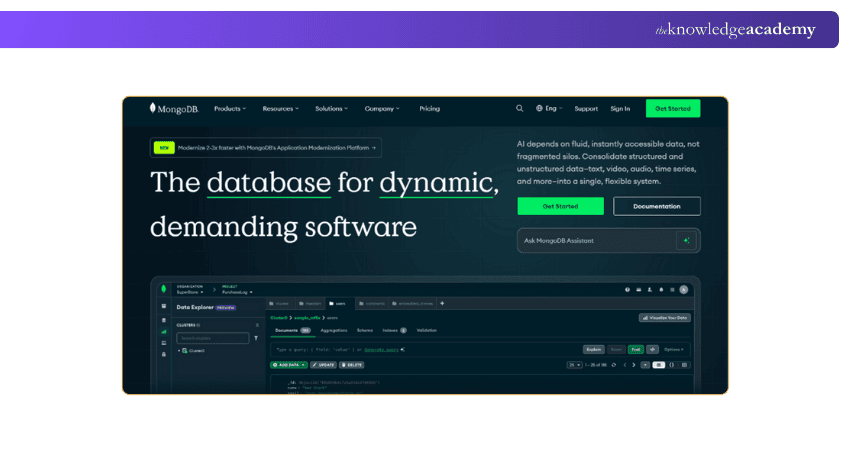
1) MongoDB
MongoDB is one of the most popular open-source NoSQL databases. It stores data as JSON-like documents using a flexible, dynamic schema, which means each document can have a different structure.
Key Features:
1) Ad-hoc Queries: Supports field, range, and regex queries, returning entire documents or specific fields.
2) Replication: Uses replica sets for high availability and automatically gives a secondary replica if the primary fails.
3) Indexing: Offers a wide range of index types like single-field, compound, geospatial, hashed, and text indexing.
Use Cases:
Web applications, analytics platforms, Content Management Systems (CMS), and product catalogues.
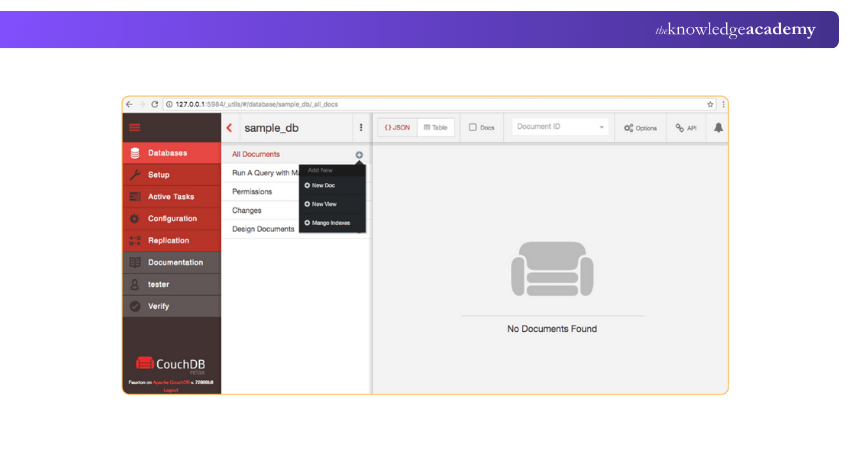
2) Apache CouchDB
CouchDB is an open-source, web-oriented NoSQL database that stores data in JSON format. It uses HTTP for its Application Programming Interface (API) and JavaScript for querying and indexing.
Key Features:
1) Schema-less JSON document storage.
2) Built-in conflict resolution for offline syncing.
3) Designed for distributed systems and mobile-first applications.
Use Cases:
Mobile apps, offline-first applications, and scalable cloud systems.
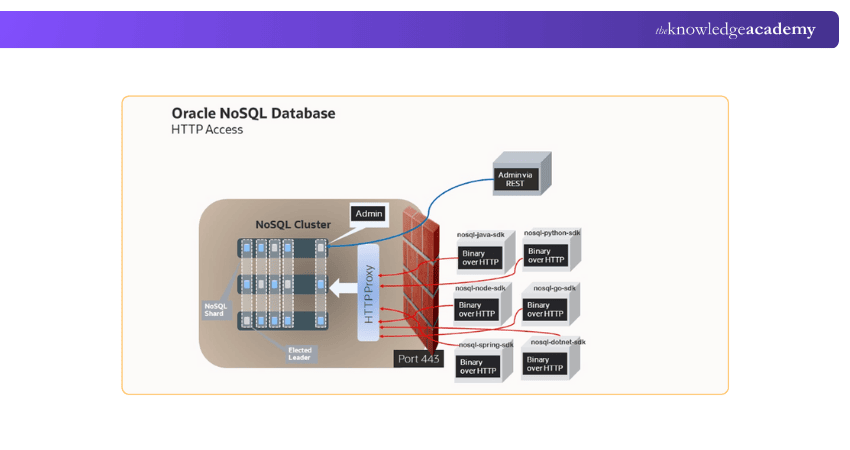
3) Oracle NoSQL Database
Oracle NoSQL is a proprietary NoSQL solution that supports key-value and JSON table models. It can run on-premise or in the cloud and supports multi-model capabilities. It includes high availability, replication, built-in analytics, and tight integration with Oracle’s cloud ecosystem.
Key Features:
1) Predictable low-latency performance with auto-scaling.
2) RESTful APIs and SDK support for Java, Python, Go, Node.js, and .NET.
3) Native analytics without moving data to another platform.
Use Cases:
Cloud-native apps, hybrid architectures, and enterprise workloads require strong consistency and developer flexibility.
4) Riak
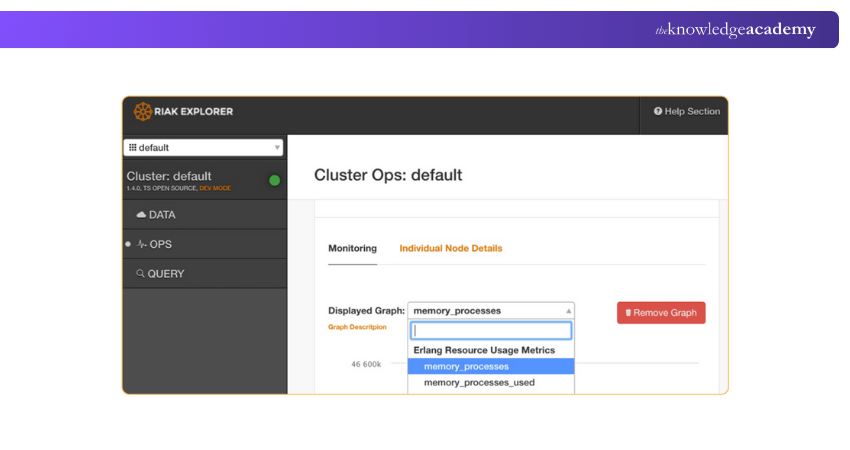
Riak is a highly distributed, fault-tolerant NoSQL database. It is designed for high availability, especially in cloud, web, and mobile applications. It uses a masterless architecture with automatic data replication and distribution across nodes and eliminates single points of failure
Key Features:
1) Built on the Dynamo model.
2) Strong fault tolerance with self-healing mechanisms.
3) Open-source and commercial editions available.
Use Cases:
Cloud file systems, distributed data architectures, and systems needing 24/7 uptime.
Build fast, flexible, and data-driven applications with our GraphQL Database Training With React – Join soon!
5) Objectivity InfiniteGraph
InfiniteGraph is a specialised graph database designed for deep relationship analysis across massive, distributed datasets. It is built using Java and C++, it is optimised for complex queries in environments where understanding relationships is critical.
Key Features:
1) Supports both graph and complex object queries.
2) Cross-platform and cloud-enabled with ‘DO’ query language for detailed graph and value-based queries.
3) High throughput and quick execution of complex queries like shortest path or all-path traversal.
Use Cases:
Telecommunications, cybersecurity, finance, manufacturing, governance, and any environment requiring deep relationship mapping.
What are the Use Cases of NoSQL Databases?
NoSQL databases are widely adopted across industries to support high-performance, scalable, and responsive applications. Here are some of the most common use cases:
1) Managing Real-time Data
NoSQL databases are great for handling fast, real-time data. They can quickly read and write information and easily grow by adding more servers, making them ideal for apps that need to work fast and respond quickly to users.
Other Use Cases:
1) Real-time analytics
2) Clickstream data and activity feeds
3) Fraud detection
2) Securing Data in Cloud Environments
Many NoSQL databases are cloud-native, offering built-in features like multi-region replication and encryption. These capabilities make them well-suited for storing sensitive or regulated data across global infrastructures.
Other Use Cases:
1) Identity and Access Management
2) Security posture visualisation
3) Real-time threat detection
3) Supporting High-availability Applications
NoSQL databases are designed for maximum uptime, often featuring automatic replication, failover, and distributed architecture. This makes them ideal for apps that cannot afford downtime and must support millions of users at once.
Other Use Cases:
1) Messaging platforms
2) File-sharing services and social networks
3) Mobile gaming apps
Benefits of NoSQL
Now, let’s check the benefits of using NoSQL:
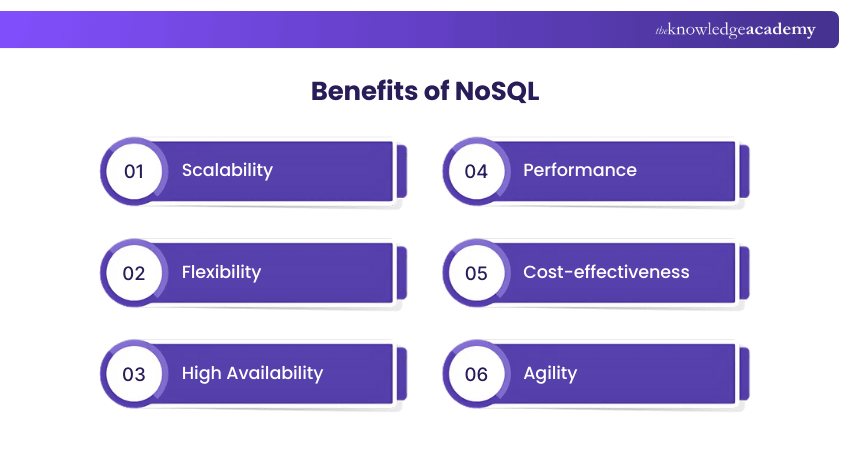
1) Scalability
1) Easily add more servers (nodes) to handle more users and data
2) No need to upgrade a single machine, it can grow horizontally
3) Perfect for fast-growing businesses or high-traffic apps
4) Scaling is seamless, often with no downtime
2) Flexibility
1) No need for a fixed data structure (schema-less)
2) Store different types of data (structured, semi-structured, unstructured)
3) Ideal for projects that change frequently or grow fast
4) Developers can adjust data models without redesigning everything
3) High Availability
1) Built-in data replication across servers
2) Automatically switches to a backup if one server fails
3) Keeps apps running with little to no downtime
4) Suitable for 24/7 applications and global users
4) Performance
1) Optimised for fast reads and writes
2) Handles large data volumes smoothly
3) Great for real-time applications and analytics
4) Maintains low response times under heavy loads
5) Cost-effectiveness
1) Can run on low-cost, commodity hardware
2) Scales horizontally, reducing the need for expensive upgrades
3) Many options are open-source, lowering software costs
4) Pay-as-you-go pricing available in cloud-based NoSQL services
6) Agility
1) Developers can make quick changes without redesigning the database
2) Supports rapid prototyping and feature updates
3) Encourages faster product development cycles
4) Perfect for Agile and DevOps workflows
Optimise data structures for real-world business applications with our Relational Databases & Data Modelling Training – Sign up immediately!
Drawbacks of NoSQL
Though NoSQL has many advantages, it also comes with its own set of drawbacks. Here are some of them:
1) Lack of Standardisation
1) No unified language or model across databases
2) Each NoSQL system has its own rules and tools
3) Skills aren’t easily transferable between systems
4) Increases the learning curve for teams
2) No ACID Compliance
1) Many NoSQL databases don’ fully support ACID properties
2) May lead to data consistency issues in critical systems
3) Good for speed but risky for transactions
4) Not ideal for financial or highly sensitive data apps
3) Limited Focus
1) Each type solves only certain problems
2) May need multiple databases for one project
3) Key-value stores are fast but have limited query support
4) Graph databases are powerful but harder to manage
4) Open-source Challenges
1) May lack enterprise-level support or security features
2) Some tools have limited documentation or updates, or community backing
3) Businesses might need to pay for support or advanced features
4) Not all open-source solutions are production-ready
5) Limited Support for Complex Queries
1) Joins, aggregations, and subqueries are often not supported
2) Advanced querying can require workarounds or external tools
3) Not ideal for reporting-heavy or relational data analysis
4) Query flexibility is often limited by design
6) Immaturity
1) Some NoSQL tools are still evolving
2) May lack stable tooling or mature ecosystems
3) Smaller community support compared to SQL
4) Upgrades and bug fixes may be slower or less tested
7) Management Complexity
1) Running distributed systems requires technical expertise
2) Must manage replication, sharding, and consistency manually
3) Poor setup can hurt performance and reliability
4) Needs constant monitoring and tuning
Conclusion
NoSQL has revolutionised how we store and manage data in the modern digital world. Its flexibility and performance make it a good choice for a wide range of applications. As technology continues to evolve, so too will the role of NoSQL in shaping the future of Data Management. Having a proper knowledge of What is NoSQL will help you make smart choices for your next project.
Understand the fundamentals of NoSQL, SQL, and modern Data Management with our Database Training – Explore now!
Frequently Asked Questions
What is the Difference Between SQL and NoSQL?

SQL databases use fixed tables and are good for structured data. NoSQL databases allow different types of data and are better for unstructured or fast-changing data. SQL is strict but powerful. NoSQL is flexible and scalable.
What Language is NoSQL?
NoSQL doesn’t use one single language. It depends on the database. MongoDB uses a JSON-like query, Cassandra uses CQL, and Redis uses simple commands. Each NoSQL database has its own way to get and store data.
What are the Other Resources and Offers Provided by The Knowledge Academy?
The Knowledge Academy takes global learning to new heights, offering over 3,000+ online courses across 490+ locations in 190+ countries. This expansive reach ensures accessibility and convenience for learners worldwide.
Alongside our diverse Online Course Catalogue, encompassing 17 major categories, we go the extra mile by providing a plethora of free educational Online Resources like Blogs, eBooks, Interview Questions and Videos. Tailoring learning experiences further, professionals can unlock greater value through a wide range of special discounts, seasonal deals, and Exclusive Offers.
What is The Knowledge Pass, and How Does it Work?
The Knowledge Academy’s Knowledge Pass, a prepaid voucher, adds another layer of flexibility, allowing course bookings over a 12-month period. Join us on a journey where education knows no bounds.
What is The Knowledge Pass, and How Does it Work?
The Knowledge Academy offers various Database Training, including Introduction to NoSQL Course, GraphQL Database Training With React and Introduction to Database Training. These courses cater to different skill levels, providing comprehensive insights into API Integration.
Our Programming & DevOps Blogs cover a range of topics related to NoSQL, offering valuable resources, best practices, and industry insights. Whether you are a beginner or looking to advance your Programming & DevOps skills, The Knowledge Academy's diverse courses and informative blogs have got you covered.

Richard Harris


Senior Full Stack Developer and Technology Educator
Richard Harris is a highly experienced full-stack developer with deep expertise in both frontend and backend technologies. Over his 12-year career, he has built scalable web applications for startups, enterprises and government organisations. Richard’s writing combines technical depth with clear explanations, ideal for developers looking to grow in modern frameworks and tools.

Upcoming Programming & DevOps Resources Batches & Dates
Date
 Introduction to NoSQL Course
Introduction to NoSQL Course
Fri 17th Jul 2026
Introduction to NoSQL Course
Fri 16th Oct 2026

 If you wish to make any changes to your course, please


