


 Top Rated Course

We may not have the course you’re looking for. If you enquire or give us a call on +43 720 115337 and speak to our training experts, we may still be able to help with your training requirements.
What is Commercial Real Estate? A Complete Overview
The Knowledge Academy 02 March 2026Commercial Real Estate covers income-generating properties such as offices, retail units, warehouses, and hotels, built for business use rather than living. These properties support commercial activity across multiple industries. They generate revenue through leasing, sales, and long-term investment opportunities.

Training Outcomes Within Your Budget!
We ensure quality, budget-alignment, and timely delivery by our expert instructors.
Table of Contents

Commercial Real Estate plays a vital role in modern business operations and economic growth. Property types such as offices, retail spaces, and open-air storage influence how organisations design infrastructure and plan long-term expansion. Understanding this sector provides clarity on how businesses operate and scale.
In this blog, we will explore what is Commercial Real Estate and why it matters to businesses. It explains key purposes, common property types, and the value they deliver across industries. This foundation helps readers better understand commercial property decisions and market dynamics.
Table of Contents
1) What is Commercial Real Estate?
2) Types of Commercial Real Estate Properties
3) Commercial Leases
4) Advantages of Commercial Real Estate
5) Challenges of Commercial Real Estate
6) Opportunities in the Commercial Real Estate Market
7) Key Players in Commercial Real Estate
8) How to Check if a Property is Residential or Commercial?
9) Can I use my Home as a Commercial Property?
10) Conclusion
What is Commercial Real Estate?
Commercial Real Estate encompasses various types of properties, which are mainly utilised for business purposes, like office buildings, shopping malls, warehouses, and lodging establishments. These kinds of assets are made for the purpose of earning income and facilitating commercial activities.

Types of Commercial Real Estate Properties
Commercial Real Estate includes different types of properties that serve business, trade, and community purposes. Each property type plays an important role in supporting the economy and everyday life. Let’s look at the main types:
1) Office Spaces
Across multiple trade sectors, office spaces act as rooms that facilitate professional and corporate operations. These locations differentiate because of their location, the square footage, and the level of services that can be offered.
1) Central business district offices
2) Suburban office parks
3) Medical and professional offices
2) Retail Spaces
Retail environments are meant for the direct sale of products and services to end users. The success of the place typically relies on its accessibility and the number of people passing by.
1) Shopping centres and malls
2) High street retail units
3) Standalone retail stores
3) Industrial Properties
The manufacturing, storage, and logistics activities are all different types of industrial properties. These properties are often located close to transport infrastructures.
1) Warehouses and distribution centres
2) Manufacturing facilities
3) Flex industrial spaces
4) Multifamily Properties
Multifamily real estate consists of several living units that are separately rented but owned by one person or company. The income comes from the rentals made for the long term.
1) Apartment complexes
2) Condominiums
3) Student housing developments
5) Hotel Properties
Hotels are hospitality industry properties that offer temporary accommodation and other services. The income of these hotels is mainly derived from the number of guests during the season.
1) Business hotels
2) Resorts and leisure hotels
3) Boutique hotels
6) Special Purpose Properties
Special properties are specific to specific operative or communal needs. Their design restricts their other alternative uses.
1) Self-storage facilities
2) Theatres and entertainment venues
Commercial Leases
Most companies and organisations lease out spaces in commercial buildings. These buildings are generally owned by different investors, owners, or single owners who collect rent from these companies. Commercial lease rates depend on the time they occupy these buildings and the space.

A) Commercial leases generally have one year to ten years or more. However, the lease length can be regulated per the organisation’s needs or requirements. Let’s discuss the four primary types of commercial property leases:
B) A single net lease means the tenant is solely responsible for paying the property taxes.
C) A double net lease means the tenant is solely responsible for paying the property taxes and insurance.
D) A triple net lease means the tenant must pay for the property taxes, insurance, and maintenance.
E) A gross lease means that the tenant pays only the rent, and the landlord, on the other hand, pays for the building’s property taxes, insurance, and maintenance.
Attain in-depth knowledge about Digital Marketing techniques in real estate. Join our Real Estate Marketing Training now!
Advantages of Commercial Real Estate
Commercial Real Estate offers many benefits for investors, business owners, and entrepreneurs. It helps you earn income and grow your wealth over time. Here are the main advantages explained in easy and simple language:
Real estate has always been the favorite option for investors due to its great income potential and stability over time. Its natural structure and demand have made it the favorite asset class of all industries.
a) Higher Rental Income: Commercial property has always been and still is the one that occupies the highest spots in the real estate market. This means that the income from it is also going to be much better.
b) Long-term Lease Stability: The majority of the lease agreements run for several years, which results in lower tenant turnover. This, in turn, leads to predictable cash flow and financial security.
c) Stronger Return Potential: Commercial properties offer the combined benefit of rental income and capital appreciation. In most cases, the value of the property increases as the business and the location grow.
d) Professional Tenants: Companies that rent will usually take good care of the property as they want to keep it up to the standard of operation. This not only protects the value of the asset but also lowers the risk of maintenance.
e) Diversified Investment Opportunities: Investors have various options to choose from- offices, retail, industrial, hospitality, and special-purpose properties. This will also help in diversifying the portfolio.
f) Inflation Protection: Inflation-linked rent escalation clauses are present in most leases. This helps in the conservation of returns over time.
g) Tax Efficiency: There are certain items, like operating expenses and depreciation, that could potentially provide tax benefits. The overall investment efficiency can be improved through the use of these benefits.
h) Reduced Vacancy Impact: The income risk from a multi-tenant building is small as it is spread among all tenants. Hence, financial losses would be easy to bear if one tenant vacates.
i) Sustained Business Demand: The demand for properties is being generated continuously by the growth in logistics, retail, and services. This, in turn, provides long-term occupancy and retention of value.
Challenges of Commercial Real Estate
Discussed below are some of the challenges of Commercial Real Estate:
a) High Initial Costs: Acquiring and developing commercial properties often involve significant upfront expenses, including down payments, construction costs, and legal fees.
b) Market Volatility: Economic downturns and market fluctuations can impact property demand, occupancy rates, and rental income, affecting investor returns.
c) Property Management: Effective Property Management requires time, expertise, and resources to ensure tenant satisfaction, maintenance, and compliance.
d) Tenant Turnover: Vacancies between tenants can lead to income gaps and increased management efforts to secure new occupants.
e) Regulatory Complexity: Commercial properties are subject to complex zoning laws, building codes, and regulations, which are overseen by the Real Estate Regulatory Authority. This necessitates thorough due diligence and compliance to ensure all legal and safety standards are met.
f) Financing Challenges: Securing financing for commercial properties can be challenging, with lenders assessing various risk factors and demanding substantial down payments.
g) Competition: Saturated markets can result in heightened competition for tenants, potentially impacting rental rates and lease negotiations.
Opportunities in the Commercial Real Estate Market
The demand for conventional offices has decreased significantly due to remote and hybrid working arrangements, while Class A premium spaces have been just as strong because of their excellent attributes and geographical position. Companies are still drawn to the aesthetically pleasing and contemporary office settings.
The few top-notch offices available are the main reason for the rent price staying high. Building managers who are open to changing their ways by using more efficient management techniques and offering varied workplace settings can still hold their ground in the competition.
Key Players in Commercial Real Estate
Commercial Real Estate is driven by various key players who contribute their expertise, resources, and vision to shape the landscape of properties and opportunities. Here are some essential actors and their roles in this domain:
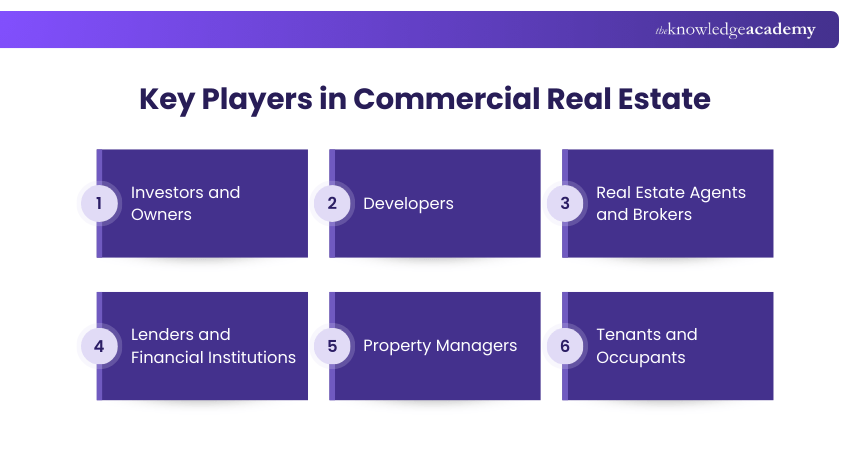
1) Investors and Owners
Investors and owners form the financial foundation of Commercial Real Estate, including Industrial Real Estate. They provide the necessary capital for property acquisition, development, and maintenance. These individuals or entities carefully assess market trends, conduct due diligence, and make strategic decisions that impact the types of properties that thrive within a given region.
2) Developers
Developers oversee the entire lifecycle of a project, from conceptualisation and design to construction and leasing. Developers who collaborate with architects, engineers, and contractors bring innovative concepts to life, ensuring that properties meet market demands while adhering to urban planning guidelines.
3) Real Estate Agents and Brokers
Agents and brokers facilitate connections between buyers and sellers, serving as transaction intermediaries. These professionals play a vital role in negotiating deals, drafting contracts, and providing insights into property values and market trends. Assisting clients in navigating the complexities of the market, they ensure informed decisions are aligned with their goals.
4) Lenders and Financial Institutions
Lenders and financial institutions are vital in Commercial Real Estate, offering essential funding. They evaluate borrower potential, scrutinise risk, and allocate funds wisely for sound growth. Their ongoing monitoring ensures proper Financial Management throughout projects.
5) Property Managers
Property Managers oversee commercial properties, ensuring compliance, maintenance, and tenant satisfaction. Acting as intermediaries between owners and tenants, they handle operations, rent collection, repairs, and tenant needs, creating a harmonious environment benefiting all stakeholders.
6) Tenants and Occupants
Tenants bring vitality to commercial spaces, converting emptiness into bustling hubs. Leasing and occupancy bolster property owners financially while energising local economies. Tenants integrate into the community by establishing offices, stores, or restaurants, drawing foot traffic, revenue, and neighbourhood identity.
Learn how to sell property listings in a buyer's market successfully with our Real Estate Agent Course – Join now!
How to Check if a Property is Residential or Commercial?
Here are simple ways to find out if a property is residential or commercial:
A) Check Property Use:
a) Residential: Used for living, houses, flats, apartments
b) Commercial: Used for business, offices, shops, malls, and warehouses
B) See Property Documents: Check the title deed or land-use certificate; they clearly mention the property type.
C) Check Zoning Rules: Visit the local municipal office or check online to know how the land can be used.
D) Look at Tax Records: Property tax bills usually state whether it’s residential or commercial.
E) Ask Experts: Contact a real estate agent, lawyer, or local authority to confirm the property type.
Can I use my Home as a Commercial Property?
Yes, you can use your home as a commercial property, but it depends on local zoning laws and regulations. In most cases, you’ll need approval from municipal authorities and, in some areas, permission from your Resident Welfare Association (RWA) as well.
Conclusion
Commercial property is very important for the future of businesses and the location of their investments. The property market consists of luxuries, necessities, and overtones. With a solid understanding of 'What is Commercial Real Estate', buyers, sellers, and investors will move confidently through the changing market.
Become familiar with all crucial aspects of investing and trading. Join our Investment and Trading Training now!
Frequently Asked Questions
How can Businesses Leverage Commercial Real Estate for Branding and Visibility?

Businesses can leverage Commercial Real Estate for branding and visibility by choosing strategically located properties, designing distinctive and branded physical spaces, and utilising building signage and architecture as marketing tools.
What are the Potential Risks or Challenges Associated with Owning Commercial Real Estate Properties?
Owning Commercial Real Estate properties involves potential risks such as market volatility, tenant turnover, unforeseen maintenance and repair costs, Property Management challenges, liquidity constraints, regulatory and zoning changes, environmental liabilities, interest rate fluctuations, and the impact of economic downturns.
What are the Other Resources and Offers Provided by The Knowledge Academy?
The Knowledge Academy takes global learning to new heights, offering over 3,000+ online courses across 490+ locations in 190+ countries. This expansive reach ensures accessibility and convenience for learners worldwide.
Alongside our diverse Online Course Catalogue, encompassing 17 major categories, we go the extra mile by providing a plethora of free educational Online Resources like Blogs, eBooks, Interview Questions and Videos. Tailoring learning experiences further, professionals can unlock greater value through a wide range of special discounts, seasonal deals, and Exclusive Offers.
What is The Knowledge Pass, and How Does it Work?
The Knowledge Academy’s Knowledge Pass, a prepaid voucher, adds another layer of flexibility, allowing course bookings over a 12-month period. Join us on a journey where education knows no bounds.
What are the Related Courses and Blogs Provided by The Knowledge Academy?
The Knowledge Academy offers various Investment and Trading Courses, including the Real Estate Financial Modelling Training, Investment Banking Training Course, and Day Trading Course. These courses cater to different skill levels, providing comprehensive insights into Real Estate Regulatory Authority.
Our Business Skills Blogs cover a range of topics related to Commercial Rest Estate, offering valuable resources, best practices, and industry insights. Whether you are a beginner or looking to advance your Advanced Technology skills, The Knowledge Academy's diverse courses and informative blogs have got you covered.

The Knowledge Academy


Global Training Provider
The Knowledge Academy is a world-leading provider of professional training courses, offering globally recognised qualifications across a wide range of subjects. With expert trainers, up-to-date course material, and flexible learning options, we aim to empower professionals and organisations to achieve their goals through continuous learning.

Upcoming Business Skills Resources Batches & Dates
Date
 Real Estate Agent Course
Real Estate Agent Course
Fri 19th Jun 2026
Real Estate Agent Course
Fri 11th Sep 2026
Real Estate Agent Course
Fri 11th Dec 2026

 If you wish to make any changes to your course, please


