


 Top Rated Course

We may not have the course you’re looking for. If you enquire or give us a call on +43 720 115337 and speak to our training experts, we may still be able to help with your training requirements.
What is PI Planning in Agile: A Complete Guide
The Knowledge Academy 25 February 2026PI Planning is a SAFe event where Agile teams align on goals, plan the next 8-12 weeks, manage risks, and deliver value through a shared ART roadmap clearly. It brings together business leaders, Product Managers, and Agile teams to identify dependencies and ensure everyone is working towards the same objectives.

Training Outcomes Within Your Budget!
We ensure quality, budget-alignment, and timely delivery by our expert instructors.
Table of Contents
Imagine a team, each member with a vital role, crowded around a table, all working toward a single project's success. This is the heart of PI Planning, a cornerstone in Agile development. It's where success begins, where the plan for the Program Increment takes shape, and where teams unite for a shared mission.
PI Planning brings teams together to set a shared direction, prioritise goals, and synchronise efforts, ensuring everyone moves forward with clarity and confidence. In this blog, we'll uncover What is PI Planning, including its process, benefits, and common challenges. Let's dive in!
Table of Contents
1) What is PI Planning?
2) Importance of PI Planning
3) Goals Behind PI Planning
4) Steps of PI Planning
5) What is Capacity in PI Planning?
6) What is the Difference Between PI Planning and Release Planning?
7) Conclusion
What is PI Planning?
Program Increment (PI) Planning is generally a major event in the Scaled Agile Framework (SAFe). In this, Agile teams, business stakeholders, Product Owners, and leaders work together to review the programme backlog with one or two-day sessions. When it is done, these people will finalise the priorities, goals, and dependencies, and set up the next Program Increment, which will last for eight to 12 weeks.
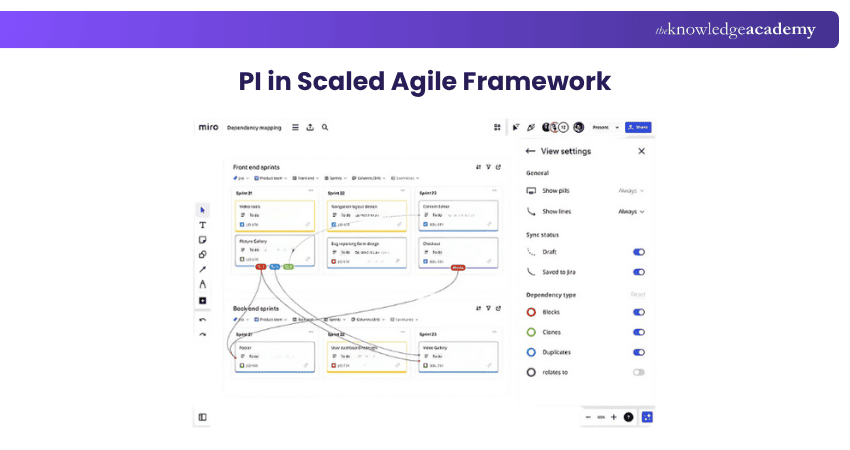
This process ensures all teams work toward the same vision while maintaining transparency, collaboration, and predictable delivery across the Agile Release Train (ART). The ART is a long-lived team of Agile teams, typically 50 to 125 individuals, that collaboratively develop, test, and deliver solutions.

Importance of PI Planning
PI Planning is crucial for successful Agile delivery at scale. It provides a structured opportunity for teams to align priorities, collaborate on planning, and commit to shared goals. Here's why it's important:
1) Alignment Across Teams
PI Planning ensures all teams in the Agile Release Train (ART) are working toward the same vision and business objectives.
1) Everyone learns about the company’s goals and customer needs
2) Teams align with the bigger picture through product vision discussions
3) Helps improve how work flows across teams and departments
4) Teams can make better choices with clear priorities
5) Aligns technology efforts with business strategy
6) Reduces duplicate efforts by clarifying who is doing what
2) Improved Collaboration
In business, PI Planning encourages face-to-face or virtual interaction, which thereby enhances communication and trust across teams and stakeholders.
1) Teams build stronger working relationships through regular interaction
2) Open discussions lead to better ideas and solutions
3) Helps avoid resource clashes by spotting team dependencies
4) Creates a supportive environment where everyone feels heard
5) Encourages feedback and continuous improvement
6) Enables shared problem-solving across different functions
3) Early Risk Identification
It surfaces dependencies and potential blockers before development starts, allowing for proactive mitigation.
1) Teams can make plans to reduce risks before they cause trouble
2) Regular reviews help update risk plans as work continues
3) Teams discuss openly about possible problems early on
4) A shared “risk board” is used to track and manage risks
5) Teams learn from past risks and apply those lessons
6) Improves response time to unexpected issues during execution
4) Measurable Business Outcomes
PI Planning brings structure to planning and execution, enabling consistent and reliable value delivery.
1) Increased predictability in delivering features and capabilities
2) Reduced waste by eliminating duplicated or misaligned work
3) Faster time to market for new features and innovations
4) Improved customer satisfaction through on-time, value-driven releases
5) Supports better use of resources and budgeting
6) Helps align features with customer and market demand
5) Transparency and Visibility
In PI Planning, everyone from developers to executives gains visibility into priorities, capacity, and progress. It promotes transparency in its work.
1) All teams have the same understanding of what needs to be done
2) Dashboards and boards show progress in real time
3) Teams can track if they’re on track or need to adjust
4) Stakeholders feel more confident with clear, shared information
5) Promotes accountability through visible commitments
6) Keeps leadership informed and involved throughout the PI
Learn essential Agile practices for effective team collaboration with our Certified SAFe® for Teams Training – Register today!
Goals Behind PI Planning
The main purpose of PI Planning is to align teams and stakeholders around a shared vision, priorities, and a plan for the upcoming Program Increment. With that, here are the key goals that followed and applied behind every PI Planning:
1) Align Teams with Business Goals: Ensure all teams understand the broader objectives, customer needs, and product vision.
2) Set and Commit to Objectives: Define clear team goals for the PI and commit to delivery.
3) Identify Dependencies Early: Spot and plan for cross-team dependencies to avoid delays as early as possible.
4) Build a Shared Roadmap: Create a unified plan with features, timelines, and milestones.
5) Promote Collaboration and Transparency: Encourage open communication across teams and stakeholders.
6) Manage Risks Proactively: Identify and plan for risks before execution begins.
7) Ensure Predictable Delivery: Support reliable and consistent delivery of value.
8) Boost Stakeholder Confidence: Provide visibility into plans and progress to build trust.
Steps of PI Planning
PI Planning typically follows a structured agenda to help Agile teams plan, align, and commit to a shared set of goals for the upcoming Program Increment. Here are the key steps involved in the process of PI Planning:
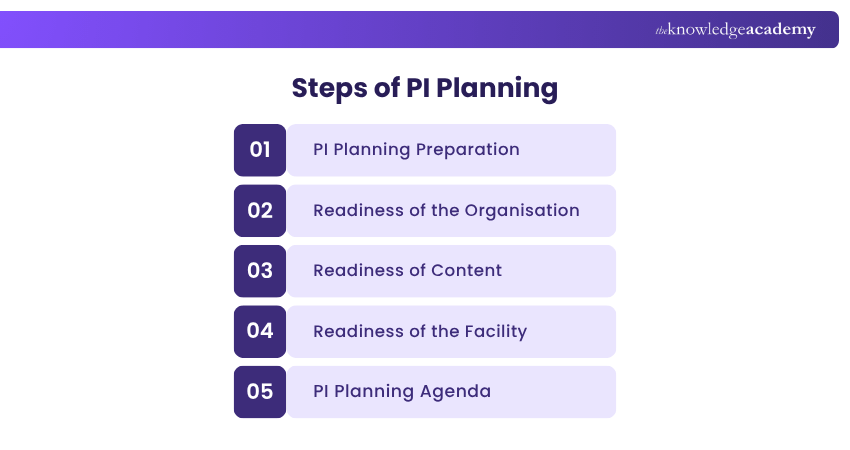
Step 1: PI Planning Preparation
The PI Planning ceremony is a well-rounded process involving pre- and post-event measures. These preparatory steps, including pre-defined roles and responsibilities, are vital in uniting team members, leadership, and stakeholders across the organisation. This sets the stage for evolving the backlog throughout the increment.
Step 2: Readiness of the Organisation
Strategic alignment among participants, stakeholders, and business/application owners is paramount. Achieving this alignment involves understanding the scope and context of planning, gaining agreement on business priorities, and ensuring that Agile teams are in place with dedicated team members, Scrum Masters, and Product Owners for each team.
Step 3: Readiness of Content
This stage is a crucial requirement for a clear vision and context. Essential components encompass executive briefings, product vision briefings, and architecture vision briefings, all designed to provide a comprehensive understanding of the landscape.
Step 4: Readiness of the Facility
Creating a collaborative environment, whether virtual or physical, for distributed or co-located teams is vital. It necessitates investments in technical infrastructure and focuses on key criteria, including preparing locations, providing access to technology and tools, and ensuring robust communication channels, mainly through Audio-Visual (AV) equipment and presentation tools.
Step 5: PI Planning Agenda
It follows a structured two-day schedule where activities are carefully planned and spread across both days. This is to ensure that the event stays focused and achieves its intended outcomes. This provides clarity around What is PI Planning and how teams align on goals, dependencies, and delivery plans. While two days is the standard duration, organisations may adjust based on their planning needs.
Understand and apply DevOps principles within the Scaled Agile Framework with our SAFe® DevOps Certification – Join soon!
What is Capacity in PI Planning?
Capacity in PI Planning represents the ability of Agile teams to complete planned work during a Program Increment (PI). It accounts for factors such as team size, availability, holidays, and historical velocity. During PI Planning, teams assess their capacity to estimate how much work they can commit to within the PI timeline.
This assessment ensures realistic planning, prevents overloading, and aligns deliverables with available resources. By balancing workload and capacity, teams can maintain high-quality outputs, reduce risks of burnout, and ensure a sustainable pace throughout the increment. Proper capacity management is vital for successful execution and meeting organisational objectives.
Acquire skills in building systems with code and design by signing up for our SAFe® Agile Software Engineering Training now!
What is the Difference Between PI Planning and Release Planning?
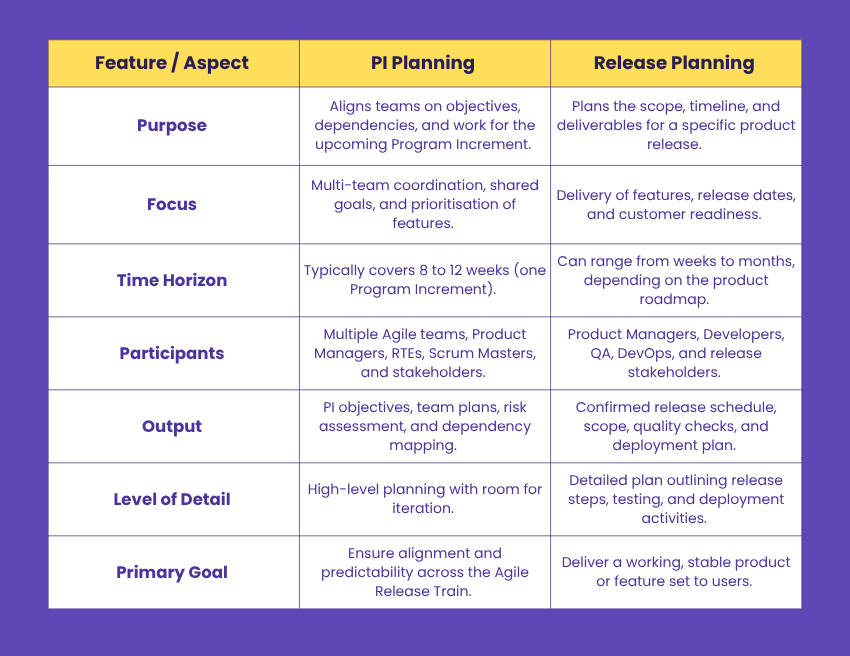
PI Planning is a structured event where all Agile teams come together to plan their work for the next Program Increment, usually covering eight to 12 weeks. The goal is to align teams on priorities, identify dependencies, set objectives, and ensure everyone is moving in the same direction.
On the other hand, Release Planning focuses on deciding when and what features will be delivered to customers. It involves coordinating the release of finished work, often considering factors like market readiness, testing, deployment, and customer value.
Conclusion
PI Planning is like the foundation of a project when it comes to organisational activities. Although it might seem complex, especially with many people and viewpoints, it's all about teamwork. By understanding What is PI Planning, teams can come together to tackle common challenges, deal with dependencies, and work concurrently to create the most efficient software solutions.
Architect your Agile Success – Register now for our SAFe® for Architects Training and become a certified SAFe for Architects!
Frequently Asked Questions
Who is Involved in PI Planning?

PI Planning includes Agile teams, Product Owners, Scrum Masters, Business Owners, and stakeholders. They collaborate to align on the vision, set priorities, and define the objectives for the upcoming Program Increment. This ensures that everyone has clarity on goals, dependencies, and their role in delivering value.
How to Prepare for a PI Planning Session?
To prepare for a PI Planning session, ensure teams have a prioritised backlog, clear product vision, and capacity estimates. Identify known risks and dependencies in advance. Arrange logistics, tools, and stakeholder availability. Pre-PI meetings with Product Owners and Business Owners help align goals before the planning event begins.
What are the Other Resources and Offers Provided by The Knowledge Academy?
The Knowledge Academy takes global learning to new heights, offering over 3,000+ online courses across 490+ locations in 190+ countries. This expansive reach ensures accessibility and convenience for learners worldwide.
Alongside our diverse Online Course Catalogue, encompassing 17 major categories, we go the extra mile by providing a plethora of free educational Online Resources like Blogs, eBooks, Interview Questions and Videos. Tailoring learning experiences further, professionals can unlock greater value through a wide range of special discounts, seasonal deals, and Exclusive Offers.
What is The Knowledge Pass, and How Does it Work?
The Knowledge Academy’s Knowledge Pass, a prepaid voucher, adds another layer of flexibility, allowing course bookings over a 12-month period. Join us on a journey where education knows no bounds.
What are the Related Courses and Blogs Provided by The Knowledge Academy?
The Knowledge Academy offers various Agile Training, including AgilePM® Foundation & Practitioner (AgilePM® V3) Course, SAFe® Agile Product Management Training and SAFe® DevOps Certification. These courses cater to different skill levels, providing comprehensive insights into Agile Roles and Responsibilities.
Our Project Management Blogs cover a range of topics related to PI Planning, offering valuable resources, best practices, and industry insights. Whether you are a beginner or looking to advance your Project Management skills, The Knowledge Academy's diverse courses and informative blogs have got you covered.

The Knowledge Academy


Global Training Provider
The Knowledge Academy is a world-leading provider of professional training courses, offering globally recognised qualifications across a wide range of subjects. With expert trainers, up-to-date course material, and flexible learning options, we aim to empower professionals and organisations to achieve their goals through continuous learning.

Upcoming Project Management Resources Batches & Dates
Date
 AgilePM® Foundation & Practitioner (AgilePM® v2)

 If you wish to make any changes to your course, please


