


 Top Rated Course

We may not have the course you’re looking for. If you enquire or give us a call on +43 720 115337 and speak to our training experts, we may still be able to help with your training requirements.
Malware Analysis: Tools, Types, and Uses
The Knowledge Academy 11 March 2026Malware Analysis is the process of examining malicious software to understand its behaviour, origin, and impact, helping prevent and respond to cyberattacks. It is vital for helping analysts detect, prevent, and respond to threats, enabling organisations to strengthen defences, anticipate attacks, and protect critical systems.

Training Outcomes Within Your Budget!
We ensure quality, budget-alignment, and timely delivery by our expert instructors.
Table of Contents
Imagine Malware Analysis as a fascinating test match, where your computer’s security is the wicket. Every delivery, whether it’s dynamic, static, or hybrid analysis, is designed to outsmart the opposition—the malware. With the right tools and techniques, you can bowl out the threats, defend your system, and lead your team to victory in the cybersecurity playground. Read to know more!
Table of Contents
1) Malware Analysis Definition
2) Different Types of Malware Analysis
3) Use Cases for Malware Analysis
4) Benefits of Malware Analysis
5) Use Cases for Malware Analysis
6) Four Stages of Malware Analysis
7) Malware Analysis Tools
8) Conclusion
Malware Analysis Definition
Malware Analysis examines and understands malicious software to determine its origin, functionality, and potential impact. It involves studying the malware's behaviour, code, and purpose to develop effective defences and mitigation strategies. This analysis, a key aspect of Computer Forensics, helps cybersecurity professionals protect systems and networks from similar threats in the future.

Different Types of Malware Analysis
Malware Analysis is important to understand the ways malicious software operates and the associated methodologies to defend against it. Here are some of the different Types Of Malware:
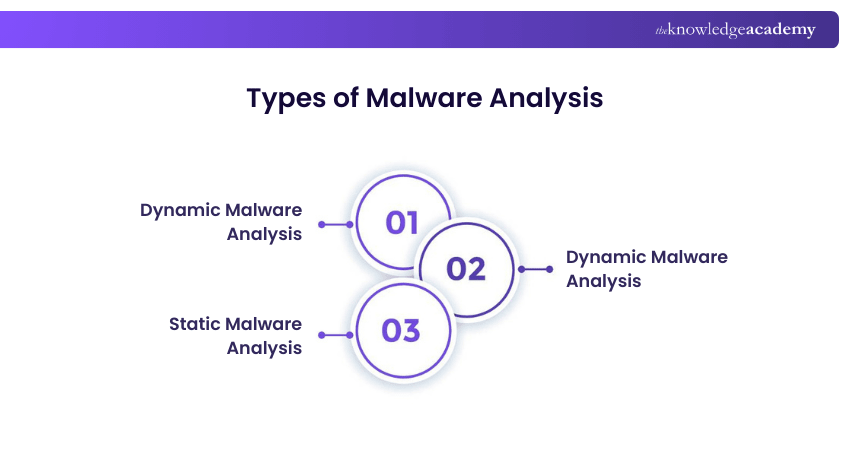
1) Dynamic Malware Analysis
Dynamic Malware Analysis executes malware in a sandbox to observe its behaviour directly. Analysts gain visibility into file changes, network activity, and payloads, while automated sandboxing speeds up detection compared to manual reverse engineering.
However, attackers design malware to evade sandboxes by hiding code until certain conditions are met. This makes it powerful but vulnerable to deception. Despite these challenges, it remains one of the most effective ways to reveal a threat’s impact.
2) Hybrid Malware Analysis
Hybrid Malware Analysis combines static and dynamic methods for fuller coverage. It correlates behavioural data with static indicators, exposing hidden code and generating more Indicators of Compromise (IOCs).
For example, analysts can apply static analysis to memory dumps created during dynamic execution to find zero‑day exploits and advanced threats. This combination offers the most reliable detection against sophisticated malware.
3) Static Malware Analysis
Static Malware Analysis inspects malware without running it. It focuses on file attributes, such as names, strings, domains, and headers. Also, tools such as disassemblers and network analysers help to reveal malicious infrastructure or packed files safely.
Its drawback is that runtime behaviour may go undetected. Sophisticated malware can generate dynamic strings or hidden payloads that basic static checks miss, making it incomplete on its own.
Transform your investigation skills with Digital Forensics Training - Join today!
Use Cases for Malware Analysis
There is a plethora of use cases for Malware Analysis. Below are listed a few of those vital applications:
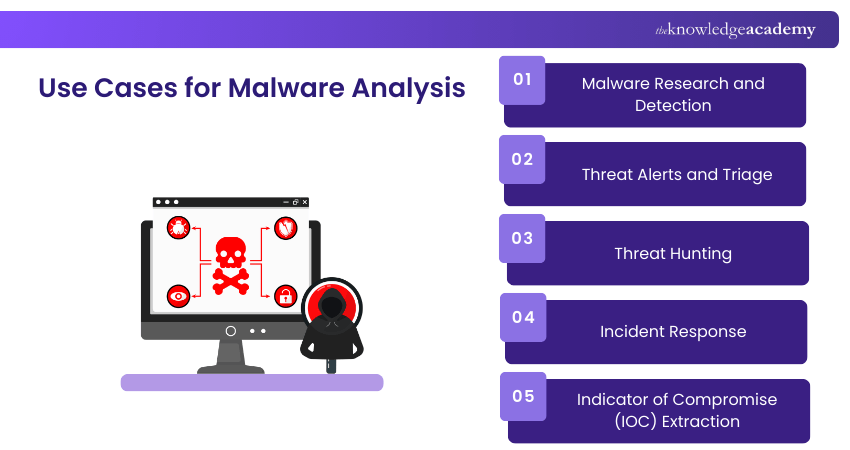
1) Malware Research and Detection
Malware Analysis improves malware detection by enhancing the signatures and heuristics used in security tools, enabling faster identification and blocking of malicious activities. This empowers organisations to stay ahead of attackers by refining their detection capabilities.
2) Threat Alerts and Triage
Security teams use Malware Analysis to assess the severity of threats quickly. This process helps prioritise responses and allocate resources efficiently, ensuring the most dangerous threats are addressed first.
3) Threat Hunting
Malware Analysis supports proactive threat hunting by providing insights into attackers' tactics, techniques, and procedures (TTPs), further helping security teams detect and eliminate hidden threats.
4) Incident Response
Malware Analysis is essential during incident response. It helps to identify the scope and impact of a breach, guide containment efforts, and assist in the recovery and prevention of future incidents.
5) Indicator of Compromise (IOC) Extraction
Malware analysis enables the extraction of Indicators of Compromise (IOCs) data, such as file hashes, domains, or registry changes that signal a breach or attack. These markers reveal how malware interacts with systems, helping to detect threats and understand system reactions.
Enhance your incident response skills with our Incident Response Training - Register now!
Four Stages of Malware Analysis
Malware Analysis involves multiple stages, each crucial for understanding the nature of the threat and developing appropriate counter-measures. Below are the four primary stages of Malware Analysis:
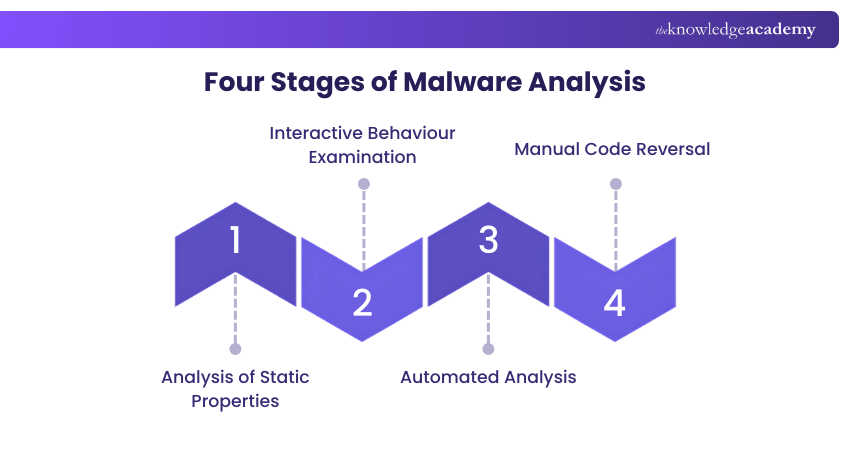
1) Analysis of Static Properties
Static properties include strings, headers, hashes, metadata, and other embedded resources within the malware code. These details can be examined without running the programme, allowing analysts to create IOCs quickly and decide if deeper investigation is needed.
2) Interactive Behaviour Examination
Interactive behaviour analysis involves running the malware in a controlled lab to observe its registry, file system, process, and network actions. Analysts may also use memory forensics to study how it operates in memory.
3) Automated Analysis
Fully automated analysis rapidly assesses suspicious files to predict potential impact on networks. It generates easy-to-read reports, helping security teams handle large-scale malware evaluations efficiently.
4) Manual Code Reversal
Manual code reversing uses tools like debuggers and disassemblers to decode encrypted data and uncover hidden malware logic. Though time-consuming, it offers deeper insights into the malware’s capabilities and behaviour.
Kickstart your forensic journey with Computer Forensics Foundation Training - Register today!
Malware Analysis Tools
There are various tools available for effective Malware Analysis, each offering unique features to dissect and understand malicious software. Below are some of the prominent tools used in the industry:
1) Ghidra
Ghidra is a powerful open-source reverse engineering tool developed by the NSA. It allows analysts to decompile and analyse malware binaries, enabling a deeper understanding of the software’s inner workings.
2) Fiddler
Fiddler is a versatile web debugging tool that allows analysts to inspect and modify network traffic. It is widely used in Malware Analysis to observe how malware communicates over the network and detect anomalies.
3) PeStudio
PeStudio is a lightweight, yet robust tool designed for static analysis of Windows executables. It quickly identifies suspicious elements in a file, such as malware indicators, without executing the code, making it a safe option for preliminary analysis.
4) Process Hacker
Process Hacker is an advanced task manager and system monitoring tool. It is utilised in Malware Analysis to monitor processes, detect hidden activities, and analyse the behaviour of malicious software in real-time.
5) Process Monitor
Process Monitor records live system activity, such as process creation, registry changes, and file operations, making hidden or short-lived processes visible. It is useful for analysing malicious documents, such as Word macros launching PowerShell commands to download malware.
6) Cuckoo Sandbox
Cuckoo Sandbox is a popular open-source automated malware Analysis tool that provides a secure virtual environment to execute suspicious files. It monitors system behaviour, network activity, and Application Programming Interface (API) calls, offering detailed reports on the malware’s actions without risking real system damage.
7) Wireshark
Wireshark analyses network traffic with deep packet inspection across multiple protocols. It provides full visibility into network behaviour and can extract files downloaded by malware from packet captures. This makes it a vital tool for understanding payloads and the overall impact of an attack.
8) VirusTotal
VirusTotal is an online service that scans suspicious files and Uniform Resource Locators (URLs) using multiple antivirus engines to detect malware and harmful content. It analyses assets like hashes, domains, and hostnames, while also leveraging machine learning to identify patterns in malicious software.
Protect systems, secure your future, and stay ahead of cybercriminals with Cyber Security Training now!
Benefits of Malware Analysis
Malware Analysis offers several key benefits that strengthen an organisation’s cybersecurity posture:
a) Assess Intrusion Damage: Determine how much damage a cyberattack or intrusion has caused to systems and data.
b) Identify the Source: Detect who or what may have installed the malware within the system.
c) Evaluate Attack Sophistication: Understand the complexity and techniques used by the attacker.
d) Locate Vulnerabilities: Pinpoint the exact weakness or vulnerability of the malware exploited to gain access.
e) Enhance Defence Strategies: Use gathered insights to develop stronger detection and prevention mechanisms.
Malware Analysis Best Practices
For strengthening cybersecurity effectiveness and promoting safety, Malware Analysis must follow proven practices. Let’s look at them below:
a) Use a Large Sample of Suspected Malware: Analysing diverse samples reveals attacker tactics, trends, and unknown threats, improving detection accuracy and resilience.
b) Only Analyse Malware with Active C&C: Focus on samples with live command and control servers to observe digital behaviour and attacker infrastructure.
c) Use a Secure Environment to Run Malware: Run malware in isolated environments to prevent spread, ensure accurate results, and protect sensitive systems.
d) Capture and Store VM Image Snapshots: Snapshots preserve analysis states, allow rollback to safe points, and enable deeper review of malware behaviour.
Conclusion
Staying ahead of cybercriminals demands proactive intelligence. Malware Analysis equips security teams with the ability to uncover how malicious software operates, extract indicators of compromise, and refine detection methods. By leveraging tools and techniques, organisations can strengthen their defences, anticipate evolving attacks, and protect critical systems.
Build a lucrative cybersecurity career with Introduction To System And Network Security Training - Start today!
Frequently Asked Questions
What is the Goal of Malware Analysis?

The goal of Malware Analysis is to understand how malicious software operates, identify its behaviour, and use that knowledge to detect, stop, and prevent future threats. They help organisations strengthen defences and respond more effectively to cyberattacks.
Why is Malware Analysis Important?
Malware Analysis is important because:
a) It reveals how much damage an intrusion caused
b) It identifies who installed the malware
c) It determines the attack’s sophistication level
d) It pinpoints the vulnerability exploited
What are the Other Resources and Offers Provided by The Knowledge Academy?
The Knowledge Academy takes global learning to new heights, offering over 3,000+ online courses across 490+ locations in 190+ countries. This expansive reach ensures accessibility and convenience for learners worldwide.
Alongside our diverse Online Course Catalogue, encompassing 17 major categories, we go the extra mile by providing a plethora of free educational Online Resources like Blogs, eBooks, Interview Questions and Videos. Tailoring learning experiences further, professionals can unlock greater value through a wide range of special discounts, seasonal deals, and Exclusive Offers.
What is The Knowledge Pass, and How Does it Work?
The Knowledge Academy’s Knowledge Pass, a prepaid voucher, adds another layer of flexibility, allowing course bookings over a 12-month period. Join us on a journey where education knows no bounds.
What are the Related Courses and Blogs Provided by The Knowledge Academy?
The Knowledge Academy offers various Cyber Security Training, including the Malware Analysis Training, and Incident Response Training. These courses cater to different skill levels, providing comprehensive insights into Cyber Security Resume: Examples and Template.
Our IT Security & Data Protection Blogs cover a range of topics related to cybersecurity and data protection, offering valuable resources, best practices, and industry insights. Whether you are a beginner or looking to advance your IT security skills, The Knowledge Academy's diverse courses and informative blogs have got you covered.

The Knowledge Academy


Global Training Provider
The Knowledge Academy is a world-leading provider of professional training courses, offering globally recognised qualifications across a wide range of subjects. With expert trainers, up-to-date course material, and flexible learning options, we aim to empower professionals and organisations to achieve their goals through continuous learning.

Upcoming IT Security & Data Protection Resources Batches & Dates
Date
 Malware Analysis Training
Malware Analysis Training
Fri 21st Aug 2026
Malware Analysis Training
Fri 20th Nov 2026

 If you wish to make any changes to your course, please


