


 Top Rated Course

We may not have the course you’re looking for. If you enquire or give us a call on +43 720 115337 and speak to our training experts, we may still be able to help with your training requirements.
Top 10 Digital Marketing Skills
James Smith 14 July 2026To achieve Digital Marketing, you have skills such as SEO, social media, content development, email marketing, good communication and analytics. These Digital Marketing Skills are crucial to reaching your audience efficiently. It also helps build brand awareness and support business development across different online platforms.

Training Outcomes Within Your Budget!
We ensure quality, budget-alignment, and timely delivery by our expert instructors.
Table of Contents
Have you ever thought about how brands increase their online presence and connect with the exact audience? The answer is, learn Digital Marketing Skills. From social media to SEO, these skills help you develop content, run effective campaigns and create real outcomes.
In this blog, we will discuss the important Digital Marketing Skills necessary for success and share simple, practical ways to develop them. Either you are just starting out or looking to improve.
Table of Contents
1) What are Digital Marketing Skills?
2) Skills Required in Digital Marketing
3) How to Develop Digital Marketing Skills?
4) What are the Three Most Important Things in Digital Marketing?
5) Is Digital Marketing a Tech Skill?
6) Conclusion
What are Digital Marketing Skills?
Digital Marketing is using the internet to promote products, services or brands. It involves things such as social media, SEO, email and mobile marketing. The target is to get the correct people over websites, social media, apps and emails. If you wish to work in Digital Marketing, it is essential to learn how to use these tools and applications to get new visitors, leads and sales.
Digital Marketing Skills are the abilities required to encourage something effectively online. Professionals in this field use a mixture of technical skills such as Data Analysis or SEO and soft skills such as communication and creativity. These are the skills required for Digital Marketing. It helps to enhance brand awareness, create customer interest, create a positive image and communicate directly with the audience.

Skills Required in Digital Marketing
This section of the blog will expand on some of the most essential skills required in the domain of Digital Marketing. Let’s explore them in detail:
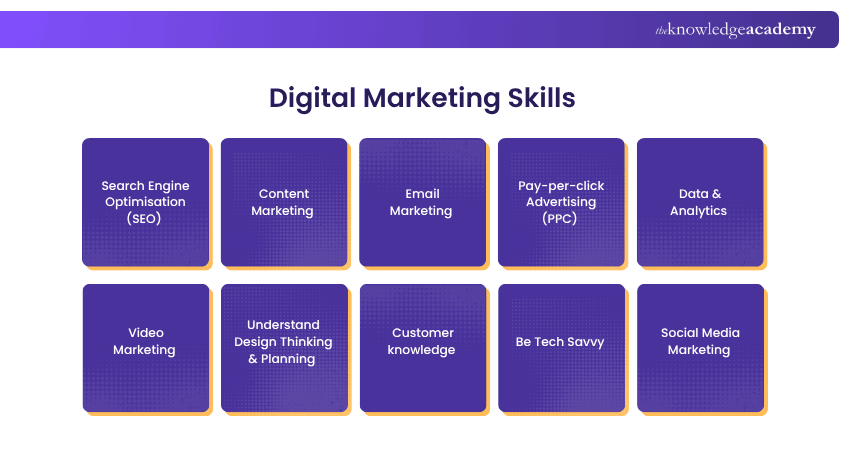
1) Search Engine Optimisation (SEO)
Search Engine Optimisation (SEO) and Search Engine Marketing (SEM) both traget to increase your website’s traffic on search engines but use several approaches. SEO enhances natural traffic by promoting content, keywords and user experience. Meanwhile SEM involves both natural efforts and paid ads like Pay-Per-Click to get audiences faster. Understanding how both work is key to Digital Marketing success. For better SEO, use the right keywords, create quality content, create strong internal links and optimise for voice and video search.
2) Content Marketing
Content marketing is a Digital Marketing strategy that involves creating and sharing valuable, relevant content to attract and retain a clearly defined audience. The main goal is to drive profitable customer actions by meeting the needs of that audience. This content can take many forms, such as blogs, e-books, podcasts, or webinars.
Content marketing is based on the thought that conventional ads are less productive. Today’s customers are more aware and choose useful content through direct promotions. Instead of interfering with ads, content marketing concentrates on sharing helpful and appropriate information.
3) Email Marketing
Email marketing means sending promotional or business emails to people who’ve signed up to hear from a company. It helps build relationships, grow brand awareness, and encourage sales. To do it well, businesses use tools to manage contact lists, design emails, and track results like open rates and clicks.
They also group their subscribers based on behavior or demographics to send content that matches their interests. A successful email marketing campaign relies on smart planning, engaging content, and ongoing improvements guided by data and performance insights.
4) Pay-per-click Advertising (PPC)
Pay-Per-Click (PPC) is a Digital Marketing method where businesses pay only when someone clicks their ad. Commonly used on search engines like Google, companies bid on keywords, and ads appear based on relevance and the highest bid.
Knowing the difference between Dynamic and Responsive Search Ads is vital in PPC advertising. It allows businesses to target specific audiences and pay only for clicks. With real-time tracking, campaigns can be optimised for better performance. However, success depends on careful planning and smart management to ensure a strong ROI.
5) Data & Analytics
Data and analytics are important in every area of Digital Marketing. They help you understand what’s working, what’s not, and how people interact with your content. Tools like Google Analytics (GA4) make it easy to track website traffic, user behavior, and key metrics that guide better decisions.
The real challenge is using that data to improve results. Great marketers know how to spot patterns, learn from customer behavior, and use those insights to increase traffic and conversions. If you can show that you can turn data into smart ideas that drive success, you’ll be an asset. Don’t forget besides Google Analytics, there are other tools worth exploring too.
Learn how to optimise ad campaigns for better performance. Join our Google Ads Certification now!
6) Video Marketing
Video marketing is a powerful digital tool that helps brands connect with people in a personal way. Platforms like YouTube, TikTok, and Instagram Reels make it easy to grab attention through short, engaging videos that do more than sell they educate, entertain, and inspire.
You don’t need expensive gear to succeed in video marketing. Even simple phone videos can work well if they’re clear, engaging, and speak to the right audience. Keep content short, relevant, and mobile-friendly. With video leading on social media, it’s a must-have skill for today’s digital marketers.
7) Understand Design Thinking & Planning
Design thinking is all about solving problems by focusing on the user's needs. In Digital Marketing, this means understanding your audience deeply and building campaigns around what matters most to them. It involves steps like researching, brainstorming, testing ideas, and improving based on feedback.
Good planning goes hand in hand with design thinking. When you combine creative ideas with a clear plan, your marketing becomes more focused and effective. This approach helps digital marketers create better user experiences and drive stronger results.
8) Customer knowledge
Knowing your customers is key to successful Digital Marketing. It’s about understanding who they are, what they need, and how they behave online. This helps you create messages, content, and offers that truly connect with them.
By using tools like customer personas, surveys, and analytics, you can gather insights to shape better campaigns. The more you understand your audience, the easier it is to deliver the right message at the right time and build lasting relationships.
9) Be Tech Savvy
In Digital Marketing, being comfortable with technology is a big advantage. You don’t need to be a tech expert, but knowing how to use tools like email platforms, social media schedulers, analytics dashboards, and CRM systems is important.
As digital trends change quickly, marketers who can adapt to new tools and platforms stay ahead. Being tech-savvy also helps you work better with developers, designers, and data teams to run smoother, smarter campaigns.
10) Social Media Marketing
With nearly half the world’s population using social media and many businesses relying on it for marketing, strong social media skills have become a vital part of any digital marketer’s toolkit.
Social media marketing goes beyond just posting on Facebook. It includes creating engaging content, designing ads, and tracking performance across platforms. Tools like Facebook Marketing Tools help target the right audience and boost engagement. Staying updated with platform changes is key to meeting business goals effectively.
Learn advanced strategies to enhance your online presence effectively. Join our Social Media Marketing Course now!
How to Develop Digital Marketing Skills?
Learning how to develop your Digital Marketing Skills is key to growing your career in the field. Here are some effective steps you can take to strengthen and improve your Digital Marketing abilities:
1) Register for Full-time Education
If you’re starting a Digital Marketing career, a full-time university course offers a solid foundation with both theory and hands-on experience.
Here’s what you can gain:
1) Core understanding of traditional and Digital Marketing principles
2) Practical experience through projects and internships
3) Exposure to tools and techniques used in the industry
4) Opportunities to connect with marketing professionals and peers
5) A structured path to develop job-ready skills
2) Supplement with Part-time Training
If you're an aspiring or current marketer, part-time training is a great way to boost your skills.
You can:
1) Take online courses or local university classes
2) Attend seminars, webinars, or marketing conferences
3) Earn certifications in SEO, PPC, CRO, and more
4) Explore free resources to strengthen key skills
5) Choose training that suits your goals and schedule
What are the Three Most Important Things in Digital Marketing?
The top three are:
1) Knowing Your Audience: Understand who they are and what they need
2) Creating Good Content: Share useful, interesting content that adds value
3) Using Data and Analytics: Track results to see what works and improve your strategy
Is Digital Marketing a Tech Skill?
Yes, Digital Marketing involves both creative and technical skills. While it’s not purely a tech role, it does require understanding tools like analytics platforms, SEO, social media tools, and email marketing systems. Knowing how to use these technologies helps digital marketers plan better, track results, and improve performance.
Conclusion
Building good Digital Marketing Skills is important for growing your career online. Skills like SEO, social media, and analytics help you plan better campaigns and connect with the right audience. By learning regularly and keeping up with new trends, you can create content that works, get better results, and move forward in your Digital Marketing journey.
Learn how to optimise strategies using SEO, social media, and content tools. Join our Digital Marketing Tools Training now!
Frequently Asked Questions
How are Digital Marketing Strategies Different from Traditional Marketing Methods?

Digital Marketing utilises online channels like social media, email, and websites, offering real-time analytics and targeted advertising. Whereas traditional marketing relies on offline methods such as print, TV, and radio.
What are Some Cost-effective Digital Marketing Tactics for Small Businesses?
Cost-effective strategies include leveraging social media platforms, optimising SEO, utilising email marketing, and creating engaging content to attract and retain customers.

James Smith


Digital Marketing Manager and Trainer
James Smith is a digital marketing professional with over a decade of experience in SEO, content strategy, paid media and analytics. He has supported both SMEs and global brands in transforming their digital presence. James’s writing and training are rooted in results-driven tactics and the latest marketing trends.
View Detail

 If you wish to make any changes to your course, please


