


 Top Rated Course

We may not have the course you’re looking for. If you enquire or give us a call on +43 720 115337 and speak to our training experts, we may still be able to help with your training requirements.
Cloud Adoption Framework and Its Key Strategy and Steps
Richard Harris 22 April 2026A Cloud Adoption Framework is a structured approach that helps organisations plan, implement, and manage their shift towards Cloud Computing. It aligns cloud goals with business strategy, strengthens security, and leads businesses for long-term operations. This ensures smoother adoption, reduced risks, and successful cloud transformation.

Training Outcomes Within Your Budget!
We ensure quality, budget-alignment, and timely delivery by our expert instructors.
Table of Contents
Shifting to the cloud is no longer uncertain. Instead, it has simply become a matter of timing. As organisations look for ways to improve efficiency, strengthen security, and modernise their operations, the cloud has become a natural next step. Yet the journey of Cloud Adoption can feel complex without the right guidance.
Successful Cloud Adoption requires more than technology alone. It needs a clear strategy, well-planned processes, trained teams, and strong governance. This is where a Cloud Adoption Framework becomes essential, offering a structured path that helps organisations move with confidence and achieve long-term success in the cloud. Want to know how it works? Read on to explore its key insights!
Table of Contents
1) What is a Cloud Adoption Framework?
2) How Does the Cloud Adoption Framework Work?
3) Key Components of a Cloud Adoption Framework
4) Stages of the Microsoft Cloud Adoption Framework for Azure
5) Benefits of the Cloud Adoption Framework
6) Enterprise Challenges in Cloud Adoption
7) Key Use Cases of Cloud Adoption Frameworks
8) Conclusion
What is a Cloud Adoption Framework?
A Cloud Adoption Framework (CAF) is a structured set of guidelines, tools, practices, and best practices that help organisations plan, implement, and manage cloud adoption. It provides a clear pathway from initial cloud strategy development to migration, modernisation, optimisation, governance, and daily operations.
Major cloud providers include Microsoft Azure, Amazon Web Services (AWS), and Google Cloud, and they offer their own frameworks. Although each one differs slightly, the main goal remains the same. They help organisations move to the cloud confidently and successfully.
How Does the Cloud Adoption Framework Work?
A Cloud Adoption Framework works by dividing the cloud journey into clear steps. It helps organisations prepare, test, and expand their cloud use in a safe and organised way. The process is commonly explained through four simple phases: Envision, Align, Launch, and Scale.
1) Envision: In this phase, organisations think about why they want to use the cloud and what they hope to achieve. They pick the most important goals and choose the right people to lead the changes.
2) Align: Next, they check if they are ready for the cloud. This includes finding skill gaps, fixing weak areas, and making sure everyone understands their tasks and responsibilities.
3) Launch: Organisations then create small cloud pilots to test their ideas. These pilots show whether the cloud approach works well and help teams learn before making bigger changes.
4) Scale: Finally, once the pilots succeed, the organisation expands cloud use across more areas. This stage helps ensure that the cloud brings long-term value and supports business growth.
Key Components of a Cloud Adoption Framework
Although the exact structure varies slightly between cloud providers, most CAF models include several core components that form the foundation of successful cloud adoption. The following are those key components:
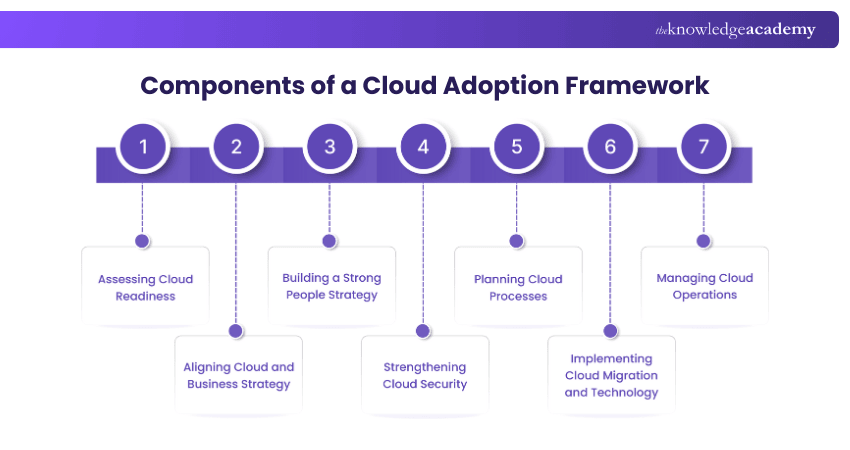
1) Assessing Cloud Readiness
A cloud readiness assessment evaluates the organisation’s current situation to check whether it is prepared for cloud migration. This assessment reviews factors such as:
1) Existing IT infrastructure
2) Application architecture
3) Security controls
4) Team skills and capabilities
5) Financial resources
6) Operational maturity
This evaluation highlights gaps or risks that may slow down migration and provides targeted recommendations to strengthen readiness before moving forward.
2) Aligning Cloud and Business Strategy
A Cloud Adoption project needs to support the overall goals of the organisation. This is why aligning business strategies with cloud plans is very important. For this, organisations have to understand:
1) Why do they want to move to the cloud
2) Which business goals will the cloud support
3) What results do they expect
4) Which workloads are most important
This alignment ensures that Cloud Adoption delivers real value and supports long-term growth rather than just a technology upgrade.
3) Building a Strong People Strategy
Cloud Adoption is not only a technical change. It also requires people with the right skills and mindset. A strong people strategy helps organisations prepare their workforce by defining roles, improving knowledge, and promoting collaboration. This can include:
1) Training programmes for employees
2) Defining roles such as Cloud Architect, Cloud Engineer, or Security Lead
3) Encouraging teamwork between IT, security, and business units
4) Supporting cultural change so teams feel comfortable working with cloud services
A proper plan on how to upskill your people ensures that the organisation has the right talent to manage its cloud environment.
4) Strengthening Cloud Security
Security is one of the most important parts of a Cloud Adoption Framework. Cloud environments bring new risks like exposed data, weak access control, and compliance issues. The CAF helps organisations build a secure foundation by focusing on:
1) Identity and access control
2) Network protection
3) Encryption and data security
4) Compliance requirements
5) Monitoring and threat detection
By planning security early and in all stages of the adoption process, organisations can avoid major risks and keep their systems and data safe.
5) Planning Cloud Processes
This involves designing clear operational processes that support Cloud Adoption and daily cloud usage. These processes help maintain consistency and reduce errors. They often include:
1) Governance processes
2) DevOps practices
3) Change Management
4) Monitoring and logging processes
5) Incident Management
6) Deployment and testing procedures
Clear planning processes can reduce operational risk and ensure consistent adoption across teams.
Understand how to optimise and scale cloud environments with our Google Cloud Training – Register today!
6) Implementing Cloud Migration and Technology
This component focuses on the actual technical tasks involved in adopting the cloud. It includes choosing the right migration method and setting up the cloud environment for success. Common activities include:
1) Selecting migration strategies such as rehosting or refactoring
2) Building cloud architectures
3) Setting up compute, storage, and networking
4) Migrating data and applications
5) Testing and validating workloads
The goal is to move systems to the cloud safely while keeping performance and reliability high.
7) Managing Cloud Operations
Once workloads are migrated, organisations need to manage the cloud environment day by day. This component focuses on ongoing tasks such as:
1) Monitoring performance
2) Handling incidents and keeping systems updated
3) Managing cloud costs
4) Maintaining security
5) Ensuring compliance
6) Running backups and recovery processes
Good operations management ensures that the cloud environment remains stable and secure over time.
Stages of the Microsoft Cloud Adoption Framework for Azure
Microsoft’s Cloud Adoption Framework for Azure is one of the most widely used CAF models. It divides Cloud Adoption into six clear stages that help organisations plan, deliver, and manage their cloud journey.

1) Strategy
In the Strategy stage, organisations decide why they want to use the cloud and what results they hope to achieve. They look at business goals, possible benefits, costs, and which workloads matter most. This step sets a clear purpose for the entire cloud journey.
2) Plan
The Plan stage creates a simple roadmap for Cloud Adoption. Organisations check their current systems, find any gaps, decide what skills they need, and outline the steps for migration. This plan helps teams stay organised and work in the right direction.
3) Ready
In this stage, the cloud environment and teams are prepared for migration. This includes setting up security, identity, networking, and landing zones. Teams are trained and roles are assigned, so everything is in place before moving workloads.
4) Adopt
The Adopt stage is where organisations start moving applications and data to the cloud. They test how everything works, fix issues, check security, and make improvements. This stage brings real progress as workloads begin running in the cloud.
5) Govern
This stage keeps the cloud environment safe, secure, and cost-effective. Organisations set rules for security, spending, and compliance. They monitor usage and make sure everything follows the right standards. Good governance prevents problems and keeps things under control.
6) Manage
In the Manage stage, organisations handle daily cloud operations. They monitor performance, respond to issues, manage costs, and keep systems updated. This stage ensures the cloud continues to run smoothly and delivers long-term value.
Design, build, and manage modern solutions on Azure with our Microsoft Azure Certification – Join now!
Benefits of the Cloud Adoption Framework
So far, you would have explored What is Cloud Adoption Framework and how it works. Now, let’s check its benefits to know why you need to implement it:
1) Reduced Complexity
1) Breaks the cloud journey into easy steps
2) Makes planning and migration less confusing
3) Gives teams a clear path to follow
4) Helps avoid mistakes from rushing
5) Makes cloud tasks easier to manage
2) Standardised Processes
1) Sets one clear way for cloud planning and execution
2) Helps all teams follow best practices
3) Makes teamwork smoother and easier
4) Keeps cloud deployments consistent
5) Ensures good quality across all cloud activities
3) Faster Implementation
1) Provides tools and templates to speed up work
2) Reduces guesswork and trial and error during migration
3) Helps spot problems early
4) Makes migration faster and smoother
5) Lets organisations see cloud benefits sooner
4) Enhanced Governance and Security
1) Improves control over who can access what details
2) rotects data and keeps it safe
3) Builds a more secure cloud environment
4) Helps meet security and compliance rules
5) Reduces risks and improves reliability
5) Cost Efficiency and Optimisation
1) Helps track and control cloud spending
2) Avoids paying for unused resources
3) Supports cost-saving options
4) Encourages smart use of cloud services
5) Ensures better return on cloud investments
Get hands-on experience in securing real cloud environments with our Introduction to Google Cloud Security Course – Sign up anytime!
Enterprise Challenges in Cloud Adoption
Despite the benefits, enterprises often face challenges during cloud adoption. These challenges include:
1) Cost Management and Budget Optimisation
1) Cloud costs can rise quickly
2) Spending is hard to predict
3) Unused resources still cost money
4) Lack of budgeting can lead to overspending
2) Cloud Security and Compliance
1) Managing access and permissions is difficult
2) Keeping data safe is a challenge
3) Meeting security rules and laws takes effort
4) Simple mistakes can cause big security risks
3) Handling Technical Complexity and Skills Shortages
1) Teams may not have enough cloud skills
2) Older systems are hard to move
3) Setting up cloud tools needs expertise
4) Hard to make good choices without cloud knowledge
Key Use Cases of Cloud Adoption Frameworks
A Cloud Adoption Framework is versatile and can support varied goals across different industries. Some common use cases include:
1) Resource Organisation
Organisations use the CAF to structure cloud resources in a logical and organised way. This includes naming conventions, tagging, subscription structures, and resource groups. Good organisation simplifies management and improves visibility.
2) Technology Adoption
The CAF supports the safe introduction of new cloud technologies. Whether a team wants to adopt Artificial Intelligence (AI), automation, containerisation, or analytics platforms, the CAF helps them do so in a structured manner.
3) Enhancing Business Processes
Cloud Adoption often improves business processes by making them faster and more flexible. The CAF ensures these improvements are planned, tested, and aligned with overall business needs.
Conclusion
A Cloud Adoption Framework is very necessary for organisations that want to embrace the cloud with confidence and clarity. It brings together strategy, planning, technical readiness, migration, governance, and operations into a single, organised approach. Instead of treating Cloud Adoption as a difficult or confusing task, the CAF helps businesses build confidence, reduce risks, and achieve long-term success.
Create and manage secure cloud environments with our Google Cloud Certification – Start building your cloud networks today!
Frequently Asked Questions
What is the AWS Cloud Adoption Framework?

The AWS Cloud Adoption Framework is a collection of best practices, tools, and guidance from Amazon Web Services that helps organisations plan, prepare, and successfully shift to the cloud across six key areas. They include business, people, governance, platform, security, and operations.
What is the Difference Between Cloud Adoption Framework and Well-architected Framework?
The Cloud Adoption Framework guides the full cloud journey, from strategy, readiness, and migration to ongoing operations. The Well-Architected Framework focuses only on reviewing and optimising existing cloud workloads to ensure they are secure, reliable, efficient, and cost-effective.
What are the Other Resources and Offers Provided by The Knowledge Academy?
The Knowledge Academy takes global learning to new heights, offering over 3,000+ online courses across 490+ locations in 190+ countries. This expansive reach ensures accessibility and convenience for learners worldwide.
Alongside our diverse Online Course Catalogue, encompassing 19 major categories, we go the extra mile by providing a plethora of free educational Online Resources like Blogs, eBooks, Interview Questions and Videos. Tailoring learning experiences further, professionals can unlock greater value through a wide range of special discounts, seasonal deals, and Exclusive Offers.
What is The Knowledge Pass, and How Does it Work?
The Knowledge Academy’s Knowledge Pass, a prepaid voucher, adds another layer of flexibility, allowing course bookings over a 12-month period. Join us on a journey where education knows no bounds.
What are the Related Courses and Blogs Provided by The Knowledge Academy?
The Knowledge Academy offers various Google Cloud Certifications, including Google Cloud Platform Fundamentals Course, Introduction to Google Cloud Security Course and Google Cloud Training. These courses cater to different skill levels, providing comprehensive insights into Cloud Orchestration.
Our Cloud Computing Blogs cover a range of topics related to Cloud Adoption Framework, offering valuable resources, best practices, and industry insights. Whether you are a beginner or looking to advance your Cloud Computing skills, The Knowledge Academy's diverse courses and informative blogs have got you covered.

Richard Harris


Senior Full Stack Developer and Technology Educator
Richard Harris is a highly experienced full-stack developer with deep expertise in both frontend and backend technologies. Over his 12-year career, he has built scalable web applications for startups, enterprises and government organisations. Richard’s writing combines technical depth with clear explanations, ideal for developers looking to grow in modern frameworks and tools.

Upcoming Cloud Computing Resources Batches & Dates
Date
 Google Cloud Platform Fundamentals
Google Cloud Platform Fundamentals
Fri 10th Jul 2026
Google Cloud Platform Fundamentals
Fri 9th Oct 2026

 If you wish to make any changes to your course, please


