


 Top Rated Course

We may not have the course you’re looking for. If you enquire or give us a call on +43 720 115337 and speak to our training experts, we may still be able to help with your training requirements.
Agile Project Management: A Complete Guide
David Evans 29 April 2026Adopting Agile Project Management means changing how teams plan, work, and deliver projects by breaking tasks into small steps with regular feedback. It transitions from the traditional Project Management method to a flexible and iterative approach. It helps teams be flexible, solve problems faster, and focus on what customers need.

Training Outcomes Within Your Budget!
We ensure quality, budget-alignment, and timely delivery by our expert instructors.
Table of Contents
Imagine launching a project that adapts to change, delivers faster, and keeps your team motivated, without the chaos. That’s exactly what Agile Project Management makes possible. In a world where customer needs shift quickly and traditional plans fall short, Agile offers a smarter, more flexible way to manage work.
Adopting Agile Project Management helps your team break big tasks into smaller steps, improve constantly, and stay focused on delivering value. In this blog, we’ll walk you through how to adopt it successfully, build strong teams, handle resistance, and implement proven strategies that work. Let’s dive in.
Table of Contents
1) Understanding Adopting Agile Project Management
2) Assessing Your Business’s Readiness for Agile Transformation
3) How to Perform an Agile Readiness Assessment?
4) Key Strategies for Implementing Agile Practices
5) Objections to Agile Adoption
6) How to Implement Agile in Project Management?
7) How to Transition a Team to Agile?
8) Conclusion
Understanding and Adopting Agile Project Management
Agile Project Management means managing projects in small parts. It’s a mindset that encourages collaboration, customer feedback, and iterative delivery. Unlike traditional Project Management methods that plan everything upfront, Agile focuses on breaking work into smaller, manageable tasks called iterations or sprints.
By adopting Agile, organisations can build better products faster while keeping teams motivated and engaged. It has become a new way of thinking in the business world.
Assessing Your Business’s Readiness for Agile Transformation
Before adopting Agile for your business, it’s important to check if your business is ready for the change. Agile isn't just a new method; it is a complete shift in how teams think, work, and deliver. A readiness assessment helps you spot possible problems early and create a plan to fix them.
Some common issues that appear when businesses skip this step include:
1) Resistance to change from employees
2) Lack of support from leadership
3) Mismatch between Agile principles and current business processes
4) Confusion or limited understanding of Agile roles and methods
5) Poor team communication or collaboration
Doing this assessment allows you to:
1) Understand how open your business is to change
2) Review how your current projects are managed
3) Measure the level of teamwork, communication, and flexibility within your teams
4) Spot cultural or structural barriers that could make Agile harder to adopt
It also helps leadership get involved early and support teams with the resources, training, and tools they need. By preparing properly, you can reduce risk and make your Agile transformation smoother and more successful.
How to Perform an Agile Readiness Assessment?
A proper Agile readiness assessment helps you avoid delays, confusion, and wasted effort by making sure you understand where you stand and what still needs to be done. Here's how you can perform that assessment:

1) Understand Your Organisation’s Goals
Agile should directly support your business objectives. Clearly define your purpose to keep teams aligned throughout the journey.
a) Identify whether your goal is faster delivery, higher customer satisfaction, or better adaptability.
b) Set measurable objectives that can be tracked throughout the Agile journey.
c) Align goals with business strategy and market needs.
2) Identify Agile Hotspots in Your Processes
Look for areas where Agile can create immediate impact. These are often the quickest wins for building momentum.
a) Analyse functions with frequent delays or bottlenecks.
b) Focus on teams needing regular adjustments based on feedback.
c) Target processes require close collaboration and quick decisions.
d) Prioritise high-visibility projects to showcase early success.
3) Assess Current Workflows and Team Structures
Agile requires adaptive, cross-functional teams. Mapping your current workflows will help you restructure effectively.
a) Document existing workflows from start to finish.
b) Evaluate team roles, skill sets, and capacity.
c) Identify dependencies between teams.
d) Review tools and processes currently in use.
4) Check Communication and Collaboration Levels
Strong communication is critical for Agile success. Assess and improve these areas before rollout.
a) Monitor how teams share updates and feedback.
b) Evaluate how problems or blockers are addressed.
c) Review frequency and quality of cross-team meetings.
d) Identify gaps in tools or practices for collaboration.
5) Ensure Leadership is Ready to Lead the Change
Agile transformation needs strong leadership commitment. Without it, adoption will falter.
a) Educate leaders on their new Agile roles.
b) Provide leaders with tools and resources to support teams.
c) Encourage leaders to model transparency and flexibility.
d) Get leadership buy-in to address resistance proactively.
6) Look for Cultural and Structural Barriers
Agile thrives in a collaborative, adaptable environment. Barriers must be identified early.
a) Evaluate employee comfort with change and feedback.
b) Identify if hierarchy limits decision-making.
c) Review whether control-focused culture overrides collaboration.
d) Plan initiatives to encourage self-organisation and trust.
Learn to meet the dynamic demands of the market with our Agile Overview Course – Register today!
Key Strategies for Implementing Agile Practices
Agile is not a one-size-fits-all solution. Every organisation is different, with unique challenges, goals, and team dynamics. So, here are some of the key strategies for implementing Agile practices that fit your business:
1) Strategies for Choosing the Right Agile Framework
Agile frameworks provide the structure to apply Agile methods. Choosing the right one is crucial because it will shape how your teams work, communicate, and deliver results over time. Some common frameworks include:
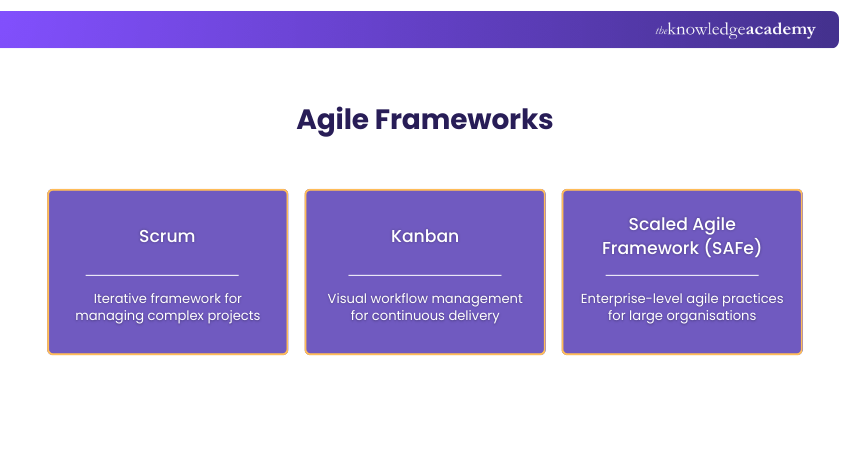
1) Scrum: Ideal for teams that work in short sprints and need regular check-ins and adjustments.
2) Kanban: Great for teams that handle ongoing tasks or lots of unplanned work, as it focuses on visualising workflow and limiting work in progress.
3) Scaled Agile Framework (SAFe): Designed for large companies managing multiple teams or departments that need a standard approach to Agile.
In order to choose the framework that suits your business, you can do the following steps:
1) Evaluate Your Needs: Review goals, team size, project complexity, and customer demand to choose a suitable Agile framework.
2) Involve Stakeholders: Engage team members and leaders in selecting a framework that fits daily workflows.
3) Pilot and Scale: Test the chosen framework with a small team, refine based on feedback, then expand gradually.
2) Strategies for Team Development
Agile success starts with people. Strong, motivated, cross-functional teams are at the heart of any Agile transformation. Here’s how to build and support them:
1) Select the Right Team Members: Build teams with the relevant, skilled people. Look for people who are open to collaboration, take responsibility, and are eager to learn.
2) Foster a Collaborative Environment: Encourage open talks, shared goals, and teamwork. Create a space where people feel safe to share ideas and solve problems together.
3) Encourage Cross-functional Collaboration: Break down silos and get teams from different departments to work together. This improves flexibility, creativity, and innovation.
4) Invest in Training and Coaching: Some team members may be new to Agile. Provide workshops, access to learning materials, or bring in Agile coaches to help them.
5) Build a Habit of Continuous Improvement: Run regular feedback to reflect on what went well and what could be better. It helps with making improvements.
3) Strategies to Prioritise the Customer
In Agile, the customer is at the centre of everything. Delivering what the customer actually wants is the ultimate goal. Here’s how to keep customers front and centre:
1) Include Customer Feedback: Involve customers at every stage from planning to testing. Their insights help make decisions and reduce wasted effort.
2) Use Iterative Development: Break work into short cycles called iterations, with each cycle delivering something that can be tested or reviewed. This helps adjust plans quickly if the customer’s needs change.
3) Create Feedback Loops: Set up regular methods for collecting feedback, such as surveys or testing sessions. Analyse this feedback and use it to make quick improvements.
These steps make sure you’re not just delivering on time but also delivering what is valuable. They also help build trust with customers, showing that their voice matters.
Uplift your team to work faster, smarter, and with greater clarity with our Agile for Teams Course – Join soon!
4) Strategies for Nurturing an Organisational Culture
Culture can make or break Agile success. This is because it requires a shift in mindset from control to collaboration, from fear of failure to continuous learning. Here’s how to build a culture that supports Agile:
1) Lead by Example: Leaders should model Agile values like openness, adaptability, and shared ownership. Their actions influence the whole organisation.
2) Promote Open Communication: Create space for honest discussions across all levels of the company. When communication flows freely, teams can adapt more easily to change.
3) Empower Teams: Let teams make decisions at the ground level. Trusting teams to manage their own work increases ownership and motivation.
4) Celebrate and Learn from Failure: Learn and get ideas from each failure. Encourage teams to try new ideas, take smart risks, and use failures to improve future work.
5) Embrace Continuous Learning: Keep improving, both in team practices and individual growth. Offer learning opportunities and celebrate teams who are evolving their ways of working.
Objections to Agile Adoption
Not everyone likes to change. Some people or teams may not want to use Agile at first. Let’s look at some common reasons and how to deal with them.
People Resistance
People naturally resist change, especially if they’re used to traditional project structures. Common concerns include:
1) Fear of role changes or job insecurity
2) Confusion about responsibilities in new Agile roles
3) Doubts about Agile’s effectiveness in their specific work environment
Here’s how you can overcome it:
1) Talk to people early about what’s changing and why
2) Give training and show real examples of success
3) Start small and show results to gain trust
Agile Does Not Fit All
Agile is not perfect for every type of work. It may not work well if:
1) You have fixed deadlines and budgets
2) You work in a very controlled or regulated industry
3) Your team doesn’t meet often or is in different time zones
In these cases, try mixing Agile with other methods. Start small and add Agile parts that work best for your team.
Discover the Agile planning, control, and delivery techniques with our AgilePM® Foundation & Practitioner (AgilePM® V3) Course – Sign up now!
How to Implement Agile in Project Management?
In order to implement Agile in Project Management, you can follow the practices below:
1) Educate and Train: Start with workshops and certifications for leadership and teams.
2) Start Small: Choose a pilot project with clear goals and committed team members.
3) Set Up Agile Roles: Appoint a Product Owner, Scrum Master, and a skilled delivery team.
4) Build Product Backlog: Define user stories, priorities, and sprint plans.
5) Run Iterations (Sprints): Deliver work in iterations, hold daily stand-ups, and review progress.
6) Review and Retrospect: After each sprint, conduct retrospectives to find improvements.
7) Scale Agile: Gradually expand Agile practices across teams and departments.
How to Transition a Team to Agile?
Changing your team’s way of working takes time and care while Adopting to Agile. Here’s how to help them move to Agile:
1) Explain the Purpose: Tell your team why Agile is important and how it helps
2) Set Clear Roles: Help them understand what’s new and what’s expected
3) Listen to Feedback: Let them share worries or ideas
4) Give Support: Use coaches or experienced Agile staff to help
5) Show Success: Share wins and improvements often
6) Be Patient: People need time to adjust, and they need support and space to learn
With support and practice, teams will start to enjoy working the Agile way.
Conclusion
Adopting Agile Project Management is not just about changing how you plan your projects. It is about shifting how your teams think, communicate, and deliver value. It offers a blueprint for smarter, faster, and more collaborative work. Whether you’re a growing business or a large enterprise, Agile can help you stay focused on what matters most.
Elevate your productivity by streamlining processes effectively with our Agile Project Management Foundation (AgilePM® V3) Course – Register now!
Frequently Asked Questions
What is Step 5 for Implementing Agile?

Step five in Agile implementation is about running sprints and integrating fast feedback loops. In this step, teams break the project into short, time-boxed cycles called sprints (usually between 1–4 weeks). Each sprint results in a working piece of the product that can be reviewed, tested, and improved.
How to Implement Agile Project Management?
To implement Agile:
1) Train your team on Agile principles
2) Choose a suitable framework like Scrum or Kanban
3) Start with a small pilot project
4) Define clear roles and responsibilities for everyone involved
5) Use tools like Jira or Trello for Task Management
6) Run sprints, review, adapt, and scale gradually
What are the Other Resources and Offers Provided by The Knowledge Academy?
The Knowledge Academy takes global learning to new heights, offering over 3,000+ online courses across 490+ locations in 190+ countries. This expansive reach ensures accessibility and convenience for learners worldwide.
Alongside our diverse Online Course Catalogue, encompassing 17 major categories, we go the extra mile by providing a plethora of free educational Online Resources like Blogs, eBooks, Interview Questions and Videos. Tailoring learning experiences further, professionals can unlock greater value through a wide range of special discounts, seasonal deals, and Exclusive Offers.
What is The Knowledge Pass, and How Does it Work?
The Knowledge Academy’s Knowledge Pass, a prepaid voucher, adds another layer of flexibility, allowing course bookings over a 12-month period. Join us on a journey where education knows no bounds.
What are the Related Courses and Blogs Provided by The Knowledge Academy?
The Knowledge Academy offers various Agile Training, including AgilePM® Foundation & Practitioner (AgilePM® V3) Course, Agile Project Management Foundation (AgilePM® V3) Course and Agile for Teams Training. These courses cater to different skill levels, providing comprehensive insights into Business Transformation.
Our Project Management Blogs cover a range of topics related to Agile Project Management, offering valuable resources, best practices, and industry insights. Whether you are a beginner or looking to advance your Project Management skills, The Knowledge Academy's diverse courses and informative blogs have got you covered.

David Evans


Certified Project Trainer and Agile Delivery Expert
David Evans brings over a decade of hands-on experience in project delivery, Agile transformation, and team leadership. With a background in technology and business consulting, David has led cross-functional teams through Agile and Waterfall projects in both public and private sectors. He combines technical knowledge with practical insights to help readers navigate the challenges of modern project environments.

Upcoming Project Management Resources Batches & Dates
Date
 AgilePM® Foundation & Practitioner (AgilePM® v3)
AgilePM® Foundation & Practitioner (AgilePM® v3)
Mon 29th Jun 2026
AgilePM® Foundation & Practitioner (AgilePM® v3)
Mon 6th Jul 2026
AgilePM® Foundation & Practitioner (AgilePM® v3)
Mon 13th Jul 2026
AgilePM® Foundation & Practitioner (AgilePM® v3)
Mon 20th Jul 2026
AgilePM® Foundation & Practitioner (AgilePM® v3)
Mon 27th Jul 2026
AgilePM® Foundation & Practitioner (AgilePM® v3)
Mon 3rd Aug 2026
AgilePM® Foundation & Practitioner (AgilePM® v3)
Mon 10th Aug 2026
AgilePM® Foundation & Practitioner (AgilePM® v3)
Mon 17th Aug 2026
AgilePM® Foundation & Practitioner (AgilePM® v3)
Sat 22nd Aug 2026, Sun 23rd Aug 2026
AgilePM® Foundation & Practitioner (AgilePM® v3)
Mon 24th Aug 2026
AgilePM® Foundation & Practitioner (AgilePM® v3)
Tue 1st Sep 2026
AgilePM® Foundation & Practitioner (AgilePM® v3)
Mon 7th Sep 2026
AgilePM® Foundation & Practitioner (AgilePM® v3)
Mon 14th Sep 2026
AgilePM® Foundation & Practitioner (AgilePM® v3)
Mon 21st Sep 2026
AgilePM® Foundation & Practitioner (AgilePM® v3)
Mon 28th Sep 2026
AgilePM® Foundation & Practitioner (AgilePM® v3)
Mon 5th Oct 2026
AgilePM® Foundation & Practitioner (AgilePM® v3)
Sat 10th Oct 2026, Sun 11th Oct 2026
AgilePM® Foundation & Practitioner (AgilePM® v3)
Mon 12th Oct 2026
AgilePM® Foundation & Practitioner (AgilePM® v3)
Mon 19th Oct 2026
AgilePM® Foundation & Practitioner (AgilePM® v3)
Mon 26th Oct 2026
AgilePM® Foundation & Practitioner (AgilePM® v3)
Mon 2nd Nov 2026
AgilePM® Foundation & Practitioner (AgilePM® v3)
Mon 9th Nov 2026
AgilePM® Foundation & Practitioner (AgilePM® v3)
Mon 16th Nov 2026
AgilePM® Foundation & Practitioner (AgilePM® v3)
Mon 23rd Nov 2026
AgilePM® Foundation & Practitioner (AgilePM® v3)
Mon 30th Nov 2026
AgilePM® Foundation & Practitioner (AgilePM® v3)
Mon 7th Dec 2026
AgilePM® Foundation & Practitioner (AgilePM® v3)
Sat 12th Dec 2026, Sun 13th Dec 2026
AgilePM® Foundation & Practitioner (AgilePM® v3)
Mon 14th Dec 2026
AgilePM® Foundation & Practitioner (AgilePM® v3)
Mon 21st Dec 2026

 If you wish to make any changes to your course, please


