


 Top Rated Course


We may not have the course you’re looking for. If you enquire or give us a call on +43 720 115337 and speak to our training experts, we may still be able to help with your training requirements.
18 Best 2D Animation Styles for Beginners and Professionals
Richard Harris 17 March 20262D Animation Styles range from hand-drawn to digital techniques like vector animation, cut-out animation, and motion graphics for storytelling and marketing. Each style offers unique visual appeal and flexibility for different projects. Choosing the right approach depends on your goals, audience, and creative direction.

Training Outcomes Within Your Budget!
We ensure quality, budget-alignment, and timely delivery by our expert instructors.
Table of Contents
Welcome to the vibrant world of Animation, where creativity knows no bounds. The captivating universe of 2D Animation Styles encompasses the nostalgic charm of traditional hand-drawn animation and the sleek dynamism of motion graphics; each style within this diverse category contributes to the rich tapestry of visual storytelling.
Moreover, every stroke, frame, and style come together to breathe life into narratives and captivate audiences across the ever-expanding spectrum of animated expression. The various 2D Animation Styles include traditional 2D animation, 3D animation, retro animation, 360 animation, realistic cartoon animation, & more.
Table of Contents
1) What is 2D Animation?
2) Top 18 2D Animation styles
3) How to Master 2D Animation?
4) Top Movies and Shows Made With 2D Animation
5) Conclusion
What is 2D Animation?
The 2D animation is making things move in a 2-dimensional environment, in which the characters and the backgrounds are flat and move along the X (horizontal) and Y (vertical) axes. Traditional 2D animation was created by hand frame after frame, although the recent methods also apply to digital tools with the purpose of making the process easier without compromising artistic expression. It is a popular tool for storytelling, cartoons, explainer videos, and web content since it is both visually engaging and easy to follow.

Top 18 2D Animation styles
Here is a list describing the various 2D Animation styles in detail:
1) Hand Drawn Animation
Hand-drawn animation, a timeless craft, breathes life into static images with the stroke of an artist's hand. Each frame is a meticulously crafted work of art, contributing to the seamless flow of motion.
This traditional technique, exemplified by classics like Disney's masterpieces, captures the essence of storytelling through the artist's personal touch. From expressive character movements to vibrant backgrounds, hand-drawn animation transcends technical precision to evoke emotions.
2) Motion Graphics
Motion graphics animation seamlessly blends design elements, typography, and visual effects to convey information dynamically. It transforms static graphics into compelling narratives through fluid movements and transitions.
Employing software like After Effects brings a contemporary and sleek aesthetic to various mediums, including videos, presentations, and user interfaces. This versatile form of animation harnesses the power of movement to enhance communication, creating visually engaging experiences.
3) Rotoscope Animation
The rotoscope animation is an integration of live-action film and drawn animation to form realistic and stylised images. Under this method, animators draw frame by frame on video capturing the natural movement of human beings and converting them into animation.
It is initiated by shooting real actors, followed by the rest of the frames being outlined either manually or with the help of a computer program. It maintains the natural movement and expression, but gives freedom to artistic changes in style, colour and detail.
4) Isometric Animation
Isometric animation is a technique used to give the illusion of depth in a two-dimensional depth by means of a fixed angled view. Instead of using the rules of a realistic perspective, it maintains all the axes at equal distances, which makes the animation look clean, structured, and visually unique.
This style uses isometric projection in which lines are kept parallel and proportions kept the same. Since the objects do not become smaller as they are further distant, the entire composition appears to be well-balanced and accurate.
5) White board Animation
Whiteboard animation employs a minimalist yet impactful approach, where illustrations unfold on a white background, resembling the process of live sketching on a whiteboard. This technique utilises time-lapse or stop-motion effects, capturing the creation of drawings and text in real-time.
As each element appears and evolves, complex concepts are simplified, making it an effective tool for educational content, explainer videos, and presentations. Whiteboard animation's uncluttered aesthetic and the illusion of spontaneous creation provide a visually engaging and accessible means to convey information, transforming mundane topics into captivating and comprehensible visual narratives.
6) Augmented Reality Animation
Augmented reality (AR) animation is a type of animation that combines 2D animated effects with real-life scenarios and enables graphics to be displayed in the true context of a user via mobile devices or wearables.
The style adds value to both storytelling and user interaction by imposing interactive animated scenes on live scenes, which makes viewing the experiences more immersive and memorable to viewers.
Create fascinating characters for animations by signing up for our Animation Course now!
7) Realistic Cartoon Animation
Realistic cartoon animation involves a combination of the expressiveness of classical cartoons with more realistic and lifelike images. This style retains the beauty and character of animated characters but has a few gentle features, smooth motions, and a more careful consideration to proportion and texture.
Characters also tend to have natural body language and subtle facial expressions, which make them look more real without losing their animated appearance. This style of using realism and stylisation is able to form a visual appeal to the story that is not only imaginative but also emotionally true to life.
8) Cut-out animation
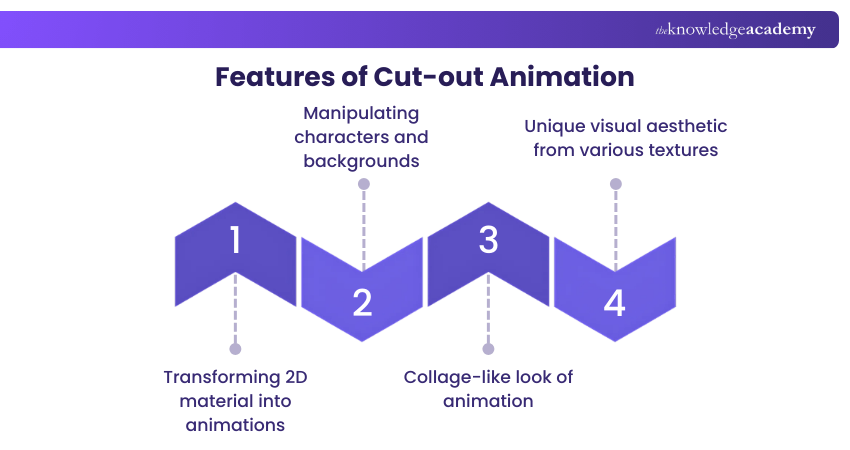
A unique 2D style, cut-out animation is when flat animation parts are given life by handing individual parts per frame. Rather than creating every scene by hand, animators outsource pre-made characters, props and backgrounds and move them to produce motion.
Historically, these components were cut out on paper, photographs, or cloth, which also made the animation look hand-crafted. Digital tools nowadays duplicate this effect and preserve its stratified, divided appearance.
It has a collage-like style, which is characterized by contrasting textures, shapes, and colours to produce visual interest. Depending on the requirements of the project, cut-out animation can be playful and quirky or clean and modern, so it is a good choice when working with the narrative and branded content.
9) Retro Animation
Retro Animation, a delightful journey into the past, encapsulates the unique aesthetic and storytelling styles prevalent in animation's earlier eras. Characterised by its vintage flair, retro animation pays homage to the hand-drawn techniques that laid the foundation for the animated art form.
Drawing inspiration from the mid-20th century's golden age of animation, retro animation often embraces simpler forms, limited colour palettes, and charming imperfections. These characteristics, reminiscent of classic cartoons and early animated features, evoke a sense of warmth and nostalgia.
Bring your Unity projects to life and create game-ready assets with our Blender 3D Modelling for Unity Course- Sign up today!
10) 360 Animation
360 Animation, a revolutionary leap in immersive storytelling, transports viewers into an all-encompassing visual experience. Unlike traditional animations confined to a two-dimensional plane, 360 animation utilises cutting-edge technology to create content that engulfs audiences in a full panoramic view.
At the heart of 360 animation is virtual reality (VR) and augmented reality (AR) technology. Through specialised cameras or computer-generated environments, creators capture or construct a 360-degree field of view, allowing viewers to explore every angle of the animated world.
11) Typography Animation
Typography animation is the conversion of text into the motion picture through the animation of letters, words, and phrases. This style does not entirely depend on imagery, but rather motion, timing, and layout to make written content alive and make messages more interesting.
Movies and transitions allow text to slip, fade, stretch and reform, attracting attention and directing the eyes of the viewer. It is a powerful method to enhance storytelling because it gives plain words the rhythm and dynamism.
12) Zoetrope Animation
Zoetrope animation is an early optical technique in which a series of motion pictures are made by creating the illusion of movement by using a series of still images. It involves a rotating cylinder or disc with spaced cuts so that the viewers can observe separate frames sequentially.
The images blend with each other, forming a continuous loop as the device spins, creating a smooth motion. Zoetrope is considered the predecessor of contemporary film and emphasizes the principles on which animation and visual narrative are based.
13) Flipbook Animation
Flipbook animation is an old, craft-based process in which drawings in series are added sequentially on a page and seem to move as pages are flipped at a rapid rate. The images have a slight development and when observed rapidly, they give an effect of movement.
This is just a basic but efficient trick that proves the essence of animation frame by frame. It is a masterpiece of how to create movement using still images because of its tactile and nostalgic quality.
Understand the use of special effects and Visual Effects (VFX) in motion graphics. Join our Motion Graphics Course now!
14) Claymation Animation
Claymation is a mode of stop-motion animation, which involves motion of sculpted clay figures. Between frames, animators recreate and rearrange the clay figures slightly and record each change with a photograph.
The plastics of clay make it possible to perform expressive movements and unique character designs. Claymation is known to be more handcrafted in its look, and truly artistic in its presentation of animated storytelling, in addition to being able to reveal the creativity inherent in frame-by-frame production.
15) Mechanical Animation
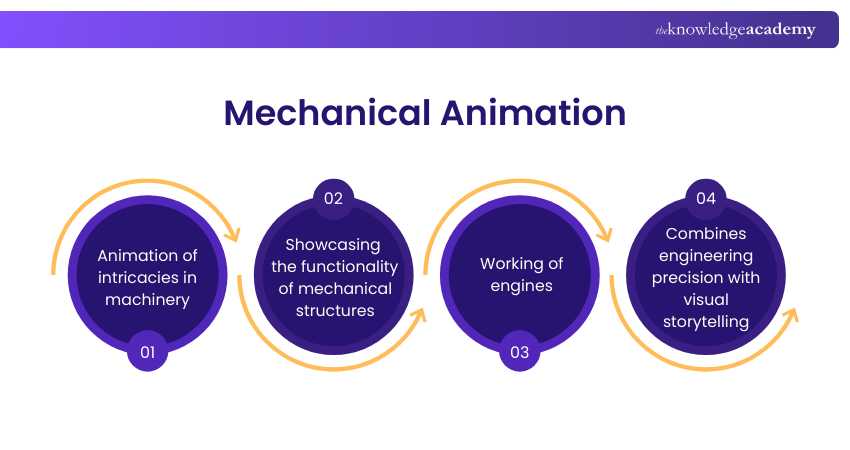
Mechanical animation meticulously animates the intricate workings of machinery, bringing gears, levers, and complex systems to life in a visually captivating dance. This specialised form of animation serves to showcase the precision and functionality of mechanical structures.
Whether revealing the inner workings of engines, illustrating assembly processes, or highlighting intricate devices, mechanical animation seamlessly combines engineering precision with the visual storytelling power of animation.
Build and create interactive courses by signing up for our Articulate Storyline Training Masterclass now!
16) Stop motion Animation
Stop motion animation is a mesmerising craft that animates inanimate objects, imbuing them with movement and personality through a meticulous process of frame-by-frame photography. Each frame captures a moment, and when played in sequence, these still images come to life, creating the illusion of motion.
The heart of stop motion lies in its painstaking frame-by-frame approach. Animators manipulate physical objects, often puppets or clay figures, incrementally adjusting their positions to create fluid movement. This meticulous process demands patience, precision, and a keen eye for detail.
17) Audio-Animatronics
Audio-Animatronics animation is a groundbreaking fusion of technology and artistry that brings lifelike, three-dimensional characters to the forefront. Employing robotics and synchronised audio, it imbues figures with realistic movements, making them seemingly come alive.
Originating from Disney's innovative Imagineering, audio-animatronics excel in theme park attractions and immersive experiences. These animated entities, with synchronised speech and precise motions, blur the line between reality and fantasy.
18) Real world footage with Animation
The integration of real-world footage with animation marks a dynamic synergy, offering filmmakers and content creators a powerful tool to transcend the boundaries between reality and fantasy. This technique involves overlaying animated elements onto live-action scenes or seamlessly embedding animated characters and objects within a live-action environment.
By merging real-world footage with animation, creators unlock new dimensions of visual storytelling. This approach allows for the incorporation of fantastical creatures, magical effects, or imaginative worlds into scenes filmed in tangible reality, creating a visually captivating narrative.
Create stellar digital sketches and renderings by signing up for our Sketchbook Essential Training now!
How to Master 2D Animation?
Learning 2D animation involves building strong foundations and practising key animation principles such as timing, spacing, squash and stretch, and anticipation to create realistic movement. Developing an understanding of anatomy, weight, and character motion also helps bring drawings to life. By regularly practising simple animations, experimenting with styles, studying professional work, and using modern animation tools, learners can gradually improve their skills and storytelling ability.
Top Movies and Shows Made With 2D Animation
Some of the best films and series of all time have been created using 2D animation, combining artistic visuals with powerful storytelling. Classic animated films such as The Lion King and Beauty and the Beast highlight the beauty and emotional depth of traditional hand-drawn animation. Modern 2D animated series like Avatar: The Last Airbender continue to captivate audiences with engaging stories and visually dynamic scenes.
Conclusion
In conclusion, 2D animation styles showcase the timeless allure and evolving possibilities within this art form. From traditional hand-drawn elegance to the dynamic precision of motion graphics, 2D Animation Styles encompass rich creativity that continues to shape the captivating world of animated storytelling.
Excel in your project and unlock creativity with our Animation and Design Training- Join today!
Frequently Asked Questions
What Industries Use 2D Animation Styles the Most?

2D animation is widely used in entertainment, advertising, education, gaming, and marketing. It is popular for explainer videos, cartoons, social media content, e-learning modules, and brand storytelling due to its versatility and cost-effectiveness.
Can 2D Animation Styles Be Combined With 3D?
Yes, 2D animation styles can be combined with 3D elements to create hybrid visuals. This approach blends flat illustrations with depth and realism, enhancing storytelling, visual impact, and creative flexibility in films, games, and marketing content.
What are the Other Resources and Offers Provided by The Knowledge Academy?
The Knowledge Academy takes global learning to new heights, offering over 3,000+ online courses across 490+ locations in 190+ countries. This expansive reach ensures accessibility and convenience for learners worldwide.
Alongside our diverse Online Course Catalogue, encompassing 17 major categories, we go the extra mile by providing a plethora of free educational Online Resources like Blogs, eBooks, Interview Questions and Videos. Tailoring learning experiences further, professionals can unlock greater value through a wide range of special discounts, seasonal deals, and Exclusive Offers.
What are the Other Resources and Offers Provided by The Knowledge Academy?
The Knowledge Academy’s Knowledge Pass, a prepaid voucher, adds another layer of flexibility, allowing course bookings over a 12-month period. Join us on a journey where education knows no bounds.
What are Related Courses and Blogs Provided by The Knowledge Academy?
The Knowledge Academy offers various Animation and Design Training, including 2D Animation Course, Motion Graphics Course, and 3D Printing Course. These courses cater to different skill levels, providing comprehensive insights into the 3D Modelling.
Our Office Applications Blogs cover a range of topics related to 2D Animation Styles, offering valuable resources, best practices, and industry insights. Whether you are a beginner or looking to advance your Animation skills, The Knowledge Academy's diverse courses and informative blogs have got you covered.

Richard Harris


Senior Full Stack Developer and Technology Educator
Richard Harris is a highly experienced full-stack developer with deep expertise in both frontend and backend technologies. Over his 12-year career, he has built scalable web applications for startups, enterprises and government organisations. Richard’s writing combines technical depth with clear explanations, ideal for developers looking to grow in modern frameworks and tools.


 If you wish to make any changes to your course, please


