


 Top Rated Course

We may not have the course you’re looking for. If you enquire or give us a call on +971 8000311193 and speak to our training experts, we may still be able to help with your training requirements.
What is Risk Monitoring? Its Importance and Best Practices
The Knowledge Academy 22 April 2026Risk Monitoring involves continuously tracking identified risks, detecting new ones, and evaluating risk response effectiveness throughout a project or process. It helps ensure proactive adjustments, timely reporting, and informed decision-making to minimise negative impacts. It shows how monitoring efforts foster continuous improvement.

Training Outcomes Within Your Budget!
We ensure quality, budget-alignment, and timely delivery by our expert instructors.
Table of Contents

What if your biggest risk isn’t something new, but something you forgot to track? In a constantly changing business environment, it’s not always the unexpected that leads to chaos. More often, it will be the familiar risks that quietly evolve, escalate, and strike when no one’s looking.
That’s where Risk Monitoring comes in as a vital part of Risk Management. Identifying and analysing risks is important, but consistent tracking keeps strategies sharp and outcomes on track. In this blog, we’ll explore what Risk Monitoring is, why it matters, and the best practices to apply it effectively. Let’s begin!
Table of Contents
1) What is Risk Monitoring?
2) Why is Risk Monitoring Important?
3) Types of Risk Monitoring
4) The Risk Monitoring Process
5) How Does Risk Monitoring Impact Organisations?
60 Best Practices for Effective Risk Monitoring
7) Conclusion
What is Risk Monitoring?
Risk Monitoring is the continuous process of tracking, reviewing, and evaluating identified risks within a project or organisation. It helps ensure that risks are kept under control, corrective actions are applied when needed, and new risks are quickly recognised and addressed. By doing this, organisations can stay prepared and avoid unexpected setbacks.
For example, if a company identifies the risk of delays in raw material delivery, monitoring allows managers to keep an eye on supplier performance. If a delay occurs, they can take action early, such as switching suppliers or adjusting timelines, instead of waiting until it becomes a bigger issue.
Why is Risk Monitoring Important?
Risk Monitoring helps you stay stable. Especially, when things go up and down. However, it is not at all about just avoiding errors. Here are the other reasons of why it is important:

a) Spots New Threats Early: Keeps an eye on changes before they become problems
b) Improves Decision Making: Gives leaders real information to act with confidence
c) Ensures Strategy is Working: Checks if your current plans are still effective
d) Protects Resources: Helps avoid waste by catching issues in time
e) Boosts Business Agility: Makes it easier to adapt when situations change
f) Builds Stakeholder Trust: Shows clients and teams that risks are managed well
g) Supports Compliance: Helps meet legal and industry standards without stress
Types of Risk Monitoring
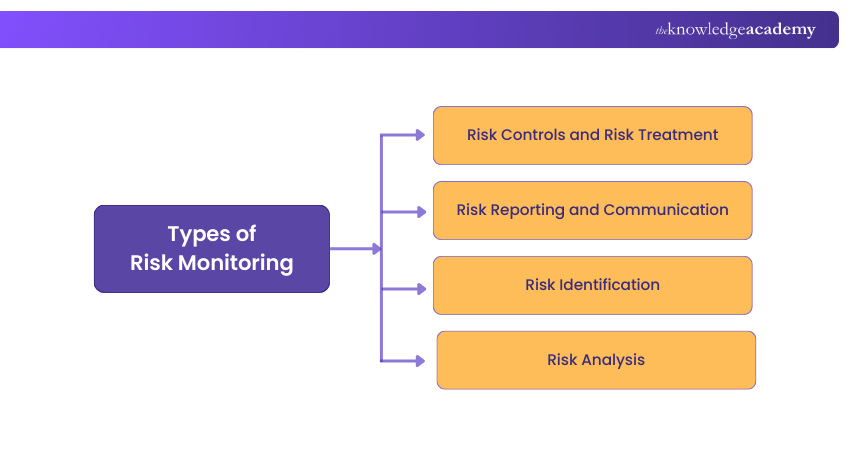
Monitoring risks is essential for any organisation. It plays a key role in preventing issues before they grow. So, let’s check what types of Risk Monitoring you can implement for your project:
1) Risk Controls and Risk Treatment
This involves monitoring the strategies designed to reduce threats. It’s about checking if the safeguards are working well. If something isn’t effective, adjustments are made. Think of it as tuning a machine to keep it running perfectly.
2) Risk Reporting and Communication
Sharing information about risks is vital. Clear updates help everyone understand the current situation. This way, decisions can be made quickly and wisely. Good communication bridges the gap between data and action.
3) Risk Identification
New risks can appear anytime. Constant vigilance helps discover these emerging issues early. Recognising risks before they escalate prevents surprises. This proactive step is the foundation of Risk Management.
4) Risk Analysis
Once risks are identified, their potential impact is studied closely. This means figuring out how likely they are and how severe the consequences could be. Prioritising risks allows focusing energy where it matters most.
Understand different types of risk with our Risk Management Black Belt Training – Join now!
The Risk Monitoring Process
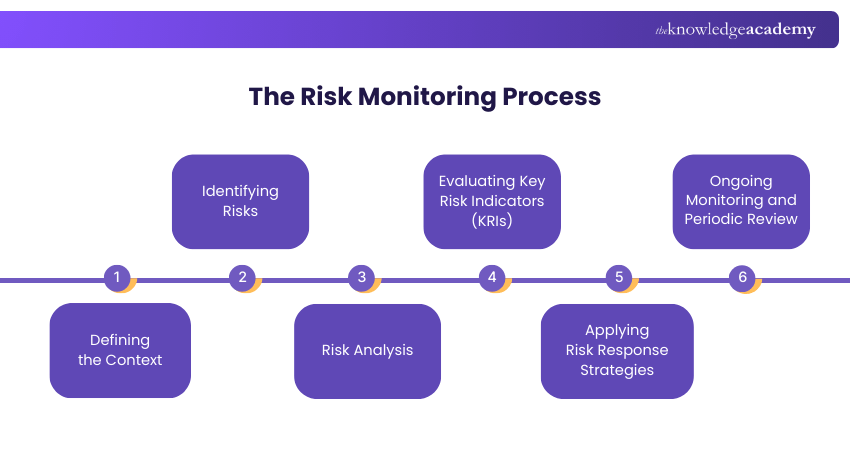
Keeping risks under control requires a clear, step-by-step approach. This process helps organisations stay alert and prepared. It breaks down complicated tasks into manageable actions. Following these steps makes it easier to protect what matters most:
1) Defining the Context
Start by understanding the environment, goals and boundaries. This sets a clear foundation. Ensure all stakeholders are aligned on objectives to avoid confusion. A well-defined context helps in focusing efforts towards the most critical aspects. Clear context drives better decision-making and resource allocation.
2) Identifying Risks
Spot potential threats early by keeping an eye out for changes. Awareness helps prevent surprises. Engage the team in discussions to identify risks from different perspectives. A proactive approach enables quicker detection of emerging threats. Constantly update risk registers to reflect new and evolving threats.
3) Risk Analysis
Carefully examine each risk by assessing its likelihood and potential impact. This helps determine priorities and focus areas. Recognising interconnections between risks ensures cumulative effects are considered. Strong analysis prevents underestimation, guiding better resource allocation and effective mitigation strategies.
4) Evaluating Key Risk Indicators (KRIs)
Track measurable signals that indicate potential problems. These indicators act as early warnings and help keep risks under control. Regularly reviewing KRIs ensures they remain relevant, enabling timely action and agile responses to emerging threats.
5) Applying Risk Response Strategies
Select the right actions to address risks, whether by avoiding, reducing, or accepting them. Responses should be tailored to the situation and remain flexible as conditions change. Effective strategies minimise impact without limiting innovation, and expert input strengthens their quality.
6) Ongoing Monitoring and Periodic Review
Monitor risks continuously and review strategies at regular intervals to keep plans relevant and effective. Feedback from stakeholders refines responses, while consistent reviews ensure alignment with goals. Adapting to new insights and changing conditions is essential for long-term success.
Understand various principles and aims of Risk Management efficiently. Join our Risk Management for Change Training now!
How Does Risk Monitoring Impact Organisations?
Risk Monitoring helps organisations stay alert and prepared for possible problems. It allows teams to spot risks early and take action before they grow into bigger issues. This improves decision-making and builds confidence in managing projects or business goals. It also saves time and money by preventing losses. Overall, Risk Monitoring makes organisations stronger, safer, and more successful.
Best Practices for Effective Risk Monitoring
Keeping risks under control takes more than just spotting problems. It requires a smart approach and steady effort. Here are some of the best practices for effective Risk Monitoring:

1) Designate Risk Ownership
Assign responsibility clearly by assigning who is accountable for each risk. This creates focus and clarity. By designating a specific individual for each risk, you foster ownership. It will also help in ensuring proactive Risk Management. This accountability also helps in tracking progress and making timely adjustments to mitigate potential issues.
2) Continuous Risk Assessment
Regularly review risks without pause and stay updated on any changes. This keeps awareness sharp. Continuous monitoring of risks allows for early detection of potential threats and helps maintain an adaptive approach. Regular reviews also ensure that mitigation strategies remain relevant as conditions evolve.
3) Educate and Train
Provide training and learning opportunities to the people involved in Risk Monitoring. It helps teams understand risks and how to handle them. Knowledge strengthens readiness. So, encouraging ongoing training and knowledge-sharing empowers teams to identify risks before they escalate. Also, a well-informed team is better equipped to make swift decisions when needed.
4) Leverage Technology
Use tools to track and analyse threats. Automation can speed up detection and response and smart systems can improve accuracy. Leveraging technology helps in the elimination of human error. It ensures that no threat goes unnoticed. Automated systems can quickly assess risks and provide real-time insights. This lets teams respond more efficiently.
5) Establish a Comprehensive Framework
Build a structured framework that clearly defines how risks will be identified, analysed, monitored, and managed. A comprehensive approach ensures consistency across teams and projects. It also sets common standards, responsibilities, and reporting methods, making sure no critical area is ignored.
6) Embed Risk Monitoring into Daily Workflows
Include risk checks in daily tasks so monitoring becomes natural and continuous. Making assessments part of routine work keeps teams alert without adding extra pressure. Over time, this builds a proactive mindset where issues are spotted and managed before they grow.
Conclusion
Risk Monitoring isn’t just a final step in Risk Management. It is a continuous, proactive process that ensures threats and opportunities are always under watch. By regularly reviewing risks, assessing response effectiveness, and adapting strategies, organisations can stay resilient in the face of uncertainty. When supported by clear communication, stakeholder involvement, and the right tools, it can be a powerful driver of informed decisions and project success.
Understand the key principles of project planning and execution with our Project Management Courses – Register today!
Frequently Asked Questions
What is an Example of Monitoring Risks?

An example of monitoring risks is a company tracking Key Risk Indicators (KRIs). By regularly reviewing these signals, the company can spot potential issues early. This helps in avoiding bigger problems. Consistently monitoring KRIs also enables the company to measure the effectiveness of its Risk Management strategies.
How Do You Monitor Risks in the Workplace?
To monitor risks in the workplace, begin with regular safety inspections and encourage employees to report hazards. Use checklists and audits to review controls and procedures. Training sessions, incident reports, and workplace observations also help track risks effectively.
What are the Other Resources and Offers Provided by The Knowledge Academy?
The Knowledge Academy takes global learning to new heights, offering over 3,000+ online courses across 490+ locations in 190+ countries. This expansive reach ensures accessibility and convenience for learners worldwide.
Alongside our diverse Online Course Catalogue, encompassing 17 major categories, we go the extra mile by providing a plethora of free educational Online Resources like Blogs, eBooks, Interview Questions and Videos. Tailoring learning experiences further, professionals can unlock greater value through a wide range of special discounts, seasonal deals, and Exclusive Offers.
What is The Knowledge Pass, and How Does it Work?
The Knowledge Academy’s Knowledge Pass, a prepaid voucher, adds another layer of flexibility, allowing course bookings over a 12-month period. Join us on a journey where education knows no bounds.
What are the Related Courses and Blogs Provided by The Knowledge Academy?
The Knowledge Academy offers various Project Management Courses, including the Project Risk Management Course, Risk Management Black Belt Training, and the Requirements Gathering Training. These courses cater to different skill levels, providing comprehensive insights into Risk Mitigation.
Our Project Management Blogs cover a range of topics related to Risk Monitoring, offering valuable resources, best practices, and industry insights. Whether you are a beginner or looking to advance your Risk Monitoring skills, The Knowledge Academy's diverse courses and informative blogs have got you covered.

The Knowledge Academy


Global Training Provider
The Knowledge Academy is a world-leading provider of professional training courses, offering globally recognised qualifications across a wide range of subjects. With expert trainers, up-to-date course material, and flexible learning options, we aim to empower professionals and organisations to achieve their goals through continuous learning.

Upcoming Business Skills Resources Batches & Dates
Date
 Project Risk Management Course
Project Risk Management Course
Fri 25th Sep 2026
Project Risk Management Course
Fri 18th Dec 2026

 If you wish to make any changes to your course, please


