


 Top Rated Course


We may not have the course you’re looking for. If you enquire or give us a call on +971 8000311193 and speak to our training experts, we may still be able to help with your training requirements.
How to Practice Mindfulness for Better Mental Wellbeing
Michael Jones 18 April 2026To practice mindfulness, focus on the present moment, observe your thoughts without judgement, and breathe deeply to cultivate calm awareness. This concept helps reduce stress, improve emotional balance, and sharpen focus in everyday life. Over time, it also fosters resilience, self-awareness, and a deeper sense of inner peace. Title: Understanding Mindfulness

Training Outcomes Within Your Budget!
We ensure quality, budget-alignment, and timely delivery by our expert instructors.
Table of Contents
Life can often feel like it is being pulled apart, with your thoughts and feelings being pulled in multiple directions. Our goal here isn’t necessarily to empty your mind, but rather to see and notice what is going on either in and around you. If you have ever wondered, "Well, how to practice mindfulness?", then you are in the right place! You don’t need to have hours of meditation training or go on a 10-day silent retreat to get started. Let’s look at some easy ways to carry out mindfulness in your everyday life.
Table of Contents
1) What is Mindfulness?
2) How to Practice Mindfulness?
3) Benefits of Mindfulness
4) Four Ways to Practice Mindfulness
5) Mindfulness Practices for Anxiety
6) Conclusion
What is Mindfulness?
Mindfulness is a practice that consists of being aware of what’s happening in the present without judgment. It fosters an awareness of your thoughts, feelings, the body, and your environment to help you respond in a calmer and clearer way. Mindfulness originates from meditation, and can help you increase self-awareness, gain perspective on stress, and strengthen your emotional wellbeing.
It is not about stopping your thoughts, but about noticing your thoughts and being able to observe them without getting consumed. Regular practice can assist you in feeling more in control of your life and be kinder towards yourself. Mindfulness may not be for everyone, but many people find it a helpful tool to help manage the mundane daily challenges while improving mental health.
How to Practice Mindfulness?
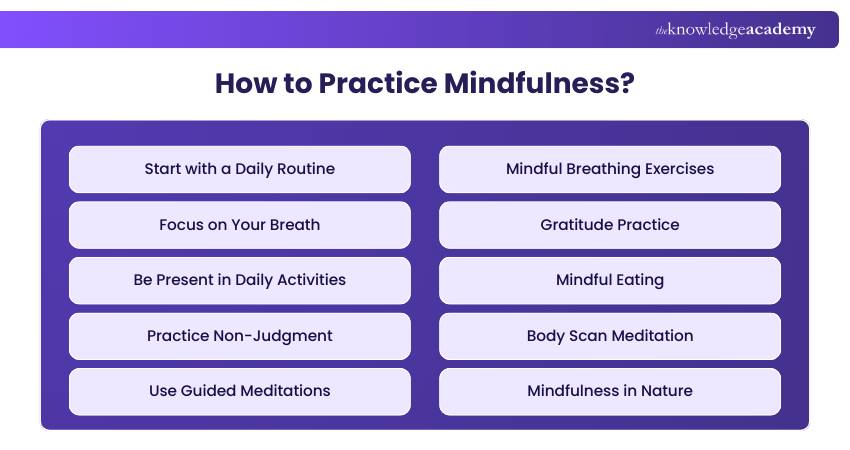
Practicing Mindfulness can be a great way to bring more peace into your daily life. Here are some practical steps to get you started:
1) Start with a Daily Routine
A consistent routine is key when learning how to practice mindfulness. Choose a quiet space where you feel comfortable and set aside a few minutes each day. Sit in a relaxed but upright position, close your eyes, and focus on your breath. Let go of distractions and gently bring your attention back whenever your mind wanders.
2) Focus on Your Breath
One of the simplest ways to learn how to practice mindfulness is by focusing on your breath. To begin, just notice the feeling of air going in and out of your body. When you notice your thoughts drifting, gently bring your attention back to your breath. This simple act of returning your awareness to your breath is a great way to solidify your ability to be present and remain calm during stress.
3) Be Present in Daily Activities
You can practice mindfulness outside of meditation as well. You can practice while eating, walking, and even doing dishes. The goal is to focus all your attention on just the task at hand. Notice all the sights, sounds, textures, and movements that are part of the activity you are doing and attempt to shift from living in “autopilot” to a more deliberate presence.
4) Practice Non-Judgment
A key part of How to Practice Mindfulness is observing your thoughts without labelling them. When a thought arises, you acknowledge it without judgment and simply allow it to pass. This reduces self-judgement and increases your emotional resilience to respond to situations with more clarity and compassion over time.
5) Use Guided Meditations
For someone new to mindfulness, I would recommend utilizing guided meditations. Guided meditations are audio/video recordings with step-by-step instructions to keep you focused. Many apps and websites offer free content for you to get started, which can make practicing regularity and keeping motivation easier.
6) Mindful Breathing Exercises
Mindful breathing is another simple method for how to practice mindfulness. Breathing exercises allow you to bring balance quickly and easily. When you are ready, attempt to consciously mindfully breathe in through your nose and out through your mouth. Just a few minutes of mindful breathing can help to calm your nervous system and bring you back to the moment, too!
7) Gratitude Practice
Practicing breathing exercises for about ten minutes every day will positively assist in releasing stress from the body. Maintain a good but comfortable position sitting back so your breath is low and deep, focusing on the breath coming in and out of the body and on the sensations involved. This is another meaningful approach to How to Practice Mindfulness daily.
8) Mindful Eating
Mindful eating is a practical example of How to Practice Mindfulness. Pay attention to the taste and smell of your food. Eat slowly and chew thoroughly, noticing the sensations in your mouth. This practice can enhance your eating experience and help you stay present. It can also foster healthier eating habits and improve digestion.
9) Body Scan Meditation
It involves focusing on different parts of your body, from your toes to your head. Lie down or sit comfortably and close your eyes. Slowly bring your attention to each part of your body, noticing any sensations or tension. This practice can help you become more aware of your body and release physical stress. It’s a great way to relax and connect with your body.
10) Mindfulness in Nature
Spending time in nature is a refreshing way to practise mindfulness. Take a walk in a park, garden, or any natural space and tune into your surroundings. Notice the sounds, scents, and the feeling of the ground beneath your feet and the air on your skin. This is a peaceful and grounding way to explore how to practice mindfulness outdoors.
Learn proven resilience techniques with our Handle Stress And Develop Your Resilience Training. - Join today!
Benefits of Mindfulness
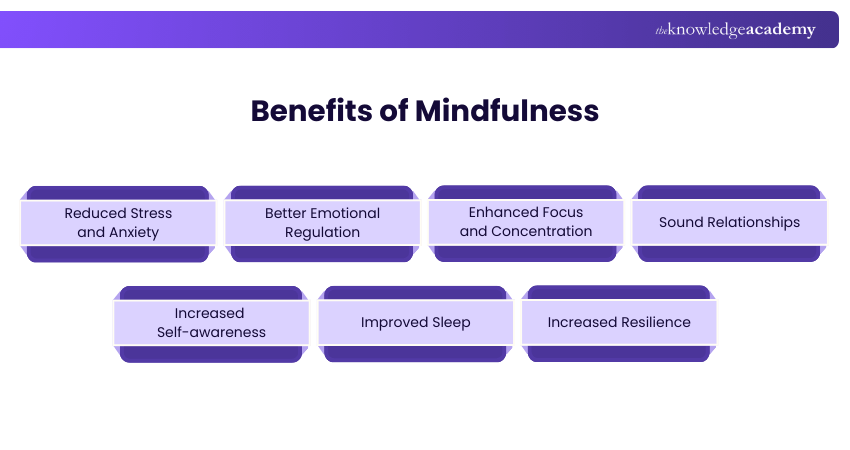
Here are some of the key advantages of Mindfulness:
1) Reduced Stress and Anxiety
Mindfulness can help alleviate stress when you learn to focus on the here and now. Rather than feeling overwhelmed by worries about the past or future, you can simply be thought-aware about yourself and calmly respond to stressors.
2) Better Emotional Regulation
With Mindfulness, you learn to empower your emotional reflection before acting on them. This ability enables you to easily respond to challenging situations in a more thoughtful and effective manner instead of being a slave to impulse.
3) Enhanced Focus and Concentration
Practicing mindfulness regularly increases your focuses. When you are presently focused, your mind is more likely to stay on a task and less likely to wander away.
4) Sound Relationships
Practicing Mindfulness can help nourish your relationships by enhancing your ability to listen and communicate Clearly, these interactions can lead to deeper connections.
5) Increased Self-awareness
Mindfulness gives you the ability to watch your thoughts, feelings, and actions with an attitude of nonjudgment. This self-awareness puts you in the best position to understand yourself and effect positive change in your own life.
6) Improved Sleep
Mindfulness knows how to relax you enough to fall asleep. A mind with calm thoughts just before getting into bed means quality sleep.
7) Increased Resilience
Mindfulness increases your resilience in acceptance and adaptability. You will gracefully and resiliently part the waves when challenges come in your way.
Learn how to tackle mental health problems with our Mental Health and Wellbeing Training – Join today!
Five Ways to Practice Mindfulness in Daily Life
Mindfulness doesn't have to be two hours of meditation or a retreat away from your real life. Mindfulness is more about taking small, meaningful opportunities to be mindful throughout your day. Here are five simple practices to try, as life gets thrown at you.
1) Observe Your Thoughts: Take a moment to notice your thoughts, without trying to react. Don't judge, don't try to change it. Just notice it. When we notice our thoughts, we become more aware of mental patterns. Noticing helps create distance between us and our reaction.
2) Focus on One Task at a Time: When you multitask, you may feel effective, but there is less impact, greater stress, and a disconnect when switching from one task to another. Try engaging your full attention to one activity and engaging your full attention towards that activity. When you notice it's wandered, gently return your focus to one activity.
3) Breathe Deeply: Deep breathing is a fast and easy way to ground yourself. Shut your eyes and focus on the sensation of inhaling and exhaling. Notice how it feels and let the air you draw in anchor you in the present moment.
4) Take a Mindful Walk: Walking mindfully allows you to become aware of your environment, irrespective of your surroundings. Start noticing colours, sounds, and other sensations around you, bringing you to the present moment with every step you take.
5) Stay Present: It is common to have thoughts that wander off to the past or the future. When this happens, make a conscious decision and drift your attention back to the moment. This act of returning makes a difference that will strengthen your mindfulness over time.
Mindfulness Practices for Anxiety
When anxiety kicks in, Mindfulness can be a powerful tool. Try slowing your breath, doing a body scan, or grounding yourself by noticing five things around you. Even five minutes of quiet, focused attention can help you feel more centred. These mindful moments won’t magically fix everything, but they do create space between you and your anxious thoughts, and that space is where calm begins.
Discover the power of Meditation- Reserve your spots for our Meditation Course now!
Conclusion
Mindfulness is a gentle yet powerful way to reconnect with yourself and the present moment. By making small changes in your daily routine, you can build more awareness, calm, and clarity. Whether you're just beginning or refining your approach, knowing How to Practice Mindfulness is key to lasting wellbeing. Keep exploring and let each moment guide you forward.
Take charge of your well-being with our expert-led Mental Health Training – Join us now!
Frequently Asked Questions
How do I Stay Mindful During Challenging Situations?

To remain conscious during stressful circumstances, pause for a minute, take several breaths and concentrate on the current events without dwelling upon the past or the future. Use Mindfulness strategies such as taking a timeout to meditate or experiencing grounding to keep you relaxed.
Is Mindfulness Suitable for Everyone, or Are There any Concerns?
Anyone can benefit from Mindfulness, and there is always room for personalisation. With some other health complications, such as trauma history or even psychological disorders, one should consult with a Physician.
What are the Other Resources and Offers Provided by The Knowledge Academy?
The Knowledge Academy takes global learning to new heights, offering over 3,000+ online courses across 490+ locations in 190+ countries. This expansive reach ensures accessibility and convenience for learners worldwide.
Alongside our diverse Online Course Catalogue, encompassing 19 major categories, we go the extra mile by providing a plethora of free educational Online Resources like Blogs, eBooks, Interview Questions and Videos. Tailoring learning experiences further, professionals can unlock greater value through a wide range of special discounts, seasonal deals, and Exclusive Offers.
What is The Knowledge Pass, and How Does it Work?
The Knowledge Academy’s Knowledge Pass, a prepaid voucher, adds another layer of flexibility, allowing course bookings over a 12-month period. Join us on a journey where education knows no bounds.
What are Related Courses and Blogs Provided by The Knowledge Academy?
The Knowledge Academy offers various Mental Health Courses, including the Mental Capacity Training, Mindfulness Training, and Handle Violence And Aggression At Workplace Course. These courses cater to different skill levels, providing comprehensive insights into Reduce Anxiety Immediately.
Our Health & Safety Blogs cover a range of topics related to Practicing Mindfulness, offering valuable resources, best practices, and industry insights. Whether you are a beginner or looking to advance your Health & Safety skills, The Knowledge Academy's diverse courses and informative blogs have got you covered.

Michael Jones


Health and Safety Consultant and Compliance Trainer
Michael Jones is a seasoned health and safety expert with more than 15 years of experience in workplace safety, risk management, and compliance training. He has worked across construction, manufacturing, and corporate sectors, helping organisations meet legal requirements and create safer working environments. Michael’s training and writing are known for being practical, clear, and aligned with UK regulations.
View Detail


 If you wish to make any changes to your course, please


