
Cyber Security Training

Online Instructor-led (1 days)

Online Self-paced (8 hours)

Cyber Security Risk Management Course Outline

Module 1: Introduction to Cyber Risk

  • What is Cyber Security Risk?
  • Why is Cyber Security Important?
  • Types of Cyber Security Risks
  • Threat Landscape and Emerging Threats

Module 2: Dealing with Risk

  • Identifying Cyber Risks
  • Evaluating and Assessing Risk
  • Risk Mitigation Techniques
  • Risk Monitoring and Review

Module 3: Cyber Risk Management Frameworks

  • Risk Management as Part of Cyber Security Strategy
  • Cyber Risk Management Lifecycle
  • Developing an Effective Cyber Risk Management Strategy
  • Aligning with Industry Standards (ISO 27001, NIST, CIS)

Module 4: Regulatory and Compliance Requirements

  • Key Cyber Security Regulations (GDPR, NIS, PCI-DSS)
  • Understanding Compliance Obligations
  • Cyber Risk Audits and Assessments
  • Legal and Financial Implications of Non-Compliance

Module 5: Incident Response and Recovery

  • Incident Response Planning
  • Steps in Handling Cyber Incidents
  • Business Continuity and Disaster Recovery
  • Lessons Learned and Continuous Improvement

Module 6: Human Factors and Cyber Security Culture

  • The Role of Human Error in Cyber Risks
  • Security Awareness and Training Programs
  • Social Engineering and Insider Threats
  • Building a Cyber-Resilient Culture

Module 7: Emerging Risks and Future Trends

  • AI and Machine Learning in Cyber Security
  • Cloud Security Risks and Challenges
  • IoT and Supply Chain Security Risks
  • Future Threats and Evolving Attack Vectors

Show moredown

Who Should Attend this Cyber Security Risk Management Course?

This Cyber Security Risk Management Course is designed to provide you with a structured understanding of the principles, practices, and tools used to identify, assess, prioritise, and manage cyber risks associated with digital infrastructure. This course can be beneficial for professionals including:

  • Risk Managers
  • Information Security Managers
  • IT Directors
  • Compliance Officers
  • Security Analysts
  • Business Continuity Planners
  • Cybersecurity Professionals

Prerequisites for the Cyber Security Risk Management Course

There are no formal prerequisites for this Cyber Security Risk Management Training. However, a basic understanding of cyber security concepts and information security principles would be beneficial.

Cyber Security Risk Management Course Overview

Cyber Security Risk Management Course introduces the principles of identifying, assessing, and managing cyber security risks within organisations. It covers risk assessment, cyber security frameworks, incident response, security culture, and emerging cyber threats.

Delegates develop skills in evaluating cyber risks, implementing mitigation strategies, aligning with industry standards, and strengthening organisational resilience. They learn how to manage cyber security risks and support effective governance and compliance.

This 1-Day course by The Knowledge Academy enables delegates to apply cyber security risk management practices in enterprise and information security environments. Delegates can identify, assess, and mitigate cyber risks to strengthen organisational security and resilience.

Cyber Security Risk Management Course Objectives

  • To understand the core principles of Cyber Security Risk Management
  • To identify, assess, and prioritise cyber risks within an organisation
  • To apply cyber risk management frameworks and industry best practices
  • To evaluate and improve existing risk management practices
  • To understand risk governance, compliance, and regulatory requirements
  • To develop effective strategies for risk mitigation, monitoring, and incident response

Upon completion of this Cyber Security Risk Management Course, delegates will have the knowledge to identify, assess, and manage cyber risks effectively. They will be able to apply risk management principles, support informed decision-making, and strengthen organisational security and resilience.

Show moredown

What’s Included in this Cyber Security Risk Management Course?

  • World-Class Training Sessions from Experienced Instructors
  • Cyber Security Risk Management Certificate
  • Digital Delegate Pack

Show moredown

Online Instructor-led (1 days)

Online Self-paced (8 hours)

Certified Artificial Intelligence (AI) for Cyber Security Professionals Training Course Outline

Module 1: Introduction to AI and Cybersecurity

  • Understanding Artificial Intelligence
  • The Role of AI in Cybersecurity
  • Key Terminologies in AI and Cybersecurity

Module 2: Fundamentals of Machine Learning

  • Basics of Machine Learning Algorithms
  • Supervised vs Unsupervised Learning
  • Deep Learning and Neural Networks
  • Application of Machine Learning in Cybersecurity

Module 3: AI-Driven Threat Detection

  • Identifying Cyber Threats Using AI
  • AI Techniques for Anomaly Detection
  • Behavioural Analysis and Pattern Recognition
  • Case Studies of AI in Threat Detection

Module 4: AI for Incident Response

  • Automating Incident Response with AI
  • AI-Powered Threat Hunting
  • Role of AI in Forensic Analysis
  • Case Studies of AI in Incident Response

Module 5: Cyber Threat Intelligence with AI

  • Understanding Cyber Threat Intelligence
  • AI for Threat Intelligence Gathering
  • Predictive Analysis and Threat Forecasting
  • Real-Time Threat Intelligence

Module 6: AI in Malware Analysis

  • Identifying and Analysing Malware Using AI
  • Machine Learning Techniques for Malware Detection
  • AI for Ransomware Detection
  • Case Studies of AI in Malware Analysis

Module 7: AI for Network Security

  • AI for Monitoring Network Traffic
  • Intrusion Detection and Prevention Systems
  • AI in Securing Cloud Environments
  • Case Studies of AI in Network Security

Module 8: Ethical and Legal Considerations

  • Ethical Implications of AI in Cybersecurity
  • Legal Framework and Compliance
  • Responsible Use of AI in Cybersecurity
  • Future Trends and Challenges

Module 9: Implementing AI in Cybersecurity Operations

  • AI Tools and Platforms for Cybersecurity
  • Integration of AI with Existing Security Systems
  • Best Practices for AI Implementation
  • Case Studies of Successful AI Integration

Show moredown

Who Should Attend Certified Artificial Intelligence (AI) for Cyber Security Professionals Training?

This course is designed for cybersecurity professionals who seek to enhance their expertise with AI-driven solutions. The following professionals will benefit from this course:

  • Cybersecurity Analysts
  • Security Operations Center (SOC) Analysts
  • Incident Response Team Members
  • Network Security Engineers
  • Malware Analysts
  • Threat Intelligence Analysts
  • Cybersecurity Managers and Leaders

Prerequisites for Certified Artificial Intelligence (AI) for Cyber Security Professionals Training

There are no formal prerequisites for attending this AI for Cyber Security Professionals Training course. However, having a prior understanding of cybersecurity principles, familiarity with cybersecurity tools and techniques, would be beneficial for the delegates.

Certified Artificial Intelligence (AI) for Cyber Security Professionals Course Overview

Certified Artificial Intelligence (AI) for Cyber Security Professionals Training introduces delegates to the application of AI in cyber security. It covers AI-driven threat detection, response strategies, and behavioural analytics to enhance organisational protection.

This training develops delegates ability to implement AI tools effectively and strengthen cyber defence capabilities. It enhances skills in proactive threat monitoring, incident response, and reducing digital vulnerabilities.

This 1-Day course offered by The Knowledge Academy equips delegates to apply AI-driven security techniques confidently in real-world scenarios. It bridges traditional cyber security methods with modern AI solutions to bolster enterprise-level defence.

Certified Artificial Intelligence (AI) for Cyber Security Professionals Course Objectives

  • To understand the fundamentals of Artificial Intelligence and its role in Cyber Security 
  • To apply Machine Learning techniques for threat detection and behavioural analysis 
  • To leverage AI for incident response, threat hunting, and forensic investigations 
  • To utilise AI for cyber threat intelligence and predictive threat analysis 
  • To implement AI-driven solutions for malware detection and network security
  • To understand the ethical, legal, and operational considerations of AI in Cyber Security

Upon completion of this Certified Artificial Intelligence (AI) for Cyber Security Professionals Training Course, delegates will be able to apply AI-driven solutions for threat detection, incident response, malware analysis, and network security. They will also be able to use AI for real-time threat intelligence, predictive analysis, and responsible cyber security operations.

Show moredown

What’s Included in this Certified Artificial Intelligence (AI) for Cyber Security Professionals Training Course?

  • World-Class Training Sessions from Experienced Instructors
  • Certified Artificial Intelligence (AI) for Cyber Security Professionals Certificate
  • Digital Delegate Pack

Show moredown

Online Instructor-led (1 days)

Online Self-paced (8 hours)

Incident Response Training Course Outline

Module 1: Threat Landscape and Incident Readiness

  • Attacker Motivations
  • Attack Methods
  • Anatomy of an Attack
  • Modern Adversary
  • Preparing Process
  • Preparing People
  • Preparing Technology

Module 2: Remote Triage and Its Tools

  • Finding Evil
  • Guarding Credentials
  • Windows Management Instrumentation Command‐Line Utility
  • Forensically Sound Approaches
  • PowerShell
  • Incident Response Frameworks

Module 3: Acquiring Memory and Disk Imaging

  • Order of Volatility
  • Local Memory Collection
  • Remote Memory Collection
  • Live Memory Analysis
  • Protecting the Integrity of Evidence
  • Dead‐Box Imaging
  • Live Imaging
  • Imaging Virtual Machines

Module 4: Network Security Monitoring

  • Security Onion
  • Text‐Based Log Analysis

Module 5: Event Log, Memory, and Malware Analysis

  • Understanding Event Logs
  • Account‐Related Events
  • Object Access
  • Auditing System Configuration Changes
  • Process Auditing
  • Auditing PowerShell Use
  • Using PowerShell to Query Event Logs
  • Importance of Baselines
  • Sources of Memory Data
  • Using Volatility and Rekall
  • Examining Processes
  • Examining Windows Services
  • Examining Network Activity
  • Detecting Anomalies
  • Online Analysis Services
  • Reverse Engineering

Module 6: Disk Forensics and Lateral Movement Analysis

  • Forensics Tools
  • Time Stamp Analysis and Registry Analysis
  • Link Files and Jump Lists
  • Prefetch
  • System Resource Usage Monitor
  • Browser Activity and USN Journal
  • Volume Shadow Copies
  • Automated Triage
  • Linux/UNIX System Artefacts
  • Server Message Block
  • Kerberos Attacks
  • PsExec
  • Scheduled Tasks
  • Service Controller
  • Remote Desktop Protocol
  • Windows Management Instrumentation
  • Windows Remote Management
  • SSH Tunnels and Other Pivots

Module 7: Continuous Improvement and Proactive Activities

  • Document
  • Validate Mitigation Efforts
  • Building On Your Successes and Learning from Your Mistakes
  • Improving Your Defences
  • Threat Hunting
  • Adversary Emulation

Show moredown

Who Should Attend this Incident Response Training?

This Cyber Security Training is ideal for professionals aiming to develop critical skills in identifying, managing, and responding to cybersecurity incidents effectively.

You should attend this Incident Response Training if you are:

  • Cybersecurity Professional: Handling incident detection, analysis, and response 
  • IT Security Specialist: Managing breaches, vulnerabilities, and cyber threats 
  • Risk and Compliance Officer: Ensuring regulatory compliance during Incident Management 
  • Security Operations Centre (SOC) Analyst: Responding to real-time security alerts and incidents 
  • Network Administrator: Protecting infrastructure against intrusions and cyberattacks 
  • Aspiring Incident Responder: Preparing for specialised roles in Cyber Incident Management 

Prerequisites for the Incident Response Training

There are no formal prerequisites for this Incident Response Training Course. However, a basic understanding of computer systems, networks, or cyber security concepts will be beneficial for delegates.

Incident Response Training Overview

Incident Response Training helps delegates understand how to detect, investigate, and respond to cyber security incidents effectively. It covers key response activities, including triage, evidence handling, forensic analysis, and recovery planning.

Delegates develop skills in identifying security incidents, conducting investigations, handling digital evidence, and implementing structured response procedures. They learn how to minimise the impact of cyber incidents and support organisational resilience.

This 1-Day course by The Knowledge Academy enables delegates to apply incident response techniques in cyber security and incident management environments. Delegates can investigate security incidents and implement effective incident response strategies.

Incident Response Training Course Objectives

  • To detect, analyse, and investigate cyber security incidents
  • To develop and implement effective incident response plans
  • To apply forensic techniques for evidence handling and analysis
  • To support recovery and post-incident improvement activities
  • To improve threat hunting and proactive incident response capabilities
  • To strengthen organisational resilience against cyber threats

Upon completion, delegates will be able to manage cyber security incidents confidently, protect critical assets, and apply structured response practices to improve organisational resilience. They will also be able to support investigations, reduce incident impact, and strengthen future security readiness.

Show moredown

What’s Included in this Incident Response Training Course?

  • World-Class Training Sessions from Experienced Instructors
  • Incident Response Certificate
  • Digital Delegate Pack

Show moredown

Online Instructor-led (1 days)

Online Self-paced (8 hours)

Certified Cyber Security Professional Exam

Certified Cyber Security Professional (CCS-PRO) Course Outline

Module 1: Cyber Threats Affecting Businesses

  • Impact of Cyber Threats
  • Hacking
  • Impact of Cyber Threats
  • Phishing
  • Web Security
  • DDOS
  • Social Media
  • Mobile Devices
  • Bring Your Own Device (BYOD)
  • Spyware, Malware, and Ransomware
  • Malware Symptoms
  • Physical Security

Module 2: Actions for Combating Cyber Threats

  • Passwords
  • Encryption Techniques
  • Secure Mobile Devices
  • Removable Media
  • 2-Factor Authentication
  • Browsing
  • Sensitive Data
  • General Actions of Combining Cyber Threats

Module 3: Dealing with Risk

  • Threat Landscape
  • Identifying Risk
  • Assessing Risk
  • Mitigating Risk
  • Risk Register

Show moredown

Who Should Attend this Certified Cyber Security Professional (CCS-PRO) Course?

The Certified Cyber Security Professional (CCS-PRO) Course is designed for delegates who wish to enhance their professional credentials in the domain of Cyber Security. This Cyber Security Course can be beneficial for a variety of professionals, including:

  • Cybersecurity Analysts
  • Security Engineers
  • Information Security Managers
  • Network Security Professionals
  • IT Administrators
  • Systems Administrators
  • Security Consultants

Prerequisites for the Certified Cyber Security Professional (CCS-PRO) Course

There are no formal prerequisites for the Certified Cyber Security Professional (CCS-PRO) Course. However, it would be beneficial to have a basic knowledge of cybersecurity concepts and tools.

Certified Cyber Security Professional (CCS-PRO) Course Overview

Certified Cyber Security Professional Training introduces the principles of protecting systems, networks, and digital assets from cyber threats. It covers cyber security fundamentals, threat identification, risk management, encryption, secure browsing, and security best practices.

Delegates develop skills in identifying cyber threats, managing security risks, and applying protective measures against phishing, malware, ransomware, and other cyber attacks. They learn how to strengthen organisational security and support safe digital practices.

This 1-Day course by The Knowledge Academy enables delegates to apply cyber security principles in enterprise and information security environments. Delegates can identify threats, implement security controls, and help protect organisational systems and data. 

Certified Cyber Security Professional (CCS-PRO) Course Objectives

  • To comprehend the fundamental principles of Cybersecurity
  • To identify and mitigate common cyber threats and vulnerabilities
  • To understand the best practices for network security
  • To develop proficiency in data protection and encryption
  • To master techniques for effective threat management
  • To be prepared for swift incident response and recovery

Upon completion of this training, delegates gain essential knowledge and practical skills to defend organisations against cyber threats. This expertise also strengthens career prospects by opening advanced opportunities in the growing cyber security field.

Show moredown

What’s Included in this Certified Cyber Security Professional (CCS-PRO) Course?

  • World-Class Training Sessions from Experienced Instructors
  • Interactive Learning with 24*7 Support
  • Digital Delegate Pack

Show moredown

Certified Cyber Security Professional (CCS-PRO) Exam Information

To achieve the Certified Cyber Security Professional (CCS-PRO) candidates will need to sit for an examination. The exam format is as follows: 

  • Question Type: Multiple Choice
  • Total Questions: 40 
  • Total Marks: 40 Marks 
  • Pass Marks: 65%, or 26/40 Marks 
  • Duration: 60 Minutes

Show moredown

Online Instructor-led (1 days)

Online Self-paced (8 hours)

Malware Analysis Training Course Outline

Module 1: Introduction to Malware Analysis

  • Malware and its Types
  • Importance of Malware Analysis
  • Goals of Malware Analysis
  • Ethical and Legal Considerations
  • Tools and Environments for Malware Analysis

Module 2: Malware Analysis Techniques

  • Static Analysis Vs Dynamic Analysis
  • Disassembly and Decompilation
  • Behavioural Analysis
  • Code Emulation and Sandboxing
  • Reverse Engineering Fundamentals

Module 3: Malware Types and Behaviour

  • Viruses, Worms, Trojans, and Other Malware Types
  • Malware Delivery Methods
  • Payloads and Exploits
  • Persistence Mechanisms
  • Common Malware Behaviours

Module 4: Static Malware Analysis

  • File Structure Analysis
  • File Hashing and Digital Signatures
  • Strings and Metadata Analysis
  • Code Obfuscation Techniques
  • Identifying Indicators of Compromise

Module 5: Dynamic Malware Analysis

  • Setting Up a Controlled Environment
  • Dynamic Analysis Tools and Instrumentation
  • Monitoring System Calls and API Calls
  • Analysing Network Traffic
  • Extracting Artifacts and Payloads

Module 6: Malware Code Analysis

  • Code Reversing and Debugging
  • Identifying Malicious Functions and Routines
  • Code Injection and Hooking Techniques
  • Analysing Packets and Protocols
  • Identifying Command and Control Channels

Module 7: Malware Evasion and Detection Techniques

  • Polymorphic and Metamorphic Malware
  • Rootkit and Anti-Analysis Techniques
  • Signature-Based and Heuristic Detection
  • YARA Rules for Malware Identification
  • Evolving Threat Landscape

Module 8: Reporting and Mitigation

  • Documenting Malware Analysis Findings
  • Creating Detailed Analysis Reports
  • Communicating Findings to Stakeholders
  • Best Practices for Incident Response
  • Developing Strategies for Mitigation and Remediation

Show moredown

Who Should Attend this Malware Analysis Training?

This course is ideal for professionals aiming to understand, dissect, and respond to malicious software threats through hands-on analysis and reverse engineering. You should attend this Online Malware Analysis Course if you are:

  • Cybersecurity Analyst: Investigating and neutralising malware threats
  • Malware Researcher: Conducting in-depth static and dynamic malware analysis
  • Incident Responder: Analysing malware during cyber incident investigations
  • Threat Intelligence Analyst: Identifying patterns and indicators of compromise
  • Forensic Investigator: Uncovering malicious code in digital evidence
  • Aspiring Malware Analyst: Preparing for specialised roles in cyber defence and analysis

Prerequisites for the Malware Analysis Training Course

There are no formal prerequisites for this Malware Analysis Course. However, prior experience in Linux or macOS would be beneficial for the delegates.

Malware Analysis Training Course Overview

Malware Analysis Training introduces delegates to the techniques used to examine, identify, and understand malicious software. It covers static and dynamic analysis, reverse engineering, and methods to assess malware impact on systems.

This training develops delegates ability to detect, investigate, and mitigate malware threats effectively. It enhances practical skills for incident response, threat analysis, and strengthening organisational Cyber Security Principles.

This 1-Day course offered by The Knowledge Academy equips delegates to apply malware analysis principles confidently in real-world scenarios. It supports professional development and prepares delegates for advanced roles in cybersecurity and digital forensics.

Malware Analysis Training Course Objectives

  • To identify and classify different types of malwares
  • To conduct static and dynamic malware analysis
  • To use reverse engineering tools and techniques
  • To enhance organisational malware detection and response capabilities
  • To improve threat intelligence for proactive malware prevention 
  • To develop practical skills for investigating and mitigating cyber incidents 

Upon completion, delegates gain practical skills to analyse, detect, and mitigate malware threats. This expertise also enhances career prospects in cybersecurity and digital forensics. Advance your cyber security expertise with The Knowledge Academy’s Cyber Security Courses.

Why Choose this Course?

The Malware Analysis Course by The Knowledge Academy equips delegates with the practical skills needed to analyse, investigate, and respond to malicious software. Here's why this course stands out:

  • Expert-Led Training: Learn from experienced trainers with practical expertise in malware analysis and cyber security.
  • Comprehensive Analysis Techniques: Gain hands-on knowledge of static, dynamic, and behavioural malware analysis methods.
  • Practical Lab Experience: Work with malware samples in a controlled environment to build real-world investigation skills safely.
  • Industry-Relevant Skills: Develop the knowledge required for roles in malware analysis, threat intelligence, digital forensics, and incident response.
  • Real-World Application: Apply proven techniques and best practices to detect, analyse, and mitigate malware threats effectively.

Show moredown

What’s Included in this Malware Analysis Training Course?

  • World-Class Training Sessions from Experienced Instructors
  • Malware Analysis Certificate
  • Digital Delegate Pack

Show moredown

Online Instructor-led (1 days)

Online Self-paced (8 hours)

Digital Forensics Training Course Outline

Module 1: Introduction

  • Forensic Science
  • Digital Forensics
  • Digital Evidence

Module 2: Digital Forensics Process

  • Introduction
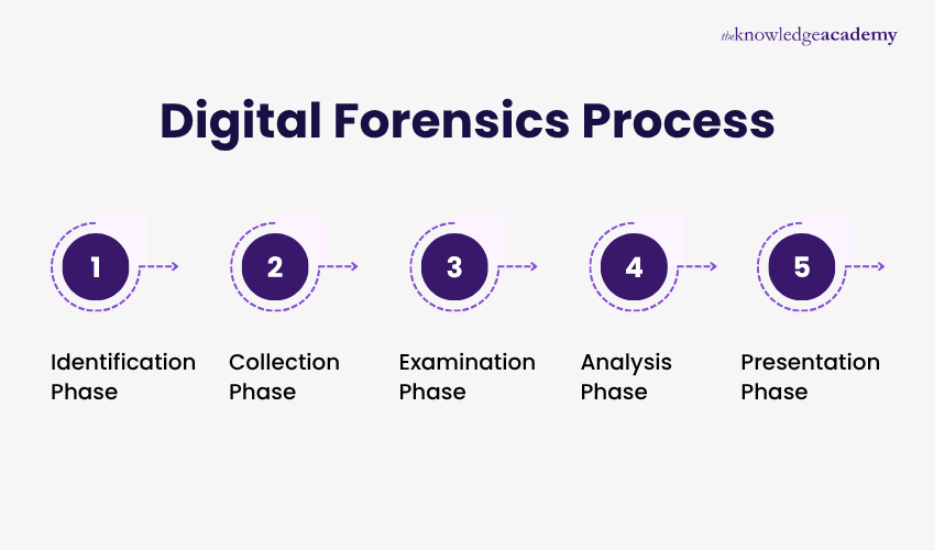
  • Identification Phase
  • Collection Phase
  • Examination Phase
  • Analysis Phase
  • Presentation Phase

Module 3: Cybercrime Law

  • Introduction
  • International Legal Framework of Cybercrime Law
  • Digital Crime – Substantive Criminal Law
  • Investigation Methods for Collecting Digital Evidence
  • International Cooperation to Collect Digital Evidence

Module 4: Digital Forensic Readiness

  • Definition
  • Law Enforcement Vs Enterprise Digital Forensic Readiness
  • Why a Rational for Digital Forensic Readiness?
  • Frameworks, Standards, and Methodologies
  • Becoming Digital Forensic Ready
  • Enterprise Digital Forensic Readiness
  • Consideration for Law Enforcement

Module 5: Computer Forensics

  • Introduction
  • Evidence Collection
  • Examination
  • Analysis

Module 6: Challenges in Digital Forensics

  • Computational Forensics
  • Automation and Standardisation

Show moredown

Who Should Attend this Digital Forensics Training Course?

This Digital Forensics Course is ideal for professionals looking to build expertise in cyber investigations, digital evidence handling, and cybercrime prevention. You should attend this course if you are:

  • Law Enforcement Officer: Enhancing digital investigation and evidence handling skills
  • Cybersecurity Professional: Managing threat detection and incident response
  • Auditor or Compliance Officer: Investigating security risks and control breaches
  • IT Security Professional: Applying forensic principles and evidence techniques
  • Digital Investigator: Developing skills in evidence collection, examination, and analysis
  • Data or Security Analyst: Applying forensic methods to data investigations
  • Aspiring Digital Forensics Expert: Preparing for roles in cybercrime and investigations

Prerequisites for the Digital Forensics Training Course 

There are no formal prerequisites for this Digital Forensics Training Course. However, a basic understanding of IT systems, networks, and cyber security concepts will be beneficial for delegates. 

Digital Forensics Training Course Overview

Digital Forensics Training in Andorra introduces delegates to the process of identifying, preserving, analysing, and presenting digital evidence. It covers key forensic methods used to investigate cyber incidents and digital crimes.

This training helps delegates develop the skills needed to examine devices, recover data, and maintain evidence integrity. It also supports effective incident investigation and strengthens organisational security practices.

This 1-Day Digital Forensics Course by The Knowledge Academy equips delegates with practical digital investigation techniques. Upon completion, delegates will be able to handle digital evidence confidently and support cybercrime investigations effectively. 

Digital Forensics Training Course Objective

  • To understand the principles, processes, and purpose of digital forensics
  • To identify, collect, and preserve digital evidence using recognised forensic practices
  • To understand the legal and regulatory considerations associated with cybercrime investigations
  • To apply digital forensic readiness concepts, frameworks, and methodologies
  • To examine and analyse digital evidence using established forensic techniques
  • To recognise challenges associated with digital forensic investigations, including automation and standardisation

Upon completion of this Digital Forensics Course, delegates will have the knowledge to collect, preserve, and analyse digital evidence effectively. They will understand forensic investigation processes, cybercrime law, and forensic readiness principles used in investigative environments.

Digital Forensics Process Covered in this Course 

The Digital Forensics Training Course introduces the structured process used to identify, collect, examine, analyse, and present digital evidence during an investigation. Delegates learn how each stage contributes to maintaining the integrity of evidence and supporting reliable investigative outcomes. The course covers the key phases of the digital forensics process: 

Digital Forensics Process Covered in this Training

  • Identification Phase: Identifying potential sources of digital evidence relevant to an investigation.
  • Collection Phase: Gathering and preserving digital evidence using appropriate forensic procedures.
  • Examination Phase: Reviewing and extracting relevant information from collected evidence.
  • Analysis Phase: Interpreting findings to establish facts, patterns, and investigative insights.
  • Presentation Phase: Documenting and presenting findings clearly to support investigative or legal requirements.

By understanding these stages, delegates gain practical insight into how digital evidence is managed throughout the investigation lifecycle while supporting legal, procedural, and organisational requirements.

Show moredown

What’s Included in this Digital Forensics Training Course?

  • World-Class Training Sessions from Experienced Instructors
  • Digital Forensics Certificate
  • Digital Delegate Pack

Show moredown

Online Instructor-led (2 days)

Online Self-paced (16 hours)

Computer Forensics Foundation Training Course Outline

Module 1: Digital Forensics Profession and Investigations

  • Overview of Digital Forensics
  • Process of Digital Forensics
  • Maintaining Professional Conduct
  • Types of Digital Forensics
  • Procedures for Private-Sector High-Tech Investigations
  • Data Recovery Workstations and Software
  • Conducting an Investigation

Module 2: Data Acquisition

  • Storage Formats for Digital Evidence
  • Determining the Best Acquisition Method
  • Contingency Planning for Image Acquisitions
  • Using Acquisition Tools
  • Acquiring Data with a Linux Boot CD
  • Validating Data Acquisitions
  • Performing RAID Acquisitions
  • Using Remote Network Acquisition Tools
  • Using Other Forensics Acquisition Tools
  • Create an Image with FTK Imager

Module 3: Processing Crime and Incident Scenes

  • Identifying Digital Evidence
  • Collecting Evidence in Private-Sector Incident Scenes
  • Processing Law Enforcement Crime Scenes
  • Preparing for a Search
  • Securing a Digital Incident or Crime Scene
  • Seizing Digital Evidence at the Scene
  • Storing Digital Evidence
  • Obtaining a Digital Hash
  • Acquiring Evidence with OSForensics

Module 4: Working with Windows and CLI Systems

  • File Systems
  • Microsoft File Structures
  • Examining NTFS Disks
  • Whole Disk Encryption
  • Windows Registry
  • Microsoft Startup Tasks
  • Virtual Machines
  • Virtual Machines Using Oracle VirtualBox

Module 5: Digital Forensics Tools

  • Evaluating Digital Forensics Tool Needs
  • Digital Forensics Software and Hardware Tools
  • Validating and Testing Forensics Software

Module 6: Linux and Macintosh File Systems

  • Examining Linux File Structures
  • Macintosh File Structures
  • Using Linux Forensics Tools

Module 7: Recovering Graphics Files

  • Recognising a Graphics File
  • Data Compression
  • Identifying Unknown File Formats
  • Copyright Issues with Graphics
  • Use Autopsy for Search and Extract Recover Evidence

Module 8: Digital Forensics Analysis and Validation

  • Determining What Data to Collect and Analyse
  • Validating Forensic Data
  • Addressing Data-Hiding Techniques

Module 9: Virtual Machine Forensics, Live Acquisitions, Network Forensics, E-Mail, and Social Media Investigations

  • Virtual Machine Forensics
  • Performing Live Acquisitions
  • Network Forensics Overview
  • Role of E-Mail in Investigations
  • Roles of the Client and Server in E-Mail
  • E-Mail Servers
  • Using Specialised E-Mail Forensics Tools
  • Applying Digital Forensics Methods to Social Media Communications
  • Network Analysis Using Wireshark

Module 10: Mobile Device Forensics and the Internet of Anything

  • Mobile Device Forensics
  • Acquisition Procedures for Mobile Devices
  • Forensics in the Internet of Anything

Module 11: Report Writing for High-Tech Investigations

  • Importance of Reports
  • Guidelines for Writing Reports
  • Generating Report Findings with Forensics Software Tools

Show moredown

Who Should Attend this Computer Forensics Foundation Training?

This Computer Forensics Course provides a solid introduction to the fundamental concepts of digital forensics, including the processes of identifying, collecting, preserving, and analysing electronic evidence. It is designed for learners seeking foundational expertise in the field and serves valuable for professionals such as:

  • Cybersecurity Professionals
  • Digital Forensic Analysts
  • IT Security Specialists
  • Law Enforcement Officers 
  • Legal Professionals
  • Incident Response Teams
  • Internal Audit and Compliance Officers

Prerequisites for the Computer Forensics Foundation Training

There are no formal prerequisites for this Computer Forensics Foundation Training Course. However, a basic understanding of computer systems, operating systems, and cyber security concepts will be beneficial for delegates. 

Computer Forensics Foundation Training Overview

Computer Forensics Foundation Training introduces delegates to the legal, ethical, and technical principles of digital investigations. It covers key methods for collecting, preserving, examining, and analysing digital evidence across different systems and devices.

This training helps delegates build foundational skills in data acquisition, evidence handling, file system analysis, and forensic reporting. It also supports effective investigation practices for cybercrime, incident scenes, email, network, and mobile device forensics.

This 2-Day course by The Knowledge Academy enables delegates to apply computer forensics principles confidently in practical scenarios. Upon completion, delegates will be able to support digital investigations, handle evidence responsibly, and produce clear forensic findings. 

Computer Forensics Foundation Training Course Objectives

  • To understand the fundamentals of computer forensics and digital investigations 
  • To learn how to identify, collect, and preserve digital evidence correctly 
  • To gain knowledge of forensic tools and investigation techniques 
  • To understand legal and ethical considerations in digital forensics 
  • To analyse digital data for incident response and investigations 
  • To build a foundation for further study or roles in cyber forensics and security

Upon completion of this Computer Forensics Course, delegates will be well-prepared to embark on a career in Computer Forensics, contribute to investigations, and advance their expertise in the field, benefiting from a strong foundational knowledge base.

Show moredown

What’s Included in this Computer Forensics Foundation Training Course?

  • World-Class Training Sessions from Experienced Instructors
  • Computer Forensics Foundation Certificate
  • Digital Delegate Pack

Show moredown

Online Instructor-led (1 days)

Online Self-paced (8 hours)

Social Engineering Training Course Outline

Module 1: Introduction to Social Engineering

  • Introduction to Social Engineering
  • Introduction
  • How does Social Engineering Works?

Module 2: Social Engineering Types

  • Social Engineering Types
  • Email
  • Telephone
  • Baiting
  • Fax
  • Pretexting

Module 3: Influencing Techniques

  • Influencing Techniques
  • Reciprocation
  • Obligation
  • Concession
  • Scarcity
  • Authority
  • Commitment and Consistency
  • Liking
  • Consensus or Social Proof

Module 4: Overview of Elicitation

  • Overview of Elicitation
  • Flattery
  • False Statements
  • Artificial Ignorance
  • Sounding Board
  • Bracketing

Module 5: Basics of Pretexting

  • Basics of Pretexting
  • Research and Planning
  • Body Language

Module 6: Information Gathering

  • Introduction
  • How to Gather Information?
  • Dradis Framework
  • Sources of Information

Module 7: Computer-Based and Physical Tools

  • Kali Linux
  • Social Engineering Toolkit (SET)
  • Metasploit Framework
  • Maltego
  • Cameras
  • GPS Trackers
  • Lock Picking
  • Phone

Show moredown

Who Should Attend this Social Engineering Training?

This Social Engineering Training is ideal for professionals looking to understand and counteract manipulation tactics used in cyberattacks through Social Engineering techniques. You should attend this training if you are:

  • Cybersecurity Analyst: Detecting and preventing social engineering threats.
  • IT Security Professional: Strengthening human-layer defences against manipulation.
  • Risk and Compliance Officer: Addressing vulnerabilities in user awareness and behaviour of Phishing.
  • Security Awareness Trainer: Educating teams to recognise phishing, Ransomware and deception tactics.
  • Law Enforcement Officer: Investigating fraud, Phishing, data breaches and cyber deception cases.
  • Cybersecurity Specialist: Building skills to combat social engineers and human-focused cyber threats.

Prerequisites for the Social Engineering Training 

There are no formal prerequisites for this Social Engineering Training Course. However, a basic understanding of cyber security concepts and computer systems will be beneficial for delegates.

Social Engineering Training Course Overview

Social Engineering Training introduces delegates to the techniques attackers use to manipulate human behaviour and gain access to sensitive information. It covers common methods such as phishing, baiting, pretexting, elicitation, and influence-based attacks.

This training helps delegates recognise social engineering threats and understand how information gathering, psychological tactics, and digital tools are used in attacks. It also supports stronger awareness, safer decision-making, and improved organisational security practices.

This 1-day Social Engineering Course by The Knowledge Academy equips delegates with practical knowledge to identify and reduce social engineering risks. Upon completion, delegates will be able to recognise manipulation techniques and support stronger cyber security awareness.

Social Engineering Training Course Objectives

  • To identify various threats such as social engineering attacks and Ransomware
  • To analyse the psychological principles behind social engineering
  • To apply prevention strategies and awareness training against Phishing and phishing attacks
  • To enhance organisational resilience against human-based attacks
  • To develop skills to create effective security awareness campaigns for teams 
  • To reduce human error and strengthen overall organisational security posture 

Upon completion, delegates will be able to recognise social engineering tactics and apply practical prevention methods. They will also be able to support awareness initiatives that reduce human-based security risks. 

Show moredown

What’s Included in this Social Engineering Training?

  • World-Class Training Sessions from Experienced Instructors
  • Social Engineering Certificate
  • Digital Delegate Pack

Show moredown

Online Instructor-led (1 days)

Online Self-paced (8 hours)

Fraud Analytics Training Course Outline

Module 1: Schematics of Fraud and Fraud Analytics

  • Introduction to Fraud Analytics
  • Mining the Field: Fraud Analytics in its New Phase
  • Using Fraud Analytics
  • What is Fraud Detection?
  • Fraud Analytics Refined

Module 2: Evolution of Fraud Analytics

  • Why Use Fraud Analytics?
  • Evolution Continues
  • Fraud Prevention and Detection in Fraud Analytics
  • Incentives, Pressures, and Opportunities

Module 3: Analytical Process and the Fraud Analytical Approach

  • Probabilities of Fraud and Where it All Begins
  • What Should the Fraud Analytics Process Look Like?
  • Data Analytics Exposed

Module 4: Fraud Analytics Vs Predictive Analytics

  • Fraud Analytics and Predictive Analytics
  • Comparing and Contrasting Methodologies
  • Steps Score Development Versus Fraud Analysis
  • CRISP-DM Vs Fraud Data Analysis
  • SAS/SEMMA Vs Fraud Data Analysis
  • Conflicts within Methodologies
  • Composite Methodology
  • Comparing and Contrasting Predictive Modelling and Data Analysis

Module 5: New Trends in Fraud Analytics and Tools

  • Many Faces of Fraud Analytics
  • Paper Chase is Over
  • To Be or Not to Be
  • Raytheon’s Visualinks
  • Fico Insurance Fraud Manager
  • Palantir Teach
  • Fiserv’s AML Manager

Show moredown

Who Should Attend this Fraud Analytics Training Course?

This Fraud Analytics Training Course is ideal for professionals involved in the management, analysis, and protection of financial and operational data within an organisation. This course is particularly beneficial for the following professionals:

  • Cybersecurity Professionals
  • Financial Analysts
  • Risk Managers
  • IT Security Officers
  • Compliance Officers
  • Internal Auditors

Prerequisites for the Fraud Analytics Training Course

There are no formal prerequisites to attend this Fraud Analytics Course. However, having fundamental knowledge of data analytics will be beneficial for learners to grasp concepts more effectively.

Fraud Analytics Training Course Overview

Fraud Analytics Training helps delegates understand how data can be used to detect, investigate, and prevent fraudulent activity. It focuses on identifying suspicious patterns, anomalies, and risk indicators across financial and digital environments.

This training develops practical skills in transaction monitoring, data visualisation, predictive modelling, and fraud risk assessment. It supports stronger decision-making and helps organisations improve their anti-fraud controls.

This 1-day course by The Knowledge Academy equips delegates with practical fraud detection and prevention techniques. Upon completion, delegates will be able to analyse fraud risks, identify warning signs, and support effective fraud investigation processes. 

Fraud Analytics Training Course Objectives

  • To apply fraud analytics techniques to detect suspicious patterns in financial data
  • To strengthen anti-fraud frameworks within organisations using data insights
  • To implement effective fraud controls and monitoring systems
  • To use data models and visualisation tools to investigate and prevent fraud
  • To support compliance and reduce reputational and financial damage
  • To develop practical skills to respond proactively to evolving fraud threats 

Upon completion, delegates gain essential knowledge and practical skills to detect, prevent, and investigate fraud effectively. This Cyber Security Certification expertise also strengthens career prospects by opening advanced opportunities in risk management and financial compliance.

Building Blocks of Fraud Analytics

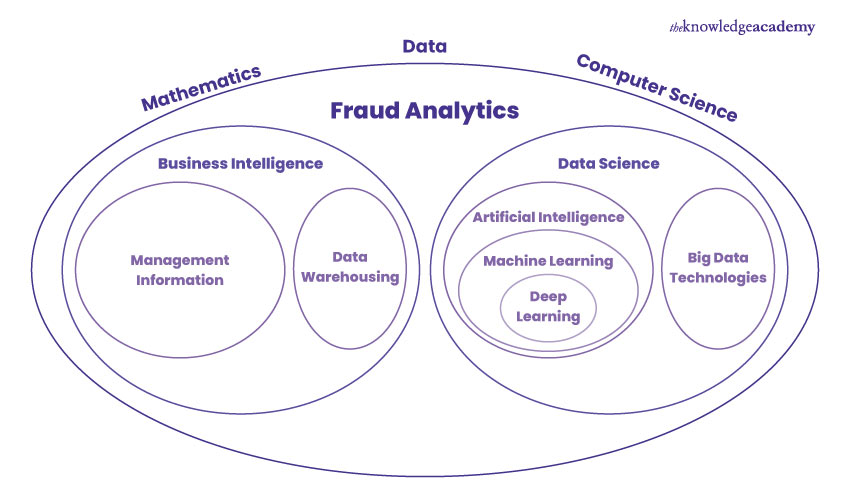
Fraud Analytics combines principles from mathematics, data, and computer science with business insight to detect, prevent, and respond to fraud. It relies on key domains and technologies that enable effective analysis and action.

Business Intelligence

  • Management Information
  • Data Warehousing

Data Science

  • Artificial Intelligence (AI)
  • Machine Learning (ML) - Deep Learning
  • Big Data Technologies

Fraud Analytics

Show moredown

What’s Included in this Fraud Analytics Training Course?

  • World-Class Training Sessions from Experienced Instructors
  • Fraud Analytics Certificate
  • Digital Delegate Pack

Show moredown

Online Instructor-led (1 days)

Online Self-paced (8 hours)

Introduction to System and Network Security Course Outline

Module 1: Building a Secure Organisation

  • Real Threats that Impact Cyber Security
  • Hackers Inside and Out
  • Eavesdropping
  • Spoofing
  • Sniffing
  • Trojan Horse
  • Viruses
  • Wiretaps

Module 2: Cyber Security Policy and Cryptography Primer

  • Assurance Objectives
  • Caesar Cipher
  • Cryptography
  • Symmetric Encryption
  • Data Encryption Standard (DES)
  • Advance Encryption Method (AES)

Module 3: Solving Key Distribution Issues with Asymmetric Encryption

  • Key Management
  • What is OpenPGP/GnuPG?

Module 4: Ensuring Integrity with Hashes

  • Secure Hashing Algorithm
  • Data Integrity
  • Difference Between WEP, WPA, and WPA2
  • Data Integrity
  • Digital Signatures

Module 5: Assessing Traditional Static Password Schemes

  • Preventing Password Cracking
  • Social Engineering Attacks

Module 6: Evaluating Strong Authentication Methods and Authenticating Hosts

  • Preventing Password Replay
  • Multi-Factor Authentication
  • Authentication
  • What is a Spoofing Attack?
  • IP Address Spoofing Attacks
  • ARP Spoofing Attacks
  • Spoofing Attack Prevention and Mitigation

Module 7: Preventing System Intrusions and Discovering System Vulnerabilities

  • Intrusion Detection Systems (IDSes)
  • Type Of IDS Monitoring
  • Sources of Vulnerabilities
  • Vulnerability Assessment
  • Identification of Vulnerabilities

Module 8: Encrypting Files for Confidentiality

  • Encrypting File System
  • Important Basic Facts About EFS

Module 9: Hardening the Operating System

  • Steps to Use to Secure an Operating System
  • Initial Setup and Patching
  • Remove Unnecessary Services, Applications, and Protocols
  • Configure Users, Groups, and Authentication
  • Configure Resource Controls
  • Install Additional Security Controls
  • Test the System Security

Module 10: Scanning for Vulnerabilities and Reducing DoS Attacks

  • Overview
  • Benefits of Vulnerability Scanner
  • Types of Vulnerability Scanner
  • Nessus Vulnerability Scanner
  • Denial of Service (DoS)
  • Distributed Denial of Service (DDoS)

Module 11: Deploying Firewalls To Control Network Traffic

  • Firewalls to Control Network Traffic
  • Firewalls Design Principles
  • Types of Firewalls
  • Packet-Filtering Router
  • Application-Level Gateway
  • Circuit-Level Gateway

Module 12: Protecting Web Services and Applications

  • Overview
  • Blue Coat WAF Capabilities

Module 13: Threats from the LAN and Confidentiality on External Connections

  • Securing Communication with IPSec
  • Sniffing the Network
  • Mitigating Threats from Connected Hosts
  • Partitioning the Network to Prevent Data Leakage
  • Identifying Wireless LAN Vulnerabilities
  • Confidentiality with Encryption
  • Securing Communication with IPSec

Show moredown

Who Should Attend this Introduction to System and Network Security Course?

This Introduction to System and Network Security Course provides a clear understanding of how systems and networks are protected against threats. It builds essential knowledge of security principles and best practices used in modern IT environments. The following professionals will benefit most from this course:

  • System Administrators
  • Network Engineers
  • Security Analysts
  • Entry-level Cybersecurity Professionals
  • Security Architects
  • Security Managers
  • Compliance Officers

Prerequisites for the Introduction to System and Network Security Course

There are no formal prerequisites for attending the Introduction to System and Network Security Course. However, basic knowledge of cybersecurity principles would be beneficial for the delegates.

Introduction to System and Network Security Course Overview

Introduction to System and Network Security Training introduces the principles of protecting systems, networks, and digital information from cyber threats. It covers cryptography, authentication, firewalls, intrusion detection, vulnerability management, operating system security, and network protection.

Delegates develop skills in identifying security vulnerabilities, implementing authentication methods, securing operating systems, managing firewalls, and protecting network communications. They learn how to apply security controls to strengthen system and network security.

This 1-Day course offered by The Knowledge Academy enables delegates to apply system and network security practices in enterprise IT and cyber security environments. Delegates can implement security measures, mitigate cyber threats, and support secure network operations.

Introduction to System and Network Security Course Objectives

  • To understand the fundamental principles of system and network security
  • To identify common cyber threats, vulnerabilities, and attack techniques
  • To apply cryptography, authentication, and encryption to protect systems and data
  • To implement security controls such as firewalls, intrusion detection systems, and multi-factor authentication
  • To perform vulnerability assessments and apply effective mitigation strategies
  • To strengthen operating system, network, and web application security through industry best practices

Upon completion of this Introduction to System and Network Security Course, delegates will be able to apply essential security measures to protect systems, networks, and digital assets. They will also be able to identify vulnerabilities, respond to common security threats, and support a stronger organisational security posture.

Show moredown

What’s Included in this Introduction to System and Network Security Course?

  • World-Class Training Sessions from Experienced Instructors
  • Introduction to System and Network Security Certificate
  • Digital Delegate Pack

Show moredown

Online Instructor-led (1 days)

Online Self-paced (8 hours)

Cyber Security Awareness Training Course Outline

Module 1: Understanding Cyber Threats

  • Understanding Cyber Threats
  • Hacking
  • Social Engineering
  • Email Phishing
  • Mobile Devices
  • Spyware
  • Ransomware
  • Malware
  • Social Media
  • OWASP
  • Physical Security

Module 2: Preventing Cyber Threats

  • Secure Passwords
  • Two-Factor Authentication
  • Securing Mobile Devices
  • Browsing Securely
  • How to Handle Removable Media?
  • Encryption
  • Cryptography in Transit
  • Destroying Sensitive Data
  • Physical Security Measures
  • Phishing Types
  • Preventing Phishing
  • OS’s Security Features

Show moredown

Who Should Attend this Cyber Security Awareness Training?

The Cyber Security Awareness Course is designed to train professionals regarding the fundamentals of Cybersecurity and cybersecurity law, as well as build a culture of security awareness, so that professionals can be aware of various cyber threats. This Cyber Security Training improves the career of various professionals, including:

  • System Administrators
  • Network Administrators
  • Cybersecurity Analysts
  • Business Managers
  • IT Administrators
  • Managers and Team Leaders
  • Information Security Officers

Prerequisites for the Cyber Security Awareness Training

There are no formal prerequisites for this Cyber Security Awareness Training Course. However, a basic understanding of digital devices and online activities will be beneficial for delegates. 

Cyber Security Awareness Training Overview

Cyber Security Awareness Training introduces delegates to common cyber threats and safe online practices. It covers key areas such as phishing, malware, ransomware, social engineering, mobile device security, and physical security.

This training helps delegates recognise potential risks and respond appropriately to everyday cyber security threats. It supports safer workplace behaviour by promoting secure passwords, two-factor authentication, secure browsing, encryption, and careful handling of sensitive data.

This 1-Day course by The Knowledge Academy enables delegates to apply cyber security awareness practices in workplace environments. Delegates can identify common cyber threats, follow secure working practices, and help reduce organisational cyber risks.

Cyber Security Awareness Training Course Objectives

  • To identify and mitigate common cyber threats in professional environments
  • To improve awareness of cyber-crime tactics such as phishing and identity theft
  • To follow best practices that prevent cyber-attacks and data breaches
  • To promote organisation-wide cyber awareness and responsible digital behaviour
  • To support compliance with information security policies and regulations
  • To develop secure decision-making habits when using digital systems and data 

Upon completing this Cyber Security Awareness Course, delegates will be equipped with the knowledge and practical skills to recognise cyber threats, identify phishing attempts, apply secure working practices, and help reduce organisational exposure to cyber risks.

Importance of Cyber Security Awareness Training

Understand the key benefits of Cyber Security Awareness Training for organisations. From reducing risk to improving team response, cybersecurity skills play a crucial role in safeguarding digital assets and enhancing business resilience.

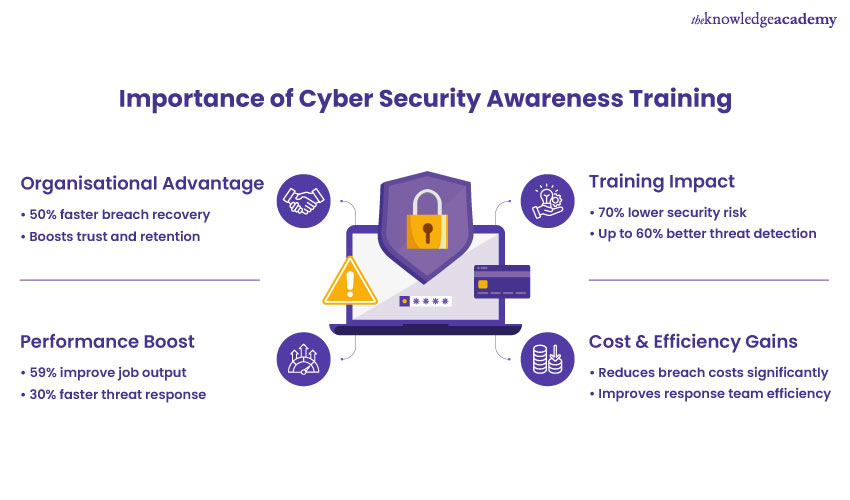
Importance of Cyber Security Awareness Training and how this essential training helps protect users & organisations.

Here are the key importance of this Cyber Security Training:

  • Organisational Advantage: Enables 50% faster breach recovery and strengthens trust and employee retention.
  • Training Impact: Leads to 70% lower security risk and improves threat detection by up to 60%.
  • Performance Boost: 59% of staff improve job performance, and threat response speeds up by 30%
  • Cost and Efficiency Gains: Cuts breach-related costs and enhances the efficiency of incident response teams.

Show moredown

What’s Included in this Cyber Security Awareness Training?

  • World-Class Training Sessions from Experienced Instructors
  • Cyber Security Awareness Certificate
  • Digital Delegate Pack

Show moredown

Online Instructor-led (1 days)

Online Self-paced (8 hours)

Incident Reporting Training Course Outline

Module 1: Abnormal Incidents

  • Hazards
  • Social and Organisational Influences

Module 2: Motivation for Incident Reporting

  • Strengths of Incident Reporting
  • Weaknesses of Incident Reporting
  • Different Forms of Reporting Systems

Module 3: Sources of Failure

  • Regulatory Failures
  • Managerial Failures
  • Hardware Failures
  • Software Failures
  • Human Failures
  • Team Failures

Module 4: Anatomy of Incident Reporting

  • Different Roles
  • Different Anatomies

Module 5: Detection and Notification

  • Incident Starvation and the Problems of Under-Reporting
  • Encouraging the Detection of Incident
  • Form Contents

Module 6: Primary Response and Secondary Investigation

  • Safeguarding the System
  • Acquiring Evidence
  • Drafting a Preliminary Report
  • Gathering Evidence About Causation
  • Gathering Evidence About Consequences

Module 7: Casual Analysis

  • Introduction to Casual Analysis
  • Stage 1: Incident Modelling
  • Stage 2: Casual Analysis

Module 8: Alternative Casual Analysis Techniques

  • Event-Based Approaches
  • Check-List Approaches
  • Mathematical Models of Causation

Module 9: Feedback and the Presentation of Incident Response

  • Challenges of Reporting Adverse Occurrences
  • Presentation of Incident Reports
  • Quality Assurance
  • Electronic Presentation Techniques

Module 10: Dissemination

  • Problems of Dissemination
  • From Manual to Electronic Dissemination
  • Computer-Based Dissemination
  • Computer-Based Search and Retrieval

Show moredown

Who Should Attend this Incident Reporting Training?

The Incident Reporting Course is designed to equip professionals with the essential skills and knowledge required to effectively report and manage incidents within their organisations. This course will benefit the following professionals:

  • Security Personnel
  • Risk Management Professionals
  • Compliance Officers
  • Quality Control Managers
  • Operations Managers
  • Facility Managers
  • Incident Response Teams

Prerequisites for the Incident Reporting Training

There are no formal prerequisites to attend the Incident Reporting Course. However, a basic knowledge of Incident Reporting policies and procedures would be beneficial for the delegates.

Incident Reporting Training Course Overview

Incident Reporting Training equips delegates with the skills to identify, document, and communicate incidents effectively. It covers processes, reporting structures, and best practices to ensure accurate and timely notifications.

This training enhances delegates ability to respond to incidents efficiently and support organisational safety. It develops practical skills for maintaining accountability, reducing risks, and improving operational resilience.

This 1-Day course offered by The Knowledge Academy enables delegates to apply incident reporting principles confidently in real-world scenarios. It provides practical guidance on evidence collection, report drafting, and feedback to strengthen safety and compliance.

Incident Reporting Training Course Objectives

  • To understand the significance of Incident Reporting in maintaining safety and accountability
  • To explore various forms and roles within reporting systems
  • To analyse incident responses and provide effective feedback
  • To identify and mitigate hazards in high-risk industries
  • To understand the social and organisational influences on incident reporting
  • To gain skills in safeguarding systems, acquiring evidence, and drafting preliminary reports

Upon completion of this Cyber Security Course, delegates will benefit by acquiring the knowledge and skills necessary to enhance safety and accountability in high-risk industries, opening doors to career advancement and prestigious job titles. This training equips them to contribute significantly to the safety and efficiency of their organisations and work towards continuous improvement.

Show moredown

What’s Included in this Incident Reporting Training Course?

  • World-Class Training Sessions from Experienced Instructors
  • Incident Reporting Certificate
  • Digital Delegate Pack

Show moredown

Not sure which course to choose?

Speak to a training expert for advice if you are unsure of what course is right for you. Give us a call on +44 1344 203 999 or Enquire.

Skills After Completing Cyber Security Courses

Cyber Security Courses provide professionals with a comprehensive set of both technical and strategic skills, such as malware dealing to threat intelligence, and the practical experience gained by being exposed to industry tools and counterattack methods. The key skills are:

  • Technical Expertise: The skill to establish, monitor, and safeguard all the components, including networks, endpoints, and cloud-based systems, using applications like Wireshark.
  • Cryptography: Using encryption (e.g. AES, RSA) and hashing (SHA-256), and tools such as GnuPG to protect the resting data and the one in transit.
  • Vulnerability Assessment & Penetration Testing: Scan and exploit vulnerabilities in an operating system through the use of different vulnerability assessment tests, like Nessus.
  • Incident Response & Forensics: Investigate the gap using memory and disc analysis, perform host forensics, and coordinate recovery.
  • Threat Intelligence & Analysis: Use threat feeds (e.g. MISP, ThreatConnect), playbooks, and implement SIEM (Security Information and Event Management).
  • Communication & Collaboration: Coordinate with IT, DevOps, legal and business stakeholders to translate technical discoveries into an action plan and policy change.
  • Analytical Thinking and Problem-Solving: Learn how to use log data, create patterns of anomalies, and create multi-layered defences on the basis of organised threat models.
  • Attention to Detail: Identify minor signs within logs, behaviours, or setups that are indicative of APTs (Advanced Persistent Threats) or insider assaults.
  • Cloud and Endpoint Security: Protect AWS, GCP, or Azure environment based on IAM policies, container security (e.g., Kubernetes, Docker) and endpoint protection features.


Benefits of Cyber Security Training for Businesses

Benefits of Cyber Security Training for Businesses

The Cyber Security Training increases the security of an organisation, making it proactive in its defence rather than responding to a fire. It helps teams minimise the impact of malware, ransomware, and social engineering attacks in addition to improving compliance, customer trust, and business problem resistance. Its core benefits include: 

  • Increased Threat Awareness: Awareness Training reduced threats, as approximately 73% of cyber-incidents of global character are a result of human mistakes. 
  • Better Compliance: Improves adherence to GDPR-related, ISO 27001, and NIS regulations, as well as the cases of losses and fines from the regulator. 
  • Reduced Risk & Attack Surface: The regular scans and patches maintain zero-day features and ransomware such as WannaCry. 
  • Improved Incident Response: ISO 27035 trained employees will respond to the situation 40 times quicker and reduce losses and downtimes. 
  • Data Protection & Encryption: Utilises encryption, MFA and data backup measures to secure data in the clouds. 
  • Heightened Stakeholder Confidence: Certified professionals will enhance trust between the client and investor by being cyber resilient. 
  • Brand & Reputation Safeguarding: Risk of reputational damage is minimised by training, as in almost 39% of international organisations, reputational damage is ongoing after the organisation has suffered significant breaches. 
  • Competitive Edge: Teams trained on ISO 27001, which gives more credibility to the bids of the enterprise and public sector contracts. 
  • Cost Efficiency: IBM 2024 report further states that the costs incurred on breaches are reduced by 50 percent, i.e. PS3.8M to PS1.9M, with the training of teams. 
  • Readiness for Advanced Threats: Prepare the learners to address AI attacks, zero-trust networks and Internet of Things threats. 
Show more blue-arrow

Cyber Security Training FAQs

Cyber Security is the practice of protecting systems, networks, devices, and data from digital threats. It helps prevent unauthorised access, data breaches, malware attacks, and other cyber risks.
                                  

The 7 types of Cyber Security include Network Security, Cloud Security, Application Security, Information Security, Endpoint Security, Operational Security, and Identity and Access Management. Each type plays a vital role in protecting systems, data, and digital assets from evolving cyber threats.

The prerequisites for the Cyber Security Courses are based on the course specifications and the target group of professionals it serves. Check the respective course page of the course that you are planning to take to know about its prerequisites.

These Cyber Security Courses are suitable for IT professionals, security analysts, network administrators, risk professionals, compliance teams, and anyone responsible for protecting digital systems and data. They are also ideal for delegates looking to build or advance a career in cyber security.

Yes, Cyber Security Courses are suitable for beginners and start with the fundamental concepts of cyber security before progressing to more advanced topics. They provide a structured learning path to help delegates build practical knowledge and confidence in protecting systems and data.

The best Cyber Security Courses depend on your experience level. Beginners can start with Cyber Security Awareness or Introduction to System and Network Security, while intermediate delegates can choose Certified Cyber Security Professional, Incident Response, Digital Forensics, or Cyber Security Risk Management.

The Knowledge Academy offers 24/7 support via phone & email before attending, during, and after the Cyber Security Courses. Our customer support team is available to assist and promptly resolve any issues you may encounter.

Yes, after completing the Cyber Security Training Courses you will receive a certificate of completion to validate your achievement and demonstrate your proficiency in the course material. These Cyber Security Certification can strengthen your professional profile and showcase your commitment to cyber security best practices.

Yes, The Knowledge Academy provides a both online and self-paced option for the Cyber Security Courses, allowing delegates to study at their own convenience. We also offer an online instructor-led option for delegates who prefer live trainer guidance, structured sessions, and interactive learning support.

In-demand Cyber Security roles include Cyber Security Analyst, SOC Analyst, Incident Responder, Security Consultant, Network Security Engineer, Risk Analyst, and Digital Forensics Analyst. These roles are in demand across industries as organisations continue to strengthen their cyber security capabilities.

This Cyber Training helps delegates build practical security skills, improve threat awareness, and strengthen their ability to support organisational security. It also supports career development with industry-recognised training from The Knowledge Academy, a trusted training provider.

The Knowledge Academy stands out as a prestigious training provider known for its extensive course offerings, expert instructors, adaptable learning formats, and industry recognition. It's a dependable option for those seeking this certification.

The Knowledge Academy is one of the Leading global training provider for Cyber Security Training.

The training fees for Cyber Security Training in Andorra starts from €1795

Show more down

Why we're the go to training provider for you

icon

Best price in the industry

You won't find better value in the marketplace. If you do find a lower price, we will beat it.

icon

Trusted & Approved

Recognised by leading certification bodies, we deliver training you can trust.

icon

Many delivery methods

Flexible delivery methods are available depending on your learning style.

icon

High quality resources

Resources are included for a comprehensive learning experience.

barclays Logo
deloitte Logo
Thames Water Logo

"Really good course and well organised. Trainer was great with a sense of humour - his experience allowed a free flowing course, structured to help you gain as much information & relevant experience whilst helping prepare you for the exam"

Joshua Davies, Thames Water

santander logo
bmw Logo
Google Logo
cross

Upgrade Your Skills. Save More Today.

superSale Unlock up to 40% off today!

WHO WILL BE FUNDING THE COURSE?

close

close

Thank you for your enquiry!

One of our training experts will be in touch shortly to go over your training requirements.

close

close

Press esc to close

close close

Back to course information

Thank you for your enquiry!

One of our training experts will be in touch shortly to go overy your training requirements.

close close

Thank you for your enquiry!

One of our training experts will be in touch shortly to go over your training requirements.