




We may not have the course you’re looking for. If you enquire or give us a call on +44 1344 203 999 and speak to our training experts, we may still be able to help with your training requirements.
Advantages and Disadvantages of a Partnership: Explained
William Brown 16 May 2026A Partnership is when two or more people join together to run a business and share profits and responsibilities. Discover the key Advantages and Disadvantages of Partnership, including shared responsibility, profit-sharing, and liability risks. Because of these factors, it’s crucial to understand how partnerships work before starting one.

BCS Practitioner Certificate in Being an IT Business Partner Training
 Top Rated Course
Top Rated Course
Exclusive 40% OFF
Training Outcomes Within Your Budget!
We ensure quality, budget-alignment, and timely delivery by our expert instructors.
Table of Contents

Imagine running a business where you’re not handling everything alone - instead, you’re supported by someone who shares your vision and goals. A Partnership offers the chance to split ideas, tasks, and decisions with someone just as invested as you. It can make things smoother, quicker, and even more enjoyable. But it’s not always easy - there are pros and cons to consider. In this blog, we will discuss the Advantages and Disadvantages of Partnership so you can decide if working side by side with a partner is the right fit for your business journey.
Table of Contents
1) What is Partnership?
2) Advantages of a Partnership
a) Cost Efficiency
b) Increased Capital
c) Emotional Support
d) Fresh Perspectives
e) Shared Responsibilities
3) Disadvantages of a Partnership
a) Shared Liability
b) Complex Exit
c) Securing Capital
d) Individual Taxation
e) Potential Workload
4) Conclusion
What is Partnership?
A Partnership is a type of business where two or more people work together to run and grow a company. They ready to share the profits, losses, and responsibilities. Each partner brings something to the table like money, skills, or time and makes decisions together.
For example, if two friends start a bakery. One is great at baking, and the other is good with money and customers. They decide to split everything 50/50. This means they both put in effort, share the earnings, and handle any problems that come up. This kind of Partnership works because they trust each other and agree on how the business should run.

Advantages of a Partnership
Here are the key benefits of running a business through a Partnership:
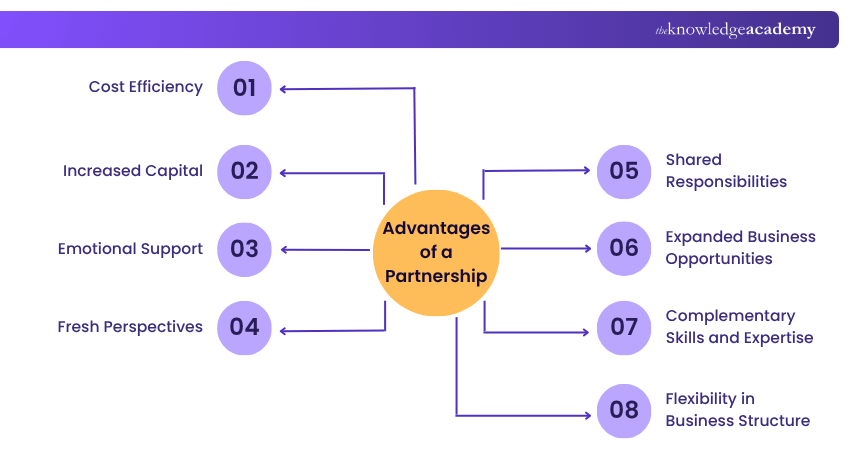
Cost Efficiency
Partnerships allow people to share business costs, which makes things more affordable. From rent to marketing, expenses can be divided among partners. This helps reduce the financial pressure on just one person.
a) Share office or equipment costs
b) Split advertising or promotion budgets
c) Reduce the need for outside staff early on
Increased Capital
More partners usually means more money available for the business. Each person can bring in funds to support growth and operations. This helps the business get started or expand faster.
a) Pool resources for bigger investments
b) Improve cash flow for daily needs
c) Lower the need for outside loans
Emotional Support
Running a business can be stressful, but having a partner helps. You can share your worries, discuss challenges, and cheer each other on. This support keeps you going during tough times.
a) Talk through problems together
b) Reduce stress by sharing concerns
c) Encourage each other during setbacks
Fresh Perspectives
Partners often have different ideas and ways of thinking. This helps solve problems better and come up with creative solutions. It also helps the business grow in smarter ways.
a) Get different opinions on key decisions
b) Avoid one-sided thinking
c) Find new and better ways to work
Shared Responsibilities
In a Partnership, the workload is divided between people. This makes it easier to manage tasks and stay organised. Each person can focus on what they do best.
a) One partner handles sales, and another handles finance
b) Reduce pressure by dividing tasks
c) Get more done without hiring extra help
Expanded Business Opportunities
More partners means more contacts and ideas. This can lead to new customers, suppliers, or projects. It opens more doors than working alone.
a) Use each partner’s network
b) Explore new markets together
c) Attract different kinds of clients
Complementary Skills and Expertise
Each partner brings different strengths to the table. One may be good at planning, while another is great with people. This mix helps the business run smoothly.
a) Combine creative and practical skills
b) Cover more business areas with ease
c) Learn from each other’s strengths
Flexibility in Business Structure
Partnerships are easier to shape and change as needed. You can decide roles, shares, and duties in a way that suits everyone. This makes it easier to grow or adjust the business.
a) Choose how profits are shared
b) Change roles based on strengths
c) Update terms as the business grows
Shape future-ready business relationships with our BCS Practitioner Certificate in Modelling Business Processes Training - Join today!
Disadvantages of a Partnership
Here are the common disadvantages you should know:
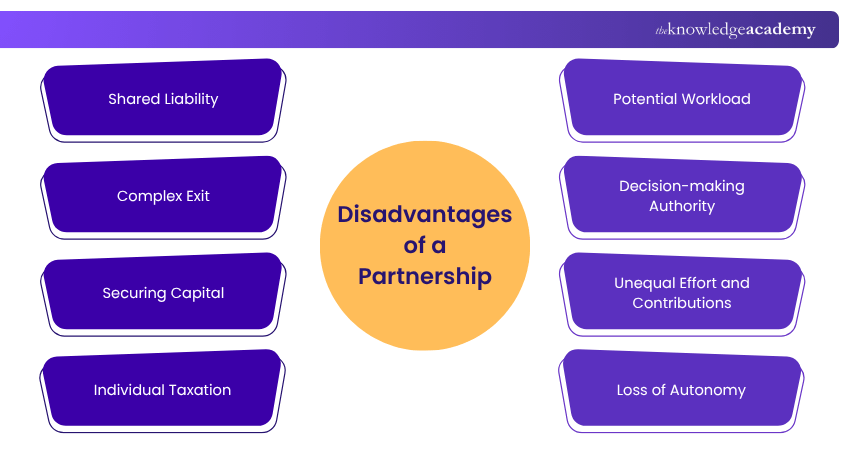
1) Shared Liability
Each partner is responsible for the debts of the business. If something goes wrong, all partners may have to pay, even if only one made the mistake. This can be risky for personal finances.
a) All partners are responsible for losses or legal issues
b) One partner’s mistake can affect everyone
c) Personal assets may be at risk
2) Complex Exit
Leaving a Partnership is not always easy. It can involve legal steps, money issues, or even disputes. Ending the Partnership completely can be even harder.
a) You may need a formal agreement to leave
b) Disagreements can slow the exit process
c) Selling your share might not be simple
3) Securing Capital
Raising big amounts of money can be harder in a Partnership. Investors might prefer bigger or more formal businesses. Banks may also ask for personal guarantees.
a) May struggle to attract large investors
b) Harder to grow without extra money
c) Loans may need personal backing
4) Individual Taxation
Each partner pays tax on their share of the profit. Even if the money stays in the business, you still have to pay tax on it. This may lead to high personal tax bills.
a) Taxed whether or not you take the money
b) Income is added to your personal tax return
c) No tax breaks like a company may get
Learn to build trust and drive value with our BCS International Diploma in Business Analysis - Join today!
5) Potential Workload
Work may not always be shared fairly. One partner might end up doing more, leading to stress or frustration. This can affect the business and the relationship.
a) Unequal work can cause conflict
b) Some partners may feel overworked
c) Can lead to burnout or mistakes
Decision-making Authority
All big decisions need to be discussed with partners. This can slow things down or lead to arguments. Too many opinions may cause confusion.
a) Slower decision-making process
b) Disagreements may block progress
c) Hard to act quickly in urgent times
Unequal Effort and Contributions
Not all partners may invest the same money, time, or energy. This can lead to unfairness or resentment. It may feel like one is doing more than others.;
a) One may contribute more work than others
b) Uneven money investments can cause tension
c) Leads to a lack of motivation
Loss of Autonomy
You can’t make major decisions on your own. You always need to consult your partners. This limits your freedom to act how you want.
a) Must check with partners before acting
b) Less independence in daily tasks
c) Can slow down your ideas or plans
Conclusion
We hope this blog has helped you understand the Advantages and Disadvantages of Partnership clearly. A Partnership can offer great support, shared duties, and more ideas, but it also comes with risks like shared liability and less independence. It’s important to weigh both sides carefully before starting. With the right partner and plan, it can be a strong way to grow a business.
Turn great ideas into strong Partnerships with our Business Analysis Courses- Join today!
Frequently Asked Questions
What are the 4 C's of Partnership?

The 4 C's of Partnership are Communication, Commitment, Compatibility, and Contribution. These help partners work well together and build a strong business.
What Does a Strong Partnership Look Like?
A strong Partnership has trust, clear roles, and open communication. Both partners support each other and work towards shared goals.
What are the Other Resources and Offers Provided by The Knowledge Academy?
The Knowledge Academy takes global learning to new heights, offering over 3,000+ online courses across 490+ locations in 190+ countries. This expansive reach ensures accessibility and convenience for learners worldwide.
Alongside our diverse Online Course Catalogue, encompassing 17 major categories, we go the extra mile by providing a plethora of free educational Online Resources like Blogs, eBooks, Interview Questions and Videos. Tailoring learning experiences further, professionals can unlock greater value through a wide range of special discounts, seasonal deals, and Exclusive Offers.
What is The Knowledge Pass, and How Does it Work?
The Knowledge Academy’s Knowledge Pass, a prepaid voucher, adds another layer of flexibility, allowing course bookings over a 12-month period. Join us on a journey where education knows no bounds.
What are Related Courses and Blogs Provided by The Knowledge Academy?
The Knowledge Academy offers various Business Analysis Courses, including the BCS Practitioner Certificate in Being an IT Business Partner, BCS Certificate in Business Analysis Practice, and BCS International Diploma in Business Analysis Course. These courses cater to different skill levels, providing comprehensive insights into Business Activity Monitoring (BAM).
Our Business Analysis Blogs cover a range of topics related to Partnership, offering valuable resources, best practices, and industry insights. Whether you are a beginner or looking to advance your Business skills, The Knowledge Academy's diverse courses and informative blogs have got you covered.

William Brown


Senior Business Analyst and Strategic Advisor
William Brown is a senior business analyst with over 15 years of experience driving process improvement and strategic transformation in complex business environments. He specialises in analysing operations, gathering requirements and delivering insights that support effective decision making. William’s practical approach helps bridge the gap between business goals and technical solutions.
View Detail
Upcoming Business Analysis Resources Batches & Dates
Date
 BCS Practitioner Certificate in Being an IT Business Partner Training

 If you wish to make any changes to your course, please


