


 Top Rated Course


We may not have the course you’re looking for. If you enquire or give us a call on +44 1344 203 999 and speak to our training experts, we may still be able to help with your training requirements.
Future of Blockchain Technology: How It Will Change Business
Richard Harris 17 April 2026Future of Blockchain brings wider enterprise use, scalable networks, real-world applications like identity & supply chains, stronger security & clearer rules. Key future developments include the rise of smarter contracts, which will automate agreements. Its decentralised structure is set to transform data management and digital trust.

Training Outcomes Within Your Budget!
We ensure quality, budget-alignment, and timely delivery by our expert instructors.
Table of Contents
Imagine a future where every transaction is not only secure but also transparent, where data flows seamlessly across industries, and where trust is built into the very fabric of our digital interactions. That’s the promise of Blockchain Technology.It’s a game-changer that has transcended its Cryptocurrency origins to revolutionise fields like healthcare, insurance, real estate and Supply Chain Management. This gives us a glimpse into the Future of Blockchain Technology.
However, with global spending on Blockchain solutions estimated to reach £121.7 billion by 2027, it's clear that Blockchain is not merely part of a digital future; it is the future! This blog paints a promising picture of the Future of Blockchain Technology, spotlighting its potential in diverse fields. So, read on and explore its exciting possibilities for your business and the digital landscape!
Table of Contents
1) What is the Future of Blockchain Technology?
2) To Predict the Future You Have to Know the Past
3) Future Potential Uses of Blockchain Technology
4) Five Predictions for the Future of Blockchain
5) Where Will Blockchain Technology be in 5 Years?
6) Will AI Replace Blockchain Developer?
7) Conclusion
What is the Future of Blockchain Technology?
Blockchain Technology is among the hottest trends in the digital landscape that organisations must adopt to stay competitive. This innovative new development is garnering a lot of attention due to its cutting-edge breakthroughs, which are opening up new advanced opportunities across many sectors.
If you are familiar with the phrase "Cryptocurrency," you might know that Bitcoin's foundation is Blockchain Technology. A crucial aspect of this technological advancement is its resistance to alterations or hacking. The History of Blockchain. highlights how this digital ledger is utilized to maintain transactions in a distinct and verifiable manner. Blockchain provides a framework for immutable ledgers and opens up numerous promising job opportunities.

To Predict the Future You Have to Know the Past
To understand blockchain’s future, it helps to look back at its origins. Although many people link its birth to Bitcoin’s launch in 2008, the underlying concepts existed long before then and played a key role in shaping what blockchain would eventually become. Here’s a brief history of Blockchain:
One of the earliest hints of blockchain’s structure was the Merkle tree, introduced by Ralph Merkle in 1979 for digital signatures and secure key distribution. This data structure later became essential for verifying data integrity in blockchain systems.
Several other foundational technologies further foreshadowed blockchain’s capabilities.
Some of the key milestones include:
1) David Chaum’s early digital cash system
2) Stuart Haber and Scott Stornetta’s block-based timestamping technique
3) Cynthia Dwork and Moni Naor’s Proof-of-Work concept
4) Stefan Konst’s work on cryptographically secured chains
These innovations collectively laid the groundwork for modern blockchain systems. Blockchain formally took shape in 2008, when Satoshi Nakamoto released a white paper outlining a decentralised, peer-to-peer system that operated without banks or central authorities.
Future Potential Uses of Blockchain Technology
Here are some exciting potential uses of Blockchain Technology you need to watch out for:
1) Blockchain Technology in Real Estate
Most of the time, real estate transactions involve a lot of money, paperwork and the agents’ involvement. By leveraging digital real estate tokens to represent physical properties, Blockchain Technology has the potential to make it easier to search for and purchase real estate. As a result, it will help in:
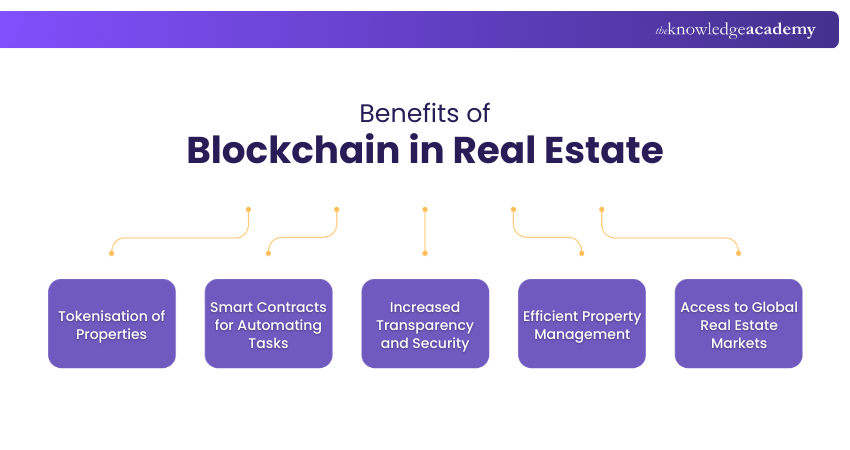
a) Removing the need for a middleman will simplify the buyer and seller transfer
b) Provide unquestionable ownership evidence with a distributed digital ledger
c) It enables you to make smaller real estate purchases because a token can be divided much like a Bitcoin
d) Enhance economic security and transparency as every transaction is processed and approved by others
Sign up for our Ethereum Developer Training and create game-changing decentralised applications - Join today!
2) Blockchain Technology in Supply Chain and Logistics
Innovation has constantly disrupted supply chains, which are the connections between the production and delivery of goods. Today's supply chains are incredibly intricate, spanning several countries, requiring a tremendous volume of invoices and payments, involving a wide variety of entities, and possibly lasting months.
This complexity makes Blockchain an appealing way to change the economy's logistics and supply chain sectors. An immutable, auditable history from the point of origin to the point of sale can be created when commodities are moved to a new phase in the supply chain by safely and permanently recording the process.
The following are a few innovative Blockchain Applications for supply chain and logistics:
a) TradeLens:
Created by IBM, this Blockchain solution for logistics and supply chains offers a comprehensive view of shipment data and papers, enabling transparency and increased efficiency. The platform processed 1 billion shipments in 2020 and is home to more than half of the world's container ships.
b) Provenance:
To ensure that items are produced and sourced ethically, consumers are demanding more openness about the products they buy. Blockchain is used by Provenance to demonstrate chain-of-custody and supply chain certification.
3) Blockchain in Healthcare
Blockchain in healthcare is an enhancing factor because of its openness and prominent level of security. For instance, patient data can be kept secure but available to patients and healthcare professionals by being held in a decentralised, transparent, and incorruptible database.
The following are some other main applications of Blockchain in healthcare:
a) Protecting patient data
b) Personal health record data management
c) Point-of-care genomics management
d) Electronics health records data management
Here are a few innovative Blockchain applications in this area:
a) Curisium:
A Blockchain-based platform that uses innovative digital contracts to simplify rebate negotiating and Contract Management.
b) Robomed:
This platform collects patient data through telemedicine sessions, chatbots, and wearables and stores it on Blockchain to safely share it with medical experts.
4) Blockchain in Business
Significant commercial implications result from adopting Blockchain Technology, driven primarily by increased revenue, decreased costs, and effective Time Management. Examples of how corporate businesses are utilising Blockchain include:
a) ConsenSys Quorum:
Quorum is an enterprise-grade service initially created by JP Morgan to assist businesses in expanding and managing massive Blockchain networks.
b) LVMH:
This luxury goods company uses Blockchain to track products and prevent counterfeiting. Collaborating with Prada and Cartier, it developed a platform where more than 10 million products have been recorded.
c) MediaChain:
Spotify purchased this Blockchain database to handle copyright and royalty payments as well as rights holder disputes.
Secure your investments today the decentralised way by joining the Bitcoin and Cryptocurrency Course.
Five Predictions for the Future of Blockchain
New breakthroughs continue to reshape the blockchain landscape, bringing bold possibilities. As blockchain networks expand across industries, several key trends are expected to define its next phase:
1) Pragmatic Governance Models Will Emerge
a) New governance frameworks will simplify how large and diverse networks handle decisions, permissions, and payments.
b) These models will standardise and unify data from multiple sources.
c) They will support more consistent, reliable and transparent information sharing across networks.
2) Interconnectivity Comes One Step Closer to Reality
a) Interoperability between various blockchain platforms will become a key priority.
b) Growing networks will demand clearer standards on how the different protocols communicate.
c) Organisations will expect more seamless integration across multiple blockchain systems.
3) Adjacent Technologies Will Combine with Blockchain to Create a Next Level Advantage
a) Blockchain will increasingly integrate with technologies such as Artificial Intelligence (AI), analytics and Internet of Things (IoT).
b) Verified, tamper-proof blockchain data will boost algorithms and models.
c) This integration will significantly improve accuracy.
d) This will enable more transparent, data-driven decision-making.
4) Validation Tools Will Begin to Combat Fraudulent Data Sources
a) Blockchain networks will rely more on tools like cryptographic markers, IoT sensors and oracles.
b) These mechanisms will automatically verify incoming data.
c) They will reduce errors and minimise fraudulent inputs.
d) This will increase overall trust in the system.
5) Central Banks will Expand Into Wholesale and Retail Central Bank Digital Currencies (CBDCs)
a) More central banks will experiment with both wholesale and retail digital currencies.
b) This development will reshape how payments and asset digitisation function.
c) It will encourage wider adoption of tokenised financial instruments across global markets.
Where Will Blockchain Technology be in 5 Years?
In the coming years, blockchain-powered verification tools will play a big role for financial organisations. This is in response to the fact that digital document fraud can become easier for attackers to attempt. Solutions built on Blockchain Technology can give users the ability to add a tamper-proof digital seal to documents across various business applications.
Will AI Replace Blockchain Developer?
No, AI is not going to replace Web3 Developers. That's because building decentralised applications and Blockchain solutions demands highly specialised skills and a strong grasp of blockchain protocols, Cryptography and smart contracts. While AI can assist by automating tasks such as code generation, debugging and smart contract optimisation, it can only accelerate certain parts of the process. It'll never replace the expertise of a Web3 Developer.
Conclusion
Blockchain's revolutionary decentralised database helps reduce security risks, stamp out fraud, and bring transparency in a scalable way. Popularised by Cryptocurrency and NFTs, this technology has since become a management solution for various industries. As outlined in this blog, the Future of Blockchain Technology holds for sectors ranging from healthcare and real estate to Supply Chain Management and logistics.
Our Blockchain Courses serve tomorrow’s tech leader. Sign up now and master the technology behind Crypto and beyond!
Frequently Asked Questions
Is Blockchain Going to Grow?

The Blockchain Technology market is poised for significant growth in the coming years. This growth can be attributed to the increasing demand for digital identity and the growing adoption of Blockchain-based identification platforms.
What Role Will Blockchain Play in the Future?
Blockchain-based games will change the concept of cross-platform gaming. Interaction will become seamless, allowing players to move assets and seamlessly switch between various games and platforms. This will drive innovation and open up new business models.
What are the Other Resources and Offers Provided by The Knowledge Academy?
The Knowledge Academy takes global learning to new heights, offering over 3,000 online courses across 490+ locations in 190+ countries. This expansive reach ensures accessibility and convenience for learners worldwide.
Alongside our diverse Online Course Catalogue, encompassing 19 major categories, we go the extra mile by providing a plethora of free educational Online Resources like Blogs, eBooks, Interview Questions and Videos. Tailoring learning experiences further, professionals can unlock greater value through a wide range of special discounts, seasonal deals, and Exclusive Offers.
What is The Knowledge Pass, and How Does it Work?
The Knowledge Academy’s Knowledge Pass, a prepaid voucher, adds another layer of flexibility, allowing course bookings over a 12-month period. Join us on a journey where education knows no bounds.
What are the Related Courses and Blogs Provided by The Knowledge Academy?
The Knowledge Academy offers various Blockchain Courses, including the Bitcoin and Cryptocurrency Course and the Blockchain Course. These courses cater to different skill levels, providing comprehensive insights into Different Types of Blockchain.
Our Advanced Technology Blogs cover a range of topics related to Blockchain Technology, offering valuable resources, best practices, and industry insights. Whether you are a beginner or looking to advance your Blockchain skills, The Knowledge Academy's diverse courses and informative blogs have got you covered.

Richard Harris


Senior Full Stack Developer and Technology Educator
Richard Harris is a highly experienced full-stack developer with deep expertise in both frontend and backend technologies. Over his 12-year career, he has built scalable web applications for startups, enterprises and government organisations. Richard’s writing combines technical depth with clear explanations, ideal for developers looking to grow in modern frameworks and tools.


 If you wish to make any changes to your course, please


