


 Top Rated Course

We may not have the course you’re looking for. If you enquire or give us a call on +44 1344 203999 and speak to our training experts, we may still be able to help with your training requirements.
What is Emotional Intelligence and Why is it Important?
The Knowledge Academy 24 March 2026Emotional Intelligence refers to understanding and managing your emotions while recognising other’s feelings to improve relationships and decision-making. It plays a core role in how people think, behave, communicate, and build relationships, while also influencing how they manage stress, conflicts, and challenges in life and at work.

Training Outcomes Within Your Budget!
We ensure quality, budget-alignment, and timely delivery by our expert instructors.
Table of Contents
Have you wondered why some people stay calm under pressure, communicate clearly, and handle difficult situations at ease? The answer lies in What is Emotional Intelligence (EI), the skill that helps individuals understand their emotions and respond thoughtfully. In daily life and at work, Emotional Intelligence shapes how we interact, make decisions, and build relationships.
Understanding What is Emotional Intelligence goes beyond managing emotions. It is about recognising feelings in yourself and others to improve communication, teamwork, and leadership. In this blog, you will learn about Emotional Intelligence, its components, its importance, and more!
Table of Contents
1) What is Emotional Intelligence?
2) Components of Emotional Intelligence
3) Benefits of Emotional Intelligence
4) How to Enhance Emotional Intelligence?
5) Difference Between EQ and IQ
6) Common Myths About Emotional Intelligence
7) Conclusion
What is Emotional Intelligence?
Emotional Intelligence means to blend thinking and feeling to make better decisions. To put it simply, means being thoughtful with feelings. It helps people navigate complex emotions, relationships, and real-life challenges with clarity and purpose. This involves noticing feelings, understanding what they mean, and responding thoughtfully.
Emotional Intelligence is about understanding how emotions influence decisions, behaviour, performance, and relationships. Once this awareness is developed, it can be used to lead a more effective, balanced, and fulfilling personal and professional life.
Components of Emotional Intelligence
From self-awareness to relationship management, EI has four key components. Let's take a look at them below for a better understanding of What is Emotional Intelligence:
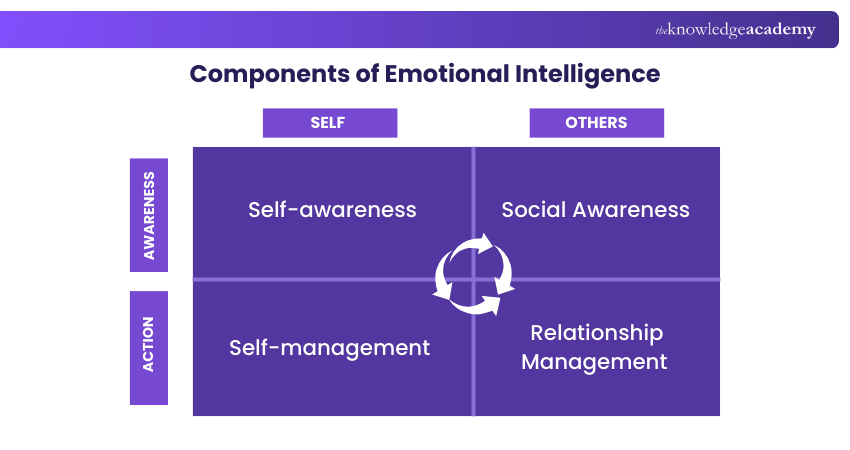
1) Self-awareness
Self-awareness is a crucial aspect of Emotional Intelligence that involves gaining a profound understanding of one's own emotions, strengths, weaknesses, values, and beliefs. It goes beyond simply recognising basic feelings by delving into the underlying causes and effects of these emotions on one's thoughts and behaviour. Developing self-awareness can help you in various ways, and it is an essential skill to cultivate for personal growth and success.
a) Recognise Emotions: Identify and label various emotions accurately, including subtle nuances in feelings.
b) Monitor Reactions: Be mindful of emotional reactions in different situations, helping to avoid impulsive behaviour.
c) Understand Triggers: Pinpoint triggers that lead to specific emotional responses, allowing for proactive management.
d) Acknowledge Strengths and Weaknesses: Acknowledge personal strengths and weaknesses, facilitating personal growth and development.
e) Enhance Decision-making: Make more informed decisions by considering emotions' influence on choices.
f) Improve Relationships: Understand how emotions impact interactions with others, leading to improved relationships.
Self-awareness serves as the foundation for developing other EI components like self-management, social awareness, and relationship management. Cultivating self-awareness is a valuable skill that contributes to personal and professional growth, fostering better decision-making and emotional well-being.
2) Self-management
Self-management is a vital component of EI that encompasses an individual's ability to control and regulate their emotions, impulses, and behaviour effectively. It involves developing strategies to manage emotional reactions and maintain composure in various situations. Let's explore the key aspects of self-management:
a) Impulse Control: The capacity to resist impulsive reactions and make thoughtful decisions even in emotionally charged circumstances.
b) Stress Management: Techniques and coping mechanisms to handle stress and pressure constructively.
c) Adaptability: The ability to adapt to changing events and bounce back from setbacks.
d) Emotional Control: Maintaining emotional balance and preventing emotions from negatively influencing actions.
e) Goal Orientation: Setting and working toward goals while maintaining focus and determination.
f) Time Management: Efficiently utilising time and resources to achieve objectives.
Developing self-management skills leads to greater emotional stability, enhanced resilience, and improved decision-making. It empowers individuals to handle challenges effectively and maintain positive interactions with others.
Manage emotions calmly and confidently with Anger Management Training – Join now!
3) Social Awareness
Social awareness is a critical component of EI that revolves around an individual's ability to recognise and comprehend the emotions, perspectives, and needs of others. It involves being attuned to the feelings and reactions of people in various social situations. Here are the key aspects of social awareness:
a) Empathy: It is the capacity to comprehend and share the emotions of others, fostering compassion and connection.
b) Non-verbal Communication: The ability to interpret and respond to nonverbal cues like facial expressions as well as body language.
c) Sensitivity to Diversity: Recognising and respecting cultural differences, individual preferences, and diverse backgrounds.
d) Conflict Resolution: Skilfully addressing conflicts and mediating disputes in a fair and constructive manner.
e) Active Listening: This ability includes paying complete attention to what others are saying, demonstrating genuine interest, and providing thoughtful responses.
f) Perspective-taking: Seeing situations from different viewpoints enhances understanding and collaboration.
Social awareness enables individuals to communicate effectively with diverse groups of people. It promotes empathy and fosters a supportive and inclusive environment. It helps people recognise other’s emotions, respond respectfully, and build stronger relationships across teams and communities.
4) Relationship Management
Relationship management involves the ability to build, nurture, and maintain positive connections and interactions with others. It leverages emotional awareness and social skills to create and sustain healthy relationships, both personally and professionally. Key aspects of relationship management include:
a) Sharing ideas: Skilfully conveying thoughts, ideas, and emotions while promoting understanding and trust.
b) Team collaboration: Working collaboratively within a team, fostering synergy, and achieving collective goals.
c) Influence and leadership: Leveraging Emotional Intelligence to inspire, motivate, and lead others effectively.
d) Building rapport: Establishing genuine connections and trust with individuals, contributing to strong relationships.
e) Adaptability: Adjusting one's communication style and approach to suit different individuals and situations.
Relationship management is a core skill that enhances personal and professional success. It enables individuals to navigate social complexities, facilitate teamwork, and create a network of positive relationships.
Achieve greatness through our Motivation and Goal Setting Training – Sign up now!
Benefits of Emotional Intelligence
Emotional Intelligence is a core attribute for effective leadership. Let's explore the importance of Emotional Intelligence in Leadership:
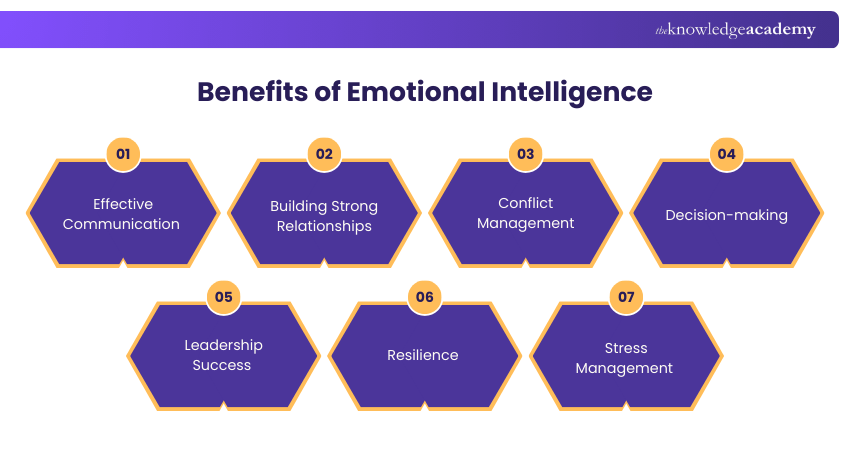
1) Effective Communication
Effective leaders with high EI possess exceptional communication skills. They listen actively to their team members, creating an environment where everyone feels heard and valued. These leaders can convey their ideas, visions, and expectations clearly and adapt their communication styles to suit various situations and individuals.
This fosters better understanding, enhances team collaboration, and ensures that the team is aligned with the leader's goals and objectives.
2) Building Strong Relationships
The Importance of Emotional Intelligence is evident in how leaders build and nurture strong, positive relationships. Leaders with high EI establish trust, empathy, and rapport with their team members and stakeholders. By genuinely understanding the emotional needs and concerns of others, they foster a supportive and harmonious work environment.
Team members are more likely to be motivated when they feel a sense of connection and trust with their leader.
3) Conflict Management
Conflict is an inevitable part of any team or organisation. Leaders with high EI approach conflicts as opportunities for growth and resolution rather than as problems. They are skilled at managing conflicts constructively, seeking win-win solutions that benefit all parties involved.
This approach preserves team cohesion, minimises disruption, and ensures that conflicts do not escalate into larger issues.
4) Decision-making
EI influences leaders' decision-making processes. Leaders with high EI consider not only rational factors but also emotional ones when making choices. They are attuned to the emotions of their team members and stakeholders, understanding how decisions may impact them emotionally.
This holistic approach to decision-making results in well-rounded and thoughtful choices that consider both the logical and human aspects of a situation.
5) Leadership Success
Emotional Intelligence is essential for effective leadership. Leaders who can recognise and understand their emotions are better able to reflect and respond thoughtfully. This self-awareness helps them make balanced decisions, communicate clearly, and inspire trust within their teams and across the organisation.
Emotionally Intelligent leaders align actions with personal value, build meaningful relationships, and lead with purpose.
6) Resilience
Resilience is the ability to adapt and stay steady during challenges, and Emotional Intelligence plays a central role in developing it. Recognising emotions, revisiting core values, and focusing on opportunities rather than limitations can turn difficult experiences into moments of learning and self-reflection.
Small, consistent actions, such as nurturing relationships can strengthen resilience over time and help maintain direction during setbacks.
7) Stress Management
Emotional Intelligence supports healthy stress management by helping individuals recognise emotional signs proactively. Understanding deeply what you feel and why you feel enables you to respond constructively and mindfully instead of feeling overwhelmed by your emotions.
Accepting challenges, seeking support and redirecting energy towards positive activities help manage stress effectively and maintain emotional balance.
Develop mental strength and adaptability with our Resilience Training – Join now!
How to Enhance Emotional Intelligence?
Understanding What is Emotional Intelligence is a transformative journey that can lead to a successful and more fulfilling life. Let's look at how to enhance Emotional Intelligence below.
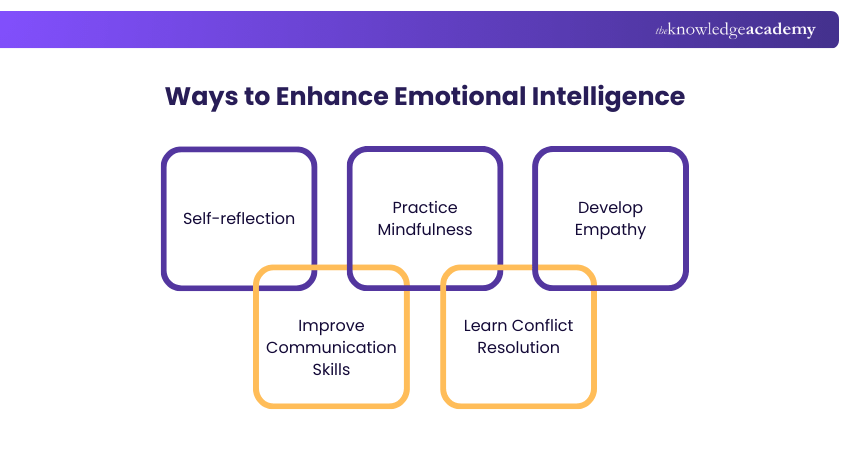
1) Self-reflection: Understanding your emotional responses is the first step toward enhancing Emotional Intelligence. Engage in self-reflection regularly to become aware of your emotional triggers, and behavioural patterns.
2) Practice Mindfulness: Mindfulness techniques, like breathing exercises and meditation, can help you remain present in the moment and observe your emotions without judgment. This promotes emotional regulation and reduces impulsive reactions.
3) Develop Empathy: Make a conscious effort to understand others' perspectives and feelings. Actively listen to their concerns and experiences and try to put yourself in their shoes to build genuine empathy.
4) Improve Communication Skills: Work on enhancing your verbal and non-verbal communication skills. Pay attention to your tone, body language, and active listening to convey empathy and understanding in your interactions.
5) Learn Conflict Resolution: Acquire conflict resolution skills to address conflicts with empathy and respect. Aim for win-win solutions that take into account the emotions and needs of all parties.
Take control of your goals, habits, and emotions with Self-Management Training today!
Difference Between EQ and IQ
Intelligent Quotient (IQ) and Emotional Intelligence (EQ) measure different but important abilities. IQ focuses on cognitive skills, such as logical reasoning, problem-solving, and memory. It reflects how well a person understands and processes information. It is commonly measured through standardised test and used in academic and analytical settings.
EQ relates to understanding and managing emotions. It includes self-awareness, teamwork, leadership, and stress management. While IQ remains relatively stable, EQ can be developed over time. Strong EQ often improves workplace relationships, communication, and decision-making.
Common Myths About Emotional Intelligence
Let’s look at some of the common myths to foster a real understanding of What is Emotional Intelligence.
a) EQ Means Being Emotional: It is about managing emotions instead of reacting emotionally.
b) EQ Cannot be Developed: Emotional Intelligence can be learned and improved over time.
c) EQ Means Constant Positivity: It involves understanding emotions, not forcing happiness.
d) EQ is Only Empathy: It also includes self-awareness, self-control, and social skills.
e) EQ is Only Personal: It is equally important in professional life.
f) High EQ Means No Struggles: Emotionally Intelligent people still face challenges.
g) High EQ means Agreement: EQ supports assertive, respectful conflict handling.
h) EQ is Gender-based: Emotional Intelligence applies to everyone.
Conclusion
Understanding What is Emotional Intelligence is the beginning of building strong relationships, improved decision-making skills, and a balanced approach to work. It helps people respond thoughtfully to challenges, communicate clearly, and lead with empathy. It improves personal well-being, professional performance, and fosters long-term success. This makes it a skill worth investing in at every stage of life.
Build confidence and emotional strength with Personal Development Courses - Sign up now!
Frequently Asked Questions
What is the Difference Between Emotional Intelligence and Social Intelligence?

Emotional Intelligence focuses on understanding and managing your own emotions and those of others as well. Social intelligence builds on this by applying emotional awareness in social settings, helping people read social cues, adapt behaviour, and interact effectively within relationships and groups.
Is Emotional Intelligence More Important Than Technical Skills?
Emotional Intelligence is often more important than technical skills in today’s workplace. Technical skills may open opportunities, but EQ determines how well you collaborate, lead, manage pressure, and make balanced decisions.
What are the Other Resources and Offers Provided by The Knowledge Academy?
The Knowledge Academy takes global learning to new heights, offering over 3,000+ online courses across 490+ locations in 190+ countries. This expansive reach ensures accessibility and convenience for learners worldwide.
Alongside our diverse Online Course Catalogue, encompassing 17 major categories, we go the extra mile by providing a plethora of free educational Online Resources like Blogs, eBooks, Interview Questions and Videos. Tailoring learning experiences further, professionals can unlock greater value through a wide range of special discounts, seasonal deals, and Exclusive Offers.
What is the Knowledge Pass, and how does it work?
The Knowledge Academy’s Knowledge Pass, a prepaid voucher, adds another layer of flexibility, allowing course bookings over a 12-month period. Join us on a journey where education knows no bounds.
What are related courses and blogs provided by The Knowledge Academy?
The Knowledge Academy offers various Personal Development Courses,including Emotional Intelligence Training, Resilience Training, and Anger Management Training. These courses cater to different skill levels, providing comprehensive insights into Anger Management.
Our Business Skills blogs cover a range of topics related to Emotional Intelligence, offering valuable resources, best practices, and industry insights. Whether you are a beginner or looking to advance your Emotional Management Skills, The Knowledge Academy's diverse courses and informative blogs have you covered.

The Knowledge Academy


Global Training Provider
The Knowledge Academy is a world-leading provider of professional training courses, offering globally recognised qualifications across a wide range of subjects. With expert trainers, up-to-date course material, and flexible learning options, we aim to empower professionals and organisations to achieve their goals through continuous learning.

Upcoming Business Skills Resources Batches & Dates
Date
 Emotional Intelligence Training
Emotional Intelligence Training
Fri 31st Jul 2026
Emotional Intelligence Training
Fri 18th Sep 2026

 If you wish to make any changes to your course, please


