


 Top Rated Course

We may not have the course you’re looking for. If you enquire or give us a call on +44 1344 203999 and speak to our training experts, we may still be able to help with your training requirements.
What is SMED: A Quick Guide to Faster Changeovers
James Smith 16 July 2026SMED (Single-Minute Exchange of Die) is a lean method to cut changeover time under 10 minutes by shifting tasks to external setups and streamlining setups. This boosts productivity and reduces downtime, allowing faster response to customer demand. Teams can maintain efficiency while keeping production flow smooth and flexible.

Training Outcomes Within Your Budget!
We ensure quality, budget-alignment, and timely delivery by our expert instructors.
Table of Contents

Have you ever heard the saying “Time and tide wait for no one” ever in your lifetime? It is indeed true, and the world is adapting to fast-moving dynamics. It is no different in manufacturing, too; time is money. The faster you can change your machines from making one product to another, the more efficient your factory becomes. That’s where SMED comes in.
In this blog, you will explore What is SMED, along with how it works, how to put it into action, the benefits it brings, and some of the common problems companies face when using it. Let’s get started!
Table of Contents
1) What is a Single Minute Exchange of Die (SMED)?
2) How do you Implement SMED?
3) Key Benefits of Using SMED in Production
4) SMED Examples
5) Is SMED Lean or Six Sigma?
6) What are the Three Stages of SMED?
7) Conclusion
What is a Single Minute Exchange of Die (SMED)?
Single Minute Exchange of Die (SMED) is a method used in factories to speed up the machine changeovers. The ultimate aim is to bring down the time it takes to switch from one product to another in under 10 minutes. It means the change needs to happen in less than 10 minutes, making Time Management a critical aspect of the process.
This idea was first created by a Japanese engineer named Shigeo Shingo while working at Toyota. He noticed that a lot of time was wasted when machines took long periods just to change tools or die. At that point, SMED was his solution to reduce this wasted time and keep production moving.

How do you Implement SMED?
Implementing the SMED system into practice is a step-by-step process. You look closely at your current changeover process and find ways to make it faster and easier. Here are the steps to know how to put it into action:

1) Observe the Process
Start by watching a full changeover from beginning to end. Record it on video and take notes. Here is a tip: while recording the video, take it from the front, back, and top-down of the machine. Write down each step and see how long it takes. This gives you a clear view of the current process.
2) Cross-functional Review
Discuss the process that happens with the machine along with the people from different parts of the business, such as machine operators, engineers, Team Leaders, and maintenance staff. Watch the video and go over each step together. You can sort all the steps into two elements: internal and external. This will help you decide what changes can be made.
3) Externalise Changeover Steps
The next procedure is to check the internal elements and try to fit them in with the external elements. By doing this, the production switchover times will be reduced. You can examine things like if the next tool is cleaned or brought to the machine early, prepare materials while production is still going, or if settings are written down or tested ahead of time.
4) Streamline Remaining Internal Changeover Steps
Once the internal and external elements are sorted out, you need to focus on improving the steps that must be done when the machine is stopped. For this, you can try implementing things like having markings to align parts faster and replacing manual measurements with fixed stops and quick-lock devices instead of bolts to save time.
5) Create Your Pre-flight Checklist
When the process has been changed and improved, make a clear checklist with all the steps in the right order. This helps everyone follow the same method, reduces mistakes, and makes training new employees easier. You can also create a checklist to verify if all the items are in their place before the action.
Learn how to use Lean tools and techniques to improve changeovers. Join our Lean Awareness Training now!
Key Benefits of Using SMED in Production
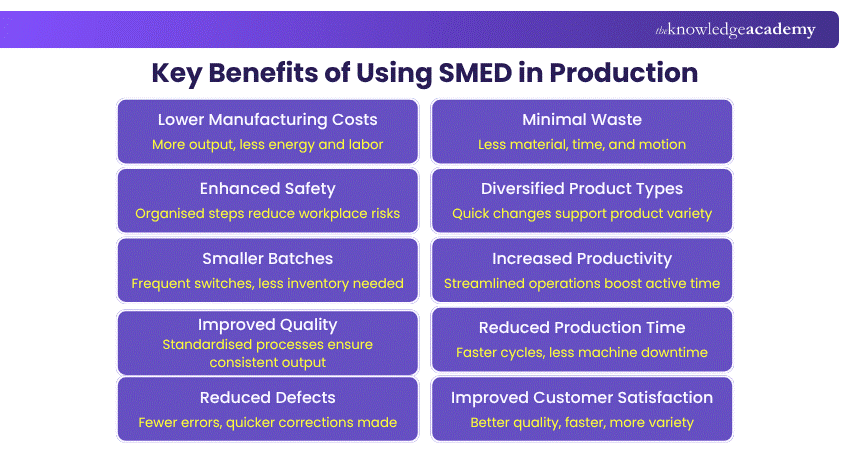
SMED has many benefits that can make a big difference in productivity. Let’s check what are the key benefits of adopting this 10-minute technique to your production:
1) Lower Manufacturing Costs
1) Machines spend more time manufacturing the products
2) Saves on labour and energy
3) Increases equipment efficiency
2) Enhanced Safety
1) Organised processes reduce rushing
2) Safer working environment with safer procedures
3) Reduced risks as they could be identified earlier
3) Smaller Batches
1) Quick changeovers promote frequent product switches
2) Less need for large-batch production
3) Reduces inventory and increases flexibility
4) Improved Quality
1) Standardised processes motivate quality and reduce errors
2) Results in consistent, high-quality products
3) Delivery is made on time and within the allotted budget
5) Reduced Defects
1) Clear, simple setups reduce mistakes
2) Less waste and minimal faulty items
3) Adjustments are made immediately to fix the defects, thereby promoting quality
6) Minimal Waste
1) Cuts down on wasted time, motion, and materials
2) Reduce material deterioration while managing the inventory
3) Creates a more efficient workflow
Acquire the skills to identify and eliminate waste in processes with our Lean Processes and Tools Training – Join now!
7) Diversified Product Types
1) Enables quicker product changes
2) Supports customised and seasonal offerings
3) No compromising on the product quality with any changes
8) Increased Productivity
1) Keeps workers and equipment active
2) Less idle machine times by streamlining the operational process
3) Eliminates bottlenecks that might slow down the production
9) Reduced Production Time
1) Speeds up the entire manufacturing cycle
2) Helps in meeting deadlines and customer demand
3) Simplified process leading to reduced machine downtime period
10) Improved Customer Satisfaction
1) Faster delivery with a wide range of variety to the customers
2) Higher quality, thereby gaining customer trust and loyalty
3) Increased Return on Investments (ROI)
Acquire skills to identify waste, improve changeovers, and streamline processes. Join our Lean Processes and Tools Training now!
SMED Examples
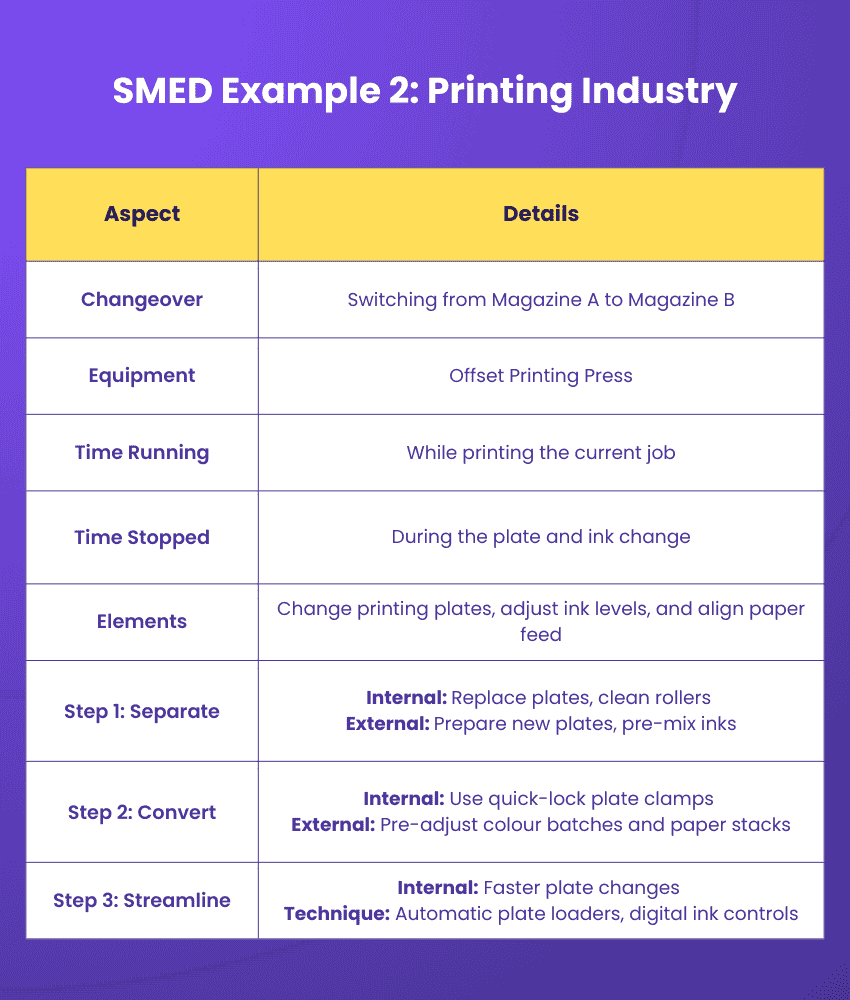
To help you see how the SMED process works in real situations, here are two examples from the hospital and printing industry settings.

Is SMED Lean or Six Sigma?
SMED is mostly a Lean Tool. It helps reduce waste by cutting setup and changeover time to less than ten minutes. This makes work faster, business improvement and smoother. At the same time, SMED can be used with Six Sigma. When added to Six Sigma, it not only saves time but also makes the process more accurate and effective.
What are the Three Stages of SMED?
The three stages of Single Minute Exchange of Die (SMED) are Separate, Convert, and Streamline. These steps help reduce changeover time in a clear and structured way.
1) Separate: Identify internal (machine stopped) and external (machine running) tasks. Aim to shift as many as possible to external to cut downtime.
2) Convert: Change internal tasks into external ones, like preparing tools or materials in advance, to reduce stoppage time.
3) Streamline: Simplify remaining tasks using quick fasteners, standard tools, and parallel work for maximum speed and business improvement.
Conclusion
In essence, understanding What is SMED is vital for businesses improvement, also saves time, cuts costs, and stays flexible. The SMED meaning goes beyond quicker changeovers; it reduces downtime, boosts efficiency, and helps meet customer demands. From cars to food, clothing, or electronics, applying SMED makes production smoother and, as a key part of Lean thinking, delivers powerful results across industries.
Apply Lean and SMED systems for faster changeovers, and better improvement. Join our Lean Training now!
Frequently Asked Questions
What is the Main Objective of SMED?

The main goal of SMED is to reduce the time it takes to change a machine from one product to another. This means less downtime, better efficiency, and more flexibility in production.
How Does SMED Reduce Waste?
SMED cuts waste by making equipment changeovers faster. This means machines spend less time idle, extra stock is reduced, energy use goes down, and fewer mistakes or scrap items are made during setup.

James Smith


Digital Marketing Manager and Trainer
James Smith is a digital marketing professional with over a decade of experience in SEO, content strategy, paid media and analytics. He has supported both SMEs and global brands in transforming their digital presence. James’s writing and training are rooted in results-driven tactics and the latest marketing trends.
View Detail

 If you wish to make any changes to your course, please


