


 Top Rated Course

We may not have the course you’re looking for. If you enquire or give us a call on 44 1344 203 999 and speak to our training experts, we may still be able to help with your training requirements.
15 Essential Sales Skills Every Sales Reps Needs
Charlotte Wilson 03 February 2026Sales Skills include communication, listening, storytelling and business acumen, helping sales teams engage customers, build trust and close deals effectively. They also enhance negotiation, relationship-building, and problem-solving abilities. Strong capabilities in these areas help teams drive growth and achieve consistent results.

Training Outcomes Within Your Budget!
We ensure quality, budget-alignment, and timely delivery by our expert instructors.
Table of Contents

Have you ever noticed how some sales people instantly win your trust, while others make you want to end the conversation? The difference is not the product but the Sales Skills they use to listen, connect, and communicate genuinely. In today’s competitive market, customers do not want to be persuaded; they want to feel understood and valued.
In this blog, you will discover the key Sales Skills that set top performers apart. Learn how communication, storytelling, negotiation, and adaptability drive success. Let’s explore what makes great Sales professionals stand out.
Table of contents
1) 15 Essential Sales Skills
a) Effective Communication Skills
b) Social Selling
c) Active Listening
d) Negotiation Skills
e) Time Management
f) Problem-solving Skills
g) Adaptability
h) Business Acumen
i) Prospecting
j) Strong Discovery
2) How to Improve Sales Skills?
3) Conclusion
15 Essential Sales Skills
Having the right Sales Skills is crucial for every Sales professional. From captivating prospects to closing deals with finesse, these skills are the foundation of a successful Sales career. So, whether you're looking to Prepare for Sales Interview or aiming to take your Sales journey to new heights, these must-have Sales Skills are essential. Let's have a look at some of them:
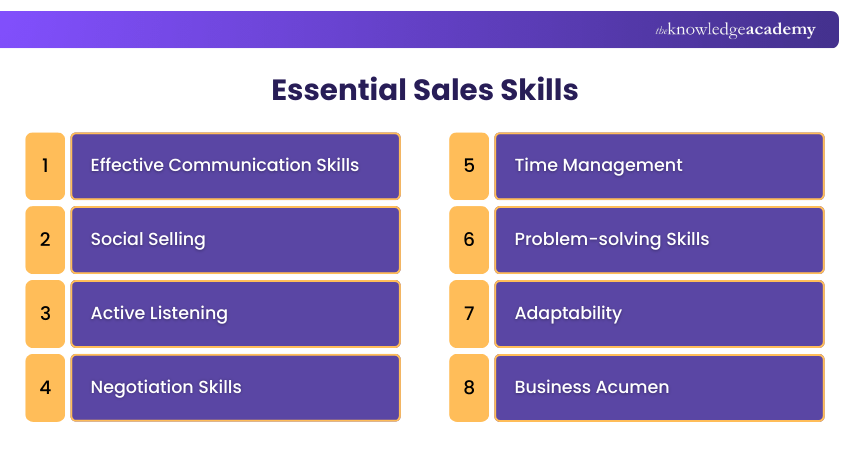
1) Effective Communication Skills
Strong communication skills are essential for building relationships with customers, setting clear expectations, and addressing their challenges. They help sales professionals connect with buyers, explain value confidently, and guide conversations towards effective solutions throughout the Sales Process.
Communication goes beyond speaking clearly; it also involves writing, presenting, listening, and building long-term connections. Sales professionals must communicate effectively across emails, meetings, and follow-ups while adapting their approach to move opportunities forward and strengthen customer trust.

2) Social Selling
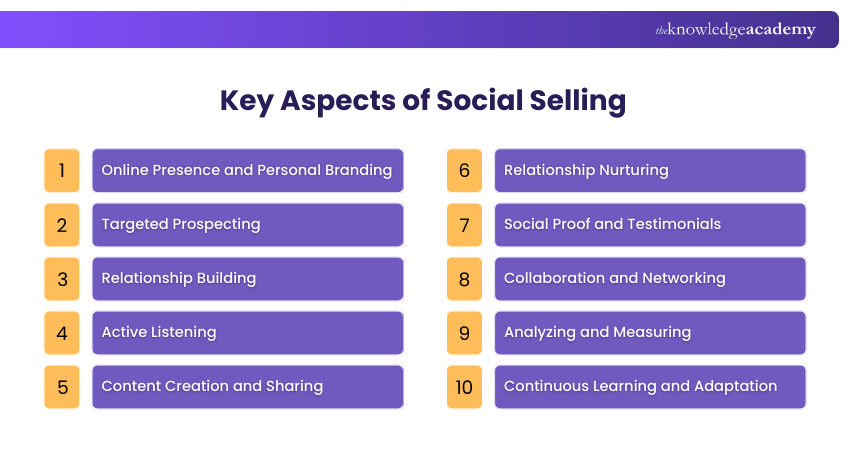
Social selling is a powerful approach where sales professionals use social media to connect with potential customers and build meaningful relationships. Instead of direct selling, it focuses on sharing value, engaging audiences, and guiding them through conversations that feel natural and trustworthy. When done effectively, it turns interactions into long-term opportunities.
In social selling, your profile acts as your professional identity, and your content shapes how others perceive your expertise. By engaging with the right audience, maintaining genuine conversations, and tracking engagement outcomes, sales professionals can build credibility, increase visibility, and drive consistent sales growth.
3) Active Listening
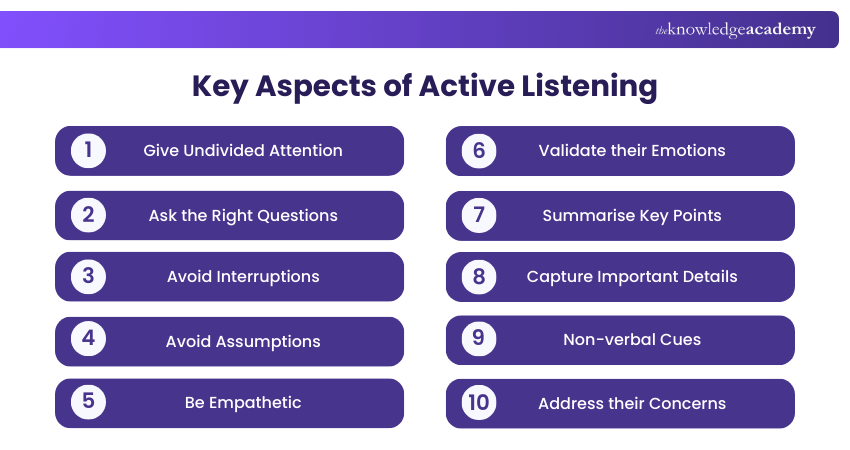
Active listening is a crucial sales skill that helps professionals truly understand customers instead of just responding to them. By listening carefully to their concerns and emotions, conversations become more meaningful, trust builds naturally, and it becomes easier to offer solutions that match their real needs.
Active listening also involves confirming what you heard, observing tone and body language, and acting thoughtfully on customer insights. When sales professionals apply what customers share and follow up effectively, they create stronger relationships, improve customer experiences, and increase the chances of successful outcomes.
4) Negotiation Skills
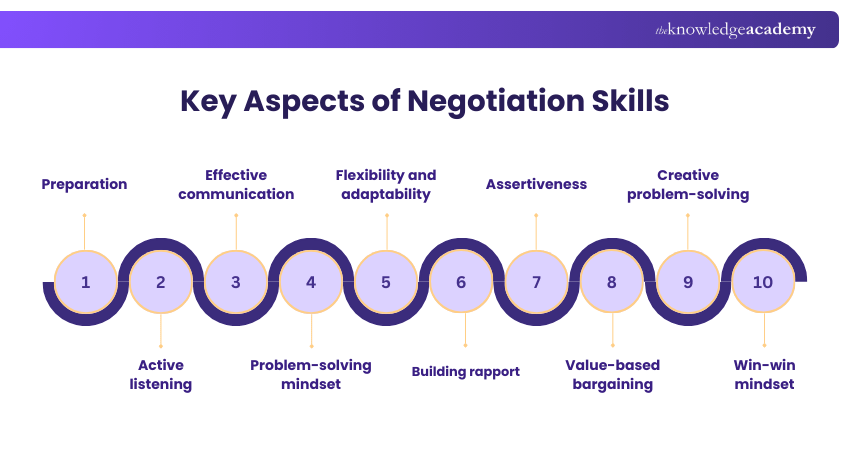
Negotiation is an essential sales skill because not every customer rejects an offer immediately. Strong negotiators focus on understanding customer needs and communicating value clearly, rather than simply pushing for a deal. When negotiation is handled well, conversations feel balanced, natural, and beneficial for both sides.
Effective negotiation is not about lowering prices but about discovering real needs and aligning solutions with customer goals. By explaining benefits clearly, responding calmly to concerns, and creating win-win outcomes, sales professionals can close deals while building long-term trust and value.
5) Time Management
Time Management is an essential sales skill that helps professionals use their time effectively and work with better focus. When tasks are planned and prioritised properly, productivity increases, stress reduces, and goals become easier to achieve. Good time management enables sales professionals to make the most of every day.
By prioritising important tasks, setting realistic time limits, and focusing on one task at a time, sales professionals can work more efficiently. Taking short breaks also helps maintain energy and mental clarity, leading to consistent performance and better sales outcomes.
Learn to close deals confidently with our Sales Negotiation Training – Join now!
6) Problem-solving Skills
Problem-solving skills are one of the essential sales tactics for professionals because challenges arise every day, from customer concerns to internal issues. Strong sales professionals do not just react to problems; they think ahead, understand situations deeply, and find practical solutions. This approach helps them support customers better and build lasting trust.
Effective problem-solving involves listening carefully, analysing situations with data, and thinking creatively to find workable solutions. By staying flexible, collaborating with teams, and adapting to new information, sales professionals can handle challenges confidently and deliver meaningful results.
7) Adaptability
Adaptability is an essential sales skill because the sales environment is constantly evolving. Whether it is new customers, changing market trends, or emerging tools, successful sales professionals adjust quickly and stay prepared for new situations. A learning mindset helps them remain relevant and achieve long-term success.
By viewing change as an opportunity to learn, adapting their approach to different customers, and staying updated with market trends and tools, sellers can perform more effectively. The ability to work confidently in new environments also strengthens their flexibility and overall impact in sales.
8) Business Acumen
Business acumen is a vital sales skill because sales is not just about selling products but understanding how businesses operate. When sellers understand a customer’s market, goals, and challenges, their conversations become more relevant and impactful. This helps them earn credibility and build stronger, value-driven relationships.
By analysing customer needs, explaining pricing and ROI clearly, and staying informed about industry trends and competition, sales professionals can make smarter recommendations. Linking solutions to the customer’s business strategy enables them to create meaningful value and drive long-term success.
9) Prospecting
Prospecting is a core sales activity focused on identifying potential customers and building their interest in your solutions. By targeting the right audience, sales professionals can use their time effectively, improve conversion rates, and maintain a strong, healthy sales pipeline. It forms the foundation of consistent and sustainable sales success.
Effective prospecting involves understanding audience needs, exploring multiple platforms for leads, and maintaining regular follow-ups. When sales professionals share messages that highlight real value and relevant solutions, they create stronger engagement and move prospects closer to meaningful conversations and opportunities.
Unlock the secret to sealing deals with our game-changing Closing Sales Training - Sign up today!
10) Strong Discovery
Strong discovery is a key sales skill that helps professionals understand customers before offering solutions. Instead of focusing on features, successful salespeople ask the right questions and listen carefully to uncover real needs and challenges. This makes conversations more meaningful and focused on what truly matters.
When discovery is done well, it builds trust, reveals genuine pain points, and creates urgency for change. By understanding the customer’s situation deeply before presenting solutions, sales professionals can offer more relevant recommendations and increase the chances of successful outcomes.
11) Storytelling
Storytelling is a powerful element of Sales Skills that helps professionals connect with customers on an emotional level. Instead of presenting only facts and features, salespeople use stories to explain value, highlight real problems, and show how solutions create meaningful results, making messages easier to understand and remember.
By sharing relatable examples, customer success stories, and real-life scenarios, sales professionals can influence decisions more effectively. Strong storytelling turns complex ideas into clear narratives, helping customers recognise the impact of a solution and feel confident in their choices.
12) Follow-through
Follow-through is an essential part of Sales Skills that demonstrates reliability and professionalism. When sales professionals consistently follow up and deliver on their commitments, customers feel valued and confident in the relationship. This builds trust and keeps conversations moving towards meaningful outcomes.
Effective follow-through involves timely communication, consistent updates, and genuine attention to customer needs. By staying engaged beyond the initial interaction, sales professionals strengthen relationships, improve customer satisfaction, and enhance their Sales Skills to achieve long-term success.
13) Curiosity
Curiosity is a powerful sales skill that helps professionals understand customers beyond surface-level needs. Curious salespeople ask thoughtful questions, explore deeper challenges, and seek to learn more about the customer’s business and goals. This mindset leads to more meaningful conversations and better solutions.
By staying curious, sales professionals can uncover hidden opportunities, adapt their approach, and offer more relevant value. Curiosity also encourages continuous learning about markets, customers, and trends, helping salespeople build stronger relationships and deliver smarter, more impactful outcomes.
14) Technological Savviness
Technological savviness is an important aspect of Sales Skills that helps professionals use digital tools effectively to improve performance. By understanding CRM systems, automation tools, analytics, and communication platforms, salespeople can work smarter, manage leads efficiently, and respond to customers faster.
Being comfortable with technology also enables sales professionals to adapt to new tools and market trends. When they use technology strategically, they can personalise interactions, track results accurately, and strengthen their Sales Skills to make data-driven decisions that enhance productivity and drive better sales outcomes.
15) Collaboration
Collaboration is a vital sales skill that helps professionals work effectively with teammates and other departments. When sales teams collaborate with marketing, customer support, and product teams, they gain deeper insights and deliver more relevant solutions to customers. This teamwork improves efficiency and strengthens overall sales performance.
Strong collaboration also encourages knowledge sharing, faster problem-solving, and consistent communication across teams. By working together towards shared goals, sales professionals can create better customer experiences, close deals more effectively, and build long-term value for both the organisation and customers.
Learn how to build a loyal sales relationship with the customers with this Relationship Sales Training – Start now!
How to Improve Sales Skills?
Salespeople need to continuously refine their Sales Skills to remain relevant in the industry and stay updated with the latest trends. More importantly, acquiring Sales Skills can effectively increase their revenue. Sales Performance Management helps identify skill gaps and tracks growth, supporting salespeople in their career development. Here is a step-by-step process that you can follow to improve these skills:
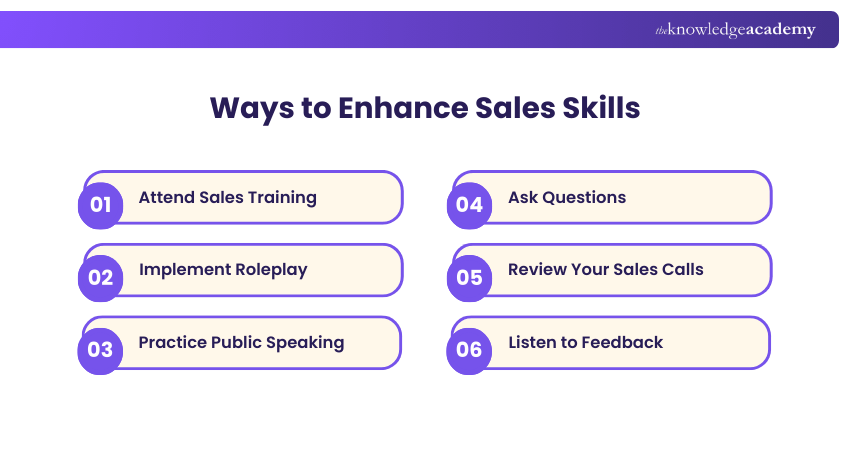
1) Attend Sales Training
Attending sales training helps professionals strengthen their skills through structured learning and real-world practice. A lifelong learning mindset enables salespeople to stay competitive, improve performance, and adapt to changing market demands more effectively.
Courses and certifications enhance expertise in sales techniques, presentations, coaching, and social selling. By building strategic thinking and communication skills, sales professionals can refine their approach, achieve better results, and grow confidently in the sales industry.
2) Implement Roleplay
Implementing roleplay helps sales professionals prepare for real conversations, questions, and objections they may face during calls. By practising conversational flow and asking questions naturally, they can handle discussions more confidently and create smoother, more engaging interactions with prospects.
Regular roleplay sessions within sales teams also strengthen practical skills and confidence. By practising challenging scenarios, handling objections, and managing difficult conversations, sales professionals can improve their response strategies and perform more effectively in real sales situations.
3) Practice Public Speaking
Practising public speaking helps sales professionals overcome fear, build confidence, and communicate more effectively in a variety of situations. With regular practice, they become more comfortable expressing ideas, managing conversations, and engaging audiences during sales interactions.
Strong public speaking skills also enable sales professionals to deliver presentations, product demos, and persuasive messages with clarity and impact. Participating in interactive events and activities further boosts confidence, reduces anxiety, and strengthens their ability to connect with prospects and decision-makers.
4) Ask Questions
A landmark trait of successful people is their ability to ask questions. Salespeople can confide in their manager or colleagues if they hit an unexpected roadblock during their Sales call. This roadblock is usually an unexpected question or an objection from the prospect. Asking the questions at the right time helps mitigate the problems if they arise again.
Moreover, after learning to ask more questions, the next step is to ask the right questions to the prospective buyers. Salespeople can learn more about their prospects’ discomforts and figure out what their business goals are. After finding out these key points, the Salespeople can proceed to understand how their product can resolve the prospects’ problems.
5) Review Your Sales Calls
Reviewing sales calls helps professionals identify what worked well and what needs improvement. By analysing conversations after each call, salespeople can refine their approach, strengthen their communication skills, and improve overall performance.
Team-based call reviews, such as recorded call discussions, also encourage feedback and Active Listening. By evaluating questions, authenticity, and product knowledge, sales professionals can learn practical techniques and continuously enhance the quality of their sales conversations.
Understand the techniques for building rapport with our Building Rapport With Customers Course – Join now!
6) Listen to Feedback
Actively listening to feedback is part and parcel of review sessions. The participants must be open-minded to accept any feedback they receive from their managers and colleagues. While it can be difficult to critique one’s Sales performance, feedback is vital for enhancing Sales Skills in the future.
Participants will need to pay attention to the critique they receive on the questions they are asking, the conversational flow that they maintain and the rapport they build with their prospective buyers. These are considered crucial Sales Skills that Sales representatives need to master to achieve success in the Sales industry.
7) Stay Connected to the Customer
It significantly helps to build a healthy rapport with your prospective buyers. However, this takes time and can be fostered gradually over the Sales call. It requires Emotional Intelligence and stability from the Salesperson’s side.
These two features of a Salesperson’s personality help them make the conversation interesting because it ropes the prospect into a mode of interest faster so they can decide to buy in on the Sales call.
8) Prepare for Objection Handling
It is imperative for the Salesperson to receive at least a few objections from the prospects’ side regarding their product, which is why it is essential to be well-prepared before the call.
A great way is to learn about the prospect’s business persona and invest time to know their pain points. Paying care and due attention to their prospect’s pain points will boost the Sales representative’s Sales Skills and, consequently, their performance.
9) Play With Your Closing Techniques
Experimenting with different closing techniques helps sales professionals refine their approach and improve success rates. Since every customer is different, testing multiple methods allows salespeople to understand what works best in various situations and make their closing conversations more effective.
Popular techniques include summarising key benefits, asking thoughtful questions to uncover concerns, and using soft closes to gauge interest naturally. By adapting and practising these methods, sales professionals can create more persuasive endings to conversations and increase the chances of successful deals.
10) Track Your Progress
Tracking progress helps sales representatives understand their performance and stay focused on their goals. By setting clear targets and recording results, they can identify strengths, spot gaps, and improve one area at a time with a structured approach.
Monitoring key metrics, such as close rates and the effectiveness of closing techniques, also supports continuous improvement. When sales professionals regularly analyse their progress, they can refine strategies, enhance performance, and achieve more consistent sales results.
Conclusion
Sales Skills are the backbone of a successful sales career. These skills help you not only limit yourself to selling products but also build long-term customer relationships. You see real growth when you constantly learn new skills, understand customer needs, and provide value to them. Sales is not just a game of targets; it is a journey of trust, connection, and smart work.
Learn to use a sales framework structure with our Sales Bootcamp Training – Join now!
Frequently Asked Questions
What are Soft Skills and Hard Skills in Sales?

Sales Skills develop through continuous learning, regular practice, and self-evaluation. By attending training, analysing performance, and improving communication, negotiation, and adaptability, sales professionals can refine their approach. Consistent practice and feedback help them achieve stronger results and long-term success.
What Personality Traits do Strong Salespeople Have?
Strong salespeople are friendly, confident and patient. They have the quality of being good listeners, and they try to understand the customer's problem. They have high motivation and do not give up even after every "no". He remains positive and is always in the mood to find a solution.
What are the Other Resources and Offers Provided by The Knowledge Academy?
The Knowledge Academy takes global learning to new heights, offering over 3,000+ online courses across 490+ locations in 190+ countries. This expansive reach ensures accessibility and convenience for learners worldwide.
Alongside our diverse Online Course Catalogue, encompassing 19 major categories, we go the extra mile by providing a plethora of free educational Online Resources like Blogs, eBooks, Interview Questions and Videos. Tailoring learning experiences further, professionals can unlock greater value through a wide range of special discounts, seasonal deals, and Exclusive Offers.
What is The Knowledge Pass, and How Does it Work?
The Knowledge Academy’s Knowledge Pass, a prepaid voucher, adds another layer of flexibility, allowing course bookings over a 12-month period. Join us on a journey where education knows no bounds.
What are the Related Courses and Blogs Provided by The Knowledge Academy?
The Knowledge Academy offers various Sales Training, including Sales Negotiation Training, Sales Analytics Training, and Value Based Selling Training. These courses cater to different skill levels, providing comprehensive insights into Sales Analytics.
Our Business Skills Blogs cover a range of topics related to Sales Skills, offering valuable resources, best practices, and industry insights. Whether you are a beginner or looking to advance your Sales Skills, The Knowledge Academy's diverse courses and informative blogs have got you covered.

Charlotte Wilson


Soft Skills and Business Training Manager
Charlotte Wilson is an expert in soft skills development, with over 14 years of experience helping individuals and teams improve communication, productivity and emotional intelligence in the workplace. Her training content is focused on enhancing interpersonal effectiveness and fostering positive, collaborative environments across all levels of an organisation.
View Detail
Upcoming Digital Marketing Resources Batches & Dates
Date
 Online Sales Training
Online Sales Training
Fri 17th Jul 2026
Online Sales Training
Fri 25th Sep 2026

 If you wish to make any changes to your course, please


