


 Top Rated Course

We may not have the course you’re looking for. If you enquire or give us a call on 44 1344 203 999 and speak to our training experts, we may still be able to help with your training requirements.
How to Become a Cyber Security Analyst: Step-by-Step Guide
John Davies 13 July 2026To become a Cyber Security Analyst, build technical skills, earn relevant certifications, gain experience, and stay current with evolving cyber threats. In this detailed guide, we explore how to enter the field, build a standout portfolio, choose the right specialisation, and succeed in a competitive cybersecurity career.
Home
 Resources
IT Security & Data Protection
How to Become a Cyber Security Analyst: Step-by-Step Guide
Resources
IT Security & Data Protection
How to Become a Cyber Security Analyst: Step-by-Step Guide
Resources
IT Security & Data Protection
How to Become a Cyber Security Analyst: Step-by-Step Guide

Training Outcomes Within Your Budget!
We ensure quality, budget-alignment, and timely delivery by our expert instructors.
Table of Contents
Cyber security threats are becoming dynamic, and on the same note, the need for skilled professionals that are capable of fighting them is increasing. If you're wondering How to Become a Cyber Security Analyst, this blog will guide you through every essential step of the journey.
In this blog, you will learn what a Cyber Security Analyst does, the skills you would have to possess, why the job is important, and How to Become a Cyber Security Analyst in the modern-day computer world. So, we will explore the journey to a successful and high-demand tech career.
Table of Contents
1) How to Become a Cyber Security Analyst?
2) What is a Cybersecurity Analyst?
3) Cyber Security Analyst Skills
4) Why is Cybersecurity Important?
5) Conclusion
How to become a Cyber Security Analyst?
Becoming a Cyber Security Analyst requires a combination of training, working experience, and continuous education. There are seven steps to starting or even expanding your career in this always changing and very dynamic field of digital defence.
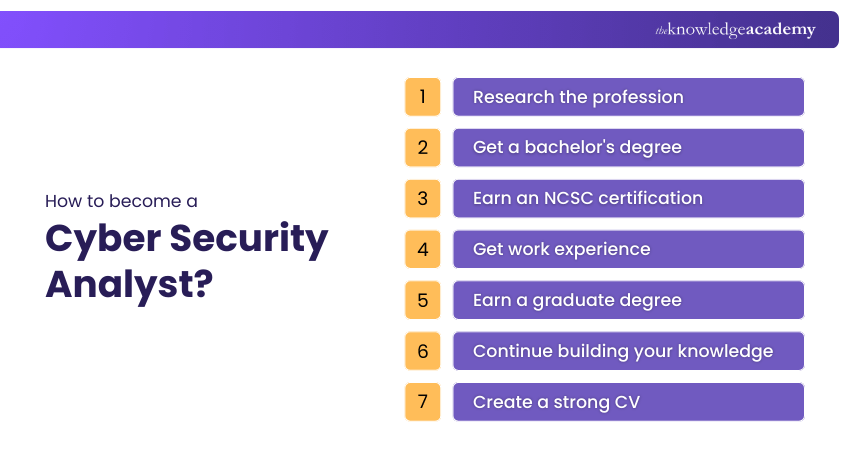
1) Research the profession
Start by understanding the role’s duties, career prospects, salary expectations, and required skills. This allows you to find out whether the field is appropriate for you and shapes your specialisation moves by pointing out the areas of major interests and personal career objectives.

2) Get a bachelor's degree
Pursue a related course such as information technology, cyber security, or computer science. This introductory degree will give you general skills and knowledge on which you can build future employment in many entry-level positions in cyber security analysis.
3) Earn an NCSC certification
Its certifications such as NCSC, or CEH /CompTIA Security+ validate that you know what you are doing and make you more hireable. Select the level of certification corresponding to your experience and career ambitions, particularly, in case you plan to operate in the UK cyber security market.
4) Get work experience
Its certifications such as NCSC, or CEH /CompTIA Security+ validate that you know what you are doing and increase employability. Entry-level roles in IT support, system monitoring, or incident response allow you to encounter real-life scenarios, including investigating what is a cyber security attack and how to respond effectively.
5) Earn a graduate degree
Your qualifications can be enhanced with a master's degree in cyber-related courses such as information assurance or computer engineering. It makes you eligible for more senior positions and has a higher probability of being offered more money and long-term career growth.
6) Continue building your knowledge
The nature of cyber threats is that they are continuously changing and therefore it is important to keep them up to date. Experience seminars, read security blogs, and attend short courses to have updated knowledge on the newest tools, tendencies, and methods to detect and prevent cyber threats.
7) Create a strong CV
Customise your resume for each job depending on what the job advert requires of you. It also emphasises the features of certification and practice along with technical skills, and it indicates your preparation and fitness to fill the job as a Cyber Security Analyst.
Become a Certified Cyber Security Professional (CCS-PRO) and gain the skills to defend against modern digital threats—start your journey today.
What is a Cyber Security Analyst?
A Cyber Security Analyst undertakes protective actions to safeguard the IT infrastructure of the organisation such as network, software, hardware, and different types of information systems against cyber threats and untrustworthy access. Their work is critical to maintaining operational stability and data integrity.
They assist in the protection of these systems against phishing attacks, malware infections, denial-of-service attacks, and SQL injections. Such threats can attack weak points of various information systems, and sensitive data and business continuity are at high risk.
Cyber Security Analyst Skills
As a cyber security analyst, you must prove both your hard/customary and soft skills in order to succeed. Employers may also be able to see that you are very much ready to fill this position by highlighting these competencies on your CV.
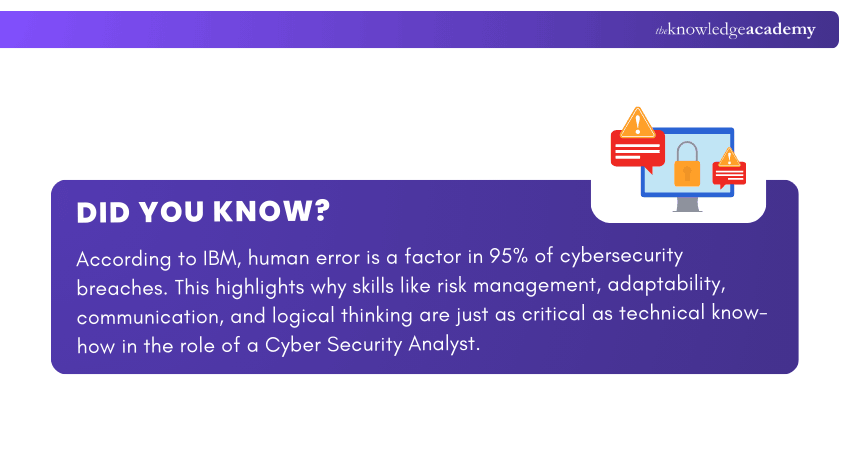
1) Risk identification and management: Detection and control of cyber threats to keep the IT environment in a secure and resilient state.
2) Data management and analysis: Data management and analysis helps in keeping the sensitive company data organised, secured and safe.
3) Cloud implementation and management: the knowledge of cloud infrastructure allows us to migrate data securely and make a choice in favor of providers.
4) Logical thinking and troubleshooting: These are also essential as it is beneficial to recognise and eliminate vulnerabilities in the system in an efficient manner.
5) Adaptability: This enables one to be able to stay abreast of changing security tools and approaches.
6) Communicating skills: This helps in communication with technical problems within a team and productive communication with others in promoting better use of security.
Learn to uncover suspicious patterns and protect organisations from financial crimes with expert-led Fraud Analytics Course.
Why Is Cybersecurity Important?
Cybersecurity is a significant aspect in the protection of sensitive data that includes personal, intellectual, and government infrastructure against emerging digital threats. It keeps the systems safe against an attack that may result in identity theft, data misappropriation, or loss of services.
A core part of cybersecurity is understanding what is information security, where there is the need to protect information against unauthorised access or modification. Since cybercriminals have become more progressive, information security is a fundamental practice that should embrace individuals and organisations to ensure privacy and stability in their operations.
Conclusion
In conclusion, there is a need to understand How to Become a Cyber Security Analyst, which should be the right education, certification, and experience. As the level of cyber threats in the world continues to increase, the development of robust technical and soft skills may deliver a successful and effective career in the field of digital security.
Start your Digital Forensics Course and learn to investigate cyber incidents with real-world tools and techniques.
Frequently Asked Questions
How Do I Become a Cybersecurity Analyst with No Experience?

To become a Cybersecurity Analyst with no experience, start by learning cybersecurity fundamentals, practising in virtual labs, and earning certifications like CompTIA Security+ or CEH. Build IT and coding skills and stay updated on evolving threats to stand out to employers.
How to Get into Cybersecurity
Start by taking a cybersecurity course to learn the basics, then build technical skills like penetration testing and system administration. Learn programming fundamentals, earn certifications like CISSP or Security+, and stay updated on new technologies and attack prevention strategies.

John Davies


Cyber Security Governance & Assurance Specialist
John Davies is a cybersecurity expert specialising in governance, risk management, and compliance. With over 15 years in the field, he has led enterprise-wide security programmes across finance, healthcare and public sector organisations. His content provides practical guidance on building secure environments, managing risk and aligning with regulatory frameworks.


 If you wish to make any changes to your course, please


