


 Top Rated Course

We may not have the course you’re looking for. If you enquire or give us a call on +61 1-800-150644 and speak to our training experts, we may still be able to help with your training requirements.
What is Carbon Accounting : A Complete Guide
The Knowledge Academy 25 April 2026Carbon Accounting is the process of measuring and tracking the amount of Carbon Dioxide (CO₂) and other Greenhouse Gases a business produces. It is also known as Greenhouse Gas (GHG) Accounting which identifies emission sources. This type of Accounting instructs your business in 2026 by calculating their impact and reporting the results.

Training Outcomes Within Your Budget!
We ensure quality, budget-alignment, and timely delivery by our expert instructors.
Table of Contents

Sustainability isn’t just about looking good but doing good and smart. That’s where Carbon Accounting comes in. As the climate crisis continues and regulations tighten, businesses must move beyond vague pledges and start measuring what truly matters: their emissions.
Whether you’re a seasoned sustainability lead or just starting your journey, this information is packed with practical insight to help your business thrive in a greener future. This blog is your 2026 guide to understand Carbon Accounting. The important questions are what it is, how it works, and why it’s crucial for ESG reporting, growth, and global impact.
Table of Contents
1) What is Carbon Accounting?
2) Why is Carbon Accounting Important?
3) Carbon Accounting Methods
4) Carbon Accounting Scope 1, 2, and 3 Explained
5) Carbon Accounting Software
6) How Carbon Accounting Works?
7) Challenges in Carbon Accounting
8) Carbon Accounting and the Paris Climate Agreement
9) Conclusion
What is Carbon Accounting?
Carbon Accounting helps to measure, track, and report the amount of Carbon Dioxide and other Greenhouse Gases. Gases include methane and nitrous oxide which business discharge through its operations. In 2026, Carbon Accounting has become a key part of business strategy.
This type of Accounting gives businesses a clear picture of their environmental impact. It involves identifying all the activities that produce emissions. It calculates how much carbon those activities generate.
Emission reporting collects and organises that data in a way that can be reported to set reduction goals.

Why is Carbon Accounting Important?
In 2026, Carbon Accounting is non-negotiable for businesses to run smoothly along with sustainability. Here is some key importance of the same:
ESG Reporting and Compliance
Environmental, Social, and Governance (ESG) metrics in 2026 is the heart of the company evaluation. Mostly they are done by investors, regulators, and even customers.
1) Carbon Accounting provides the data backbone for ESG reporting
2) Without accurate emissions data, businesses risk falling short of ESG expectations
3) They can face penalties or lose investor confidence without proper Accounting
4) Corporate Sustainability Reporting Directive (CSRD) in the EU demands verification
5) SEC climate disclosures in the US demand verification of carbon emissions data
Business Sustainability and Growth
Businesses that lead in carbon transparency often gain a competitive edge. They promote sustainability and growth in the organisation through the following steps:
1) Carbon footprint helps you spot inefficiencies, reduce waste, and unlock cost savings
2) Promotes strong brand loyalty to better access to green funding
3) Carbon Accounting can drive real growth for the companies
4) Customers increasingly choose brands aligned with climate values.
Commitment through transparent carbon tracking and reduction goals not only protects the planet but makes your business future proof.
Safer Workplaces Start with You; Explore Our Safety Investigation Training now!
Carbon Accounting Methods
There are two main approaches businesses can use to track their emissions:
1) Spend-based Method: This method estimates emissions based on the amount of money spent on goods or services. It’s easier to implement, but the accuracy, as it uses industry averages rather than real-world data.
2) Activity-based Method: This Accounting method uses actual data like energy usage or litres of fuel burned to calculate emissions. It requires more detailed information and provides more accurate results.
Note: Many businesses use a combination of both, starting with spend-based estimates and refining their data over time as systems mature.
Carbon Accounting Scope 1, 2, and 3 Explained
It is important for Carbon Accounting to be standardised and comparable. These emissions are broken down into three "scopes": Scope 1, 2, and 3.
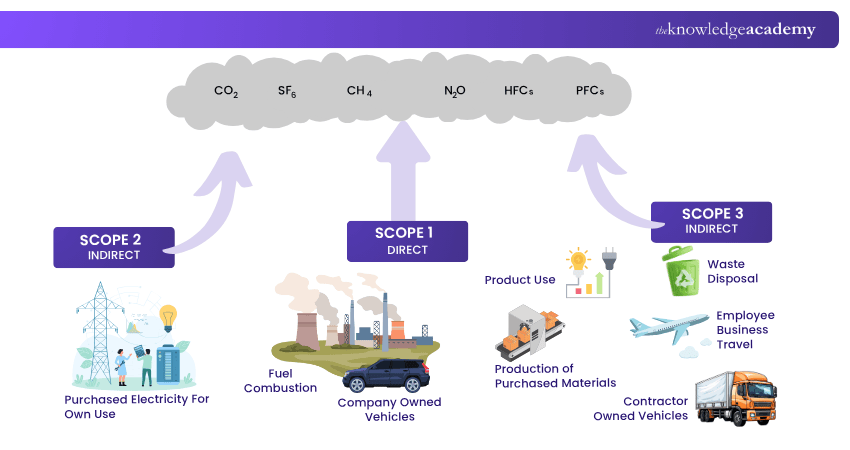
Understanding these is crucial for the accuracy of reporting. Let's have a look:
Scope 1: Direct emissions from sources owned or controlled by the company. This includes emissions from company vehicles or on-site fuel combustion.
For example: Emissions from on-site manufacturing or production and gas boilers or furnaces used in building.
Scope 2: Indirect emissions from the generation of purchased electricity, steam, heating, and cooling used by the company.
For example: Heating purchased from a third-party utility and cooling systems powered by an external provider.
Scope 3: All other indirect emissions that occur in a company’s value chain. This includes emissions from activities such as employee commuting, business travel, waste disposal, supplier operations, and product use.
For example: Business travel and, employee commuting, and product use by consumers.
Importance of Scope 3 Emissions
Scope 3 is the broadest and most challenging category to measure, but it also tends to 70% portion of a company’s total emissions.
The important part is they’re the hardest to track. Why? Because they lie outside direct control, often buried deep in complex supply chains.
In 2026, companies are expected to take responsibility for these emissions. That means engaging suppliers, improving data collection, and setting reduction targets that extend beyond their own operations. Though challenging, tackling Scope 3 is essential for genuine climate leadership.
Take Control of Workplace Safety. Start Your Best Practice In Occupational Health And Safety Regulation Training - Join Now!
Carbon Accounting Software
Manual spreadsheets just won’t cut it anymore with the rising complexity of carbon data. Thanks to Carbon Accounting software business has come a long way. Modern platforms use automation, AI, and cloud-based integrations to simplify and streamline the process. Key features include:
1) Emissions tracking by category and source
2) Automated compliance checks and audit trails
3) Integration with Accounting and procurement systems
4) Real-time dashboards and reports
Some leading tools in 2026 include Sweep, Watershed, Persefoni, and Net0; each offering scalable solutions for businesses of all sizes. Using software not only saves time but ensure accuracy and readiness for third-party audits or government reporting.
How Carbon Accounting Works?
Understanding how Carbon Accounting helps to make it part of your business strategy. If you compare it with financial Accounting, it’s all about tracking, calculating, and reporting. One difference is instead of money; you’re dealing with emissions data here.
This Accounting involves a few essential steps:
Identifying Emissions Sources
The first step is figuring out where your emissions are coming from, both the direct and indirect one. This includes reviewing your operations, energy use, supply chain, transport, waste, and even product life cycles.
You’ll be looking across Scope 1 which is direct emissions, Scope 2, indirect energy use, and Scope 3, value chain emissions. This step is sometimes called emissions mapping, like building a complete picture of your carbon footprint.
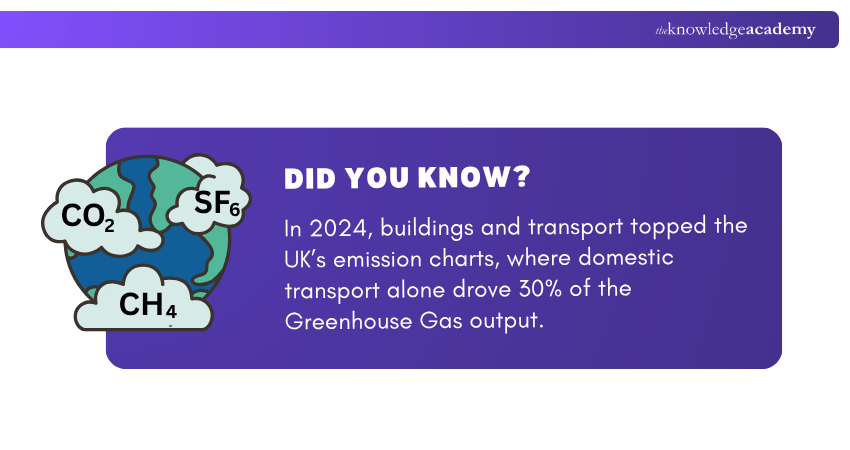
Some of the Common Sources Include:
1) On-site fuel combustion, such as boilers, generators
2) Electricity usage in buildings or factories
3) Business travel like flights, company vehicles
4) Materials and goods purchased from suppliers
5) Product distribution and delivery
6) Waste generation and disposal
it is important for you to know the source to begin collecting the data needed for accurate measurement.
Using Automation for Data Management
In 2026, businesses are leaning heavily on automation to make Carbon Accounting more efficient and scalable.
Modern Carbon Accounting automatic platforms can:
1) Integrate with your existing systems like ERP, Human Resources (HR) and finance
2) Automatic capture of real-time data from multiple sources
3) Apply correct emission factors based on location and data activity
4) Generate instant reports and dashboards for managing
5) Stay updated with the latest compliance standards
This takes a huge load off sustainability teams and ensures consistency. The Emissions data is not just a CSR checkbox. But a legal and financial concern.
Know the Rules, Lead with Confidence. Join our Safeguarding Officer Training Today!
Challenges in Carbon Accounting
Carbon Accounting offers businesses powerful insights into their environmental impact, whereas implementing it is far from straightforward. Many organisations face real and complex challenges when trying to measure and report their emissions accurately. In today’s fast-moving regulatory and sustainability landscape, there are various challenges
Let’s take a closer look at the key issues businesses face when adopting Carbon Accounting practices:
Incomplete or Inaccurate Data
One of the biggest obstacles in Carbon Accounting is data quality and availability. Organisations simply don’t have access to the detailed activity data that are needed to calculate emissions properly. It is a hurdle particularly when it comes to Scope 3 emissions.
Common issues are Missing utility records, outdated or inconsistent recordkeeping. Gaps in supplier-provided emissions data and poor coordination between departments is also an issue.
Complex Supply Chains
Scope 3 emissions face complex issues as include everything from raw material production to product use and disposal. Businesses must rely on third-party suppliers, distributors, and partners. It is to provide accurate emissions information.
This process involves reaching out to multiple vendors across different regions. Standardising data formats across a fragmented supply chain is also an issue.
Evolving Standards and Regulations
Carbon Accounting is governed by frameworks like the Greenhouse Gas Protocol, ISO Standards, and new regional legislation. Whereas these guidelines are constantly evolving in 2026 as businesses are navigating new climate disclosure rules.
One of them are The EU’s CSRD and Corporate Social Responsibility (CSR). Keeping up with these regulations can be overwhelming for the companies.
Limited Resources and Expertise
Carbon Accounting requires a blend of technical knowledge, sustainability expertise, analysis skills and data. Many organisations don’t have the internal resources or trained staff to manage the process effectively.
For smaller companies or those just beginning their carbon journey, this means relying on external consultants. They lack the capacity to analyse results and implement changes as it can be costly.
Standardising and Verifying Emissions Data
Different countries, suppliers, and industries calculate and report emissions differently. This difference makes it difficult to standardise data for consolidated reporting or comparison across operations.
Additionally, with more regulatory scrutiny, many businesses are now expected to have their carbon data externally verified. This process adds complexity, as reports must meet strict assurance standards.
Carbon Accounting and the Paris Climate Agreement
Carbon Accounting is not just about internal reporting but how businesses contribute to global climate goals.
Here Comes the Paris Agreement. But What is it?
The Paris Climate Agreement aims to limit global warming to well below 2°C. To support this goal, both governments and businesses must track and reduce their emissions. Carbon Accounting provides companies with the tools to measure their environmental impact and align with science-based targets.
By setting goals such as achieving net zero emissions by 2050, businesses position themselves as active contributors to climate solutions. Transparent carbon accounting demonstrates to regulators, investors, and the public that a company is serious about its role in meeting the Paris goals.
The Paris Agreement has created a global framework, but the real work happens at the ground level. The guiding principle is: one business, one footprint at a time. Accurate Carbon Accounting ensures that the commitments businesses make are more than just marketing. They’re backed by data, strategy, and action.
How Carbon Accounting Supports the Paris Goals:
1) Measure and disclose their emissions clearly and consistently
2) Set science-based targets aligned with climate goals
3) Contribute to national emissions reporting frameworks
4) Support global transparency and accountability
Conclusion
As we move deeper into a climate-conscious decade, businesses must change or chase it. Carbon Accounting puts you in the driver’s seat. It’s how you track impact, prove progress, and show stakeholders you mean business. By embracing Carbon Accounting now, you’re not just staying ahead of regulations but building trust, saving costs, and shaping a future. The numbers matter, but the action matters more. So, let’s turn carbon data into carbon progress!
A Better You Is One Click Away. Explore Our Best Practice in Occupational Health and Safety Regulation Training Now!
Frequently Asked Questions
What are the 5 Principles of Carbon Accounting?

The five principles of Carbon Accounting are:
1) Relevance to focus on important emissions
2) Completeness that includes all relevant sources
3) Consistency use the same methods over time
4) Transparency clearly explains your approach
5) Accuracy aims for reliable, correct data
What is the Threshold for CO₂ Reporting?
The threshold for CO₂ reporting depends on the country and regulation. In many places, businesses that add 25,000 metric tons or more of CO₂ per year must report their emissions. However, some rules may apply at lower levels, especially for listed companies or those in high-emission industries.
What are the Other Resources and Offers Provided by The Knowledge Academy?
The Knowledge Academy takes global learning to new heights, offering over 3,000+ online courses across 490+ locations in 190+ countries. This expansive reach ensures accessibility and convenience for learners worldwide.
Alongside our diverse Online Course Catalogue, encompassing 17 major categories, we go the extra mile by providing a plethora of free educational Online Resources like Blogs, eBooks, Interview Questions and Videos. Tailoring learning experiences further, professionals can unlock greater value through a wide range of special discounts, seasonal deals, and Exclusive Offers.
What is The Knowledge Pass, and How Does it Work?
The Knowledge Academy’s Knowledge Pass, a prepaid voucher, adds another layer of flexibility, allowing course bookings over a 12-month period. Join us on a journey where education knows no bounds.
What are the Related Courses and Blogs Provided by The Knowledge Academy?
The Knowledge Academy offers various Health & Safety in the Workplace, including the Working at Height Training, Food Safety Training and the Promoting Happiness and Positive Behaviour at Workplace. These courses cater to different skill levels, providing comprehensive insights into Health and Safety Manager.
Our Health & Safety Blogs cover a range of topics related to Carbon Accounting, offering valuable resources, best practices, and industry insights. Whether you are a beginner or looking to advance your Health and Safety knowledge, The Knowledge Academy's diverse courses and informative blogs have got you covered.

The Knowledge Academy


Global Training Provider
The Knowledge Academy is a world-leading provider of professional training courses, offering globally recognised qualifications across a wide range of subjects. With expert trainers, up-to-date course material, and flexible learning options, we aim to empower professionals and organisations to achieve their goals through continuous learning.

Upcoming Health & Safety Resources Batches & Dates
Date
 HIPAA Training Course
HIPAA Training Course
Fri 7th Aug 2026
HIPAA Training Course
Fri 2nd Oct 2026

 If you wish to make any changes to your course, please


