


We may not have the course you’re looking for. If you enquire or give us a call on 01344203999 and speak to our training experts, we may still be able to help with your training requirements.
Top 10 Money Management Tips for Better Financial Planning
ByThe Knowledge AcademyLast updated on: 26 October 2026
Managing your money effectively can help you balance everyday expenses, prepare for unexpected costs and work towards financial goals. This blog explores 10 practical money management tips, covering budgeting, saving, debt management, and financial planning to help you make more informed financial decisions.

At a Glance
1. Financial Priorities: Identify your most important financial commitments before setting longer-term goals.2. Spending Control: Use a realistic budget to understand where your income goes.3. Financial Flexibility: Review your plans when your income, expenses or circumstances change.4. Savings and Support: Build savings gradually and check which financial incentives may be available.5. Payment Management: Understand your debt obligations and organise bills to reduce avoidable charges.
Your salary arrived on Friday. Where did it go by Monday?
Friday feels great. Your salary arrives, and suddenly, everything seems manageable. Then the rent goes out, a few subscriptions renew, the grocery bill is higher than expected and an annual payment catches you off guard.
By Monday, you're already wondering where your money went.
Sound familiar?
Managing money isn't always about earning more or giving up everything you enjoy. Sometimes, it's about understanding your financial commitments and making more deliberate choices.
That's where practical money management tips can help. From planning everyday expenses to preparing for unexpected costs, small changes can make your finances easier to organise. Let's explore ten ways to manage your money with greater confidence.
Top 10 Money Management Tips
Effective money management involves understanding your income, planning expenditure and making decisions that reflect your circumstances. The following ten tips provide practical ways to manage day-to-day finances while preparing for future needs.
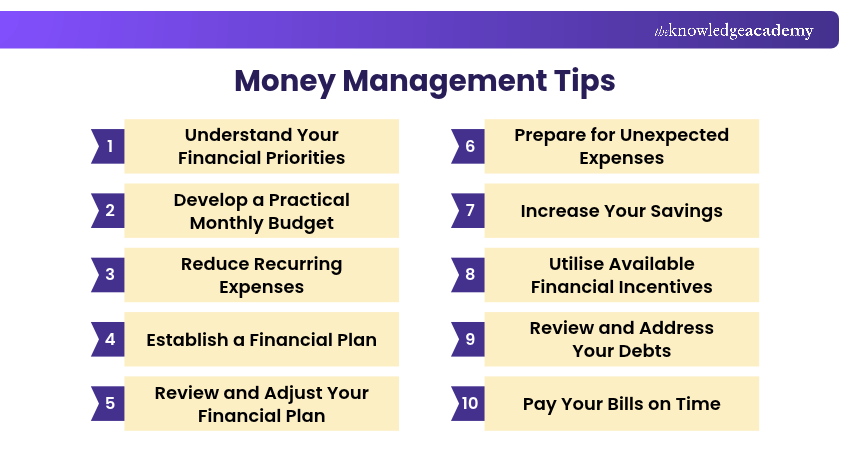
1) Understand Your Financial Priorities
Identifying your financial priorities helps you decide how to allocate your income. Start with essential commitments such as housing, food, utilities and transport, then consider other goals like education, buying a home or retirement planning.
Separate immediate needs from longer-term goals and adjust your priorities according to your circumstances. For example, if you're saving for a holiday but need essential household repairs, addressing the repairs first may be the more practical choice.

2) Develop a Practical Monthly Budget
A monthly budget helps you understand how much money you earn, spend and can afford to set aside. Begin with your take-home income, then account for essential bills, debt repayments, everyday expenses and savings.
Include irregular costs such as annual insurance, vehicle servicing and seasonal expenses. Reviewing your actual spending, rather than relying only on estimates, can help you create a realistic budget and identify areas for adjustment.
Worked Example: A Simple Monthly Budget
Imagine someone with a monthly take-home income of £2,400. Their budget might look like this:
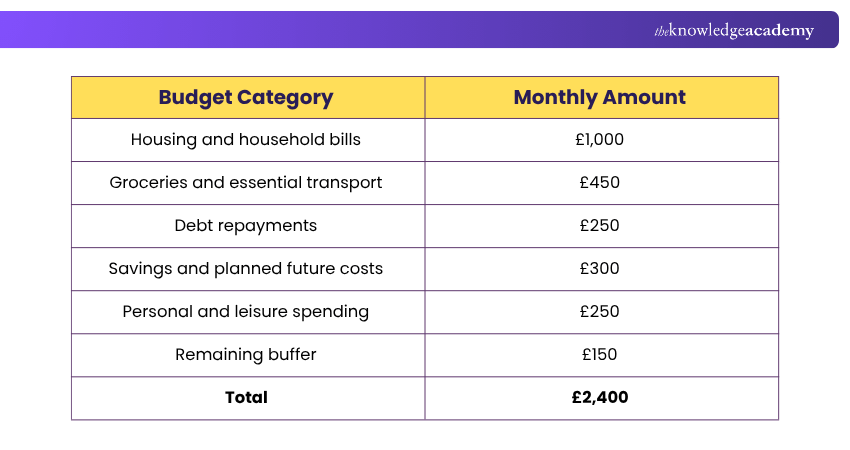
This is an illustrative budget. The buffer can help cover small variations in monthly expenditure without disrupting other planned payments. Actual spending and repayment commitments vary, so the amounts should be adjusted to individual circumstances.
3) Reduce Recurring Expenses
Regular payments for subscriptions, memberships, mobile contracts and other services can take up a significant share of your income. Review these expenses to identify services you rarely use or alternatives that offer better value.
Before cancelling or switching, check notice periods, termination charges and any benefits you may lose. Reducing unnecessary recurring costs can make more money available for essential expenses, savings or debt repayments.
4) Establish a Financial Plan
A financial plan helps you organise your money around short- and long-term goals. Unlike a monthly budget, which focuses on income and expenditure, it outlines what you want to achieve, how much money you may need and the steps required to get there.
Set realistic targets and timeframes for goals such as moving home, further education or retirement. For example, if you're planning to move in two years, estimate the expected costs and decide how much you can regularly save. Longer-term plans may also involve investments, but their value can fall as well as rise. Any investment decisions should reflect your goals, financial circumstances, investment timeframe and ability to absorb losses.
5) Review and Adjust Your Financial Plan
Your financial circumstances and priorities can change over time due to income changes, new responsibilities or unexpected expenses. Reviewing your financial plan regularly helps you identify whether your existing goals and contributions remain realistic.
Choose a regular time to review your progress, such as every three months, and revisit your plan sooner if something significant changes. For example, an increase in income may allow additional savings, while reduced earnings may require adjusting spending, contributions or financial deadlines.
6) Prepare for Unexpected Expenses
Unexpected expenses such as urgent repairs, medical costs or temporary income loss can disrupt your finances. An emergency fund provides accessible savings for these situations and may reduce the need to rely on borrowing. A commonly suggested longer-term target is three to six months of essential living expenses, although the right amount depends on your circumstances.
Start with an affordable amount and gradually build your fund, keeping the money in an account you can access when needed. For example, if essential monthly expenses are £1,200, three months would equal £3,600. Keep predictable expenses, such as annual insurance, separate from emergency savings, and consider how urgent debt obligations should be managed alongside your savings goals.
Learn to prepare and analyse financial statements with our Financial Accounting Course – Register now!
7) Increase Your Savings
Building savings starts with setting aside an affordable amount towards a specific financial goal. Regular contributions, even small ones, can help you work towards financial goals without putting unnecessary pressure on your everyday budget.
Consider automating contributions if your income is predictable, or saving flexible amounts when your earnings vary. Compare savings account interest rates, fees and withdrawal conditions, and review your contributions when your income or regular expenses change.
Pro Tip: Save Part of Every Financial Windfall
When you receive a bonus, gift or unexpected income, consider putting a portion into savings before spending the rest. This can help you make progress towards financial goals without increasing your regular monthly commitments.
8) Utilise Available Financial Incentives
Some financial incentives can support your savings and long-term financial goals. Depending on your circumstances, these may include employer contributions, tax benefits or government-supported savings programmes.
Common opportunities worth exploring include:
a) Employer Contributions: Check whether your employer offers workplace pension contributions or additional matching benefits that could support your longer-term savings.
b) Tax Advantages: Explore eligible savings and retirement arrangements that may provide tax benefits under applicable rules.
c) Savings Programmes: Find out whether suitable government-supported or other savings programmes offer incentives for which you qualify.
Before choosing an option, review its eligibility requirements, fees, contribution limits and withdrawal conditions to ensure it suits your needs.
9) Review and Address Your Debts
Review your outstanding debts to understand how much you owe, the interest charged, repayment deadlines and the consequences of missed payments. Identify obligations that could have serious consequences if unpaid, particularly housing-related debts and essential service arrears. Their priority and consequences depend on your circumstances and local rules.
Once urgent commitments are being addressed, review other borrowing, such as credit cards and personal loans. Where affordable, additional repayments towards high-interest debt may reduce overall costs. If repayments become unmanageable, contact creditors early and consider seeking independent debt advice.
Trainer’s Insight: Consider the Total Cost of Borrowing
When comparing repayment or refinancing options, look beyond the advertised interest rate. Check additional fees, repayment periods and the total amount payable. A lower monthly repayment may seem attractive but could increase the overall cost if the borrowing period is extended.
10) Pay Your Bills on Time
Paying bills on time helps you avoid unnecessary late charges and reduces the risk of service disruption or other missed-payment consequences. Keep track of due dates for housing payments, utilities, insurance and credit agreements using reminders or a payment schedule.
Where suitable, automatic payments can help you stay organised, provided sufficient funds are available. You may also be able to arrange payment dates around your income. If you anticipate difficulty paying a bill, contact the provider early to discuss available support or payment arrangements.
Common Money Management Mistakes to Avoid
Even with a financial plan, certain habits can affect your financial stability. Use this quick checklist to identify mistakes worth avoiding.
a) Overlooking Small Expenses: Track frequent purchases, as minor costs can add up over time.b) Spending Without Checking Your Balance: Review available funds before making non-essential purchases to avoid disrupting upcoming payments.c) Relying Too Much on Credit: Avoid depending on borrowing for everyday essentials and seek support if repayments become difficult.d) Setting Unrealistic Savings Goals: Keep savings targets achievable without compromising essential expenses.e) Ignoring Financial Terms: Check fees, restrictions and risks before choosing financial products.
Learn to manage investments and maximise returns effectively with our Finance Courses – Join now!

The Knowledge Academy develops accessible learning content across Project Management, IT, Cybersecurity, Data Science, Business Analysis, HR, Accounting and Finance, Leadership and Health and Safety. Its resources combine subject research with clear explanations to help professionals build practical knowledge across a wide range of disciplines.
View Detail

 If you wish to make any changes to your course, please


