


 Top Rated Course

We may not have the course you’re looking for. If you enquire or give us a call on +44 1344 203999 and speak to our training experts, we may still be able to help with your training requirements.
What is a Leadership Pipeline: A Complete Guide
Benjamin Walker 10 March 2026A Leadership Pipeline develops internal talent into future leaders by mapping career transitions to close skill gaps, boost retention, and ensure continuity. It defines clear stages for employees moving into leadership roles. This structured approach helps organisations build capable leaders and support long-term business stability.

Training Outcomes Within Your Budget!
We ensure quality, budget-alignment, and timely delivery by our expert instructors.
Table of Contents
Have you ever wondered why some organisations always seem to have strong leaders ready for the next role? While others struggle when a manager leaves or a new leadership position opens. Leadership success rarely happens by chance. It usually comes from careful planning and development. This is where understanding What is a Leadership Pipeline becomes valuable for organisations.
A Leadership Pipeline helps organisations identify future leaders and prepare them for greater responsibilities. In this blog, we will explore What is a Leadership Pipeline, how it works, and how it helps organisations build strong future leaders. Read on to learn more!
Table of Contents
1) What is a Leadership Pipeline?
2) Reasons for Building Your Leadership Pipeline
3) The Six Steps of the Leadership Pipeline Model
4) Key Skills Required at Each Leadership Level
5) Who Introduced the Leadership Pipeline Concept?
6) Is the Leadership Pipeline Only for Large Organisations?
7) Conclusion
What is a Leadership Pipeline?
A Leadership Pipeline is a system in a company that constructs and sustains a succession Leadership Development Plan for leadership roles. The Leadership Pipeline model focuses on grooming individuals to become leaders through development, evaluation, training, and promotion, aiming to ensure a smooth succession process for the organisation's efficiency.
There are four essential elements of the Leadership Pipeline which include:
a) Individual Contributors
b) Managers
c) Mid-level Management
d) Executive Leaders

Reasons for Building Your Leadership Pipeline
When developing a Leadership Pipeline, it’s essential to understand the purpose behind it. Organisations undergoing change or facing staff turnover need new leaders to quickly become proficient and acquire a demanding set of skills. Developing leadership skills in this context can be a significant challenge.
Reasons for Developing a Leadership Pipeline:
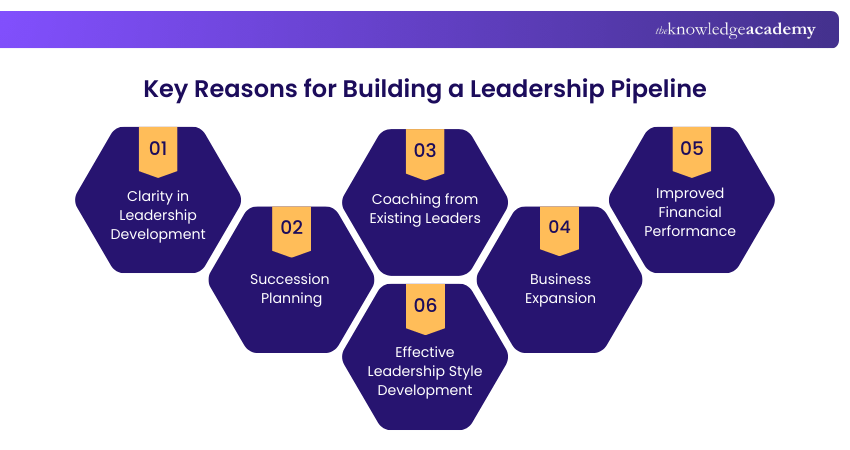
a) Clarity in Leadership Development: A pipeline clarifies how leaders are developed within an organisation, including selection criteria and the experiences that shape their growth. This transparency boosts employee engagement and motivation by providing a clear path for personal development and career progression.
b) Succession Planning: A Leadership Pipeline supports development at all levels, ensuring personnel are ready to step into roles as needed. It equips everyone, from entry-level to seasoned professionals, with the tools to advance in their careers.
c) Coaching from Existing Leaders: Developing a pipeline allows current leaders to mentor and coach future leaders, facilitating the exchange of ideas, processes, and visions for the future. This invaluable experience helps shape effective leadership.
d) Business Expansion: A well-developed Leadership Pipeline supports long-term business growth and expansion by preparing leaders for future opportunities and challenges, ensuring the organisation’s sustained success.
e) Improved Financial Performance: Selecting the right leaders for key positions impacts the business’s bottom line. Experienced leaders who understand growth opportunities can better position the organisation financially.
f) Effective Leadership Style Development: Building new leaders provides an opportunity to cultivate a leadership style that works, phasing out ineffective practices and fostering a new approach that aligns with the organisation’s goals.
Transform your Leadership approach and drive success in Agile environments with our Agile Leadership Training - Join today!
The Six Steps of the Leadership Pipeline Model
The Leadership Pipeline Model is one of the foremost and most extensively applied frameworks for establishing a Leadership Pipeline. This model was crafted by Ram Charan, Stephen Drotter, and James Noel and was introduced in their book titled "The Leadership Pipeline: How to Build the Leadership Powered Company." The model describes six levels of Leadership, each with its skills, time applications, and work values.
It also explains the transitions that Leaders need to make as they move from one level to another and the challenges and pitfalls they may face. Here is a brief overview of the six steps of the Leadership Pipeline Model:
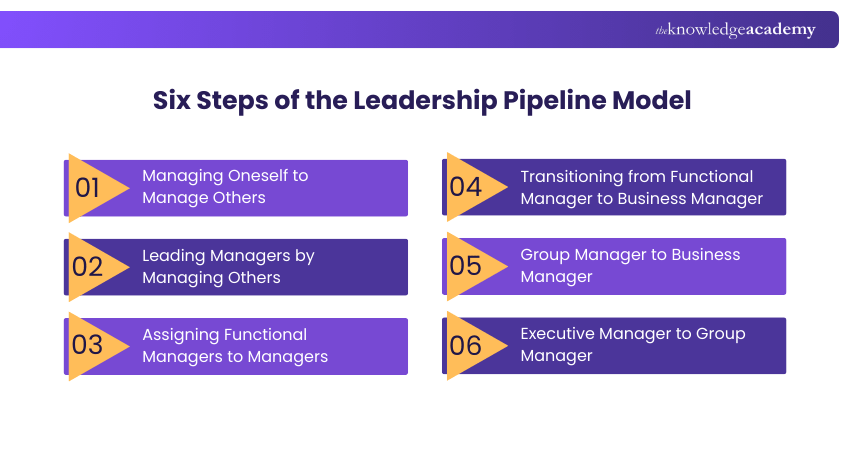
Step 1: Managing Oneself to Manage Others
The first step is transitioning from an individual contributor to a first-time manager. It is one of the most challenging and critical transitions in the Leadership Pipeline, as it needs a fundamental shift in mindset and behaviour.
Identify your organisation’s needs and start by auditing your current business structure. Identify business-critical roles that impact the company’s long-term health, including senior leadership positions, specialist roles, and Functional Managers. Look beyond essential roles for daily operations and consider those driving engagement, motivating teams, and championing your culture.
Step 2: Leading Managers by Managing Others
The second step is transitioning from a first-time Manager to a Manager of Managers. It is another challenging and important transition in the Leadership Pipeline, and a key moment for Leadership Team Development, requiring a further shift in focus and perspective.
Identifying potential leaders doesn’t mean throwing them in at the deep end. Training and development are crucial. Tailor your leadership training programme to your business but ensure consistency.
Step 3: Assigning Functional Managers to Managers
The third step is transitioning from a Manager of Managers to a functional Manager. It is a significant and complex transition in the Leadership Pipeline, requiring a deep understanding and mastery of a specific function or domain. Development should be continuous, not just when someone is up for promotion.
Encourage growth at all levels, recognising that readiness for leadership varies. A flexible, inclusive programme ensures talented individuals are included and prevents high performers from being pigeonholed into leadership roles prematurely. Development opportunities outside formal programmes can include job rotations, special assignments, action learning, and learning through exposure.
Step 4: Transitioning from Functional Manager to Business Manager
The fourth step is transitioning from a Functional Manager to a Business Manager. It is a major and demanding transition in the Leadership Pipeline, requiring a broad and holistic view of the business and the market.
Leverage the knowledge and experience of your current leaders. Their involvement in mentoring emerging leaders ensures business continuity and strategic alignment. Involve the entire leadership team in the process to encourage knowledge sharing and build a culture of trust.
Step 5: Group Manager to Business Manager
The fifth step is transitioning from a Business Manager to a Group Manager. It is a rare and challenging transition in the Leadership Pipeline, as it requires high Leadership maturity and agility.
Track the success of your Leadership Pipeline using metrics such as employee retention, promotions, lateral movements, engagement, feedback, and learning outcomes. These metrics help you continuously improve the programme.
Step 6: Executive Manager to Group Manager
The sixth and final step is transitioning from a Group Manager to an Executive Manager. It is the most difficult transition in the Leadership Pipeline, requiring supreme Leadership wisdom and influence.
Keep your leadership development process simple, transparent, and open. This ensures fairness and equal opportunity, creating an environment where employees feel valued, encouraged, and motivated to do their best.
Gain familiarity with the tasks, responsibilities, and empowerment of teams with our High Performing Teams Training – Register today!
Key Skills Required at Each Leadership Level
Leadership skills evolve as professionals move into higher roles. Each level requires different abilities to manage responsibilities and guide teams. The key skills required at each leadership level include:
1) Frontline or First-Level Leadership:
Frontline leaders work closely with employees and manage daily tasks. They supervise work, support team members, and ensure tasks are completed efficiently. Key skills include clear communication, basic problem-solving, time management, and motivating employees.
2) Middle-Level Leadership:
Middle-level leaders connect senior management with operational teams. They implement strategies and ensure that departments run smoothly. Key skills include decision-making, strategic thinking, cross-team collaboration, performance monitoring, and resolving workplace conflicts.
3) Senior or Executive Leadership:
Senior leaders focus on the organisation’s long-term direction. They set strategic goals, guide major decisions, and drive growth. Key skills include strategic planning, leadership influence, managing change, and building strong stakeholder relationships.
Who Introduced the Leadership Pipeline Concept?
The Leadership Pipeline concept was introduced by Ram Charan, Stephen Drotter, and James Noel. They explained this idea in their book The Leadership Pipeline: How to Build the Leadership Powered Company, first published in 2001.
The concept explains how organisations develop employees into effective leaders as they move to higher roles. It outlines leadership levels and the skills needed at each stage. This approach helps organisations identify talent early and prepare employees for future leadership roles.
Is the Leadership Pipeline Only for Large Organisations?
No, the Leadership Pipeline is not only for large organisations. While it is often used by big companies with many leadership levels, the concept can also benefit small and medium-sized organisations.
Even smaller organisations need future leaders to manage teams, guide projects, and support business growth. By using the Leadership Pipeline approach, they can identify talented employees early, develop their leadership skills, and prepare them for greater responsibilities as the organisation expands.
Conclusion
In essence, understanding What is a Leadership Pipeline helps organisations build strong future leaders and maintain business continuity. By developing leadership skills at each stage, organisations can prepare employees for greater responsibilities. A clear Leadership Pipeline ensures smooth transitions, stronger teams, and long-term organisational growth.
Enhance your leadership skills through interactive activities and real-world scenarios with our Leadership Courses – Join now!
Frequently Asked Questions
What are The Five Levels of Leadership Outline?

These five levels of leadership help leaders understand their position in the leadership journey. Learning and applying them effectively can help leaders grow and perform their roles more successfully.a) Position
b) Permission
c) Production
d) People Development
e) Pinnacle
What are The Four Rules of Leadership?
The four main rules of Leadership to follow are:
a) Be Empathetic
b) Be Decisive
c) Recognise and Exploit Opportunities
d) Build Effective Teams
What are the Other Resources and Offers Provided by The Knowledge Academy?
The Knowledge Academy takes global learning to new heights, offering over 3,000+ online courses across 490+ locations in 190+ countries. This expansive reach ensures accessibility and convenience for learners worldwide.
Alongside our diverse Online Course Catalogue, encompassing 17 major categories, we go the extra mile by providing a plethora of free educational Online Resources like Blogs, eBooks, Interview Questions and Videos. Tailoring learning experiences further, professionals can unlock greater value through a wide range of special discounts, seasonal deals, and Exclusive Offers.
What is The Knowledge Pass, and How Does it Work?
The Knowledge Academy’s Knowledge Pass, a prepaid voucher, adds another layer of flexibility, allowing course bookings over a 12-month period. Join us on a journey where education knows no bounds.
What are the Related Courses and Blogs Provided by The Knowledge Academy?
The Knowledge Academy offers various Leadership Courses, including the Leadership Skills Training, Agile Leadership Training, and the High Performing Teams Training. These courses cater to different skill levels, providing comprehensive insights into How to Set Goals.
Our Business Skills Blogs cover a range of topics related to Leadership Pipeline, offering valuable resources, best practices, and industry insights. Whether you are a beginner or looking to advance your Business skills, The Knowledge Academy's diverse courses and informative blogs have got you covered.

Benjamin Walker


Leadership Development Coach and Management Consultant
Benjamin Walker is a leadership coach and business consultant with over 18 years of experience in guiding organisations through strategic growth and transformation. He specialises in developing leadership capabilities at all levels, from emerging managers to executive teams. Benjamin’s work focuses on practical leadership, team dynamics, and performance management.
View Detail
Upcoming Business Skills Resources Batches & Dates
Date
 Leadership Skills Training
Leadership Skills Training
Fri 8th May 2026
Leadership Skills Training
Fri 3rd Jul 2026
Leadership Skills Training
Fri 4th Sep 2026

 If you wish to make any changes to your course, please


