


 Top Rated Course

We may not have the course you’re looking for. If you enquire or give us a call on + 1-866 272 8822 and speak to our training experts, we may still be able to help with your training requirements.
What is Entrepreneurship? Types and Benefits Explained
The Knowledge Academy 16 February 2026Entrepreneurship involves designing, launching, and running a new business by identifying an opportunity, gathering resources, and taking calculated risks. Entrepreneurs typically aim to solve a problem, meet a market need, or introduce an innovative product or service, often with the goal of generating profit.

Training Outcomes Within Your Budget!
We ensure quality, budget-alignment, and timely delivery by our expert instructors.
Table of Contents
Spotting a gap in the market, dreaming up a solution, and building something from scratch! That's the essence of entrepreneurship. It's the exciting process of turning your bold ideas into a real business. Entrepreneurs are the risk-takers and changemakers who play a key role in transforming the economy. This blog is comprehensive exploration of What is Entrepreneurship. It dives into its exciting types and the powerful benefits it offers to individuals, communities and the world. So, be it a tech startup or a social venture, read on and unlock your innovative side!
Table of Contents
1) What is an Entrepreneur?
2) What is Entrepreneurship?
3) Different Types of Entrepreneurship
4) Characteristics of Entrepreneurs
5) Entrepreneurship's Benefits and Drawbacks
6) How to become an entrepreneur
7) Conclusion
What is an Entrepreneur?
An Entrepreneur is someone who starts a new business by taking on most of the risks and benefits that come with it. This process of cultivating a business is called entrepreneurship. Entrepreneurs are important to the economy because they use their skills and creativity to spot opportunities and introduce fresh ideas or solutions to elevate the market.
Entrepreneurs are typically driven by a desire for independence, profit, and making a positive impact. They often showcase creativity, resilience, and strong leadership skills as they navigate market uncertainties while managing employees and operations.

What is Entrepreneurship?
Entrepreneurship means having a smart business idea, gathering the right resources, and taking risks to start something new. Entrepreneurs bring fresh products, services, or ideas that can change how things work. They boost the economy by thinking differently and need creativity, careful planning, and the strength to face challenges.
More than just starting a business, entrepreneurship is a mindset. It’s about solving problems, being open to change, and always learning. Great entrepreneurs focus on creating value for customers and their communities.
Different Types of Entrepreneurship
Entrepreneurship comes in various shapes and sizes, catering to different aspirations and goals:
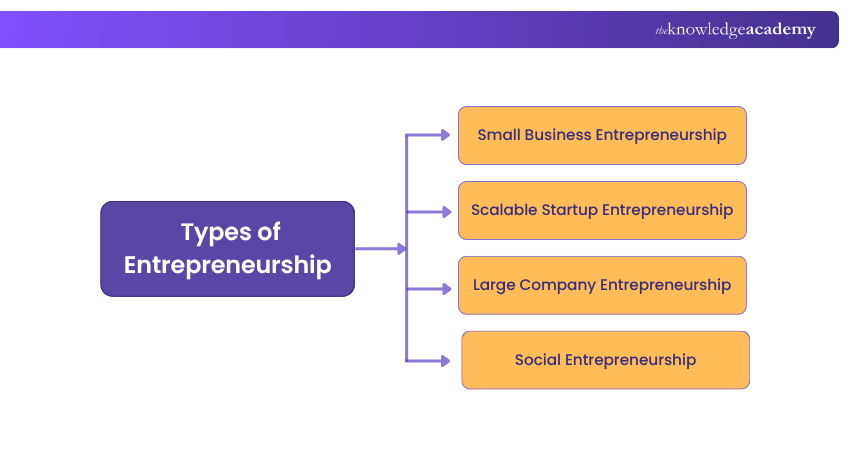
Small Business Entrepreneurship
Small business entrepreneurship is about starting small companies, which typically happens in areas such as local manufacturing or retail. These businesses focus on serving their local community and building strong customer relationships. For those interested in starting their own venture, exploring Side Hustle Ideas can be a great way to step into entrepreneurship while emphasising community engagement.
Scalable Startup Entrepreneurship
Scalable Startups Entrepreneurship is defined as the establishment of startups aiming at quick growth and big market influence. These businesses, which have innovative ideas to compete with existing markets or create new ones, sometimes use venture capital as their source of funding.
Large Company Entrepreneurship
Large firm Entrepreneurship, also known as intrapreneurship, is about instilling entrepreneurial spirit in the already existing big companies. The primary objective is to promote innovation, create new products, and discover previously unexplored markets to be always ahead of the competition.
Social Entrepreneurship
Social Entrepreneurship aims to solve social or environmental problems. It links profitability with the purpose of helping society. Social Entrepreneurs create separate business models to solve various problems, from poverty to environmental degradation, perpetuating sustainable solutions.
Innovative Entrepreneurship
Innovator entrepreneurship elevates the process by introducing new ideas, products, or services or improving existing ones. These entrepreneurs’ creativity can lead to fresh business opportunities, new patents, or even selling ground-breaking concepts to other companies.
Hustler Entrepreneurship
Hustler entrepreneurship often begins by managing a small business alongside a regular job. This category of Entrepreneurs may do this to follow a passion, earn extra income, or try out a business idea. Over time, many turn these side projects into full-time successful ventures.
Characteristics of Entrepreneurs
Entrepreneurs have specific characteristics that ultimately lead to their success. Here are the key elements of an Entrepreneurial mindset:
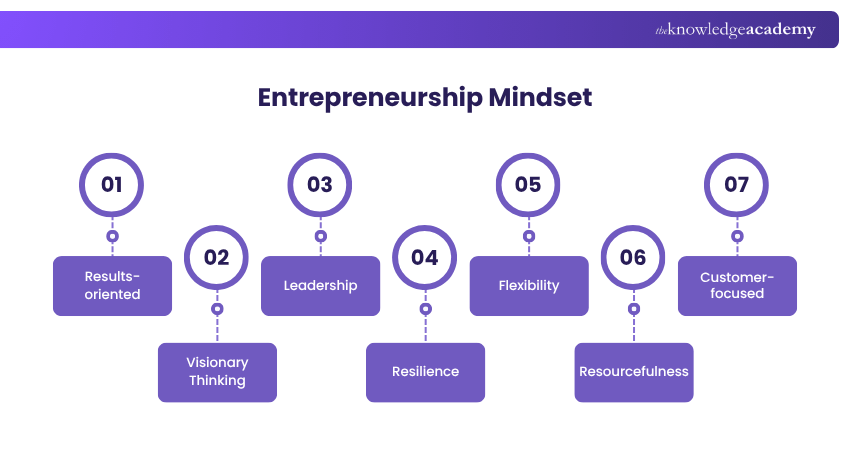
a) Results-oriented: They stay focused on reaching clear goals and real results by constantly monitoring their progress.
b) Visionary Thinking: Visionaries can see future trends early on. They are always thinking ahead, so they can spot chances to grow where others might see problems.
c) Leadership: Armed with people leadership skills, they become more than just Managers; they inspire and unite their teams, forging a culture of team spirit and a shared purpose.
d) Resilience: The real entrepreneurial spirit consists of regaining strength after a defeat with energy, passion, and self-confidence. They are the underdogs of the business world.
e) Flexibility: They are flexible and quick-thinking, always prepared to face unforeseen situations or change the pace in an unplanned way.
f) Resourcefulness: Mastery in the art of making something out of nothing is what a true Entrepreneur knows and maximises the value from resource constraints as a professional.
g) Customer-focused: Their compass always points towards customer satisfaction, ensuring they meet needs, deliver value, and build unwavering loyalty.
Enhance your relationship-building skills with our Building Business Relationships Course – join today!
Entrepreneurship's Benefits and Drawbacks
Entrepreneurship is a journey of various possibilities and underlying constraints. On the one hand, it brings freedom of innovation and opportunity for huge rewards, but on the other hand, it is accompanied by risks and responsibilities that require due diligence to understand the Types of Entrepreneurship effectively. Let’s explore both aspects below:
Benefits of Entrepreneurship
Here are the benefits:
a) Autonomy: Entrepreneurs can make their own decisions and run the business their way.
b) Financial Potential: A successful business can bring big profits and personal wealth.
c) Innovation: Entrepreneurs create new ideas or products that drive progress and change.
d) Personal Fulfilment: Seeing your long-cherished ideas come to life and thrive is very rewarding.
e) Flexibility: Entrepreneurs have the freedomt to set their own work hours, which helps them balance life and work.
f) Impact: They help the economy by creating jobs and building businesses in their community.
Drawbacks of Entrepreneurship
Here are the disadvantages:
a) Financial Risk: Starting a business can be a costly endeavour, and there’s a substantial chance of losing money.
b) Uncertainty: New businesses face ups and downs, especially in their initial phase.
c) Workload: Entrepreneurs usually have to work long hours and deal with a lot of stress.
d) Isolation: Running a business can feel lonely without a full-strength team or support network.
e) Responsibility: Entrepreneurs have to take the responsible of keeping the business, employees and customers happy.
f) Work-life Balance: Even with flexible hours, balancing work and personal life can be a big challenge.
Are you an aspiring storyteller, Join our Journalism Course and lern how to write, report and inspire the world!
How to Become an Entrepreneur
There are many ways to become an entrepreneur. Consider the following points:
1) Register as self-employed, form a partnership, build a limited company, or set up a cooperative or social enterprise.
2) You must gain experience in the industry by freelancing in the field or working for a business.
3) You can turn a hobby or interest into a profitable business idea.
4) ou must learn how to conduct market research. This will help you identify your target sector and detect gaps in the market.
5) Gather insights using customer feedback or by speaking with business owners acoss similar industries.
6) You have to outline a clear business plan that details your idea, goals and how the business’s succeed trajectory will go.
7) You have to look for funding options for your business. Alternatively, you can invest personal savings to kickstart your venture.
8) Building a team is of utmost importance along with contacting Suppliers and Contractors. On top of that, you must think about setting up legal and financial systems.
9) Last but not the least, you must craft a marketing and distribution strategy to promote and deliver your products or services.
Conclusion
Entrepreneurship is about taking action. Whether you are opening a small store or starting a big business, it means spotting opportunities and making them real. It involves finding new ways to solve problems and help people. So, the simplest way to answer What is Entrepreneurship is this: it’s about having bold ideas and the courage to follow them. With hard work and big dreams, anyone can become an Entrepreneur.
Let your entrepreneurial spark build the future you imagine! Sign up for our Entrepreneurship Training now!
Frequently Asked Questions
What are the First Steps to Become Entrepreneur?

Start by coming up with a strong business idea. Then, do some research to learn about your potential customers and competitors. Next, you must create a simple business plan that explains how you’ll run your business, reach the customers and manage money.
How do Entrepreneurs Manage Risk?
Entrepreneurs handle risk by planning carefully and learning about their market. They also protect their business by offering different products, saving money for tough times and getting the right insurance.
What are the Other Resources and Offers Provided by The Knowledge Academy?
The Knowledge Academy takes global learning to new heights, offering over 3,000+ online courses across 490+ locations in 190+ countries. This expansive reach ensures accessibility and convenience for learners worldwide.
Alongside our diverse Online Course Catalogue, encompassing 19 major categories, we go the extra mile by providing a plethora of free educational Online Resources like Blogs, eBooks, Interview Questions and Videos. Tailoring learning experiences further, professionals can unlock greater value through a wide range of special discounts, seasonal deals, and Exclusive Offers.
What is Knowledge Pass, and how Does it Work?
The Knowledge Academy’s Knowledge Pass, a prepaid voucher, adds another layer of flexibility, allowing course bookings over a 12-month period. Join us on a journey where education knows no bounds.
What are the Related Courses and Blogs Provided by The Knowledge Academy?
The Knowledge Academy offers various Personal Development Courses including Entrepreneurship Course, Organisational Skills Course and Building Business Relationships Course. These courses cater to different skill levels, providing comprehensive insights into the Importance of Entrepreneurship.
Our Business Skills Blogs cover a range of topics related to Entrepreneurship, offering valuable resources, best practices, and industry insights. Whether you are a beginner or looking to advance your Entrepreneurial skills, The Knowledge Academy's diverse courses and informative blogs have you covered.

The Knowledge Academy


Global Training Provider
The Knowledge Academy is a world-leading provider of professional training courses, offering globally recognised qualifications across a wide range of subjects. With expert trainers, up-to-date course material, and flexible learning options, we aim to empower professionals and organisations to achieve their goals through continuous learning.

Upcoming Business Skills Resources Batches & Dates
Date
 Entrepreneurship Course
Entrepreneurship Course
Fri 3rd Apr 2026
Entrepreneurship Course
Fri 8th May 2026
Entrepreneurship Course
Fri 10th Jul 2026
Entrepreneurship Course
Fri 4th Dec 2026

 If you wish to make any changes to your course, please


