


 Top Rated Course

We may not have the course you’re looking for. If you enquire or give us a call on + 1-866 272 8822 and speak to our training experts, we may still be able to help with your training requirements.
Best 50+ Team Building Activities for Every Type of Workplace
William Brown 14 July 2026Team Building Activities are activities designed to encourage cooperation and strengthen interpersonal relationships among team members in an organisation. It ranges from scavenger hunts and escape rooms to cooking classes. This helps in boosting teamwork and collaboration. This also helps in making a workplace healthy. Read to know now!

Training Outcomes Within Your Budget!
We ensure quality, budget-alignment, and timely delivery by our expert instructors.
Table of Contents

Collaboration is the fuel that drives growth in any organisation. But is there a sure-fire way to ensure this fuel isn't depleted? The answer lies in the power of Team Building Activities. Moreover, thanks to innovations in communication technology and workplace models, team building has evolved beyond office walls, offering endless creative ways to ignite (and reignite) connection and collaboration.
Whether you are working remotely, on-site, or balancing the best of both worlds by embracing the Hybrid model, this blog is your roadmap to fostering a highly collaborative workforce. From virtual escape rooms and virtual karaoke to hybrid office Olympics and online gaming, explore 50+ exciting Team Building Activities and unleash the full potential of your team! Read on!
Table of Contents
1) What are Team Building Activities?
2) Importance of Team Building Activities
3) Best 50+ Team Building Activities
4) What are the Five Ps of Team Building?
5) What are the Four Steps of Effective Team Building?
6) Conclusion
What are Team Building Activities?
Team Building Activities are a collection of exercises, games, and tasks that are designed to bring individuals together. These build a sense of friendship and collaboration among team members. One cannot do without these activities. This is because it plays a crucial role in improving communication. It also helps in building trust and strengthening interpersonal relationships within a group.
Bringing in such activities on a significant level help develop a cohesive, positive, and motivated work environment. This alone gives assistance to a particular team to collaborate and achieve common objectives. These activities can vary widely in nature and complexity. It also strongly caters to different team dynamics and objectives. The choice of activities depends on the specific needs and goals of the team.

Importance of Team Building Activities
The Importance of Team Building in today's corporate landscape cannot be overstated. Team building is vital in creating a positive and productive work environment, fostering strong relationships among team members, and maximising overall team effectiveness. The reasons detailed below explain why Team Building Activities for teams are crucial:
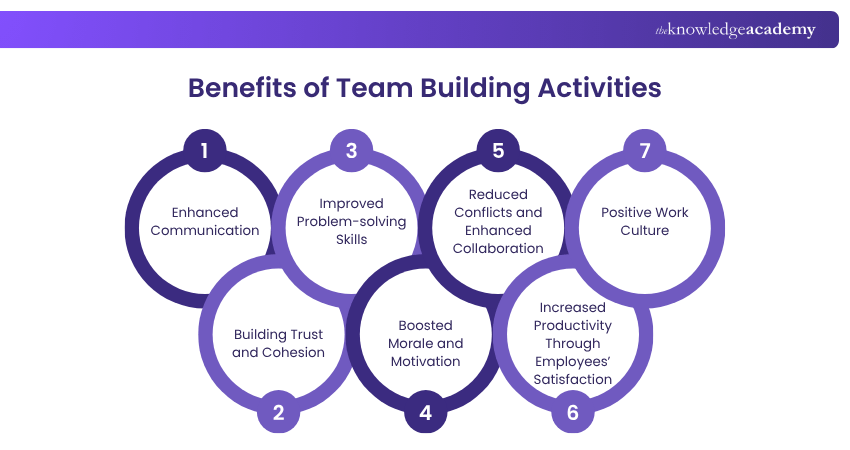
1) Enhanced Communication: The success of any team depends on how well it communicates, with activities like Team Building Questions acting as catalysts to enable team members to interact with one another and contribute towards the team's common targets.
2) Building Trust and Cohesion: Through Team Building Activities, teams develop cohesion, and personal and professional trust develops among members.
3) Improved Problem-solving Skills: Team building often involves problem-solving challenges that require a collective effort. Engaging in such activities enhances the team's ability to think creatively to find solutions.
4) Boosted Morale and Motivation: Team Building Activities create a sense of brotherhood and belonging among team members. When employees feel appreciated and valued within their team, their job satisfaction and morale increase.
5) Reduced Conflicts and Enhanced Collaboration: By fostering better understanding and empathy among team members, team building activities mitigate conflicts and help team members resolve issues collaboratively.
6) Increased Productivity Through Employees’ Satisfaction: Productivity naturally improves when team members work together harmoniously and efficiently.
7) Positive Work Culture: Team Building creates a positive and inclusive work culture where employees feel appreciated and valued. Additionally, Team Building Activities that prioritise wellness and stress relief contribute to employee well-being.
Unleash your leadership potential with our comprehensive Management Courses - drive success, inspire your team, and transform your career.
Best 50+ Team Building Activities
Exploring various Team Building Ideas ensures that activities remain engaging and effective in fostering strong team connections. Common examples of activities for team building are discussed below:
1) Team Bonding Activities
Initiating Team Building Activities can be deemed quite challenging, especially in scenarios where a new team is involved. Therefore, the various activities specified below are designed to help the team members understand one another more effectively. It also promotes the Characteristics of an Effective Team.
a) The ‘3 Question Mingle’: The most effective way to start building a new team is often through conversation. However, without a clear framework, these discussions can sometimes hinder progress. The 3 Question Mingle offers a simple solution in this. Out here, each team member writes three questions on sticky notes and then has a one-minute meeting with a colleague to discuss them. This quick, structured approach encourages meaningful interactions.
Enhance your problem-solving skills with our Problem Solving Training - join now!
b) ‘9 Dimensions’ Team Building Activity: In the ‘9 Dimensions’ Team building Activity, you can distribute the red, green, yellow, and blue dots to each team member alongside the nine dimensions under consideration. Further, participants place a dot on each dimension to indicate whether they feel they are excelling or need improvement.
c) Awareness Circle: While establishing connections among group members may come naturally to extroverted individuals, introverts might encounter challenges in forming strong bonds with their team and fostering meaningful connections. In the ‘Awareness Circle’ exercise, the goal is to prompt the group to familiarise themselves with one another without verbal communication, highlighting that every team member possesses a link within the team.
d) Best and Worst: The efficacy of team-building exercises often increases when you leverage the individual interests and passions of each team member, prompting them to open up and share personal aspects with the team. In the ‘Best and Worst’ activity, participants are asked to pose questions related to their best and worst experiences or insights. This is useful for anyone who is seeking to learn from the group.
e) Break the Ice with ‘The Four Quadrants Activity’: This activity can be initiated by distributing paper sheets and instructing each participant to create a 2×2 grid, posing four questions to the group. Each team member illustrates their response in one of the grid squares, and after the designated time, the group is encouraged to share.
f) Group Order: Facilitating introductions in a meeting or with a new team can be simple. The ‘Group Order’ exercise involves asking participants to arrange themselves based on specific criteria like proximity to work, birthdate, or number of countries visited. This activity encourages communication and collaboration as everyone works toward a shared goal.
g) Happiness Exercise: When introducing a new team, adopting the ‘Happiness Exercise’ prompts the exchange of uplifting stories and experiences facilitating connection and cultivating a positive environment in the group. This team building activity can also be applied in a workplace setting or with a team that is already well-established.
h) Just One Lie: With new teams or groups unaccustomed to team building, simplicity using a proven method can be most effective. "Just One Lie" is a variation of the popular "Two Truths and a Lie" game, but it encourages participants to interact and share numerous facts about themselves.
i) Life Map: Effective Team Building catalyses the process of forming stronger teams and provides opportunities for reflection and more profound sharing among participants. Next, utilise the ‘Life Map’ activity to prompt your group to illustrate or craft a collage representing their life stories, which they can subsequently share with the team.
j) Name Juggling:Collaborating with new teams starts with learning names. This interactive icebreaker adds energy to introductions: participants stand in a circle, say their name, and toss a ball to someone, saying that person’s name. The receiver thanks them and passes the ball on, creating a fun cycle of connection. This is one of the best Team Building Activities for work.

k) Open Fist: Discovering shared interests among team members is a fundamental aspect of fostering successful teamwork and communication. While certain Team Building Activities and conversation games may require a more detailed approach, Open Fist offers a straightforward yet impactful bonding exercise. By sharing lesser-known facts about themselves, teams can enhance their cohesiveness.
Begin your leadership journey now! Our Introduction to Management Course provides the foundations to guide, inspire, and excel.
Fun Team Building Activities
a) Bang:
A fun and energizing game which is the best among simple Team Building Activities is ‘Bang’, which encourages quick reactions. To start, elect a Sheriff and have the rest of the group form a circle. The Sheriff spins around, points at someone, and shouts "Bang!" The pointed person quickly crouches, and the two people on either side immediately point at each other, shouting the other’s name aloud. This fast-paced game promotes engagement and laughter.
b) Build-a-shake:
Handshakes are a bonding element that have existed amongst individuals since they were kids, where there would be a ‘secret handshake’ created amongst kids to display connection and friendship. A very similar Team Building Activity could be created, wherein the team would tap into the same sense of creativity and encourage their fellow members to know one another while sharing and developing their handshakes in pairs.
c) Count Up:
Groups that are devoting time and effort to fostering trust and interpersonal relationships can get involved in basic activities that require focus, awareness and cohesion. In the ‘Count Up’ activity, the team is required to gather and count until twenty while closing their eyes, sans any communication. Now any member can say only one number at a time, and if two members speak simultaneously, the team must start the activity again.
d) Follow the Leader:
For virtual team building, simple activities like ‘Follow the Leader’ are effective in boosting participation and reducing frustration. In a virtual setting, use Zoom’s gallery view and ask participants to perform actions within their screen frames for others to mimic. The light-hearted nature of this exercise often sparks laughter and boosts energy, making it a fun and engaging way to connect.
e) Portrait Gallery:
Imaginative team-building exercises like the ‘Portrait Gallery’ are great for fostering camaraderie and energizing the team. To start, divide the group into two teams. Team B sketches portraits of Team A, passing their drawings every 10-15 seconds for continuous collaboration. By the end, you’ll have a diverse collection of portraits and a fun, ice-breaking activity that strengthens team bonds.
f) Snowball:
The ‘Snowball’ activity is a fun and engaging icebreaker that encourages movement and interaction. Start by asking a group-related question and having participants write down their answers on paper. After crumpling the papers into "snowballs," everyone gathers for a brief, lively snowball fight. Once the action settles, participants keep one snowball and find the person who wrote the answer, fostering connections and energizing the group.
g) Celebrity Party:
You've probably played the game where you write the name of a random celebrity on a piece of paper, stick it to your forehead, and then ask questions to deduce the identity. While it is quite a straightforward activity, it is highly effective for breaking the ice and fostering laughter and conversation. Try it out as it is one of the best activities for Team Building.
h) Non-verbal improv:
Whether working remotely or in person, it’s crucial to enjoy your time together and strengthen team bonds. Simple games can spark discussions on improving collaboration while offering a fun break. In this improvisation activity, write down various actions on post it notes and have participants act them out without speaking. Adding humorous or challenging scenarios will boost engagement and create moments of laughter, building unity within the team.
i) The Viking:
This activity from Hyper Island invites teams to channel the energy and enthusiasm of Vikings, bringing bold, spirited actions to the forefront. Perfect for energising long workshops or meetings, it boosts group dynamics and creates memorable experiences. To make it even more special, designate a photographer to capture the moments, building a visual history wall for future reflection.
Step into leadership with confidence! Our Management Training for New Managers equips you with the tools you need to succeed.
1) Corporate Team Building Activities
Below is a list of various corporate Team Building Activities that you can conduct:
a) Appreciations Exercise: The ‘Appreciations Exercise’ promotes positive feedback by having team members recognise each other's strengths. Participants write their name on a paper, pass it left, and note what they value most about the person. Afterward, share the appreciation notes to celebrate everyone’s contributions. For added fun, try it during a happy hour for a relaxed celebration.
b) Cover Story: In this game, small groups collaborate to design a magazine cover featuring your team, incorporating headlines and taglines that depict the team's optimal version. By envisioning the ideal future state for the organisation, your group can identify actions to pursue today while simultaneously producing an enjoyable and practical artefact for the team.
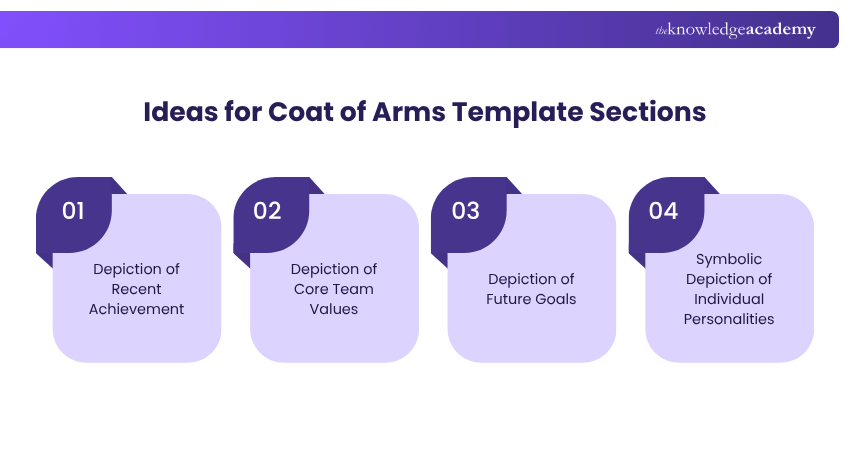
c) Coat of Arms: In the Coat of Arms exercise, each team member starts by crafting a personal coat of arms and subsequently shares it with a partner. The partner then interprets the coat of arms and presents it to the entire group. This activity encourages self-expression and deeper understanding of each other's values.
d) My Favourite Manager: Begin this activity by gathering your team to explore their preferences and dislikes when it comes to managers. This team building exercise within the corporate setting establishes a comfortable environment for discussing various Types of Management Styles and promotes understanding among team members.
e) The Pirate Ship Exercise: Examining team roles in a fun, casual way is perfect for office events. In this simple exercise, present a pirate ship crew and have participants reflect on which roles suit them, such as who’s the captain, lookout, or deckhand. This light-hearted activity sparks meaningful discussions and helps team members better understand each other’s strengths.
f) History Map: Developing effective teams is a journey of brainstorming and refinement. To help your group reflect on progress, create a memory wall showcasing key moments over time. This History Map encourages creativity, strengthens shared experiences, and offers a fun way to conclude a project or session. It also serves as a visual reminder of the team's growth and achievements.
g) Birds of a Feather: Teams often form sub-groups naturally, but this activity shows how diversity boosts resilience and productivity. Give each participant an index card with a letter and have them quickly form a group of five. Then, challenge them to create the longest word possible. The most successful teams will have diverse cards, highlighting the value of diversity. End with a debrief to spark discussions on diversity and inclusion.
h) Human Knot: Business meetings can be serious, but this fun activity adds some relaxation while promoting teamwork. Divide the team into groups of 7-12 and have them form a circle, close their eyes, and interlink hands with two others. The goal is to untangle the human knot without breaking the chain. This engaging puzzle encourages clear communication, teamwork, and flexibility.
Transform your ability to lead and connect! Discover the essentials of People Management with our Introduction to Managing People Course.
2) Team Communication and Collaboration Activities
Below is a list of various corporate Team Building Activities that you can conduct:
a) Conflict Responses: It's crucial to bear in mind that each team comprises individuals, and occasional conflicts or differences of opinion may emerge. While it's common for disagreements to occur, our reactions to conflicts and how we address them are within our control and can be enhanced. In this activity, contemplate past conflicts as a team and collaboratively establish a set of guidelines for handling such situations in the future. Effectively resolving issues is a significant aspect of team collaboration, and involving all team members in this process can yield more meaningful results.
b) Heard, Seen, Respected: Team empathy is a crucial element of effective teamwork, but regardless of your organisation's size, understanding and appreciating others' perspectives can be challenging. "Heard, Seen, Respected" is a team-building exercise crafted to assist participants in honing deeper empathy for their colleagues and fostering the types of connections and work practices that enhance team collaboration. By encouraging participants to identify patterns in shared stories and discover common insights, you can align everyone on the same page and enhance communication skills.
c) Myers-Briggs Team Reflection: In the Myers-Briggs personality ,each team member reflects on their own personality type, followed by small group discussions. It's crucial to properly frame the use of the Myers-Briggs Type Indicator (MBTI), emphasising its utility in understanding communication preferences without pigeonholing team members based on self-reported preferences.
d) Strength Building Exercise: Team Building Exercises manifest in diverse forms, and this particular activity centres on the team supporting and boosting each other's confidence, self-esteem, and mutual trust. Commence by prompting team members to recount an instance where they achieved something personally gratifying. Subsequently, the rest of the team contributes by identifying two to three strengths that the individual likely demonstrated during that accomplishment. Collaborative teamwork involves aiding fellow team members in reaching their potential, and this exercise facilitates the group in meaningfully and efficiently uplifting one another.
e) Strength Envelopes: Every team comprises individuals with distinct strengths, capabilities, and work preferences. To enhance engagement and streamline group workflow, encourage each participant to leverage their unique strengths and engage in tasks that align with their interests when collaborating. In this team-building exercise, prompt participants to inscribe their name on an envelope.
f) Team of Two: Collaboration on a one-to-one basis shows that employees can find ways to work more effectively in pairs, regardless of the mode of communication. You can experiment with the ‘Team of Two’ activity which helps empower your team members with more effective communication skills.
g) What I Need From You (WINFY): The best Team Building Activities generally emphasise on helping the team members improve their interpersonal skills as a group. WINFY is a simple way of working with other groups to create and receive requests. People working in different disciplines can quickly improve how they ask each other for what they need to be successful.
3) Team Problem Solving Activities
Below are activities that teams can participate in to solve problems in a collective manner, regardless of the problem’s size. It all boils down to experimenting with approaches and maintaining consistency:
WINFY is a simple way of working with other groups to create and receive requests. People working in different disciplines can quickly improve how they ask each other for what they need to be successful.WINFY is a simple way of working with other groups to create and receive requests. People working in different disciplines can quickly improve how they ask each other for what they need to be successful.
a) Blind Square – Rope Game: A team workshop gains vibrant energy from a seemingly uncomplicated challenge that actively involves everyone. In this interactive problem-solving activity, begin by transforming a length of rope into a circle and encourage participants to devise a strategy for turning it into a flawless square without being able to see. Following the planning phase, team members don blindfolds and have ten minutes to shape the rope into the square. Through a reflective discussion afterward, your team will discover the significance of communication, planning, and attention to detail in effective team problem-solving, all within an enjoyable context.
b) Crocodile River: We appreciate team-building exercises that push the group to collaborate in creative ways and inject energy into a workshop environment. Crocodile River is a team problem-solving activity that requires team members to physically assist each other in traversing a broad outdoor area. By altering the environment and prompting problem-solving and strategic thinking to overcome a challenge, your team not only enhances their problem-solving skills but also hones their communication, leadership, and cooperation. As with any more unconventional team-building game, it's crucial to conduct a thorough debrief afterward for optimal results!
c) Egg Drop: Time-tested Team Building Activities such as Egg Drop provide effective methods for promoting collaborative problem-solving and enhancing communication skills within teams.
This game frequently sparks laughter and stimulates creative thinking as participants brainstorm ways to protect a fragile egg.
In this team problem-solving exercise, task small groups with constructing a self-supporting structure capable of safely dropping an egg from a height of seven feet. Introduce additional constraints and challenges to increase difficulty and foster a higher level of teamwork.
d) Helium Stick: Uniting team members through problem-solving activities that incorporate an element of play can serve multiple purposes. Beyond fostering teamwork and the development of diverse team skills, these activities can also bring enjoyment and laughter to the group. The Helium Stick is an instance of a straightforward team-building game that serves a dual purpose by promoting enjoyable physical activity while introducing and delving into fundamental team-building concepts.
Challenge the group to lower a lengthy pole to the ground while ensuring that all their fingers maintain contact with the pole throughout, making the task more challenging than it initially seems!
e) Lego Challenge: The act of bringing your team members together often revolves around the goal of crafting something collectively. Dive into the interactive realms of co-creation and collaboration through this team-building game involving LEGO. Expanding upon the principles of LEGO Serious Play, this activity serves as an excellent means of promoting playfulness, unconventional thinking, and creative strategies for tackling ongoing challenges. Furthermore, each team member is entrusted with a covert task, heightening the difficulty level and prompting the discovery of innovative methods for efficient cooperation, ultimately achieving both individual and team objectives.
f) Marshmallow Challenge with Debriefing: In this activity, within a brief eighteen-minute timeframe, teams are tasked with constructing the tallest self-supporting structure using materials such as spaghetti, tape, string, and a single marshmallow placed at the pinnacle. This particular iteration of the team building exercise includes a debriefing segment aimed at prompting reflections on individual team members' roles.
g) Spider Web: Engaging in enjoyable and physical outdoor activities can effectively foster team bonding and break the monotony of a regular work schedule. This team-oriented problem-solving activity involves participants collaborating to create openings in a network of strings and ropes, enabling the entire group to pass through simultaneously in a safe and efficient manner. Team members must navigate the challenge without directly handling the string or rope. The inherent complexity of this task adds an intriguing dimension to the problem-solving experience, particularly in diverse groups.
h) Stress Balls: At one point or another, most teams will be asked to perform effectively under pressure, whether that’s generated by internal or external stressors. By using team building games that help participants work together and communicate effectively even under difficult circumstances you can prepare your team members for almost anything! Stress Balls is a fun game to help start exploring team resilience and problem solving under pressure, and it’s easy to run with large groups too! Start by simply passing a single ball around the room before adding more complex rules to help team members learn a valuable lesson about communication and teamwork!
i) Scavenger Hunt: Engaging in activities that promote teamwork and communication is an excellent way to foster team camaraderie. A traditional scavenger hunt provides a delightful opportunity to unite large groups and enjoy a unique experience together! Ensure that this enjoyable team-building activity incorporates office trivia, inside jokes, or elements of your company culture to make it more impactful. Customising the scavenger hunt according to your group's characteristics enhances its effectiveness. Additionally, consider incorporating activities that resonate with different departments or skillsets within the group to add an extra layer of engagement to the scavenger hunt!
4) Team Bonding and Trust Building Activities
Since mutual trust is a crucial aspect for a team bonding activity or teamwork during a project, employees and managers must ensure they learn how to foster it organically. The following activities are designed to bring the team together, thereby creating trustworthy relationships.
a) Trust Battery: The Trust Battery activity is crafted to enhance team cohesion by prompting each group member to assess and replenish their trust levels. Through meaningful reflection, this activity aims to foster improved collaboration and a greater sense of unity within the team. Participants openly share their thoughts, helping to build transparency and strengthen relationships. Over time, this activity can lead to a more supportive and trusting team dynamic.
b) Sharing Stories: In the activity "Telling Our Stories", participants are encouraged to contemplate their childhood, young adulthood, and present experiences while responding to questions on coloured post-it notes. This exercise encourages self-reflection and sharing, helping team members connect on a deeper, more personal level. It also fosters empathy and understanding by allowing everyone to hear each other's unique journeys.
c) Better Connections: Better Connections is a simple game designed to foster deeper connections within a team. Participants pair up and share a personal experience based on a specific prompt, such as "a challenge you overcame" or "a moment you're proud of." After a few minutes, pairs rotate, sharing their stories with new partners. This promotes empathy, strengthens relationships, and encourages meaningful conversations.
d) Translated Rant: The primary objective of this entertaining team building exercise is to foster honesty and simultaneously enhance communication skills. Divide the team into pairs and designate one person to passionately express a pet peeve for 60 seconds. Subsequently, instruct the other person to translate the rant by emphasising the underlying concerns and genuine sentiments.
5) Team Building Activities for Remote Teams
Team Building Activities are not just for office staff. Whether your team operates a hybrid model or is fully remote, involving everyone in Team Building Activities is crucial for building team morale. Consider these virtual team building games that can be played by staff working remotely:
a) Whose Office Is It, Anyway?: You'll need a file-sharing tool. In this activity, have your team members send photos of their home offices and then have everyone guess whose workspace these are. Keep the game going with photos of everyone's desktop backgrounds, coffee mugs, or the view outside their window. This fun, light-hearted activity helps build team connection and gives everyone a glimpse into each other’s work environment.
b) Online Multiplayer Games: Pick a game that will enable your team to strategise and problem-solve, such as Travian, or browse the many free and paid co-op games on Steam. You can chat using your computer's built-in microphone and headsets or speakers. These games challenge your team to think critically, collaborate effectively, and make decisions under pressure. It’s a fun way to strengthen communication and teamwork while building problem-solving skills.
c) Online Karaoke Party: Nothing lets one loose like a karaoke party! Use your computers' built-in speakers and microphones to challenge teammates to a karaoke battle. You can compare high scores, or simply have fun showing off your singing skills. This activity is perfect for breaking the ice, boosting morale, and letting your team bond in a light-hearted, relaxed setting.
d) Virtual Escape Room: Engage the team in virtual escape room challenges, where the team must collaborate to solve riddles and puzzles to escape the virtual room. Many different virtual escape room platforms are available online, such as Escapely, which deliver diverse themes and difficulty levels. With so many options, you should be able to keep virtual escape rooms in your team building activity roster without it feeling repetitive.
e) Remote Book Club: For this one, you'll need an e-books or physical book and a video conferencing app. Pick a book everyone on the team can read and discuss during virtual meetings. This approach will motivate introverted team members to participate, as they can connect over a shared interest rather than indulging in trivial small talk.
6) Strategic Team Building Activities
Team building is more than just having fun together. This is because it helps in building real connections. Along with this, it also helps in improving communication and encouraging group problem-solving. Below are some creative ways to bring your team closer and foster collaboration.
a) Company Concentration: A memory-style game using facts about colleagues or the company. It helps everyone learn more about each other while boosting focus. This game sparks conversation and encourages teammates to recall interesting details about their colleagues, enhancing connections within the team. It also promotes active listening and memory retention, which strengthens team dynamics.
b) Minefield: Set up a path with obstacles and have blindfolded teammates guided by partners. Great for improving communication and trust. The activity builds reliance on clear instructions, fostering stronger bonds between team members and reinforcing the importance of mutual support. It also encourages empathy and patience, as teammates must rely on each other to navigate the challenges successfully.
c) All the News: Teams create mock headlines or articles about fictional company events. Encourages creativity and light-hearted teamwork. It encourages participants to think outside the box and brings out the humorous side of their collective creativity, leading to lots of laughs. This activity also fosters collaboration and helps to loosen up the group, making them more comfortable in a work setting.
d) Slideshow: One person presents slides they’ve never seen before while others create the story. Ideal for practising quick thinking and public speaking. It challenges participants to improvise, pushing them to think on their feet and communicate effectively under pressure. This activity also enhances creativity and helps build confidence in delivering spontaneous presentations.
e) Shrinking Vessel: Teams must all stand within a space that gets smaller over time. It’s a fun challenge that tests adaptability and teamwork under pressure. The exercise highlights the need for quick, strategic decisions, and the group’s ability to collaborate in tight situations. It also encourages flexibility and fosters a sense of unity as everyone works together to overcome the challenge.
f) Murder Mystery Games: Colleagues play characters in a themed whodunit. Solving the mystery as a group encourages observation, collaboration, and logical thinking. This immersive activity requires sharp attention to detail and boosts teamwork as everyone works toward the same goal. It also promotes communication and strategic thinking as team members pool their knowledge to crack the case.
g) Bridge Build: Teams build sections of a bridge separately, then combine them. It highlights planning, coordination, and the importance of shared goals. This exercise emphasises collaboration, problem-solving, and the need for clear communication to create a cohesive final product. It also encourages innovation as teams must adapt their designs to ensure all parts fit together seamlessly.
h) Plot me Out: Everyone draws or maps their life journey on paper. Sharing these stories builds empathy, openness, and deeper connections. By reflecting on personal milestones, participants gain insights into each other’s values and experiences, strengthening team bonds. This activity encourages vulnerability and fosters a deeper sense of trust among team members.
7) Collaborative Innovation Challenges
Each of these activities taps into different sides of innovation. This means that it is present from building creative thinking to smart problem-solving. Whether your team prefers hands-on tasks or brain-teasing challenges, these ideas will bring out fresh thinking and stronger teamwork.
a) Paper Tower Challenge: Teams compete to build the tallest freestanding tower using only paper. It fosters quick thinking, creativity, and structural planning. Teams adapt and iterate their designs under pressure, balancing functionality and aesthetics. The challenge also builds resilience and teamwork through trial and error. Success is achieved by working collaboratively, testing ideas, and constantly refining the approach.
b) Puzzle Exchange: Each group solves part of a puzzle, then swaps with another. It encourages communication, patience, and shared problem-solving. Teams learn to adapt to different perspectives and align solutions for a common goal. Flexibility and collaboration are key to success. This fosters a deeper understanding of how each piece contributes to the larger picture.
c) Build a Boat: Teams design and build a small boat with limited materials. A test of innovation, resourcefulness, and teamwork. It encourages risk-taking and creative problem-solving while ensuring functionality. Communication and collaboration are essential for success. The challenge requires teams to think critically about design and material usage to ensure stability.
d) Innovators' Auction: Groups bid on “innovation resources” using limited tokens. It teaches strategic decision-making and prioritisation. Teams learn to evaluate the costs and benefits of each resource. Effective collaboration and critical thinking are necessary for achieving the best outcome. The auction forces teams to make tough decisions and work with limited resources under pressure.
e) Chain Reaction: Each team builds a simple machine that connects to others, creating a full sequence. It promotes problem-solving and coordination. Teams learn to communicate effectively, synchronizing tasks and ideas. The activity fosters creativity and requires alignment with other teams for success. Coordination is essential to ensure the sequence functions smoothly across all teams.
f) Tower Defence: Teams create a structure to resist external threats like wind or weight. It encourages design thinking and resilience. Teams must balance strength with creativity, adapting designs under pressure. The challenge teaches the importance of risk management and contingency planning. Testing designs under various conditions highlights the importance of durability and teamwork.
g) Supply Chain Challenge: Teams simulate a supply chain from production to delivery. It teaches process flow, logistics, and teamwork. Participants learn to manage resources and time effectively. Coordination and communication are key to ensuring seamless delivery. The challenge also highlights the interconnectedness of each stage in the process.
h) Collaborative Mural: Everyone contributes to a shared artwork based on a theme. It boosts creativity and unifies the team’s vision. The mural showcases how individual contributions form a cohesive whole. It fosters interpersonal bonds and gives a tangible representation of collaboration. The final product serves as a visual reminder of the team's collective effort and creativity.
i) The Innovator's Pitch: Teams develop and pitch an original product or solution. It enhances presentation skills and entrepreneurial thinking. Teams refine ideas and pitch with confidence, learning the power of storytelling. It fosters creativity and helps develop an entrepreneurial mindset. Pitching ideas under pressure helps hone skills for real-world business scenarios.
j) Reverse Engineering Challenge: Teams dismantle and analyse an object, then try to recreate it. It encourages curiosity, attention to detail, and technical insight. Teams learn to identify how components work together. Critical thinking and patience are essential for success. Rebuilding the object requires teamwork and precision, strengthening problem-solving skills.
8) Virtual Team Building Activities for Remote Workers
In today's remote work environment, building a sense of connection among colleagues can be tricky. This is where virtual team building activities come out to be important. That’s right! It helps to bridge this gap by encouraging teamwork, communication, and trust in a relaxed and fun setting. Below are some great virtual teams building ideas that can help your remote team feel more engaged and connected:
a) Do Emoji Challenges: Get everyone to describe their current mood, recent weekend, or a work project using only emojis. Others must guess what each set means. It’s a light, fun way to spark conversation and laughter. The challenge encourages creativity while offering insights into how team members are feeling or thinking. This also fosters a relaxed atmosphere where everyone feels comfortable sharing.
b) Play Truth or Lie: Each team member shares two truths and one lie about themselves. The rest of the group tries to guess which one’s the lie. It’s a great icebreaker that reveals quirky facts and builds rapport. This activity also helps team members get to know each other on a personal level, fostering connection and trust. It’s a great way to break down barriers and encourage openness.
c) Do a Meme Contest: Have your team create and share funny memes related to work, meetings, or remote life. Vote on the best one for some friendly competition. It keeps the mood light and encourages creativity. The contest also allows team members to bond over shared experiences, making the workplace more relatable and fun. Laughter from the memes boosts morale and strengthens team spirit.
9) Team Building Activities for Small Groups
When working in a small team, the right activities can make a big impact on how well everyone works together. Smaller groups allow for more focused, meaningful interactions that foster strong relationships. These team building exercises help improve communication, and boost trust. Given below are some activities that are helpful:
a) Do an Office Trivia Day: Test your team's knowledge with trivia questions based on your company, projects, or fun office moments. It’s a playful way to reflect on shared experiences and encourage light-hearted competition. This activity sparks friendly rivalry and allows everyone to bond over past successes and quirky moments in the workplace. It also brings a fun sense of nostalgia and pride in your company’s journey.
b) Build a Memory Wall: Create a virtual or physical space where team members can post favourite work memories, photos, or shoutouts. It’s a great way to celebrate milestones, appreciate one another, and build a sense of belonging. The wall acts as a visual representation of the team's journey, encouraging nostalgia and strengthening team unity. It’s also a perfect way to honour contributions and highlight shared achievements.
What are the 5 Ps of Team Building?
The 5 Ps of Team Building typically refer to Purpose, People, Process, Place, and Participation. These elements help structure and bring in effective team building initiatives. They are known to ensure that teams are effectively aligned and working towards a common goal. Together, these create a strong foundation for collaboration.
What are the Four Steps of Effective Team Building?
The four steps of effective Team Building are as Forming (team members meet and learn about goals), and Storming (conflicts arise as roles are established). The third step includes Norming (cohesion develops through collaboration) and Performing (the team works efficiently toward shared objectives). These steps boost overall performance.
Conclusion
In conclusion, Team Building Activities are a good solution for enhancing teamwork, communication, and collaboration. By investing time and effort in such activities, organisations can bring in a more positive work environment. Along with it, if you understand the Pros and Cons of Virtual Teams it can help in a lot of decisions. This will be helpful on a large scale.
Transform your personal and organisational growth with our comprehensive Personal and Organisational Development Course! Join now!
Frequently Asked Questions
What is a Team Building Exercise?

Team Building exercises require teams to work together to overcome obstacles. These activities teach team building skills such as negotiation, communication, and collective problem-solving.
What are the Four Main Types of Team Building Activities?
The four main types of Team Building Activities are communication, problem-solving, adaptability, and trust-building. Communication activities improve how teams share ideas. Problem-solving tasks boost collaboration. Adaptability games build flexibility. On the other side, trust-building exercises strengthen relationships.

William Brown


Senior Business Analyst and Strategic Advisor
William Brown is a senior business analyst with over 15 years of experience driving process improvement and strategic transformation in complex business environments. He specialises in analysing operations, gathering requirements and delivering insights that support effective decision making. William’s practical approach helps bridge the gap between business goals and technical solutions.
View Detail

 If you wish to make any changes to your course, please


