


 Top Rated Course

We may not have the course you’re looking for. If you enquire or give us a call on + 1-866 272 8822 and speak to our training experts, we may still be able to help with your training requirements.
Inventory Accounting Methods and Valuation Explained
Olivia Taylor 14 March 2026Inventory Accounting is the process of tracking, valuing, and recording raw materials, work-in-progress, and finished goods as assets on the balance sheet. It ensures accurate stock valuation and reliable financial reporting. It also helps organisations monitor inventory costs, improve cost control, and sustain efficient stock management.

Training Outcomes Within Your Budget!
We ensure quality, budget-alignment, and timely delivery by our expert instructors.
Table of Contents
Every product on a shelf reflects planning, cost control, and financial accuracy. Businesses need clear visibility into what they own, its cost, and how it moves through operations. This is where Inventory Accounting helps align financial records with stock management.
By tracking materials from purchase to sale, organisations gain better insight into inventory value and costs while supporting accurate financial reporting. Let’s explore its key concepts and importance in business.
Table of Contents
1) What is Inventory Accounting?
2) Types of Inventory
3) How Inventory Accounting Works?
4) How is Inventory Recorded in Accounting?
5) Inventory Accounting Key Terms and Formulas
6) The Main Inventory Valuation Methods
7) Benefits of Inventory Accounting
8) Examples of Inventory in Accounting
9) How Can Technology Improve Inventory Accounting?
10) Conclusion
What is Inventory Accounting?
Inventory Accounting refers to the process of valuing and recording inventory items as assets in a company’s financial records. It tracks goods at different stages of production, including raw materials, work-in-progress, and finished goods ready for sale.
The purpose of Inventory Accounting is to assign an accurate value to inventory and document any changes in that value over time. This helps businesses maintain reliable financial records, reflect the true value of company assets, and understand the costs associated with producing and selling goods.
Is Inventory an Asset?
Yes, inventory is considered an asset because it has the potential to generate future economic benefits for your business. Inventory appears on the balance sheet as a current asset, since it is typically sold or converted into cash within a year. When you buy or produce inventory, your cash is temporarily tied up until those items are sold.
Once sold, inventory turns into cash or accounts receivable, directly supporting your business’s income and overall profitability. However, inventory values don’t stay constant. Market trends, customer preferences and technological changes can affect how much your inventory is worth.
Types of Inventory
Inventory can be grouped into several categories based on its role in the production process and supply chain. Let's understand the different types of inventories below!
1) Raw Materials
Raw materials are the basic inputs used to manufacture products. These materials are purchased from suppliers or sourced by the company and are later transformed into finished goods during the production process.
2) Work in Progress or Process (WIP)
Work in Progress (WIP) refers to items that are currently being manufactured but are not yet completed. These partially finished goods include the cost of raw materials, labour, and overhead incurred during production.
3) Finished Goods
Finished goods are products that have completed the entire manufacturing process and are ready for sale to customers. These items are stored in inventory until they are distributed or sold in the market.
4) Maintenance, Repair, Operations (MRO)
MRO inventory includes supplies and equipment used to support production and maintain operations. These items do not become part of the final product but help keep machinery, facilities, and processes running efficiently.
How Inventory Accounting Works?
Inventory Accounting helps the company by minimising costs and optimising its stock levels. Now, let's understand the working of Inventory Accounting step-by-step:
1) Inventory Estimation: Decide the inventory value by selecting a valuation method like First-In, First-Out (FIFO), Last-In, First-Out (LIFO), or weighted average cost.
2) Recording Transactions: Track inventory purchases, sales, and adjustments in the Accounting system to ensure inventory levels are correct.
3) Cost of Goods Sold (COGS): Decide on COGS by selecting a valuation method that affects the gross profit and financial reports of the company.
4) Regular Inventory Counts: Schedule regular physical stock counts to compare actual inventory levels with tracked data.
5) Adjustments: Make necessary changes for shrinkage, obsolescence or damage to maintain accurate inventory values.
6) Reporting: Recording inventory values in financial reports impacts essential metrics such as profit and liquidity.
Develop and implement effective finance policies with our Accounting and Finance Policies Course – Register today!
How is Inventory Recorded in Accounting?
In accounting, inventory will be a current asset on the balance sheet until it is sold. The process begins with recording purchases of raw materials, work-in-progress, or finished goods.
When inventory is sold, its cost is moved from inventory to COGS on the income statement. Companies use valuation methods such as FIFO, LIFO, or Weighted Average to assign value to inventory and calculate COGS.
Regular physical counts or system checks verify records, thus ensuring accuracy. Proper recording ensures financial statements reflect true stock levels, supporting compliance, decision-making, and accurate profit measurement.
Inventory Accounting Key Terms and Formulas
Here we explore the main terms and formulas associated with Inventory Accounting:
1) Beginning Inventory
Beginning inventory (or opening inventory) represents the total value of inventory at the start of an Accounting period. It always matches the previous period’s ending inventory.
Formula:
Cost of Goods Sold + Ending Inventory – Net Purchases = Beginning Inventory
2) Ending Inventory
Ending inventory (or closing inventory) is the value of all unsold goods at the end of an Accounting period. It becomes the beginning inventory of the next period.
Formula:
Beginning Inventory + Net Purchases – Cost of Goods Sold = Ending Inventory
3) Inventory Turnover
Inventory turnover showcases how quickly a company sells and replenishes its inventory. It helps determine if a business is holding the right amount of stock based on its sales activity.
Formula:
Cost of Goods Sold / Average Inventory Value = Inventory Turnover
4) Cost of Goods Sold (COGS)
COGS represents all direct costs involved in producing or purchasing items that are sold. It includes materials, labour, and manufacturing expenses, but excludes indirect costs like marketing and taxes. This metric helps businesses understand product profitability and control production expenses.
Formula:
Beginning Inventory + Net Purchases + Production Costs – Ending Inventory = COGS
Cost of Goods Sold Example
1) Beginning inventory: £12,000
2) Net purchases: £18,000
3) Ending inventory: £7,000
COGS = 12,000 + 18,000 – 7,000 = £23,000
5) Inventory Shrinkage
Inventory shrinkage occurs when there is a difference between recorded stock levels and physical inventory. Causes include theft, damage, errors, and spoilage. Any shrinkage must be recorded through an inventory write-off.
Formula:
(Recorded Inventory – Actual Inventory) / Recorded Inventory × 100 = Inventory Shrinkage
6) Inventory Write-off
An inventory write-off removes the unsellable items from Accounting records. This occurs when items are damaged, expired, stolen, or rendered obsolete. It ensures that the balance sheet accurately reflects the true value of available inventory.
The Main Inventory Valuation Methods
Inventory valuation methods are essential for determining the cost of goods sold (COGS) and the value of remaining stock. Different methods suit different business models, and choosing the right one ensures accurate reporting and tax compliance. Here are the major inventory valuation methods:
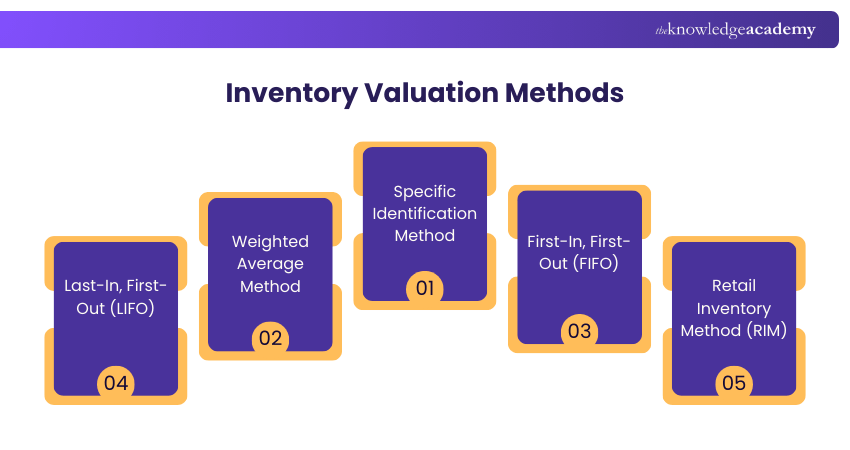
1) Specific Identification Method
The Specific Identification method assigns the exact cost to each individual inventory item. Businesses track and record the cost of specific units, making it highly accurate for inventory valuation. This approach is commonly used for unique or high-value products that can be easily identified.
2) Weighted Average Method
The Weighted Average method calculates the average cost of all items available in inventory. This average cost per unit is determined by dividing the total cost of goods available for sale by the number of units. The resulting average value is then used to measure both the cost of goods sold and remaining inventory.
3) First-In, First-Out (FIFO)
FIFO assumes that the earliest purchased or produced items are sold first. This approach reflects a natural flow of goods, particularly for products that can become outdated or expire. As a result, the remaining inventory typically consists of the most recently acquired items.
4) Last-In, First-Out (LIFO)
LIFO assumes that the most recently purchased items are sold first, while older inventory remains in stock. This means the cost of the latest inventory is recorded as the cost of goods sold. Although recognised in some accounting systems, it is used less frequently due to the risk of older stock becoming outdated.
5) Retail Inventory Method (RIM)
The Retail Inventory Method estimates inventory value using the relationship between cost and retail price. Businesses apply a cost-to-retail percentage to determine the value of goods in stock. This method is commonly used by retailers handling large volumes of similar products.
Convert any inventory into a steady flow of cash with our Cash Cycle Management Training – Join immediately!
Benefits of Inventory Accounting
Inventory Accounting is crucial when managing a company's financial health by accurately monitoring costs. Here are some of the key advantages of it:
1) Accurate Financial Reporting: Inventory Accounting reflects a company’s assets and helps calculate COGS and gross profit. This accuracy generates reliable financial statements, which are important for regulatory compliance and stakeholders.
2) Better Inventory Management: Better Inventory Management allows businesses to optimise their stock levels, reduce costs, and avoid overstocking. It even streamlines operations and minimises waste, leading to enhanced profitability.
3) Cost Control: Inventory Accounting can identify cost variances and trends, enabling companies to control costs. Businesses can work on inventory data to make informed decisions on pricing, purchasing, and developing production tactics.
4) Enhanced Cash Flow Management: Effective Inventory Accounting manages cash flow by identifying the capital linked stocks. Businesses can understand their inventory flow and ensure they possess enough liquidity for operations.
5) Tax Benefits: Methods like FIFO and LIFO can affect the recorded income and the taxes a business owes. Companies can utilise these methods to minimise tax liabilities.
6) Improved Decision-making: Detailed inventory records offer insights into product performance, customer demand, and sales patterns. These insights help make better decisions that drive business growth.
Build a career that counts...literally. Sign up for our comprehensive range of Accounting Courses now!
Examples of Inventory in Accounting
Let’s see some real-world examples in retail and manufacturing contexts to make our understanding of inventory models clearer.
1) Raw Materials/Components: The raw materials for a T-shirt manufacturer consist of fabric, thread, dyes, and print designs.
2) Finished Goods: A jeweller makes charming necklaces. Workers tie necklaces onto preprinted cards and place them in envelopes, producing final products ready for purchase. Packaging and labour expenses are part of the cost of goods sold.
3) Work in Progress (WIP): A cell phone assembly includes various parts, like the body and motherboard, at a specific work area. Items currently being assembled are classified as work in progress.
4) Maintenance, Repair, and Operations (MRO) Goods: An MRO inventory for a condo community consists of supplies such as copy paper, folders, printer toner, gloves, glass cleaner, and brooms for ground maintenance.
5) Packing Materials: A seed company uses sealed bags as the main packaging for items such as flax seeds. The bags are then put into boxes for transportation, and the boxes are secured on pallets with shrink wrap.
6) Anticipated/Smoothing Inventory: An event planner buys discounted ribbon spools and floral tablecloths for an upcoming busy June wedding season.
7) Decoupled Inventory: In a bakery, decorators have a stock of sugar roses for decorating wedding cakes. This reserve enables them to continue decorating even if other supplies, such as frosting mix, are delayed.
8) Service Inventory: A restaurant has ten tables and is open for 12 hours daily. Customers typically spend an hour waiting for their meal, which is equivalent to 120 meals in its service inventory.
9) Transit Inventory: An art store ordered 40 tins of a popular pencil set. The tins, which are currently being shipped from the vendor, are considered transit inventory.
10) Excess Inventory: A shampoo company manufactures 50,000 Olympic-themed bottles but sells only 45,000, leaving surplus stock that may require discounting or disposal.
How Can Technology Improve Inventory Accounting?
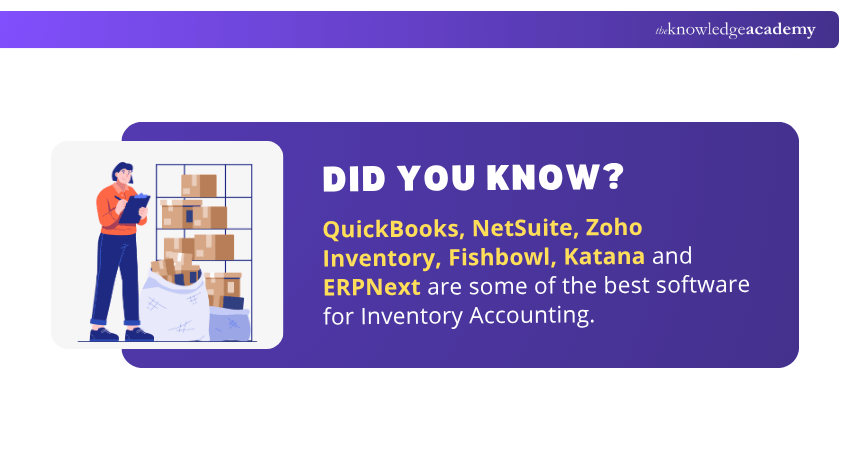
Technology greatly enhances Inventory Accounting by automating processes, reducing errors, and providing real-time data. Modern Inventory Management systems integrate with Accounting Software, making it easier to track purchases, sales, and stock levels accurately.
Tools like barcode scanning and cloud-based platforms allow instant updates, ensuring data is always current. Automation reduces manual effort, lowers administrative costs, and speeds up reporting. Advanced analytics also help businesses forecast demand, avoid overstocking, and minimise shortages.
Conclusion
Effective Inventory Management is essential for maintaining accurate financial records and supporting smooth business operations. By understanding inventory types and valuation methods, organisations can make better stock control and cost decisions. Ultimately, Inventory Accounting plays a vital role in helping businesses track assets, manage expenses, and maintain financial clarity.
Simplify your finances with our Book Keeping Course – Sign up today!
Frequently Asked Questions
What Does an Inventory Accountant do?

An Inventory Accountant manages and tracks a company’s stock records. They record purchases, usage, and sales to ensure accurate valuation using methods like FIFO or Weighted Average and reconcile discrepancies. They also prepare reports that support financial statements, compliance, and effective Inventory Management.
How is Inventory Reported on Financial Statements?
Inventory is reported in the balance sheet's "current assets" section. It specifically appears after cash and cash equivalents, short-term investments and receivables. The detailed breakdown of inventory categories is disclosed in the notes to the financial statements.
What are the Other Resources and Offers Provided by The Knowledge Academy?
The Knowledge Academy takes global learning to new heights, offering over 3,000+ online courses across 490+ locations in 190+ countries. This expansive reach ensures accessibility and convenience for learners worldwide.
Alongside our diverse Online Course Catalogue, encompassing 17 major categories, we go the extra mile by providing a plethora of free educational Online Resources like Blogs, eBooks, Interview Questions and Videos. Tailoring learning experiences further, professionals can unlock greater value through a wide range of special discounts, seasonal deals, and Exclusive Offers.
What is The Knowledge Pass, and How Does it Work?
The Knowledge Academy’s Knowledge Pass, a prepaid voucher, adds another layer of flexibility, allowing course bookings over a 12-month period. Join us on a journey where education knows no bounds.
What are the Related Courses and Blogs Provided by The Knowledge Academy?
The Knowledge Academy offers various Accounting Courses, including the Bookkeeping Course, Treasury Management Training, and Project Accounting Course. These courses cater to different skill levels, providing comprehensive insights into Accounting Software.
Our Accounting and Finance Blogs cover a range of topics related to Inventory Accounting, offering valuable resources, best practices, and industry insights. Whether you are a beginner or looking to advance your Cost Accounting skills, The Knowledge Academy's diverse courses and informative blogs have got you covered.

Olivia Taylor


Chartered Accountant and Financial Training Specialist
Olivia Taylor is a qualified chartered accountant with over a decade of experience in financial management, auditing and corporate reporting. Having worked with leading firms in both the public and private sectors, Olivia brings clarity to complex financial topics. Her writing focuses on helping professionals build confidence in key areas of accounting, compliance and financial planning.
View Detail
Upcoming Accounting and Finance Resources Batches & Dates
Date
 Inventory Accounting and Costing Course
Inventory Accounting and Costing Course
Fri 3rd Apr 2026
Inventory Accounting and Costing Course
Fri 15th May 2026
Inventory Accounting and Costing Course
Fri 17th Jul 2026
Inventory Accounting and Costing Course
Fri 25th Sep 2026

 If you wish to make any changes to your course, please


