


 Top Rated Course

We may not have the course you’re looking for. If you enquire or give us a call on + 1-866 272 8822 and speak to our training experts, we may still be able to help with your training requirements.
CGEIT vs CRISC: Understand the Differences
The Knowledge Academy 06 March 2026Dive into the comparative analysis of CGEIT and CRISC in our exploration of the "CGEIT vs CRISC" blog. Gain a comprehensive understanding of each certification, including their target audience, exam domains, and the career benefits they offer. Whether you're deciding which path to follow , this blog provides the insights you need.

Training Outcomes Within Your Budget!
We ensure quality, budget-alignment, and timely delivery by our expert instructors.
Table of Contents
Certifications play a crucial role in validating professionals' expertise in this cutthroat job market, especially in the rapidly evolving field of Cyber Security. Among these, CGEIT and CRISC stand out as prominent certifications with distinct focuses and career benefits. Understanding the differences between CGEIT and CRISC is essential for professionals seeking to make informed decisions about their career growth.
According to Statista, the global Cyber Security market is projected to reach £211.80 billion GBP by 2029, with an annual growth rate (CAGR 2025-2029) of 7.92%. So, the future looks promising in this domain and having a certification can undoubtedly improve your job profile. In this blog, you will learn about CGEIT and CRISC as well as the differences between CGEIT vs CRISC. Let’s examine deeper to learn more!
Table of Contents
1) Understanding CGEIT
2) Understanding CRISC
3) Key Differences Between CGEIT vs CRISC
a) Target Audience
b) Exam Domains
c) Career Benefits
d) Choosing the Right Certification
4) Conclusion
Understanding CGEIT
Certified in the Governance of Enterprise IT (CGEIT) is indeed a prestigious certification designed for professionals involved in IT governance, risk management, and strategic alignment. Understanding what CGEIT is and What is CGEITcrucial for deciding whether to choose this certification or not. This certification validates a candidate's skills in the following abilities:
1) Aligning IT goals with overall business objectives
2) Ensuring efficient utilisation of IT resources
3) Managing IT-related risks effectively

Understanding CRISC
Certified in Risk and Information Systems Control (CRISC) is a prominent certification offered by Information Systems Audit and Control Association (ISACA).
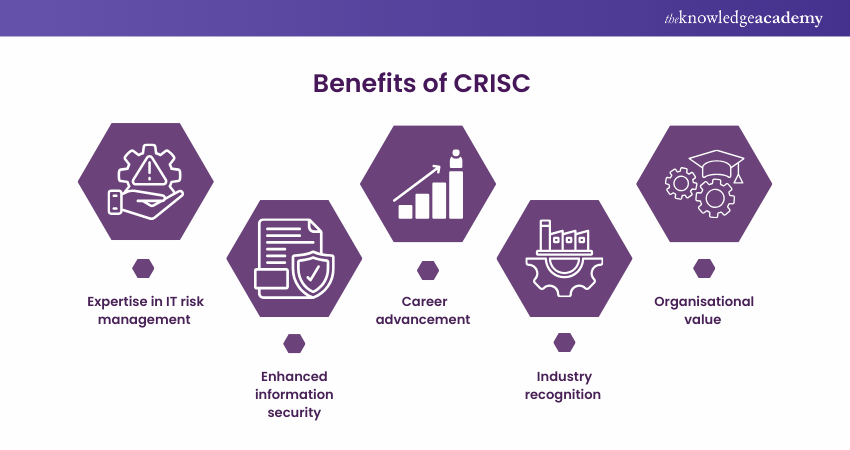
This certification is specifically designed for professionals involved in IT risk management, information systems control, and IT risk assessment. CRISC-certified individuals possess the necessary skills to identify and manage IT-related business risks effectively.
Key Differences Between CGEIT vs CRISC
CGEIT and CRISC stand out as prominent choices in the field of Cyber Security. While CGEIT focuses on IT governance and strategic alignment, CRISC emphasises risk management and control implementation, catering to distinct sets of professionals with varied expertise. Let’s take a look at the key differences between CRISC vs CGEIT:
Target Audience
CGEIT is tailored for professionals in leadership positions who are responsible for IT governance and strategic decision-making. It is an ideal choice for individuals aiming to align IT strategies with overall business objectives and enhance IT's contribution to the organisation's success.
On the other hand, CRISC is suited for professionals who are responsible for the responsibility of IT risk management and control implementation. It is an ideal certification for individuals who are passionate about managing IT-related risks, ensuring information systems' security, and meeting compliance requirements. When considering the value of such expertise, the CRISC Certification Worth is evident, as it equips professionals with the skills needed to handle these critical responsibilities effectively.
Exam Domains
a) CGEIT Exam Domains:
The CGEIT exam covers a wide range of domains and topics. Let’s take a brief look at what these topics are:
1) IT Governance Framework: Understanding different governance frameworks and how they apply to IT management.
2) Risk Management Processes: Identifying and evaluating IT risks, as well as developing risk response strategies.
3) Strategic Alignment: Ensuring IT strategies align with business objectives and support the organisation's overall vision.
4) Resource Optimisation: Efficiently utilising IT resources and assets to achieve business goals.
5) Performance Measurement: Establishing performance metrics to assess the effectiveness of IT governance practices.
6) Value Delivery: Ensuring that IT investments and initiatives deliver measurable value to the organisation.
By obtaining the CGEIT certification, professionals demonstrate their expertise in governing enterprise IT effectively, making them highly valuable assets to organisations seeking to enhance their IT governance practices and mitigate risks.
b) CRISC Exam Domains:
The CRISC exam encompasses various areas that aspiring candidates must be well-versed in. Some of the key content areas include:
1) Risk Appetite and Tolerance: Understanding an organisation's risk appetite and tolerance levels to align risk management strategies accordingly.
2) Risk Assessment Methodologies: Knowledge of various risk assessment techniques and their application in different scenarios.
3) Risk Response Options: Familiarity with different risk response strategies, such as risk acceptance, avoidance, transfer, and mitigation.
4) Information Systems Control Design and Implementation: Understanding the design and implementation of effective controls to manage IT risks.
5) Risk Monitoring and Reporting: Knowledge of monitoring IT risks and controls to ensure ongoing effectiveness and reporting findings to stakeholders.
By achieving the CRISC certification, professionals demonstrate their expertise in managing IT-related risks, ensuring information systems' security, and supporting overall business objectives.
Master the art of IT risk management with our CRISC Training.
Career Benefits
Holding a CGEIT certification opens doors to executive-level positions, such as IT directors or governance managers. CGEIT Sample Questions can be an excellent resource for those looking to refine their knowledge before certification, as CGEIT-certified professionals are highly sought after for their ability to align IT with business goals, making them valuable assets to organisations.
CRISC-certified professionals possess specialised skills in risk assessment and control implementation. They play a vital role in managing and mitigating IT-related risks, making them indispensable for organisations aiming to secure their information systems (IS) effectively.
Skill Emphasis
The CGEIT certification places more emphasis on soft skills, such as communication, leadership, and strategic thinking. CGEIT-certified professionals need to be effective communicators, capable of bridging the gap between IT and business stakeholders and conveying the value of IT governance.
The CRISC certification focuses on technical skills related to risk assessment, control implementation, and information systems security. CRISC-certified professionals require a strong understanding of IT risk management methodologies and technical controls to ensure the integrity and confidentiality of information.
Target Organisations
CGEIT is particularly valuable for professionals working in large enterprises or organisations where IT governance and strategic alignment play a critical role. It is well-regarded in industries where compliance and risk management are essential, such as finance, healthcare, and government sectors.
CRISC is beneficial for professionals working in organisations that face a high level of IT risk exposure and require strong control frameworks. It is valuable in industries where data protection and Cyber Security are paramount, such as technology, retail, and e-commerce sectors.
Choosing the Right Certification
Selecting between CGEIT and CRISC depends on an individual's career aspirations and interests. If one aspires to play a pivotal role in IT governance, decision-making, and strategic planning, CGEIT might be the right fit. On the other hand, if someone is passionate about managing IT risks, implementing controls, and ensuring information systems' security, CRISC could be the ideal choice.
Both CGEIT and CRISC certifications hold immense value in the Cyber Security domain. CGEIT focuses on IT governance and strategic alignment, while CRISC emphasises risk management and control implementation.
Aspiring professionals should carefully consider their career goals and interests before choosing the certification that aligns with their aspirations, setting them on the path to becoming proficient IT governance and risk management experts.
Unlock the potential of IT governance with our CGEIT Training (Certified In The Governance Of Enterprise IT). Sign up today!
Conclusion
We hope you read and understand the difference between CGEIT vs CRISC. CGEIT and CRISC certifications offer distinct career paths in the Cyber Security domain. CGEIT focuses on IT governance and strategy for executive-level roles. CRISC specialises in IT risk management and control implementation, ensuring information systems' security and compliance. Choosing the right certification depends on your career aspirations and needs.
Step into IT Leadership with CGEIT Training- register today and unlock new opportunities!
Frequently Asked Questions
How do Career Opportunities for CGEIT-certified Professionals Compare to CRISC-certified Professionals?

CGEIT-certified professionals focus on governance and IT management, often leading to leadership roles. CRISC-certified professionals specialise in risk management, opening opportunities in Cyber Security and compliance. Both certifications offer diverse and high-demand career paths.
Which Certification is More Suitable for Someone Focused on IT Risk Management?
The CRISC Certification is more suitable for individuals focused on IT risk management, as it emphasises identifying, assessing, and mitigating risks in information systems.
What are the Other Resources and Offers Provided by The Knowledge Academy?
The Knowledge Academy takes global learning to new heights, offering over 3,000 online courses across 490+ locations in 190+ countries. This expansive reach ensures accessibility and convenience for learners worldwide.
Alongside our diverse Online Course Catalogue, encompassing 17 major categories, we go the extra mile by providing a plethora of free educational Online Resources like Blogs, eBooks, Interview Questions and Videos. Tailoring learning experiences further, professionals can unlock greater value through a wide range of special discounts, seasonal deals, and Exclusive Offers.
What is The Knowledge Pass, and How Does it Work?
The Knowledge Academy’s Knowledge Pass, a prepaid voucher, adds another layer of flexibility, allowing course bookings over a 12-month period. Join us on a journey where education knows no bounds.
What are the Related Courses and Blogs Provided by The Knowledge Academy?
The Knowledge Academy offers various CGEIT Training, including CGEIT Training (Certified In The Governance Of Enterprise IT). This course caters to different skill levels, providing comprehensive insights into CGEIT.
Our IT Security & Data Protection Blogs cover a range of topics related to CGEIT, offering valuable resources, best practices, and industry insights. Whether you are a beginner or looking to advance your IT Security, The Knowledge Academy's diverse courses and informative blogs have got you covered.

The Knowledge Academy


Global Training Provider
The Knowledge Academy is a world-leading provider of professional training courses, offering globally recognised qualifications across a wide range of subjects. With expert trainers, up-to-date course material, and flexible learning options, we aim to empower professionals and organisations to achieve their goals through continuous learning.

Upcoming IT Infrastructure & Networking Resources Batches & Dates
Date
 Certified in Risk and Information Systems Control (CRISC)
Certified in Risk and Information Systems Control (CRISC)
Mon 22nd Jun 2026
Certified in Risk and Information Systems Control (CRISC)
Mon 14th Sep 2026
Certified in Risk and Information Systems Control (CRISC)
Mon 9th Nov 2026

 If you wish to make any changes to your course, please


