


 Top Rated Course

We may not have the course you’re looking for. If you enquire or give us a call on + 1-866 272 8822 and speak to our training experts, we may still be able to help with your training requirements.
Cash Flow Management: Key Strategies, Methods, and Examples
Olivia Taylor 07 February 2026Cash Flow Management involves tracking, analysing, and optimising cash inflows and outflows to make sure a business meets obligations and supports growth. It helps maintain liquidity, avoid cash shortages, and plan future spending wisely. With strong cash control, businesses stay stable, pay bills on time, and invest in growth.

Training Outcomes Within Your Budget!
We ensure quality, budget-alignment, and timely delivery by our expert instructors.
Table of Contents

Cash keeps every business alive, just like oxygen keeps us breathing. You might have great products, loyal customers, or big goals, but without steady Cash Flow Management, everything can quickly fall apart. Whether you are a small business owner, a finance scholar or a manager aiming to grow, understanding Cash Flow helps you stay confident, prepared, and in control.
In this blog, we will explain what is Cash Flow Management, why it matters, how it works, and practical ways to manage and improve it. You will also see examples, useful tools, and a simple method to calculate Cash Flow.
Table of Contents
1) What is Cash Flow Management?
2) Why is Cash Flow Management Important?
3) How Does Cash Flow Management Work?
4) Five Effective Strategies to Manage Cash Flow
5) Ways to Improve Your Cash Flow Management
6) Common Challenges in Cash Flow Management
7) Examples of Effective Cash Flow Management
8) What is a Cash Management Tool?
9) How Do You Calculate Cash Flow?
10) Conclusion
What is Cash Flow Management?
Cash Flow Management is the process of tracking, analysing, and optimising the movement of money into and out of a business. It helps organisations understand whether they have enough cash available to meet daily expenses, invest in growth, and handle unexpected costs. By keeping a close eye on inflows and outflows, businesses can make informed financial decisions and avoid liquidity issues.
It also involves forecasting future cash needs, planning for seasonal fluctuations, and ensuring payments are timed wisely. Effective Cash Flow Management supports long term stability and helps companies stay financially resilient.
Cash Flow Categories
A business receives and spends money in different areas. These cash movements are grouped into three main types:
1) Cash Flows from Operations (CFO)
This refers to the money a business earns and spends in its day-to-day activities, such as selling products and paying bills. A positive operating cash flow indicates that the company generates enough income to sustain its routine operations effectively.
2) Cash Flows from Investing (CFI)
This category includes cash used to buy or sell long-term assets, such as property, equipment, or investments. When a business purchases assets, cash flows out; when it sells them, cash flows in, providing funds to support future growth and projects.
3) Cash Flows from Financing (CFF)
This Cash Flow shows money coming in or going out to fund the business. It includes taking loans, issuing shares, repaying borrowing, and paying dividends. It helps show how a company raises money and manages its financial obligations.

Why is Cash Flow Management Important?
Let's discuss the key reasons behind the relevance of effective Cash Flow Management:
1) Ensures Liquidity: Proper Management of Cash Flow ensures that a business always has enough cash to cover its operational expenses, including payroll, rent, and utility bills.
2) Prevents Insolvency: By monitoring cash inflows and outflows closely, businesses can prevent running out of cash, a leading cause of insolvency and bankruptcy.
3) Supports Growth: Effective Cash Flow Management helps businesses invest in growth opportunities, such as new Product Development, market expansion, and capital expenditures, without jeopardising their financial stability.
4) Facilitates Strategic Planning: An accurate Cash Flow Forecast allows businesses to make better decisions related to future investments, financing needs, and operational adjustments.
5) Improves Relationships with Suppliers and Creditors: Managing Cash Flow helps businesses to pay their suppliers and creditors on time, which helps in maintaining robust relationships and securing favourable terms.
6) Enhances Profitability: By optimising payment timings and managing expenses, businesses can reduce costs and boost their overall profitability.
7) Enables Crisis Management: A well-managed Cash Flow provides a buffer during economic downturns or unexpected challenges, allowing businesses to navigate tough times without severe financial strain.
How Does Cash Flow Management Work?
Due to the broad nature of the topic, business Cash Flow Management differs depending on the stage of growth. However, the most effective practices include three key components:
1) Monitoring Cash Flow: This involves keeping accurate records of all cash entering and leaving the business. It includes tracking inflows, such as sales, loans, or investments, and outflows, such as rent, payroll, and supplier payments, to understand your financial activity clearly.
2) Analysing Cash Flow: This step focuses on evaluating the timing, volume, and effect of cash movements. By analysing Cash Flow, you gain insights into your business’s liquidity, solvency, and financial health. It helps you spot trends, forecast future needs, and support strategic planning.
3) Optimising Cash Flow: The goal is to strike the right balance between money coming in and going out. This includes accelerating receivables, managing expenses efficiently, investing surplus funds wisely, and arranging financing when needed. This should happen without disrupting operations or key business relationships.
Learn to track and value inventory for better Financial Management with our Inventory Accounting and Costing Course – Register today!
Five Effective Strategies to Manage Cash Flow
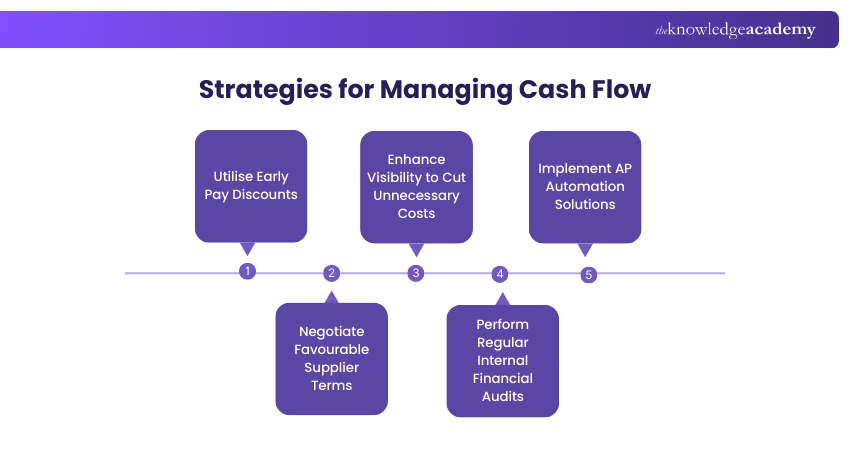
Effective Cash Flow Management ensures a business's sustained financial health. Here are five Cash Flow Strategies to help you manage Cash Flow more effectively:
1) Utilise Early Pay Discounts
Leveraging early-pay discounts is a smart way to save on costs. By settling invoices prior to their due dates, you can secure discounts from suppliers, directly enhancing your Cash Flow while fostering stronger supplier relationships.
2) Negotiate Favourable Supplier Terms
Negotiate the best payment terms with suppliers to effectively ease Cash Flow pressures. Incorporating Revenue Cycle Management strategies can further support this by allowing you to extend payment periods or arrange flexible terms, helping you better align outgoing payments with your revenue cycles and ensure smoother Cash Management.
3) Enhance Visibility to Cut Unnecessary Costs
Monitor expenditures closely through detailed reporting. This can help you make informed decisions that reduce waste and optimise your Cash Flow.
4) Perform Regular Internal Financial Audits
Regular financial audits are crucial for maintaining accuracy and efficiency in managing Cash Flow and managing the Cash Budget. These audits help detect discrepancies, ensure financial practices align with your goals and offer insights for more strategic financial planning
5) Implement AP Automation Solutions
Automating accounts payable processes can greatly enhance Cash Flow Management. Additionally, it helps in reducing manual errors, speeds up processing, and improves tracking for a better overall financial stability.
Ways to Improve Your Cash Flow Management
Consider the following points to boost your Cash Flow Management approach beyond your usual measures:

1) Monitor Cash Flow Regularly: To stay ahead of potential issues, track inflows and outflows weekly or monthly.
2) Speed Up Receivables: You must encourage faster payments with automated invoicing or early payment discounts.
3) Build a Cash Reserve: Always set aside funds for emergencies or seasonal fluctuations.
4) Forecast Future Cash Needs: Make good use of historical data to predict and prepare for upcoming financial demands.
5) Automate Financial Processes: Harness the power of Accounting software to streamline tracking and reporting.
6) Diversify Revenue Streams: A helpful step is to reduce dependency on a single source of income to stabilise Cash Flow.
7) Review Pricing Strategies: Make sure your pricing covers the costs and supports profitability. Otherwise, review the pricing strategies.
8) Know the Warning Signs: Tracking business credit scores alerts you to client or supplier financial trouble early, helping you act fast, avoid losses, and protect your Cash Flow.
9) Seek Professional Advice: Consulting financial experts for tailored strategies and insights is always a good idea.
Understand interest rate risk and balance sheet exposure management principles. Join our Asset and Liability Management Training today!
Common Challenges in Cash Flow Management
Cash Flow Management is the most important step for maintaining the financial health of a business, but it comes with its own set of challenges. Below are some common challenges businesses face in managing business Cash Flow:
1) Extending Credit
1) When businesses extend credit to customers, they often experience delays in receiving payments.
2) These delays can disrupt the regular flow of cash needed for daily operations.
3) Although credit sales may boost overall revenue, they tie up cash in accounts receivable.
4) This makes it challenging for businesses to meet immediate expenses such as rent, salaries or inventory.
As a result, a gap is created between when a sale is made and when the actual cash is received.
2) Forecasting Expenses
1) Predicting future expenses can be difficult, especially with variable costs.
2) Inaccurate forecasts may lead to unexpected cash shortfalls.
3) Sudden costs can leave the business unable to meet financial obligations.
4) To reduce this risk, regular monitoring and adjusting of forecasts is key.
Proactive planning improves financial stability and preparedness.
3) Rapid Business Growth
1) While rapid growth is a positive indicator, it can create Cash Flow challenges if not managed well.
2) An increased demand for products or services often requires additional inventory, staffing and resources.
3) These needs result in higher upfront costs that can strain any available cash.
4) Without sufficient cash reserves or access to financing, businesses may encounter liquidity problems.
Effective Cash Flow planning is crucial to support sustainable growth and avoid financial stress.
4) Absence of Accounts Receivable System
An inefficient accounts receivable system makes it very difficult to track outstanding invoices.
1) A lack of oversight often results in delayed customer payments.
2) Delayed collections can create Cash Flow problems for the business.
3) A strong receivables system ensures timely follow-ups and payments.
It also improves Cash Flow predictability and financial planning.
5) Industry Cyclicality
1) Seasonal or cyclical industries often face fluctuating Cash Flows.
2) Maintaining consistent liquidity year-round can be a big challenge.
3) The off-peak periods may result in reduced revenue and cash shortages.
4) These fluctuations increase the financial risk, especially during slower business months.
Building cash reserves during peak seasons helps you manage leaner periods effectively.
6) Irregular Revenue Patterns
1) Irregular or unpredictable revenue makes it hard to maintain a steady Cash Flow.
2) Fluctuations may stem from changing, shifting demand, project-based work or economic shifts.
3) An inconsistent income can disrupt the budgeting and financial planning process.
4) Creating cash buffers can help cover the expenses during low-revenue periods.
Diversifying your revenue streams can reduce reliance on a single income source.
Understand the cash conversion cycle to convert its inventory into sales then in to cash. Join our Cash Management Course now!
Examples of Effective Cash Flow Management
Effective Cash Flow Management plays an important role in keeping a business financially stable and ready for growth. Below are practical examples of smart Cash Flow strategies that companies can use to strengthen their finances and operate smoothly.
Example A – Short Cash
A small business holds inventory for 90 days and receives customer payments in 60 days but must pay suppliers within 30 days. This creates a cash gap because money is tied up in stock and receivables, while payments are due much sooner.
To manage Cash Flow better, the business should try to extend payment terms with suppliers or collect payments and sell inventory faster. If that is not possible, they may need to use short-term financing to cover the shortfall.
Example B – Extra Cash
A manufacturing company pays suppliers in 60 days but collects customer payments within 30 days and keeps inventory for only 10 days. With cash coming in faster than it goes out, the business has surplus funds available.
To make the most of this positive cash cycle, the company can consider investing extra cash in growth opportunities or short-term financial products to earn returns and strengthen future stability.
What is a Cash Management Tool?
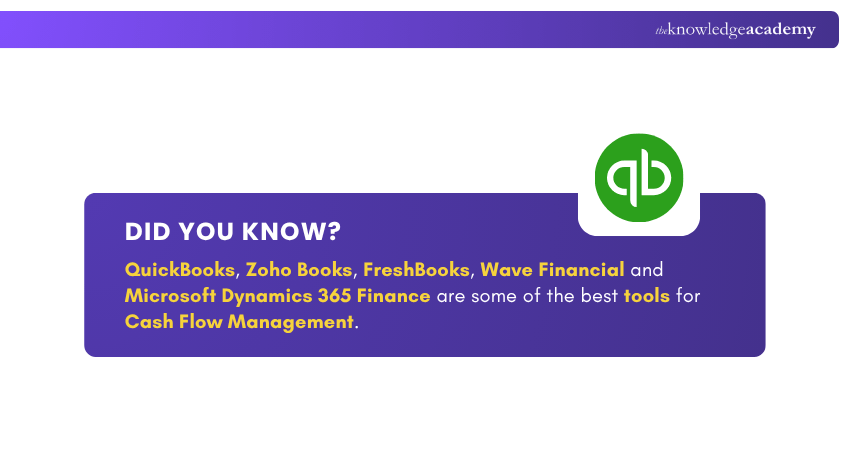
A Cash Management tool is a software or system that helps a business track, manage, and optimise its Cash Flow. It keeps an eye on money coming in and going out, helps plan future cash needs, and ensures funds are available to cover expenses and investments.
With these tools, businesses can automate payments, forecast Cash Flow, monitor spending, and avoid cash shortages. They provide real-time financial visibility, making it easier for companies to stay financially healthy and make smart decisions.
How Do You Calculate Cash Flow?
Either we use the formula for net Cash Flow, which takes all Cash Flows in a company into account:
Net Cash Flow = Total Cash Inflows - Total Cash Outflows
Alternatively, we can use the formula for Free Cash Flow (FCF), which focuses on discretionary cash.
Conclusion
Smart Cash Flow Management is not just about balancing numbers; it is about keeping your business strong, steady, and ready for growth. When you understand where your money goes, plan ahead, and use the right tools, you protect your business from surprises and unlock new opportunities. With the right Cash Flow strategy, your company stays confident, competitive, and prepared for long-term success.
Understand regulatory compliance and financial reporting standards with our Accounting Courses – Join now!
Frequently Asked Questions
What is the Aim of Cash Flow?

The aim of Cash Flow is to ensure that a business has enough liquid assets to meet its immediate and long-term obligations. This includes paying bills, salaries, and suppliers. By balancing inflows and outflows, Cash Flow allows a business to maintain financial stability, invest in growth opportunities, and avoid insolvency.
How Long can a Company's Cash Flows Continue?
A company's Cash Flow can continue indefinitely if it consistently generates more inflows than outflows. Sustainability depends on steady revenue, effective Expense Management, and regular monitoring.
What are the Other Resources and Offers Provided by The Knowledge Academy?
The Knowledge Academy takes global learning to new heights, offering over 3,000+ online courses across 490+ locations in 190+ countries. This expansive reach ensures accessibility and convenience for learners worldwide.
Alongside our diverse Online Course Catalogue, encompassing 19 major categories, we go the extra mile by providing a plethora of free educational Online Resources like Blogs, eBooks, Interview Questions and Videos. Tailoring learning experiences further, professionals can unlock greater value through a wide range of special discounts, seasonal deals, and Exclusive Offers.
What is The Knowledge Pass, and How Does it Work?
The Knowledge Academy’s Knowledge Pass, a prepaid voucher, adds another layer of flexibility, allowing course bookings over a 12-month period. Join us on a journey where education knows no bounds.
What are the Related Courses and Blogs Provided by The Knowledge Academy?
The Knowledge Academy offers various Accounting Courses, including the Cash Flow Management Course, Cash Management Course, and the Capital Market Course. These courses cater to different skill levels, providing comprehensive insights into Double-Entry Bookkeeping.
Our Accounting and Finance Blogs cover a range of topics related to Cash Flow Management, offering valuable resources, best practices, and industry insights. Whether you are a beginner or looking to advance your Accounting and Finance skills, The Knowledge Academy's diverse courses and informative blogs have got you covered.

Olivia Taylor


Chartered Accountant and Financial Training Specialist
Olivia Taylor is a qualified chartered accountant with over a decade of experience in financial management, auditing and corporate reporting. Having worked with leading firms in both the public and private sectors, Olivia brings clarity to complex financial topics. Her writing focuses on helping professionals build confidence in key areas of accounting, compliance and financial planning.
View Detail
Upcoming Accounting and Finance Resources Batches & Dates
Date
 Cash Flow Management Course
Cash Flow Management Course
Fri 27th Mar 2026
Cash Flow Management Course
Fri 22nd May 2026
Cash Flow Management Course
Fri 24th Jul 2026
Cash Flow Management Course
Fri 27th Nov 2026

 If you wish to make any changes to your course, please


