


 Top Rated Course

We may not have the course you’re looking for. If you enquire or give us a call on + 1-866 272 8822 and speak to our training experts, we may still be able to help with your training requirements.
What are the Big Five Personality Traits: Definition and Theory
Scarlett Adams 15 December 2025The Big Five personality traits are the five broad dimensions of personality: Openness, Conscientiousness, Extraversion, Agreeableness, and Neuroticism. These traits help explain how people think, feel, behave and interact with others. Understanding them can improve communication, teamwork and personal growth.

Training Outcomes Within Your Budget!
We ensure quality, budget-alignment, and timely delivery by our expert instructors.
Table of Contents

Personality influences how we respond to situations, relate to others, and make decisions. One widely accepted model is the Big Five personality traits, which offer a clear framework for understanding individual differences. These five traits reflect patterns in behaviour, emotion and thought. Let’s explore each trait in detail to see what they reveal about us.
Table of Contents
1) Understanding the Big 5 Personality Traits
2) History of the Big 5 Personality Theory
3) What are the Big Five Personality Traits?
4) How to Use the Big Five Personality Traits?
5) Factors Influencing Personality Traits
6) Conclusion
Understanding the Big 5 Personality Traits
The Big Five Personality Traits include Openness, Conscientiousness, Extraversion, Agreeableness, and Neuroticism, commonly remembered by the acronym OCEAN. These five dimensions describe how individuals think, feel, and behave across different situations, offering a comprehensive view of human personality.
Each trait exists on a continuum, explaining the variations in personality among individuals. For instance, someone high in Openness tends to be creative and curious, while a person with high Conscientiousness is typically organised and dependable. Understanding these traits can enhance self-awareness, improve interpersonal relationships, and boost professional performance.

History of the Big 5 Personality Theory
Here’s a brief history of the Big Five Personality Traits, from Gordon Allport in the 40s to the contributions of John M. Digman in the 90s.
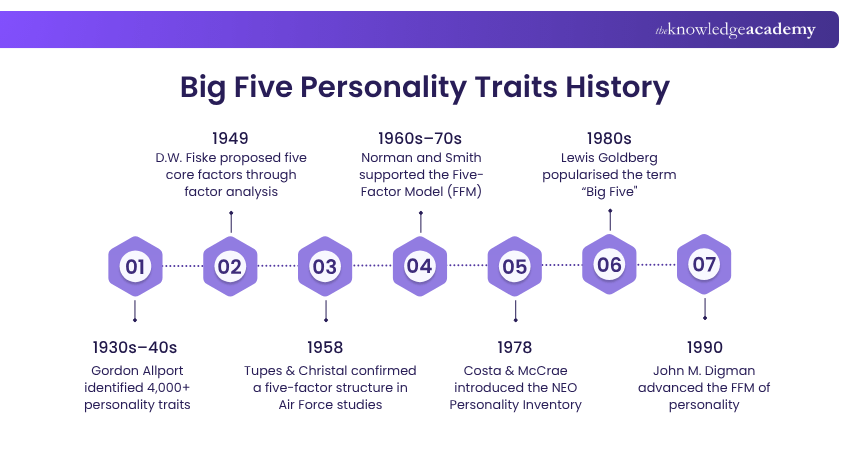
a) 1930s–1940s: The Foundation of Personality Study: Gordon Allport identified over 4,000 personality traits, laying the groundwork for modern personality psychology.
b) 1949: The Five Core Factors Proposed: D.W. Fiske introduced five fundamental factors of personality through factor analysis.
c) 1958: Empirical Validation of the Model: Tupes and Christal confirmed a five-factor structure in their Air Force studies.
d) 1960s–1970s: Support for the Five-Factor Model: Norman and Smith advanced research supporting what became the Five-Factor Model (FFM).
e) 1978: Development of the NEO Personality Inventory: Costa and McCrae created the NEO Personality Inventory to measure the Big Five traits.
f) 1980s: The Term ‘Big Five’ Popularised: Lewis Goldberg coined and popularised the term “Big Five,” establishing it in personality psychology.
g) 1990: Advancement of the Five-Factor Model: John M. Digman refined and advanced the Five-Factor Model, solidifying its modern framework.
Unlock the Psychology behind your best self in our Psychology of Personal Growth Training - Sign up now!
What are the Big Five Personality Traits?
Here’s a detailed explanation of the Big Five Personality Traits. Understanding these traits offers deeper insight into how people think, feel, and behave - helping improve communication, collaboration, and personal growth.
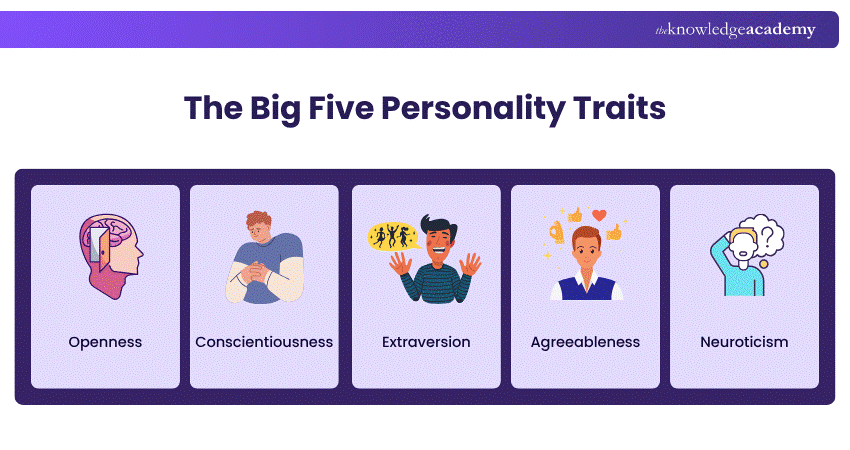
1) Openness
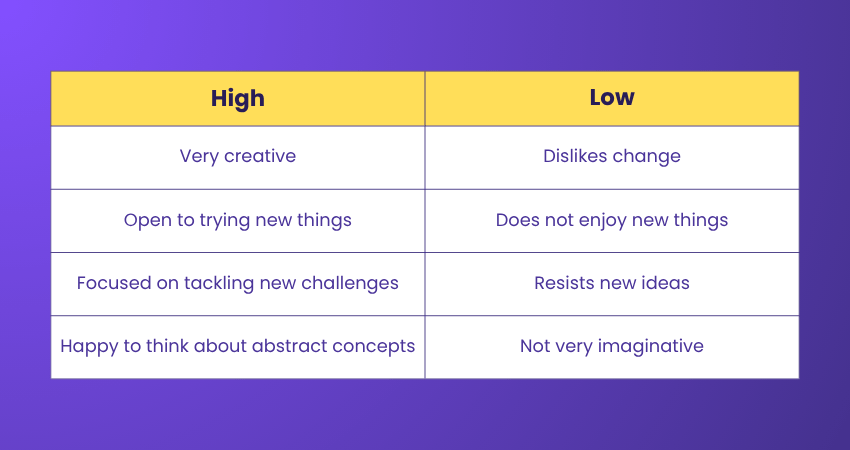
Openness highlights imagination, creativity, and curiosity. People high in openness are eager to explore new ideas and experiences, often showing a strong interest in learning and abstract thinking. Those low in openness may prefer routine, tradition, and practical approaches.
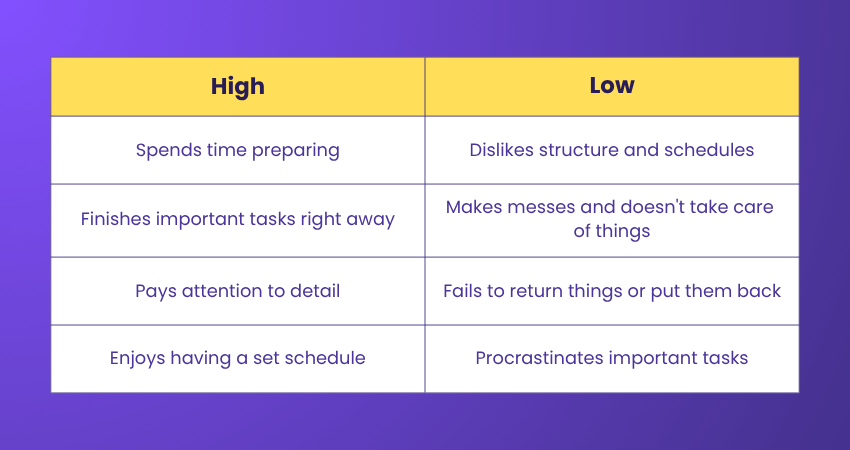
2) Conscientiousness
This trait reflects organisation, reliability, and goal-oriented behaviour. Highly conscientious individuals plan ahead, meet deadlines, and consider the impact of their actions. Low scorers may be more spontaneous but often struggle with structure and follow-through.
3) Extroversion
Extraversion is marked by sociability, assertiveness, and emotional expressiveness. Extraverts gain energy from social interaction, while introverts may find it draining and prefer solitude to recharge.

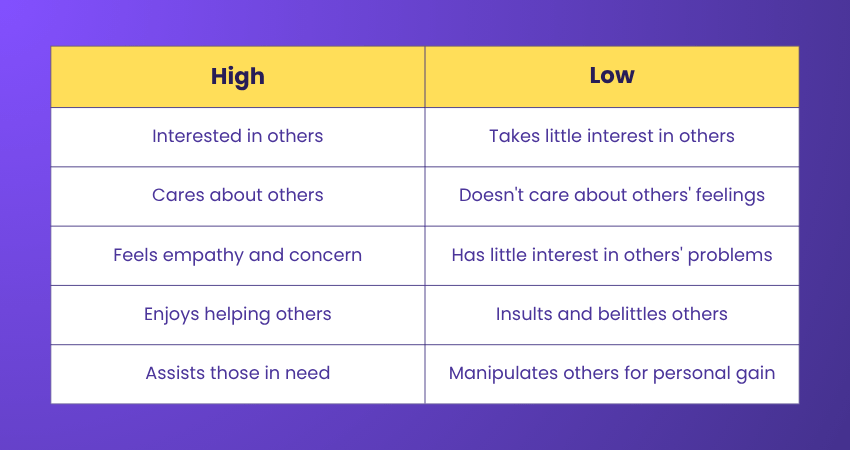
4) Agreeableness
Agreeableness involves kindness, empathy, and cooperation. Highly agreeable people are compassionate and helpful, while those low in agreeableness may be more competitive or manipulative.
5) Neuroticism
Neuroticism reflects emotional instability and sensitivity to stress. High scorers may experience anxiety, mood swings, and sadness. Low scorers tend to be calm, resilient, and emotionally stable.

Struggling to decode the workplace mindset of your team? Our Psychology of Behaviour at Work Training will help you out - Register now!
How to Use the Big Five Personality Traits?
Your position on the continuum of the five primary traits can help determine how likely you are to display certain secondary personality traits, whether positive or negative. These different traits are often split into two categories: positive Personality Traits and negative Personality Traits.
Positive Personality Traits
Positive Personality Traits can be beneficial to have. These traits help you become a better person and make it easier to cope with the challenges. Positive Personality Traits include:
1) Adaptable: Easily adjust to new situations and embrace change
2) Ambitious: Set high goals and work diligently to achieve them
3) Considerate: Show care and respect for others’ feelings and needs
4) Cooperative: Work effectively with others and value teamwork
5) Friendly and Gracious: Warm, polite, forgiving, and approachable
6) Humble and Insightful: Stay grounded despite success and think deeply
7) Objective: Make fair, balanced decisions without emotional bias
8) Optimistic: Focus on the positive and expect good outcomes
9) Thorough: Pay attention to detail and complete tasks carefully
10) Well-rounded: Possess diverse skills and maintain a balanced outlook
To better understand and develop positive personality traits, consider exploring our professional Positive Psychology Course now!
Negative Personality Traits
Negative Personality Traits are those that can be more detrimental than beneficial. These are traits that may hinder your life or harm your relationships with others. Negative Personality Traits include:
1) Aggressive and Arrogant: Display hostility or superiority toward others
2) Cold: Shows little warmth or empathy in interactions
3) Deceptive: Mislead others or conceal the truth
4) Egotistical: Focus excessively on self-interest and attention
5) Intolerant and Judgmental: Criticise or reject differing opinions or people
6) Neglectful: Ignore duties, responsibilities, or the needs of others
7) Selfish: Prioritise personal desires over others’ welfare
8) Unreliable: Fail to follow through on commitments or promises
9) Pessimistic: Expect negative outcomes and focus on problems rather than solutions
10) Stubborn: Resist change and refuse to consider others’ viewpoints
Factors Influencing Personality Traits
Here are some factors that influence Personality Traits:

Conclusion
The Big Five Personality Traits offer a useful framework for understanding how people think, feel and behave. Each trait exists on a spectrum, shaping individual differences in unique ways. Recognising these traits can improve self-awareness, relationships and personal development. Exploring them in detail helps us better understand ourselves and others.
Strong minds lead to brighter lives! Learn how to prioritise Mental health in our comprehensive Mental Health Training – Sign up now!
Frequently Asked Questions
Are Personality Traits Genetic?

Yes, Personality Traits are influenced by genetics. However, this does not mean that genes solely determine personality. Environmental factors, including upbringing, experiences, and cultural influences, also significantly contribute to this.
Are Personality Traits Consistent as We Age?
Personality Traits can change as we grow older. Although our early personality provides a baseline, it can still evolve. Some research suggests that Personality Traits may remain fairly steady during each decade of life.
What are the Other Resources and Offers Provided by The Knowledge Academy?
The Knowledge Academy takes global learning to new heights, offering over 3,000+ online courses across 490+ locations in 190+ countries. This expansive reach ensures accessibility and convenience for learners worldwide.
Alongside our diverse Online Course Catalogue, encompassing 19 major categories, we go the extra mile by providing a plethora of free educational Online Resources like Blogs, eBooks, Interview Questions and Videos. Tailoring learning experiences further, professionals can unlock greater value through a wide range of special discounts, seasonal deals, and Exclusive Offers.
What is The Knowledge Pass, and How Does it Work?
The Knowledge Academy’s Knowledge Pass, a prepaid voucher, adds another layer of flexibility, allowing course bookings over a 12-month period. Join us on a journey where education knows no bounds.
What are the Related Courses and Blogs Provided by The Knowledge Academy?
The Knowledge Academy offers various Mental Health Courses, including the Introduction to Psychology of Personality Course, Positive Psychology Course and the Psychology of Personal Growth Training. These courses cater to different skill levels, providing comprehensive insights into 5 Ways to Wellbeing.
Our Health & Safety Blogs cover a range of topics related to Personality Traits, offering valuable resources, best practices, and industry insights. Whether you are a beginner or looking to advance your knowledge about Human Psychology, The Knowledge Academy's diverse courses and informative blogs have got you covered.
Upcoming Health & Safety Resources Batches & Dates
Date
 Introduction to Psychology of Personality
Introduction to Psychology of Personality
Fri 10th Apr 2026
Introduction to Psychology of Personality
Fri 5th Jun 2026
Introduction to Psychology of Personality
Fri 7th Aug 2026
Introduction to Psychology of Personality
Fri 16th Oct 2026

 If you wish to make any changes to your course, please


