


 Top Rated Course

We may not have the course you’re looking for. If you enquire or give us a call on + 1-866 272 8822 and speak to our training experts, we may still be able to help with your training requirements.
10 Advantages of Internal Recruitment: Explained
Amelia Williams 15 July 2026The Advantages of Internal Recruitment include faster hiring, lower costs, and better cultural fit while boosting employee morale, motivation, and retention. It shows a company’s commitment to employee development, creating a loyal and future-ready workforce. Moreover, it enhances trust, teamwork, and long-term organisational stability.

Training Outcomes Within Your Budget!
We ensure quality, budget-alignment, and timely delivery by our expert instructors.
Table of Contents
Organisations are increasingly recognising the benefits of Internal Recruitment in their talent acquisition journey. This approach involves identifying and promoting existing talents to fill crucial roles, leading to advantages that go beyond traditional hiring methods.
Internal Recruitment is essential in shaping a strong and loyal workforce, from cost-efficiency to cultural preservation. This blog aims to help you understand the top Advantages of Internal Recruitment, which include cost and time savings, improved employee retention, cultural preservation, and streamlined onboarding. Let’s dive in for more insights!
Table of Contents
1) What is Internal Recruitment?
2) Key Advantages of Internal Recruitment
3) Internal Recruitment Done Right With Software
4) Which is Better: External or Internal Recruitment?
5) Would Internal Recruitment Benefit Your Company?
6) Conclusion
What is Internal Recruitment?
Internal Recruitment is the process of hiring from the organisation's present workforce. It may take the form of promotion, transfer, employee referrals, or from converting the temporary employees to permanent or full-time employees. A structured hiring system for internal candidates will save the process from becoming time-consuming in filling the vacancies.
In fact, this internal talent helps to smooth transitions from company culture by using the skills that have been developed and capitalising on knowledge of the way processes work. The above is what develops and retains employees since it gives an overview of opportunities to grow and advance within the organisation. Overall, Internal Recruitment strategies remain a beneficial approach that enhances efficiency, improves engagement with employees, and contributes to the success of the company in the long run.

Key Advantages of Internal Recruitment
Internal Recruitment is a process involving the identification and promotion of existing employees to fill vacant positions within an organisation. It emphasises nurturing talent from within, fostering employee loyalty, and reducing hiring costs.
This approach ensures a smooth transition for individuals already familiar with the company’s culture and operations. Below are the various Advantages of Internal Recruitment, described in detail:

Internal Recruitment helps companies save time and money by avoiding the need for external advertising and hiring agencies' costs. Current employees already know how the organisation works, so they settle into new roles faster. This efficiency minimises recruitment expenses and ensures quicker role adaptation, leading to faster productivity and a stronger return on investment.
It also builds confidence among employees, as they see real opportunities to grow within the company. This motivates them to work harder and stay longer, reducing staff turnover.
Example: Let’s consider that a Customer Service Team Leader earns £32,000 and is promoted to manager at £55,000. Hiring externally would have cost an extra £6,000 in recruitment fees and taken weeks longer, making her internal promotion both faster and more cost-effective.
2) Enhanced Employee Retention
One of the Advantages of Internal Recruitment is that it helps employees feel loyal and committed to the company. When they see others being promoted, it gives them hope for their own growth and encourages them to stay longer. It also creates a sense of belonging and trust among employees, as they feel valued and recognised for their work.
Clear chances for promotion and learning keep employees motivated, reduce resignations, and build a stable, experienced team. Overtime, it boosts morale and teamwork, making people more likely to give their best.
Example: Imagine an employee is approached by a rival firm offering a higher salary, but he decides to stay because your company recently promoted him and invested in his leadership training. The visible career progression and supportive culture make him feel valued and committed to growing within the organisation.
3) Cultural Preservation
Internal Recruitment plays a vital role in cultural preservation within organisations. By promoting from within, companies ensure that employees ascending the ranks are familiar with the company's values, mission, and dynamics.
Additionally, this intrinsic knowledge contributes to preserving the unique organisational culture, fostering a cohesive and harmonious workplace. Internal hires seamlessly align with existing cultural norms, promoting unity and shared objectives. This is crucial for maintaining a positive work environment and sustaining the distinctive identity that sets the organisation apart.
Example: When a longtime employee is promoted from HR Executive to HR Manager, the team quickly adapts to her leadership. Her deep understanding of the company’s values and work culture ensures a smooth transition, preserving the department’s positive atmosphere and collaborative spirit.
Upgrade your hiring approach and drive better results with our Recruiting for Success Training – Register today!
4) Streamlined Onboarding
Internal Recruitment facilitates streamlined onboarding processes, expediting the integration of promoted employees into new roles. As existing staff members, internal hires are already familiar with the company's policies and procedures, significantly reducing the time consumed and resources typically spent on orientation.
Moreover, this accelerated onboarding results in a quicker adaptation to new responsibilities, minimising disruptions to workflow. The seamless transition allows internal recruits to contribute effectively from the outset, promoting operational efficiency and ensuring a swift return on the organisation's investment in talent development.
Example: An employee who has been in the finance team for four years is now promoted to Finance Manager. Her familiarity with internal systems and workflows allows her to settle into the new role quickly, requiring only brief training.
5) Mitigation of Hiring Risks
Risk mitigation is effective; Internal Recruitment uses known entities. In this case, Talent Acquisition Managers are much more informed about the performance, work ethic, and cultural fit of the candidate in his or her department.
This equally minimises the uncertainties that are linked with hiring from outside, hence the risk of mismatching expectations. Internal candidates also have prior knowledge of organisational processes; thus, there is less chance of on-the-job challenges.
Internal Recruitment is, therefore, an attempt to tap strategically into an already proven pool of talents in a manner that minimises risks but ensures more security and predictability for the organisations in talent acquisition.
Example: After consistent performance, an employee gets promoted to Operations Manager. His proven reliability and deep understanding of company procedures reduce the uncertainty associated with external hires, ensuring a smooth transition and continued operational stability.

6) Attainment of Workforce Planning Objectives
This forms an important tool for the organisational Workforce Planning objectives in meeting the aspirations of strategic goals. The organisation must, therefore, be able to identify and develop talent from within in order to meet the organisational goals.
This approach ensures a seamless transition in leadership roles and supports succession planning initiatives. Become a Recruiter who focuses on internally developed talent, allowing for targeted skill development and creating an attuned workforce that aligns with both current objectives and future goals. Lastly, Internal Recruitment becomes a strategic driver for achieving long-term workforce planning goals.
Example: When a Senior Engineer nears retirement, a skilled Junior Engineer will be promoted after completing internal leadership training. This proactive move supports succession planning and ensures business continuity without relying on external recruitment.
7) Provision of Employee Growth Opportunities
Giving employees the chance to move to new roles shows that their hard work is noticed and appreciated. It motivates them to keep learning and improving their skills. These opportunities make people feel valued and satisfied, encouraging them to give their best effort at work.
These Internal Recruitment benefits also help build confidence among employees, as they see that their growth is supported by the company. This not only improves individual performance but also strengthens the overall success of the organisation.
Example: After an employee’s promotion to Project Manager, the former role is shared between two other existing employees, who take on new responsibilities with extra training. The experience builds their confidence and reinforces the company’s commitment to employee growth and development.
Gain the skills to recruit safely and responsibly with our Safer Recruitment Training – Sign up anytime!
8) Ensuring Employee Job Security
Internal Recruitment plays a pivotal role in ensuring employee job security. By prioritising promotions from within, organisations communicate a commitment to retaining and developing their existing talent.
Such an approach gives employees a sense of stability, knowing their dedication and contributions are recognised. Internal hires are less susceptible to external market fluctuations, enhancing their confidence in long-term job security. This commitment to internal talent helps foster a positive work environment and contributes to sustained employee loyalty and organisational resilience.
Example: During a company restructuring, instead of laying off employees, the management reassigns them to different departments based on their skills. This approach helps maintain job security and strengthens trust in the company’s commitment to its workforce.
9) Increased Engagement
Internal Recruitment improves very strongly the perspective of employee involvement through a clear path offered for career progress. An employee who sees opportunity in the organisation for growth will be more involved and motivated.
It ensures that there is a future of internal promotions since an individual can be committed and loyal if he actively contributes to his professional development. Such increased engagement tends to make the workforce much more alive and hence productive. They create an environment for positive reinforcement where employees feel valued, motivated, and connected to organisational success.
Example: When the company publicly recognises internal promotions during monthly meetings, employees feel valued and inspired to excel. This acknowledgement of effort and achievement boosts morale, driving higher engagement and stronger commitment across teams.
10) Simplified Training Processes
Internal Recruitment simplifies training processes by capitalising on existing employees' familiarity with the organisation. Internal hires are already well-versed in company policies and procedures, reducing the need for extensive training on fundamental aspects.
This streamlined onboarding allows for a more targeted and efficient training programme, focusing on specific role requirements and skill enhancements. The result is a simplified training process that saves on time and resources while ensuring that employees quickly adapt to their new roles, contributing to overall organisational productivity.
Example: After promoting an employee from IT support to systems administrator, the company only provides brief training on advanced network tools since he already understands internal systems. This shortens the learning period and keeps operations running smoothly.
Improve your recruitment decision to build stronger teams with our Recruitment Assessment and Selection Training – Join soon!
Internal Recruitment Done Right With Software
Using an Applicant Tracking System (ATS) can simplify your internal hiring strategy. For best results, choose a recruitment platform that's part of a Talent Management System. Managing the entire employee journey from one system makes Internal Recruitment tasks easier. Here's how a Talent Management System supports Internal Recruitment:
1) Evaluate internal hiring success with reports on promotions and retention.
2) Create Talent Communities to find internal candidates based on skills.
3) Use ATS Interview Scorecards to ensure fair processes.
4) Get insights from Performance Management, including reviews and feedback.
5) Make accurate workforce predictions and plan effectively.
6) Build your ideal system with modules for Recruiting, Onboarding, Performance, Engagement, and Workforce Planning.
Which is Better: External or Internal Recruitment?
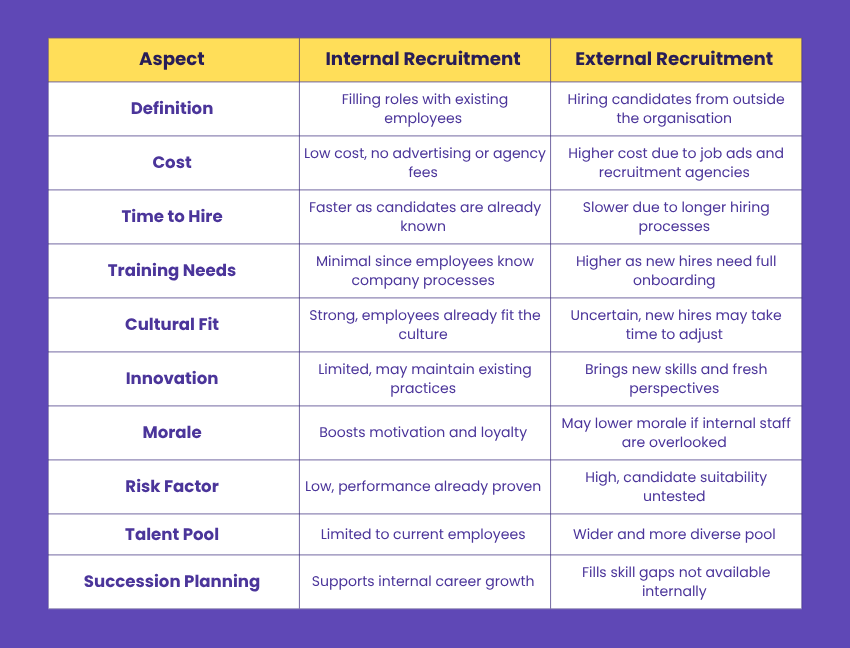
Both options have their own benefits, depending on what your company needs. Internal Recruitment is quicker, cheaper, and keeps your company culture strong since employees already know how things work.
External recruitment, on the other hand, brings in new ideas, skills, and perspectives that can help the business grow. The best approach is to use both in order to promote existing staff when possible while also hiring new talent when fresh expertise is needed.
Would Internal Recruitment Benefit Your Company?
If your company cares about employee growth and quick hiring, Internal Recruitment can be a smart choice. It saves time and money while keeping staff motivated by giving them chances to move up. With the right training and support, it helps you keep skilled people and build a strong, loyal team for the future.
Conclusion
Internal Recruitment offers numerous advantages, from boosting employee morale to reducing onboarding time and performance risks. By fostering employee growth and aligning with workforce planning goals, this approach not only supports organisational success but also nurtures a culture of resilience and engagement. Embracing the Advantages of Internal Recruitment is a strategic step toward building a thriving workplace.
Learn how to assess and retain top talent with our Recruitment Courses - Recruit with confidence now!
Frequently Asked Questions
Is it Better to Recruit Internally?

Recruiting internally can be beneficial as it boosts employee morale, reduces hiring costs, and shortens the onboarding process. Internal candidates are accustomed to the company culture and operations, making them quicker to adapt and contribute effectively.
How can I Look to Recruit Internally?
To recruit internally, advertise job openings on internal platforms, encourage managers to identify potential candidates, and promote opportunities for career advancement. Holding internal job fairs, offering training programmes, and recognising talent within the organisation can also support Internal Recruitment efforts.

Amelia Williams


Senior Human Resources Consultant and Learning Specialist
Amelia Williams is a highly respected HR professional with over 12 years of experience in human capital management, talent development and workplace policy. She has worked across sectors including education, healthcare and corporate services, focusing on aligning people strategies with organisational goals. Amelia’s writing blends current HR trends with practical solutions for modern workplace challenges.


 If you wish to make any changes to your course, please


