


 Top Rated Course

We may not have the course you’re looking for. If you enquire or give us a call on 800969236 and speak to our training experts, we may still be able to help with your training requirements.
15 Effective Communication Strategies for the Modern Workplace
The Knowledge Academy 22 April 2026Communication Strategies are structured techniques used to convey messages effectively, ensuring clarity and understanding across audiences. They define how information is shared, who it is shared with, and the most suitable channels to use. Overall, it reduces confusion, improves collaboration, and supports consistent communication.

Training Outcomes Within Your Budget!
We ensure quality, budget-alignment, and timely delivery by our expert instructors.
Table of Contents
How much time is lost each day due to unclear instructions or messages? In many workplaces, confusion does not come from a lack of effort, but from messages that are misunderstood or incomplete.
When messages are not clear, teams struggle to stay aligned and productive. This blog explores practical Communication Strategies that help everyone deliver clear messages, improve understanding, and build stronger collaboration across the workplace. Let's begin to level up your communication skills and create conversations that drive clarity!
Table of Contents
1) What is a Communication Strategy?
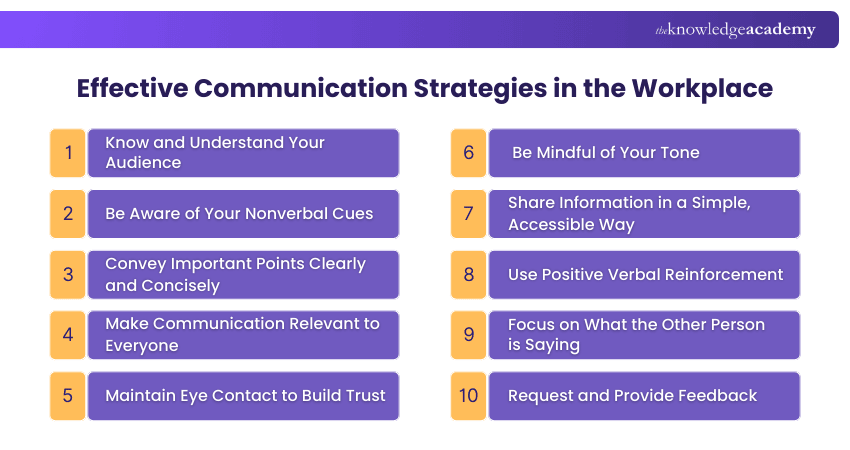
2) Effective Communication Strategies in the Workplace
a) Know and Understand Your Audience
b) Be Aware of Your Nonverbal Cues
c) Convey Important Points Clearly and Concisely
d) Make Communication Relevant to Everyone
e) Maintain Eye Contact to Build Trust
f) Be Mindful of Your Tone
g) Share Information in a Simple, Accessible Way
h) Use Positive Verbal Reinforcement
i) Focus on What the Other Person is Saying
j) Request and Provide Feedback
3) Conclusion
What is a Communication Strategy?
A Communication Strategy is a clear plan for how information is shared among others. It explains what messages need to be shared, who should receive them, how they should be delivered, and when communication should happen. Instead of leaving communication to chance, a strategy makes it organised and purposeful.
In the workplace, a Communication Strategy helps ensure that everyone receives the right information at the right time. This includes updates from leadership, team instructions, project details, and feedback. It also covers how people communicate with each other on a daily basis, whether through meetings, emails, chats, or presentations.
Effective Communication Strategies in the Workplace
Effective Communication Strategies in the workplace help employees share ideas clearly, reduce misunderstandings, and work together more effectively. Thus, the strategies below highlight simple, practical ways to improve everyday communication at work:
1) Know and Understand Your Audience
Understanding your audience helps you tailor messages so they are clear, relevant, and effective. Different roles, experience levels, and teams require different communication styles to ensure messages are understood correctly.
How to Benefit From it:
1) Identify the audience before sharing any message
2) Adjust language based on knowledge level
3) Consider cultural and professional backgrounds
4) Choose suitable communication channels
5) Focus on what matters most to the audience
2) Be Aware of Your Nonverbal Cues
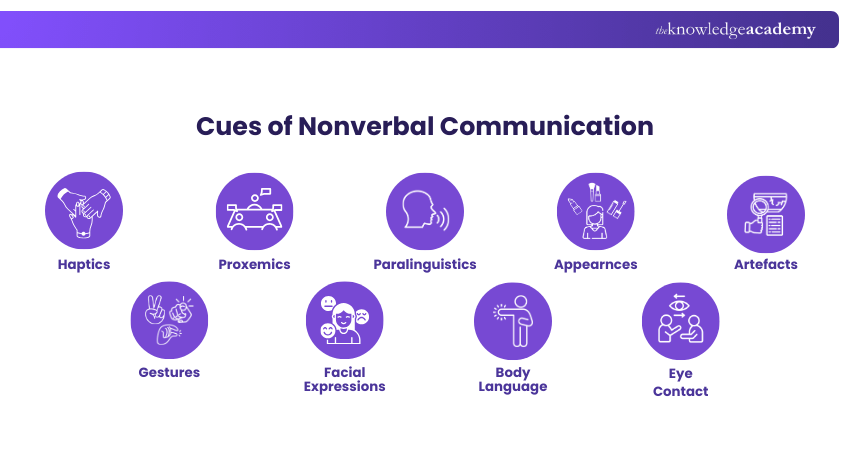
Nonverbal cues such as body language, facial expressions, and posture strongly influence how messages are received. Even when someone does not speak, their body language can show internal interest, confidence, or discomfort.
Key features:
1) Maintain an open and relaxed body posture
2) Use facial expressions that match your message
3) Avoid distracting gestures
4) Show attentiveness through nodding
5) Stay mindful during both in-person and virtual meetings
3) Convey Important Points Clearly and Concisely
Clear and concise communication ensures that key messages are understood quickly without confusion. This is because long messages filled with unnecessary details can confuse people and waste time. So, a concise message helps reduce errors and save time in busy workplaces.
How to Implement:
1) Focus on the main message
2) Avoid unnecessary details
3) Use simple and direct language
4) Structure information logically
5) Summarise key points when needed
4) Make Communication Relevant to Everyone
Relevant communication keeps employees engaged and helps them understand how information applies to their role. When messages feel meaningful, people are more likely to feel connected to the organisation and understand their role within it.
How to Benefit From it:
1) Explain why the message matters
2) Link communication to daily tasks
3) Address team-specific concerns
4) Use real examples where possible
5) Avoid generic or vague messages
5) Maintain Eye Contact to Build Trust
Eye contact is a simple but powerful way to build trust and show attention. It shows your confidence and respect towards the other person. It helps build trust and makes conversations feel more personal, engaging, and genuine.
How to do:
1) Maintain natural eye contact during conversations
2) Avoid staring or looking away too often
3) Look at the camera during virtual meetings
4) Use eye contact to show engagement
5) Combine eye contact with active listening
Learn how to handle sensitive discussions calmly with our Managing Difficult Conversations Training – Join now!
6) Be Mindful of Your Tone
Your tone plays a major role in how messages are received. The same words can sound supportive or critical depending on how they are delivered. This is especially important in emails and messages, where the tone can easily be misunderstood.
How to Implement:
1) Choose polite and positive words
2) Match tone to the situation
3) Avoid sounding harsh or dismissive
4) Re-read messages before sending
5) Stay calm during difficult conversations
7) Share Information in a Simple, Accessible Way
Sharing information is important, but too much information at once can be overwhelming. Employees may struggle to remember key points if they are given too much detail. However, simple communication focuses on what people need to know right now.
How to Benefit From it:
1) Share information in small sections
2) Highlight key points clearly
3) Avoid unnecessary technical terms
4) Use visuals or examples when helpful
5) Space out communication when possible
8) Use Positive Verbal Reinforcement
Positive verbal reinforcement involves recognising effort, progress, and achievements. Simple words of appreciation can make a big difference in how people feel at work. It boosts morale, builds confidence, and strengthens workplace relationships.
Key Features:
1) Acknowledge good work regularly
2) Offer sincere praise for your employees
3) Recognise both effort and results
4) Encourage positive behaviour
5) Build a supportive work culture
9) Focus on What the Other Person is Saying
Listening is a key part of communication, but it is often overlooked. Many people listen while thinking about what they will say next instead of fully understanding the speaker. But active listening improves understanding and reduces miscommunication.
How to Implement:
1) Give full attention to the speaker
2) Avoid interrupting when one person is speaking
3) Ask clarifying questions
4) Reflect on what was said
5) Respond thoughtfully rather than impulsively
Listen better and communicate smarter with our Active Listening Training – Register today!
10) Request and Provide Feedback
Feedback helps people know how they are doing and how they can improve. It supports learning and improvement when shared constructively. It helps align expectations and improve performance.
How to Benefit From it:
1) Encourage open feedback
2) Be specific and clear about what to include
3) Focus on actions, not individuals
4) Share feedback regularly
5) Accept feedback positively
11) Be Data-driven
Using data in communication helps make messages clearer and more reliable. Data provides evidence to support ideas, decisions, or progress updates. Active listening improves clarity, trust, and mutual understanding.
Key Features:
1) Use only relevant and meaningful data
2) Present data in a clear format
3) Avoid overwhelming employees with numbers
4) Use visuals to improve understanding
5) Support decisions using factual evidence
12) Limit Distractions
Distractions reduce the quality of communication. Checking emails, messages, or phones during conversations can lead to missed information and misunderstandings. Reducing distractions improves focus, clarity, and engagement.
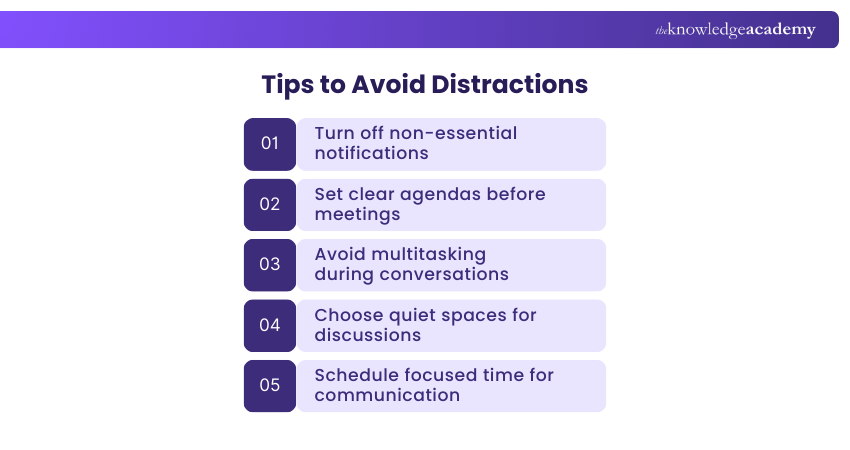
How to Implement:
1) Set clear meeting agendas
2) Minimise device use during discussions
3) Choose quiet environments
4) Schedule focused communication time
5) Encourage active participation
13) Leverage AI
Artificial Intelligence (AI) tools are becoming common in the workplace. They can support communication by saving time and improving clarity. They are most effective when used thoughtfully.
How to Benefit From it:
1) Use AI for drafting messages
2) Summarise meetings efficiently
3) Improve clarity and grammar
4) Analyse feedback trends
5) Combine AI with human judgment
14) Participate in a Public Speaking Class
Public speaking skills improve confidence and clarity in communication. They are useful for meetings and presentations and are applicable to all kinds of roles. Public speaking classes also improve body language, voice control, and audience engagement.
Key Features:
1) Improve verbal clarity
2) Build speaking confidence
3) Enhance body language awareness
4) Structure ideas effectively
5) Engage audiences better
Present your ideas clearly with our Public Speaking Course – Sign up soon!
15) Acknowledge What Others are Expressing
Acknowledging others means recognising their thoughts, feelings, or concerns. It does not always mean agreeing, but it shows respect and understanding. It helps people feel valued and understood, even during disagreements.
How to Implement:
1) Recognise others’ viewpoints
2) Use empathetic language
3) Validate feelings where appropriate
4) Encourage open dialogue
5) Strengthen trust and collaboration
Conclusion
Effective communication is important for success in the modern workplace. It supports teamwork, builds trust, and helps organisations run smoothly. While tools and technology continue to change, the need for clear, respectful communication remains the same. By using the Communication Strategies, organisations can improve how people share information, listen to each other, and work together.
Develop stronger habits and better communication with our Personal Development Courses – Explore now!
Frequently Asked Questions
What are the Five Basic Communication Skills?

The five basic communication skills are listening, speaking, reading, writing, and nonverbal communication. Together, these skills help people understand information, share ideas clearly, and interact effectively in the workplace.
What are the Seven C's of Effective Communication?
The seven C’s of effective communication are:
1) Clarity
2) Conciseness
3) Concreteness
4) Correctness
5) Coherence
6) Completeness
7) Courtesy
What are the Other Resources and Offers Provided by The Knowledge Academy?
The Knowledge Academy takes global learning to new heights, offering over 3,000+ online courses across 490+ locations in 190+ countries. This expansive reach ensures accessibility and convenience for learners worldwide.
Alongside our diverse Online Course Catalogue, encompassing 17 major categories, we go the extra mile by providing a plethora of free educational Online Resources like Blogs, eBooks, Interview Questions and Videos. Tailoring learning experiences further, professionals can unlock greater value through a wide range of special discounts, seasonal deals, and Exclusive Offers.
What is The Knowledge Pass, and How Does it Work?
The Knowledge Academy’s Knowledge Pass, a prepaid voucher, adds another layer of flexibility, allowing course bookings over a 12-month period. Join us on a journey where education knows no bounds.
What are the Related Courses and Blogs Provided by The Knowledge Academy?
The Knowledge Academy offers various Personal Development Courses, including Communication and Influencing Skill Training, Active Listening Training and Managing Difficult Conversations Training. These courses cater to different skill levels, providing comprehensive insights into Types of Listening.
Our Business Skills Blogs cover a range of topics related to Communication Strategies, offering valuable resources, best practices, and industry insights. Whether you are a beginner or looking to advance your Communication skills, The Knowledge Academy's diverse courses and informative blogs have got you covered.

The Knowledge Academy


Global Training Provider
The Knowledge Academy is a world-leading provider of professional training courses, offering globally recognised qualifications across a wide range of subjects. With expert trainers, up-to-date course material, and flexible learning options, we aim to empower professionals and organisations to achieve their goals through continuous learning.

Upcoming Business Skills Resources Batches & Dates
Date
 Communication and Influencing skill Training
Communication and Influencing skill Training
Fri 14th Aug 2026
Communication and Influencing skill Training
Fri 6th Nov 2026

 If you wish to make any changes to your course, please


