


 Top Rated Course

We may not have the course you’re looking for. If you enquire or give us a call on 800969236 and speak to our training experts, we may still be able to help with your training requirements.
Chief Product Officer: Responsibilities, Skills and Challenges
The Knowledge Academy 21 April 2026The Chief Product Officer (CPO) leads product vision and strategy, drives innovation, aligns tasks with business goals, and improves the customer experience. They typically oversee Product Managers and teams, ensuring the product aligns with the company's overall goals as well as meets the needs of its target market.

Training Outcomes Within Your Budget!
We ensure quality, budget-alignment, and timely delivery by our expert instructors.
Table of Contents

If you dream of being the mastermind behind products that people love, need and can’t live without, a Chief Product Officer (CPO) is the role for you. As part strategist, part innovator and part team builder, the CPO shapes ideas into market-leading products that boast real-world impact. As markets competition intensifies, the CPO must navigate complex challenges while building high-performing teams.
However, the role isn’t all smooth sailing because it demands vision, leadership and relentless adaptability in a rapidly evolving market. This blog explores the role of a Chief Product Officer, their key responsibilities, their essential skills, and more. So read on and master this role which treads the fine line between tough and thrilling!
Table of Contents
1) Who is a Chief Product Officer?
2) Key Responsibilities Chief Product Officer
3) Skills Required to Become a Chief Product Officer
4) Chief Product Officer (CPO) Salary Expectations
5) Challenges for Chief Product Officers and Solutions
6) Chief Product Officer vs Chief Technology Officer
7) Conclusion
Who is a Chief Product Officer?
A Chief Product Officer (CPO) is a top executive who makes sure a company’s products are developed, managed, and marketed well. The CPO sets the product vision and strategy, decides which features to focus on, and encourages innovation and growth. Although the role is relatively new, it's becoming more important as businesses face competition in fast-changing industries.
CPOs often work closely with other departments, such as Engineering, marketing and sales, to oversee product success. Their role is critical in defining the product vision and roadmap, as well as managing the Product Life Cycle.

Key Responsibilities of Chief Product Officer
These responsibilities show the many roles a product leader takes on, such as guiding product strategy, encouraging innovation, and ensuring the success of product projects. The duties can vary depending on the company’s size, stage and growth needs.
Product Strategy
The CPO defines and executes the company’s product strategy, making sure it aligns with business goals and market trends. This includes setting a clear vision, identifying target markets, and planning the product roadmap.
Revenue and Growth
The CPO drives revenue through product innovation, market expansion, and customer acquisition. They track Key Performance Indicators (KPIs) and product metrics and use data to make decisions that improve product performance and maximise revenue.
Innovation and Development
The CPO leads the innovation process by encouraging creativity and the development of new products or improvements to existing ones. They work with different teams to turn new ideas into real product offerings.
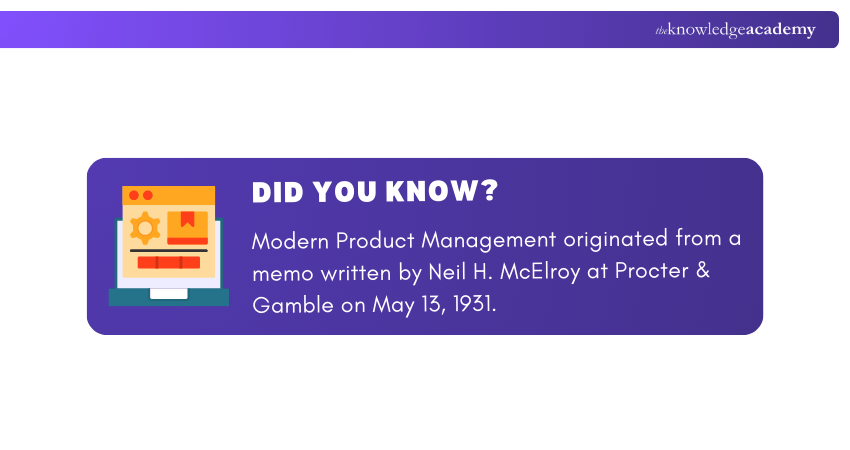
Product Life Cycle Management
They oversee the entire product life cycle, from idea to launch and beyond. This includes managing the product roadmap, prioritising features, and working with Engineering, design and marketing teams to make sure products are launched on time and meet goals.
Leadership and Team Management
They lead and guide the product team, hire and develop top talent, and create a culture of teamwork and innovation. The CPO motivates the team to deliver high-quality products that meet business goals.
Market Research and Analysis
The CPO conducts in-depth market research to understand customer needs, find market opportunities and stay updated on industry trends. They analyse data, customer feedback, and competitors to streamline product decisions.
User Experience and Design
The CPO works closely with UX/UI teams to ensure products provide great user experiences. They support user-centred design, conduct usability tests, and gather feedback to improve the product’s ease of use and appeal.
Cross-functional Collaboration
They collaborate with departments like Engineering, marketing, sales, and customer support to ensure everyone is aligned and working together to achieve product goals.
Arm your knowledge base with the latest trends and technologies! Sign up for our up-to-date Industry Training now!
Skills Required to Become a Chief Product Officer
other than the essential technical skills, a CPO must have soft skills. These skills are the differentiating factors Hiring Managers seek in a CPO candidate. Some of these much-needed CPO skills include:
Vision
a) A CPO must be able to define a clear, compelling product vision to align with business goals.
b) A strong foresight is important to anticipate market trends and customer needs.
c) They must have expertise in creating a long-term product strategy that guides innovation.
d) They must be capable of communicating the vision to all stakeholders, from executives to teams.
Problem-solving
a) A CPO must be adept in quick thinking and resourcefully addressing product issues and challenges.
b) They must be skilled at finding creative solutions to any complex product-related problem.
c) They must be able to prioritise and tackle multiple problems without losing sight of the big picture.
d) Strong decision-making skills are highly important, particularly when dealing with limited resources or high-pressure situations.
Team Communication
a) A Chief Product Officer must have excellent verbal and written communication skills for clear, concise messaging.
b) They must be able to translate complex ideas into understandable concepts for cross-functional teams.
c) They must be skilled in facilitating meetings, workshops, and discussions.
d) They must actively listen to team members and encourage open dialogue and feedback.
Analytical Thinking
a) Strong Data Analysis skills are important for assessing product performance, market trends, and customer behaviour.
b) They must be skilled in synthesising large amounts of data into actionable insights for product decisions.
c) They must be proficient in using KPIs and product metrics to track product success and identify areas of improvement.
d) To refine products, they must be comfortable with A/B testing, user research and Performance Analysis.
Team Leadership
a) A CPO must be skilled at inspiring and motivating teams to meet product goals and deliver on time.
b) They must be effective at recruiting and retaining top product talent.
c) They must be skilled in creating a collaborative team culture where creativity is the driving force.
d) They must have mentorship skills to offer professional growth opportunities for team members.
From factory floor to the front door, your mastery of Supply Chain Management awaits! Sign up for our Supply Chain Management Training now!
Business Acumen
a) A strong understanding of how product decisions impact the overall business strategy and financial performance is essential.
b) A Chief Product Officer must balance long-term product goals with short-term business needs.
c) They must be familiar with market dynamics, competition and industry trends to make sure the products are competitive.
d) They must be skilled in managing budgets, forecasting and making cost-effective decisions for product initiatives.
Customer-centric Approach
a) A Chief Product Officer must deeply empathise with the customer experience. This will help them ensure the products meet user needs and expectations.
b) They must be skilled in gathering customer feedback through surveys, interviews and user testing.
c) They must prioritise user-friendly and intuitive product designs that solve real customer problems.
d) They must regularly monitor customer satisfaction and product usage to refine product offerings.
Chief Product Officer (CPO) Salary Expectations
The following table summarises the average annual salaries of a Chief Product Officer across three major regions:

Challenges for Chief Product Officers and Solutions
From resource constraints to handling high-performing teams, a CPO faces many challenges. Let’s explore these challenges in detail:
Resource Constraints and Priority Conflicts
CPOs often face limited resources and conflicting priorities. Prioritising features and product efforts using data and business goals can be a challenge. This is where collaboration with other teams help align resources and unify the product vision.
Rapid Technological and Market Changes
Staying ahead in a quickly evolving market is challenging. CPOs must conduct regular user research and monitor market and tech trends. The challenge is implementing Agile Development for adapting to shifting demands quickly.
Managing Expectations and Delivering Results
CPOs must juggle the expectations of clients, investors and executives, which is a significant challenge to overcome. They must consistently focus on goals, performance metrics, stakeholder communication, and data-driven decisions.
Building and Leading a High-performing Team
The CPO’s success depends on a strong, skilled team. This means hiring diverse talent, offering continuous training and encouraging innovation can be a persistent challenge.
Make room for smart work in every space! Sign up for our Facilities Management Training - Sign up now!
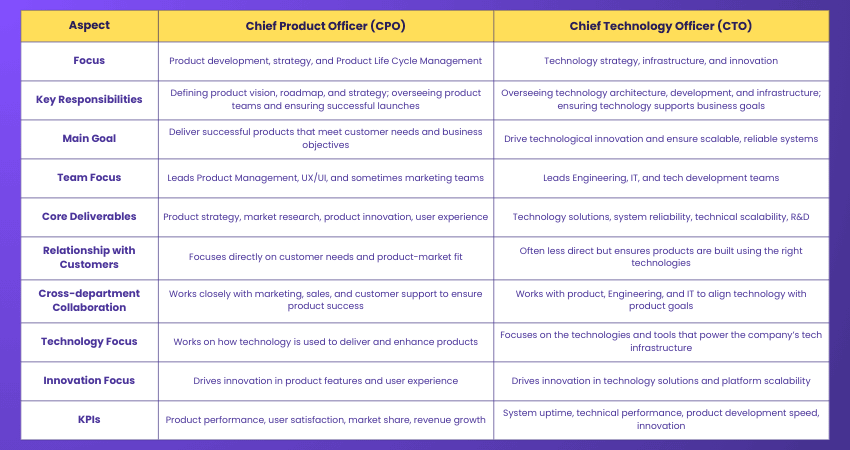
Chief Product Officer vs Chief Technology Officer
Here are the key distinctions between a Chief Product Officer and a Chief Technology Officer:
Conclusion
The Chief Product Officer is the driving force behind product innovation, strategy and success. With the perfect balance of vision, leadership and adaptability, they turn every challenge into a golden opportunity. As businesses evolve, the CPO’s role remains vital in bridging customer needs to business goals to shape products that truly make an impact.
Master the art of shipping products and possibilities in our comprehensive Product Management Course – Sign up now!
Frequently Asked Questions
What is the Work of CPO?

The CPO's work involves the product vision, strategy, design, and execution. They oversee the complete product life cycle, from conception to launch and beyond.
Key Metrics Used by a Chief Product Officer to Measure Product Success
The key metrics typically include:
a) Daily or Monthly Active Users (DAU/MAU)
b) Session duration
c) Feature adoption rate
d) Customer Lifetime Value (CLTV)
e) Product-market Fit Score
f) Customer lifetime value (CLTV)
g) Average revenue per user (ARPU)
What are the Other Resources and Offers Provided by The Knowledge Academy?
The Knowledge Academy takes global learning to new heights, offering over 3,000+ online courses across 490+ locations in 190+ countries. This expansive reach ensures accessibility and convenience for learners worldwide.
Alongside our diverse Online Course Catalogue, encompassing 19 major categories, we go the extra mile by providing a plethora of free educational Online Resources like Blogs, eBooks, Interview Questions and Videos. Tailoring learning experiences further, professionals can unlock greater value through a wide range of special discounts, seasonal deals, and Exclusive Offers.
What is The Knowledge Pass, and How Does it Work?
The Knowledge Academy’s Knowledge Pass, a prepaid voucher, adds another layer of flexibility, allowing course bookings over a 12-month period. Join us on a journey where education knows no bounds.
What are the Related Courses and Blogs Provided by The Knowledge Academy?
The Knowledge Academy offers various Industry Training, including the Facilitation Skills Training and the Product Management Course. These courses cater to different skill levels, providing comprehensive insights into the Methods of Demand Forecasting.
Our Business Skills Blogs cover a range of topics related to Product Management, offering valuable resources, best practices, and industry insights. Whether you are a beginner or looking to advance your Product Management skills, The Knowledge Academy's diverse courses and informative blogs have got you covered.

The Knowledge Academy


Global Training Provider
The Knowledge Academy is a world-leading provider of professional training courses, offering globally recognised qualifications across a wide range of subjects. With expert trainers, up-to-date course material, and flexible learning options, we aim to empower professionals and organisations to achieve their goals through continuous learning.

Upcoming Business Skills Resources Batches & Dates
Date
 Product Management Training
Product Management Training
Fri 17th Jul 2026
Product Management Training
Fri 9th Oct 2026

 If you wish to make any changes to your course, please


