


 Top Rated Course

We may not have the course you’re looking for. If you enquire or give us a call on 01344203999 and speak to our training experts, we may still be able to help with your training requirements.
Importance of Presentation Skills and How to Improve Them
Charlotte Wilson 02 September 2026Presentation Skills help you communicate ideas clearly, engage audiences, build confidence, and influence decisions. Discover their importance, key benefits in personal and professional settings, and practical ways to improve them.

Training Outcomes Within Your Budget!
We ensure quality, budget-alignment, and timely delivery by our expert instructors.
Table of Contents

Key Takeaways
1. Presentation Skills help make ideas easier for an audience to understand, follow, and remember.2. They can build confidence, credibility, persuasion, and professional communication.3. Strong presentations combine clear communication, confident delivery, and an understanding of the audience.4. These skills are useful in meetings, interviews, pitches, conferences, and everyday situations.5. Preparation, regular practice, feedback, and audience engagement can help strengthen Presentation Skills over time.
You have five minutes to explain an idea you have worked on for weeks. What do you say first? What do you leave out? And how do you make people care?
That is where Presentation Skills make a difference. A strong presentation does more than put information on slides. It helps you organise your thinking, communicate with confidence, and turn information into something your audience can understand and remember.
This blog explores the Importance of Presentation Skills, the benefits they bring to different situations, and practical ways to develop them. Read ahead!
What are Presentation Skills?
Presentation Skills are the abilities that help a person communicate ideas, information, or messages clearly and confidently to an audience. They include how you structure a message, understand your audience, use visuals effectively, deliver with confidence, and respond to questions or reactions.
At their core, they help ensure that your message is not only delivered, but clearly understood and remembered.

Why are Presentation Skills Important?
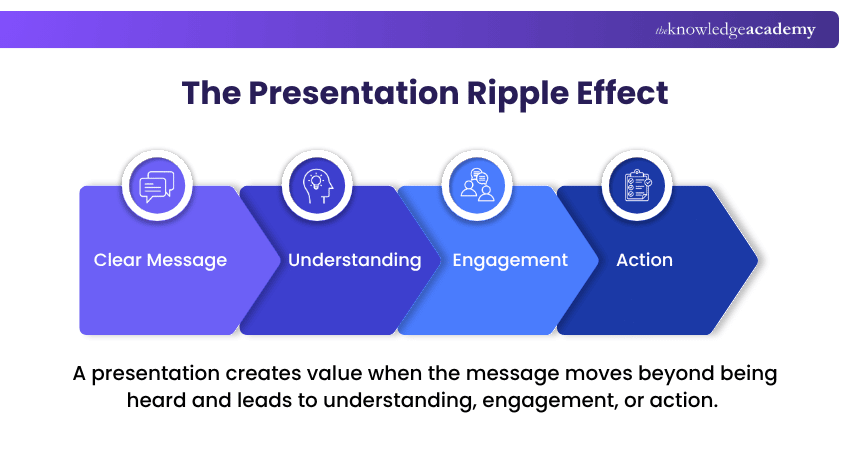
Having valuable information is only part of effective communication. How that information is organised, explained, and delivered can determine whether an audience understands it, remembers it, or acts on it.
Here are the key reasons why Presentation Skills matter:
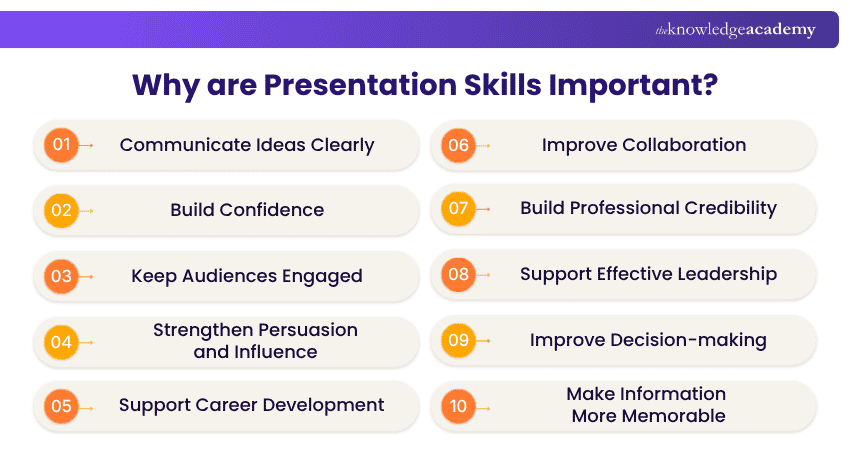
1) Communicate Ideas Clearly
Presentation Skills help you organise your thoughts and explain them in a logical sequence. This makes complex information easier for an audience to follow without losing sight of the main message.
Clear communication is useful when explaining a project, presenting research, sharing an idea, or giving instructions. It helps reduce confusion and keeps attention focused on what matters most.
2) Build Confidence
Preparing and delivering presentations regularly can make speaking in front of others feel more familiar. Knowing your subject, rehearsing your message, and understanding your audience can help you approach presentations with greater confidence.
This confidence can extend beyond formal presentations into meetings, interviews, networking conversations, and other situations where you need to express your ideas clearly.
3) Keep Audiences Engaged
A presentation needs more than useful information to hold attention. Voice, pacing, examples, questions, stories, visuals, and body language can all influence how involved an audience feels.
Engaged listeners are more likely to follow the message, connect different ideas, and remember important information after the presentation ends.
4) Strengthen Persuasion and Influence
Some presentations aim to do more than inform. They may seek approval for an idea, encourage a decision, gain support for a proposal, or persuade someone to take action.
Presentation Skills help you organise evidence, explain benefits, address concerns, and communicate recommendations convincingly. This makes them particularly valuable in sales pitches, proposals, negotiations, and stakeholder discussions.
5) Support Career Development
Presenting is part of many professional situations, from job interviews and team meetings to client discussions and conferences. The ability to explain your knowledge and ideas effectively can help others recognise your expertise and contribution.
As responsibilities grow, Presentation Skills can become even more valuable when communicating with senior leaders, managing teams, presenting recommendations, or representing an organisation.
6) Improve Collaboration
Presentation Skills help teams share updates, explain priorities, discuss ideas, and establish a common understanding of what needs to happen next.
Clear presentations can make collaboration easier by helping colleagues understand different perspectives, coordinate responsibilities, and contribute more effectively to discussions.
7) Build Professional Credibility
A well-prepared presentation demonstrates more than knowledge of a topic. It shows that you can organise information, anticipate what an audience needs, and communicate your ideas with purpose.
Consistently presenting information clearly and accurately can strengthen how colleagues, clients, and stakeholders perceive your professionalism and expertise.
8) Support Effective Leadership
Leaders often need to communicate goals, explain decisions, introduce change, and gain support for a shared direction. Strong Presentation Skills help them deliver these messages with clarity and purpose.
They can also help leaders connect wider objectives with individual responsibilities, giving teams a clearer understanding of where they are going and why it matters.
Develop practical leadership strategies that drive performance with Leadership Training – Sign up soon!
9) Improve Decision-making
Presentations can bring important information, evidence, and recommendations together in a structured format. This can help audiences compare options, understand potential outcomes, and make more informed decisions.
This is particularly useful in business proposals, project reviews, strategy meetings, and stakeholder presentations, where the audience may need to decide on a clear course of action.
10) Make Information More Memorable
Audiences are unlikely to remember every statistic, sentence, or slide. A strong idea, useful example, compelling story, or clear visual can make key information easier to remember.
Presentation Skills help you identify the information that matters most and reinforce it throughout your delivery. This gives the audience something meaningful to take away.
Where are Presentation Skills Useful?
Presentation Skills are useful whenever you need to explain an idea, share information, influence a decision, or connect with an audience. They apply far beyond formal speeches and can support communication in professional, academic, and everyday situations.
Some common examples include:
a) Workplace Meetings: Sharing updates, presenting results, explaining plans, and communicating priorities clearly.
b) Job Interviews: Communicating your experience, achievements, skills, and suitability for a role with confidence.
c) Sales and Client Meetings: Presenting products, services, proposals, or recommendations in a clear and persuasive way.
d) Leadership Situations: Explaining goals, decisions, organisational changes, and expectations to teams.
e) Education and Training: Presenting research, explaining concepts, delivering lessons, and sharing academic work.
f) Conferences and Events: Sharing expertise, research, experiences, or new ideas with wider audiences.
g) Personal Occasions: Delivering speeches or toasts, contributing to community activities, and addressing groups.
Make every presentation count with our Presenting with Impact Training – Join today!
How to Improve Your Presentation Skills?
Improving your Presentation Skills comes down to preparing with purpose, practising consistently, and learning from each presentation. Small changes to how you plan, speak, use visuals, and interact with your audience can make a noticeable difference.
Here are practical ways to improve:
1) Know Your Audience
Consider who will be listening, what they already know, and what they expect to gain from your presentation. This helps you choose the right language, examples, level of detail, and tone.
A presentation for senior executives, for example, may focus on outcomes and decisions, while one for beginners may require more explanation and context.
2) Structure Your Message
Give your presentation a clear beginning, middle, and end. Introduce the purpose, organise the main points in a logical sequence, and finish by reinforcing the key message.
Focus on what your audience needs to know, rather than trying to include everything you know about the subject.
3) Practise Your Delivery
Rehearse aloud to hear how your presentation actually sounds. This can reveal unclear explanations, awkward transitions, timing problems, and areas where your delivery needs more emphasis.
Knowing your material well also gives you more freedom to engage with the audience instead of relying heavily on notes.
Trainer's Insight
Design your presentation for the audience, not for the slides. Before adding any point, example, or visual, ask what it helps the audience understand. If it does not make the message clearer, more relevant, or easier to remember, it probably does not need to be there.
4) Manage Presentation Nerves
Preparation and familiarity can make nervousness easier to manage. Rehearse beforehand, check the presentation setup, practise controlled breathing, and become comfortable with your key talking points.
Knowing the message rather than memorising every sentence can also help your delivery feel more natural.
5) Use Eye Contact Purposefully
Appropriate eye contact can help create a connection with your audience and make your delivery feel more conversational. It can also help you notice whether people appear engaged, confused, or interested.
Move your attention naturally around the audience instead of focusing continuously on your notes, slides, or one person.
6) Keep Visuals Simple
Visuals should make your message easier to understand, not harder to follow. Use slides, charts, images, or diagrams when they clarify an idea or reinforce an important point.
Avoid overcrowding slides with text or unnecessary elements. Give the audience enough space to listen to you rather than making them read throughout the presentation.
7) Use Your Voice Effectively
Vary your pace, tone, volume, emphasis, and pauses to give your delivery more energy and meaning. Important points can easily get lost when every sentence sounds the same.
A well-placed pause can be especially effective, giving listeners a moment to absorb an important idea before you continue.
8) Use Confident Body Language
Your posture, facial expressions, gestures, and movement contribute to how your message is received. Natural, purposeful body language can reinforce your words and create a more confident presence.
Keep gestures comfortable and relevant to what you are saying so that they support rather than distract from your message.
9) Prepare for Questions
Anticipate questions your audience may have and prepare supporting information where necessary. This can make the Q&A feel like a natural extension of your presentation.
Listen to each question fully before answering and ask for clarification when needed. A thoughtful response is more valuable than a rushed one.
10) Seek Constructive Feedback
Ask colleagues, mentors, or trusted listeners for specific feedback on your content, delivery, visuals, and audience engagement.
Choose one or two areas from that feedback to work on before your next presentation. Focused improvement is easier to practise and measure than trying to change everything at once.
The 3 Questions Before You PresentBefore finalising your presentation, ask:What should they understand?What should they remember?What should they do next?These three questions keep your presentation focused on what the audience should take away, rather than simply what you want to say.
Conclusion
The Importance of Presentation Skills goes beyond speaking confidently in front of an audience. These skills help you shape ideas, communicate them with purpose, and create messages that people can understand, remember, and act upon.
A strong presentation is not defined by perfect slides or flawless delivery. It is defined by what stays with the audience after you finish speaking.
Speak with confidence and engage any audience with our Public Speaking Course – Join today!
Frequently Asked Questions
What is the 10-20-30 Rule for Presentations?

The 10-20-30 rule, popularised by Guy Kawasaki, suggests using 10 slides, presenting for 20 minutes, and using a minimum 30-point font. It is a presentation guideline rather than a strict rule and can be adapted depending on the audience, purpose, and format.
How Long Should a Presentation be?
There is no single ideal presentation length. It depends on the purpose, audience, complexity of the topic, and time available. A presentation should be long enough to communicate its key message clearly while remaining focused and avoiding unnecessary information.
What Should You Avoid During a Presentation?
Avoid overcrowded slides, reading directly from the screen, speaking too quickly, using excessive jargon, ignoring time limits, and presenting without a clear structure. It is also important to avoid relying too heavily on visuals, as they should support rather than replace your message.

Charlotte Wilson


Soft Skills and Business Training Manager
Charlotte Wilson is an expert in soft skills development, with over 14 years of experience helping individuals and teams improve communication, productivity and emotional intelligence in the workplace. Her training content is focused on enhancing interpersonal effectiveness and fostering positive, collaborative environments across all levels of an organisation.
View Detail

 If you wish to make any changes to your course, please


